
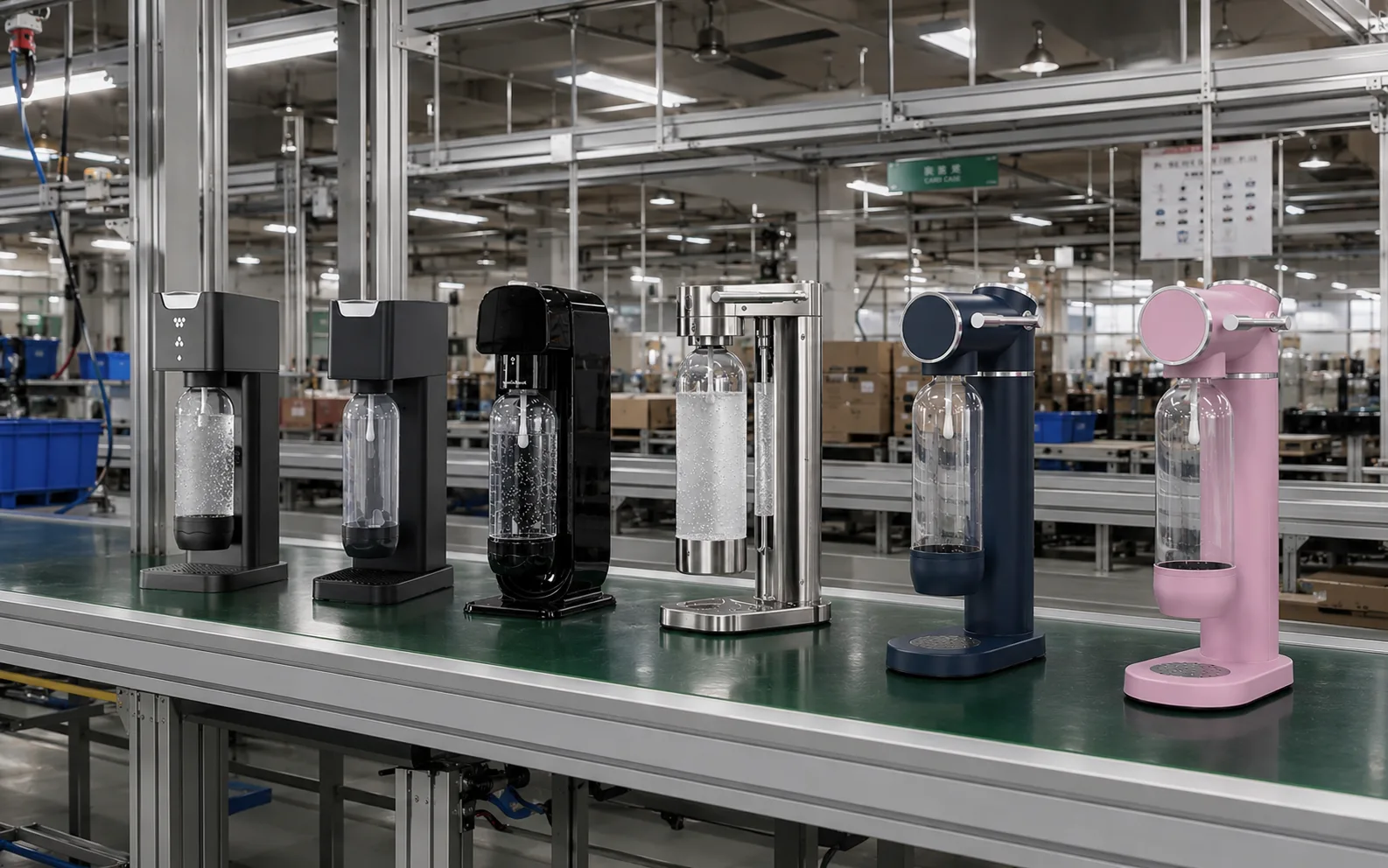
Home Soda Makers and Matching Accessories
Eight production models, the bottles and cylinders that complete the set, and the spare parts that keep the range selling.
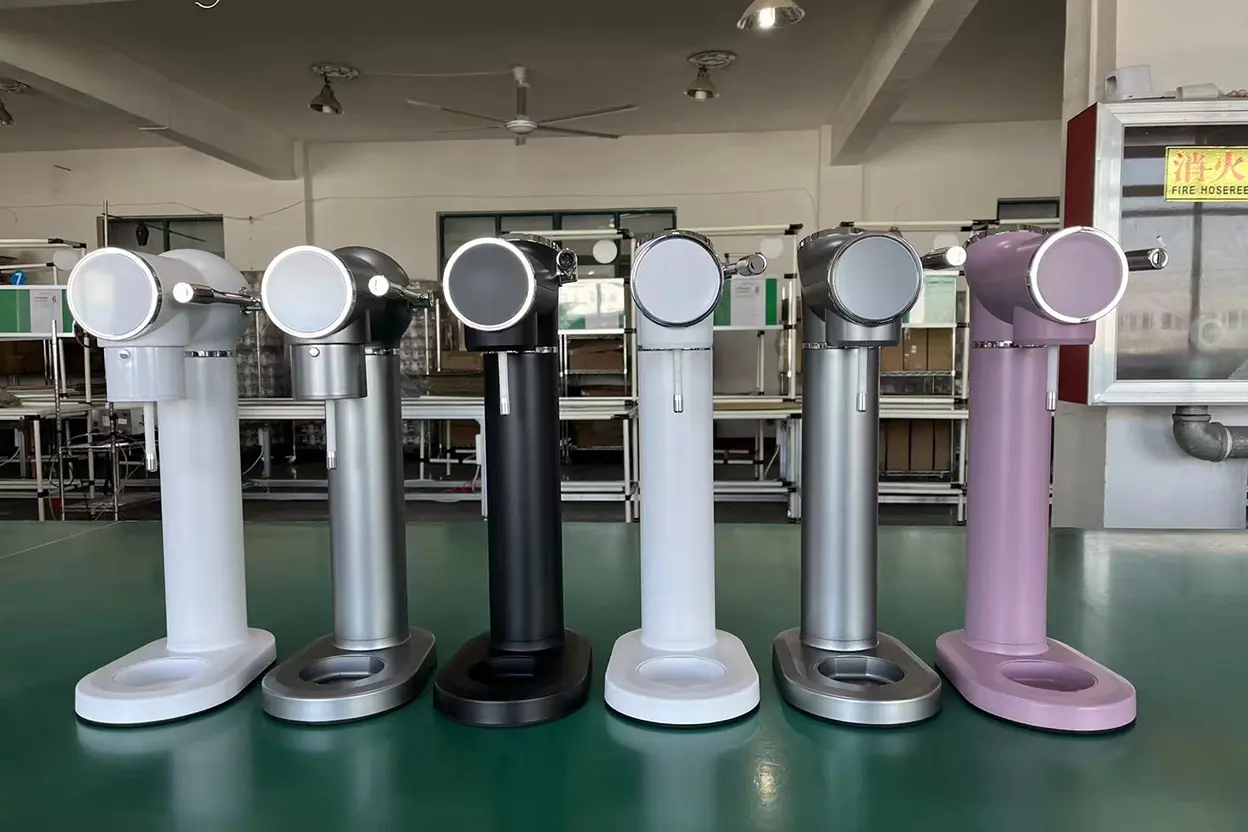
This is the full Cheersoda product range on one page: home soda makers in stainless steel and plastic, top-press and lever operation, plus PET and stainless steel bottles, empty CO2 cylinders, valves, connectors and replacement parts. Everything here comes from our own factory in Chengyang, Qingdao — a 15,500 m² plant established in 2015, running three production lines with a monthly capacity of 20,000 units. Every model is a manual machine: no power supply, no plug to certify, and one threaded cylinder standard shared across the range. If you already know the model you want, jump to it from the model index. If you are still building a shortlist, the routing table and comparison sections below are built to get you to the right model in a few minutes.
Find the Right Starting Point
Use your requirement to move directly to the most useful part of the range.
| Your requirement | Recommended starting point | What you can review |
|---|---|---|
| Compare the standard home soda makers | Model sections and comparison table below | Structures, operation, bottles and OEM options |
| Build a premium metal appliance range | G15 and G15 Pro | Full 304 stainless models and brand customization |
| Plan a volume plastic line | G720, G3, G9 | Lever and top-press models for distributor and retail volume |
| Match bottles, cylinders or spare sets | Bottles and accessories section below | PET and stainless bottles, empty cylinders, valves and parts |
| Add your logo and retail packaging | Private label soda maker | Color, logo, box, manual and carton details |
| Review production capability | Manufacturing | Molding, assembly, testing and packing |
| Confirm testing and documents | Quality and compliance | Inspection scope and model-specific documents |
| Ask for a model recommendation | Closing section of this page | Model matching, sample plan and quotation |
Browse by Product Direction
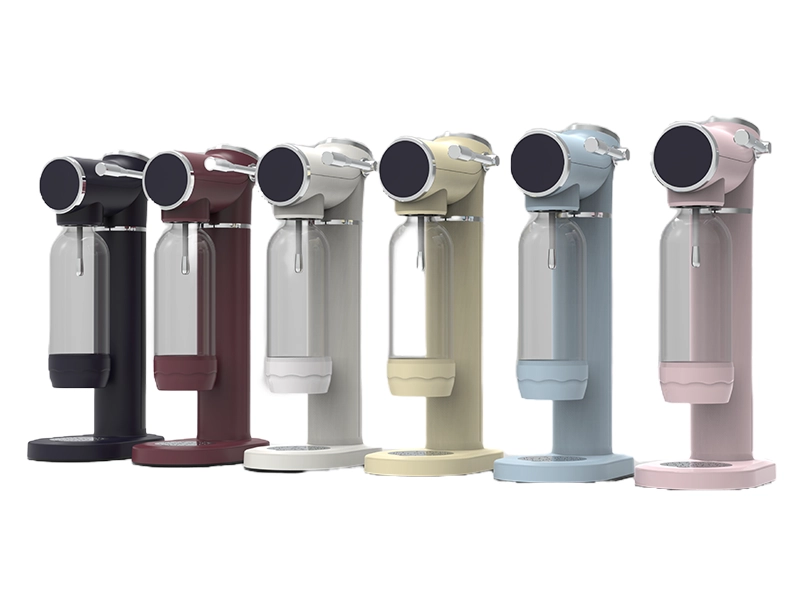
Sparkling Water Makers
Manual countertop models for private-label brands, importers and appliance distributors.
Explore Soda Makers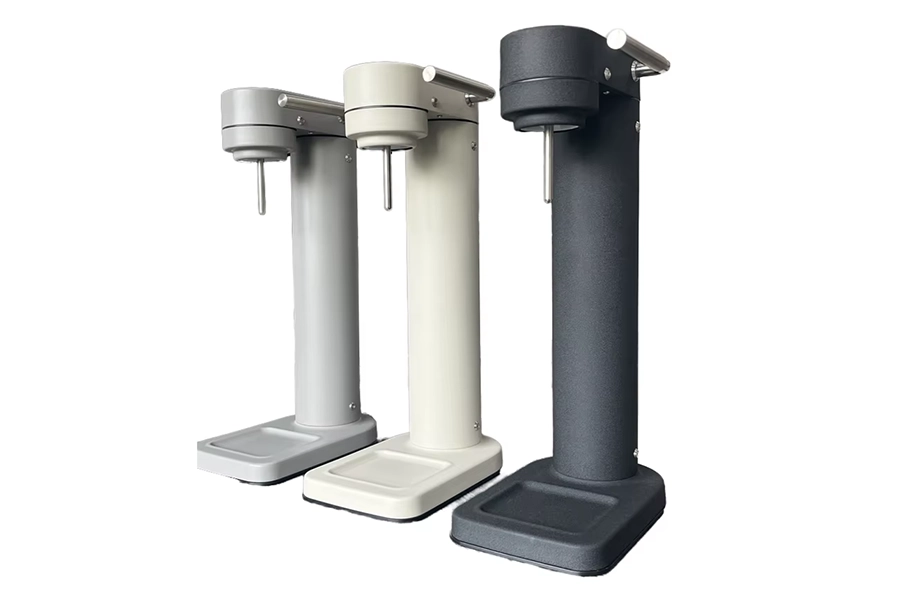
Seltzer Makers
Home carbonation models, packaging and product information prepared for US-market programs.
Explore Seltzer Makers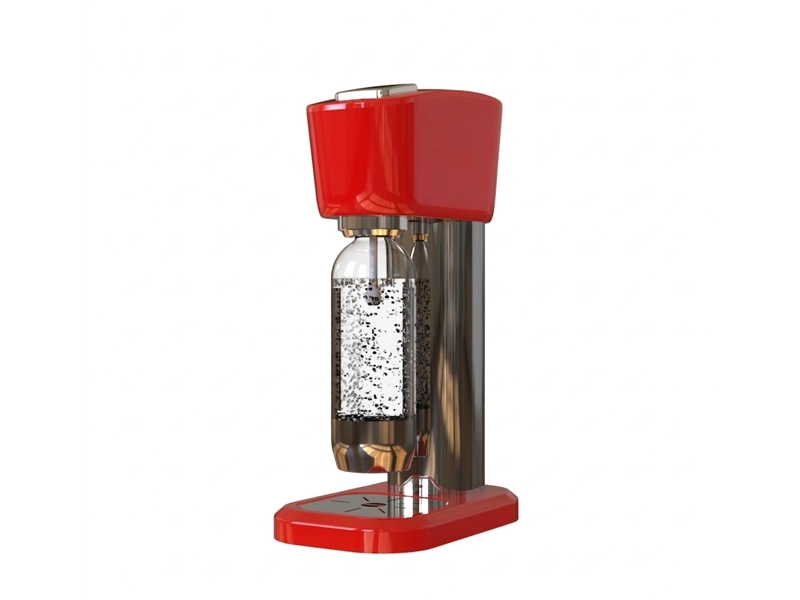
Water Carbonators
Water-focused carbonation systems with bottle, valve and packaging options for branded retail programs.
Explore Water Carbonators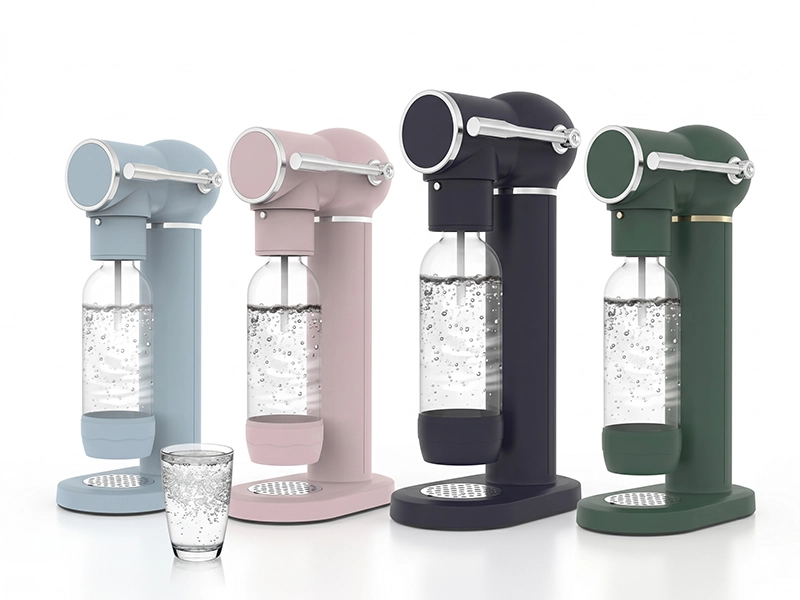
Carbonated Drink Makers
Models with removable carbonation components for approved beverage applications beyond plain water.
Explore Drink Makers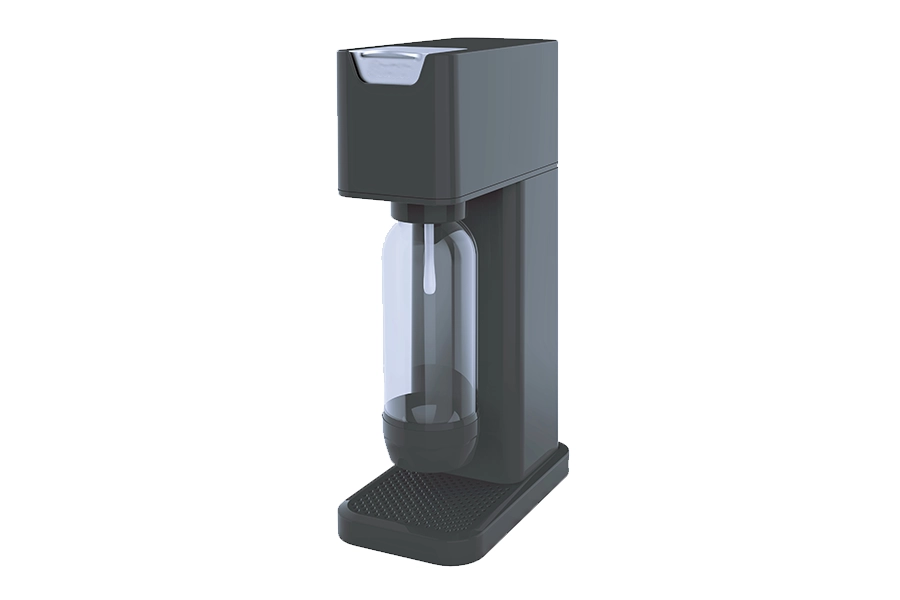
Stainless Steel Soda Makers
Metal-body models for brands and retailers seeking a higher-value kitchen appliance range.
Explore Stainless Models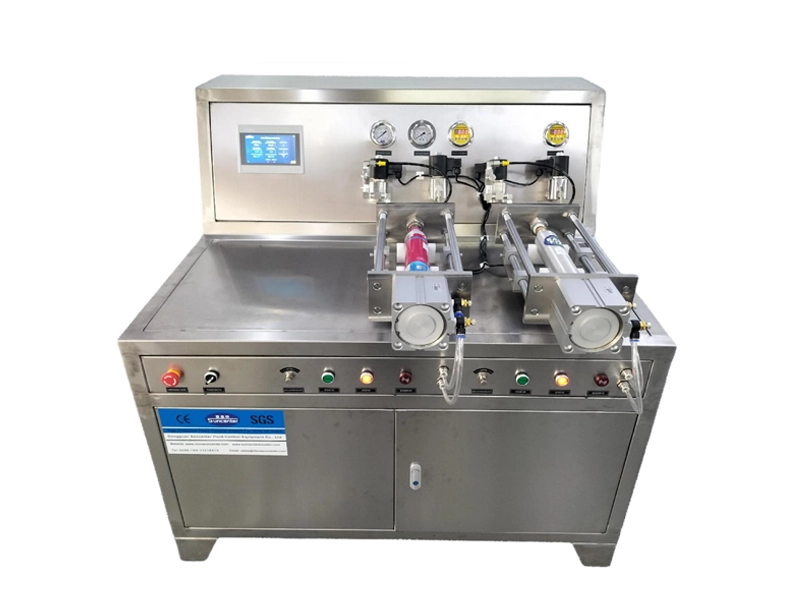
CO2 Cylinders & Accessories
CO2 cylinders, valves and accessories for qualified distributors and operators building a local cylinder supply program.
Explore CO2 Accessories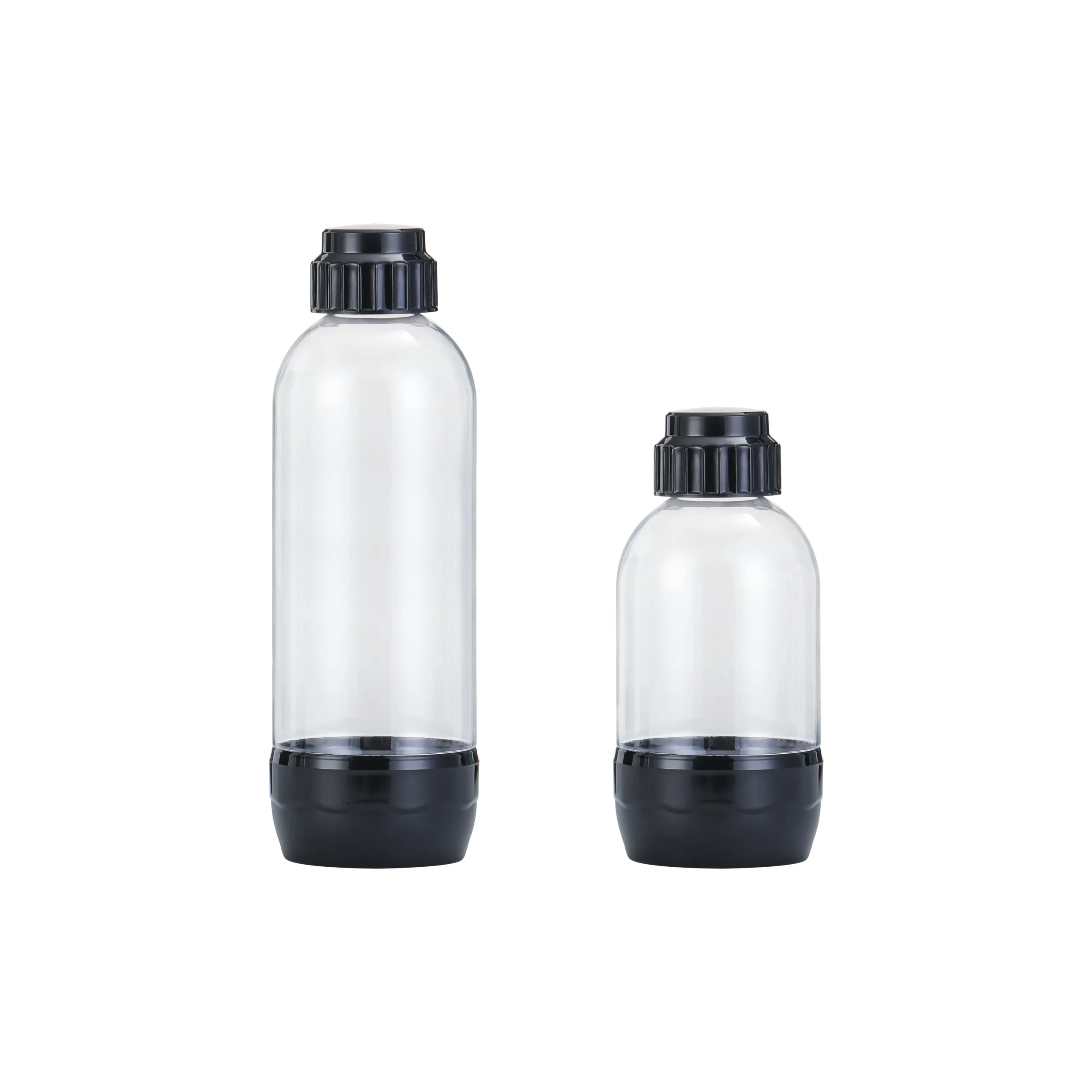
Soda Maker Bottles
Compare PET bottles, stainless steel bottles, spare sets, caps and private-label packaging options.
Review Bottle Options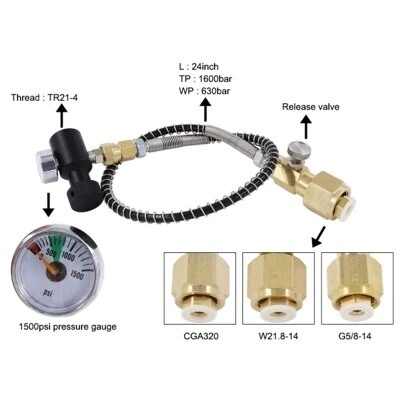
CO2 Cylinders and Components
Review empty cylinders, valve types, connection parts and accessory packs for export projects.
Review AccessoriesThe Range at a Glance
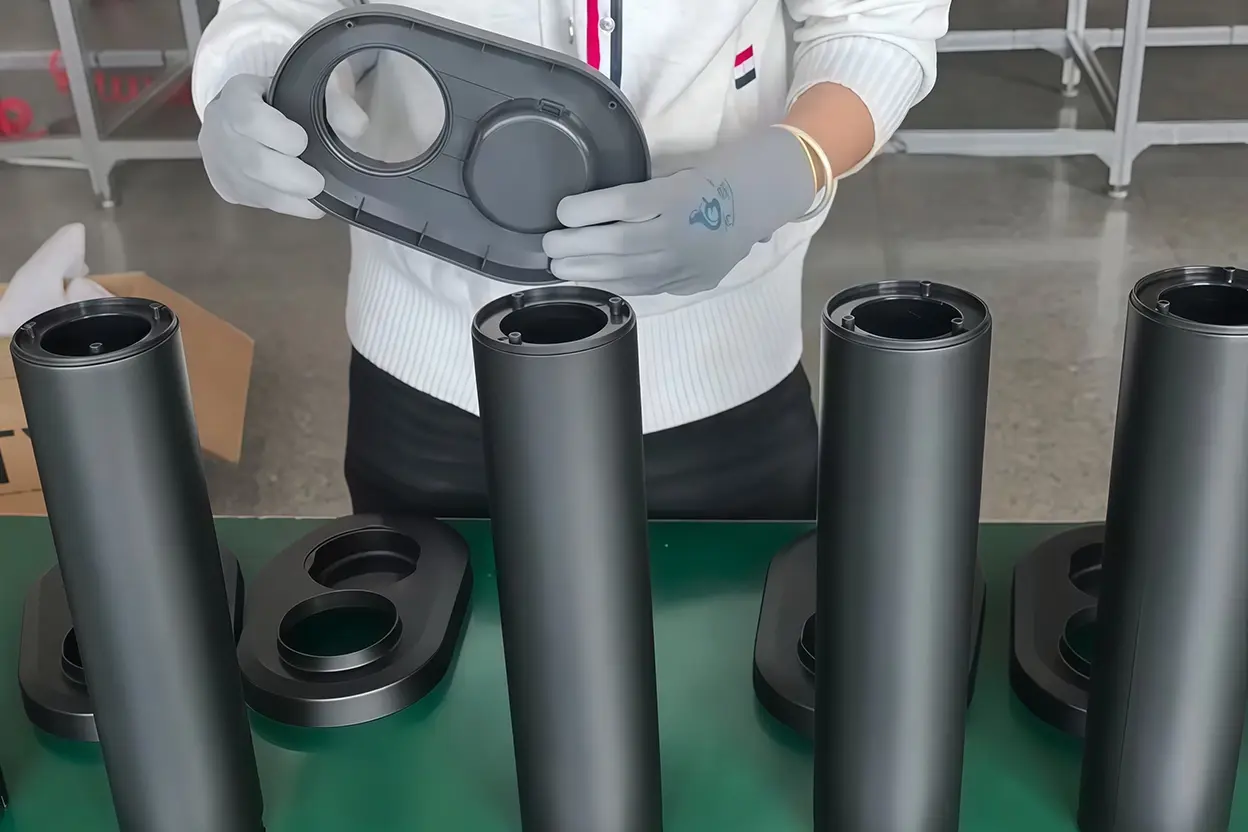
The range is organised along three decisions, and every model on this page is a combination of them.
Body family. Three models are stainless steel — the G15, the G15 Pro and the X1 — built for premium positioning, heavier hand-feel and long service life. Five are plastic-bodied — the G720, G3, G9, G8 and G830 — built for volume lines, lighter freight and lower shelf prices. The stainless steel versus plastic comparison is not on this page because the choice deserves its own treatment; the short version is that body family follows your retail price point, not ours.
Operation. The G3, G9 and G8 carbonate by top press — the user presses the top of the machine. The G720 and G830 carbonate by lever. The G15 line uses a manual press with automatic pressure release, and the X1 a manual button. None of the eight needs electricity to carbonate; the only cells anywhere in the range are indicator cells on LED models, covered in the model notes below.
One cylinder standard. Every model uses the threaded CO2 cylinder standard — TR21-4 / M18×1.5, the 425 g / 60 L threaded bottle used by threaded SodaStream-type systems and most refill and exchange networks. No model in this range fits Quick Connect cylinders, and no adapter exists. That single fact makes the whole range interchangeable at the cylinder shelf, which simplifies both retail ranging and a distributor's refill business.
Shared across all eight models: CNC brass valves (the pressure heart of every machine is machined brass, on plastic models too), dual safety valves, BPA-free PET bottles in 500 ml and 1000 ml, and the same factory test protocol described in the quality section below.
The Models, One by One
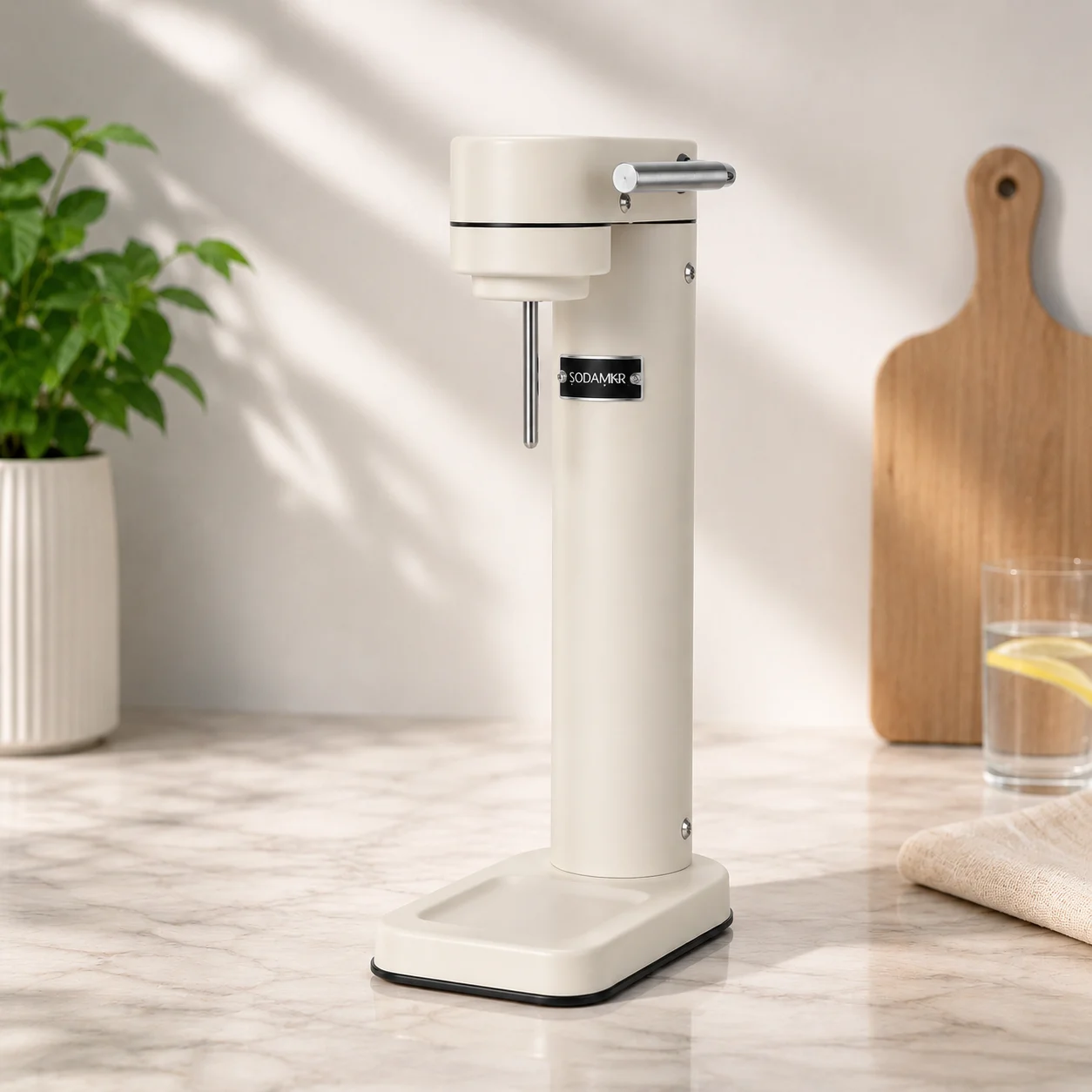
G15 — the premium stainless anchor
The G15 stainless steel soda maker is the model premium brands build on: a full 304 stainless steel body, a CNC brass valve, and a 304 stainless carbonating nozzle that is one-piece, fine-aperture and removable — it unscrews for washing, where plastic nozzles clog and freeze. Carbonation is controlled by pressure, not by counting presses: when the target pressure is reached, the machine gives an audible magnetic click (hold about a second for the best texture), the valve closes automatically — saving roughly a gram of gas per litre — and excess pressure releases automatically. Dual safety valves, fully manual operation, no power supply. The standard set is the machine plus a 1 L PET bottle. Body dimensions 23 × 14 × 41.5 cm. This is the line our German online-brand buyer scaled, and one of the two models in our Brazilian distributor's roughly 2,000-unit-a-year program.
View model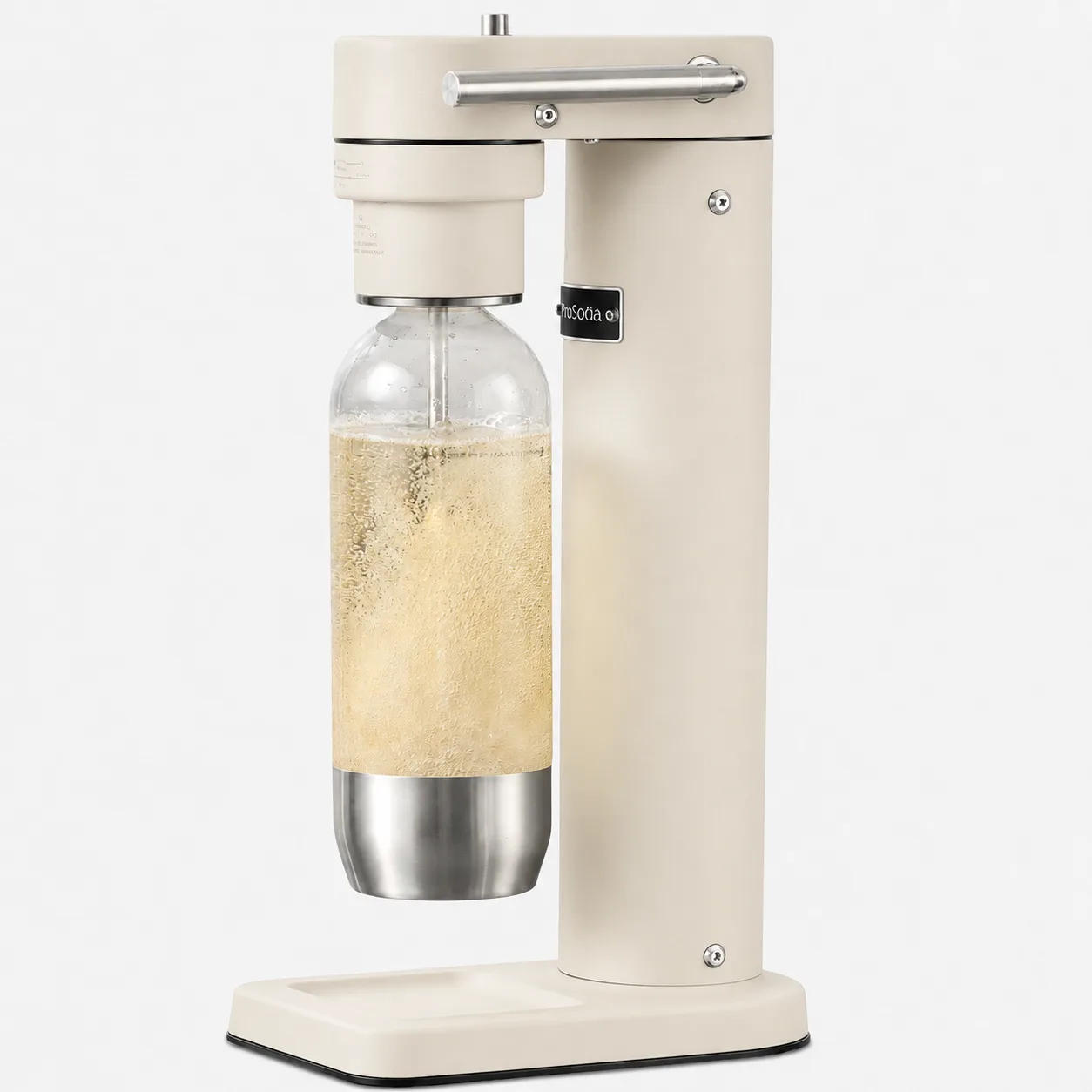
G15 Pro — detachable head, two beverage modes
The G15 Pro shares the G15's full 304 stainless body, dimensions, packing and standard set — machine plus a 1 L PET bottle with stainless base and cap. Exactly two things differ. The head is detachable, lifting off for cleaning and service where the G15 head is fixed (only its nozzle removes). And the head switches between juice and pure-water modes, so the same machine carbonates plain water and juice-based drinks correctly. That mode switch is a beverage switch, not a carbonation-strength control — fizz level on both models is governed by pressure and press count, as on the G15. Choose the Pro when your channel sells the machine for more than sparkling water; choose the G15 when it does not.
View model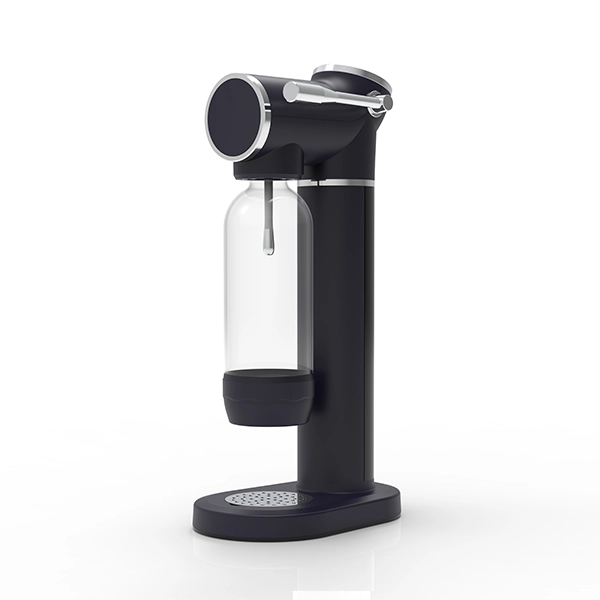
G720 — the lever volume model
The G720 is the range's volume workhorse: a plastic-bodied lever machine where one handle runs both carbonation and pressure release, with electroplated trim options for shelf differentiation. The standard G720 is fully mechanical — no battery, no electronics. An optional version, the G720 Pro, adds an LED carbonation indicator powered by a CR2032 button cell; if your market does not want a cell in the product, the standard version is the default and nothing about its operation changes. Dual safety valves. Body dimensions 15 × 23 × 44 cm. Six units pack to a carton, and a 500-unit order runs to 84 cartons at about 13.2 CBM — the worked example in the logistics section. Our Brazilian distributor built its line on this model alongside the G15.
View model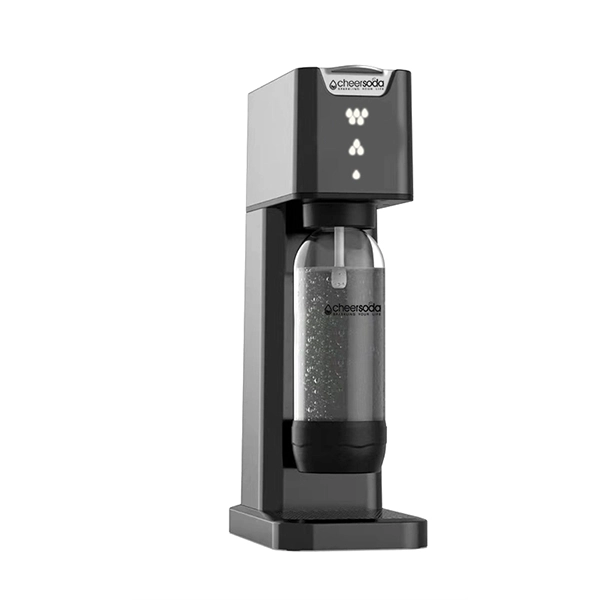
G3 — top-press with an LED carbonation indicator
The G3 is a plastic top-press model whose shelf difference is visible: an LED display shows the carbonation level as the user presses, powered by a CR123A 3V cell inside the LED module. Automatic pressure release, dual safety valves, sprayed button finish, and injection colors in white and black. The standard set is the machine plus a 1000 ml PET bottle with plastic base and cap. Body dimensions 14 × 25 × 42 cm. The G3 is also the model our Uruguayan buyer used for the 300-unit trial order described in the scenarios below — the trial route exists precisely so a feature-led model like this can be validated in-market before a branded run.
View model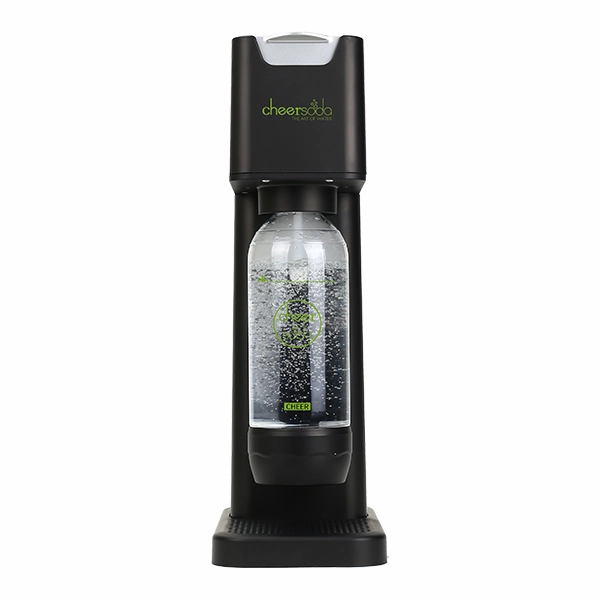
G9 — the clean top-press
The G9 is the G3 without the LED: same plastic body, same top-press operation, same standard set, dimensions and packing. What changes is the front of the machine — no indicator display, no cell, a clean minimal face. Retail buyers choose it when the line is sold on simplicity or when an indicator adds shelf cost without adding margin in their channel. If you are deciding between the two, the question is purely whether the carbonation-level display earns its place in your price architecture; mechanically the machines are the same platform.
View model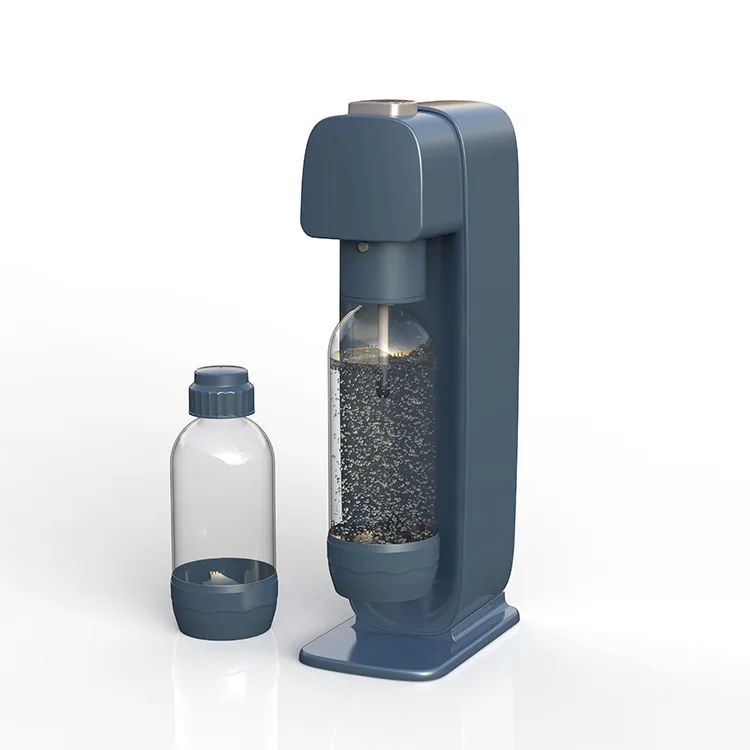
G8 — top-press with a detachable carbonating head
The G8 is a plastic top-press model built around a removable sub-carbonator: the carbonating head detaches from the body, which makes rinsing, descaling and service straightforward for the end user and for your after-sales team. Automatic pressure release and dual safety valves. The standard set is the machine plus a 1000 ml PET bottle, with the 500 ml bottle as an option — the only decision of its kind in the plastic range's standard planning. Body dimensions 12 × 20 × 44 cm. The G8 is the natural comparison against the G830 below: same detachable-head idea, different hand.
View model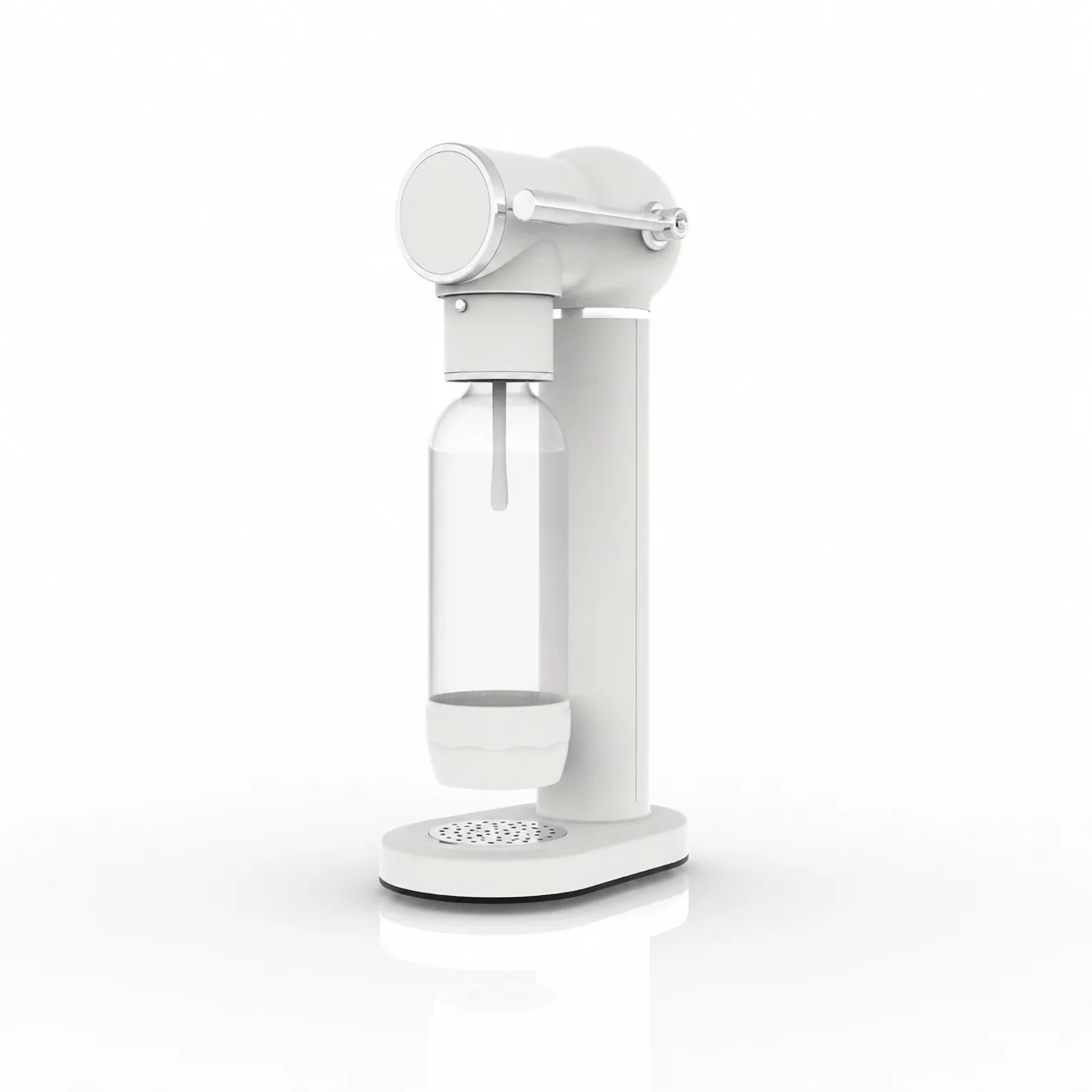
G830 — lever action, washable detachable head
The G830 pairs the lever operation of the G720 with the detachable head of the G8 — and takes the head one step further: it is designed to be washed, not just detached. A horizontal lever drives carbonation, dual safety valves are fitted, and the head comes off for proper cleaning, which suits markets where hygiene messaging sells and channels that expect to service machines over years. Body dimensions 14.4 × 22.5 × 43 cm. G8 or G830 is rarely a technical decision; it is a user-experience decision between press and lever, made once for the line.
View model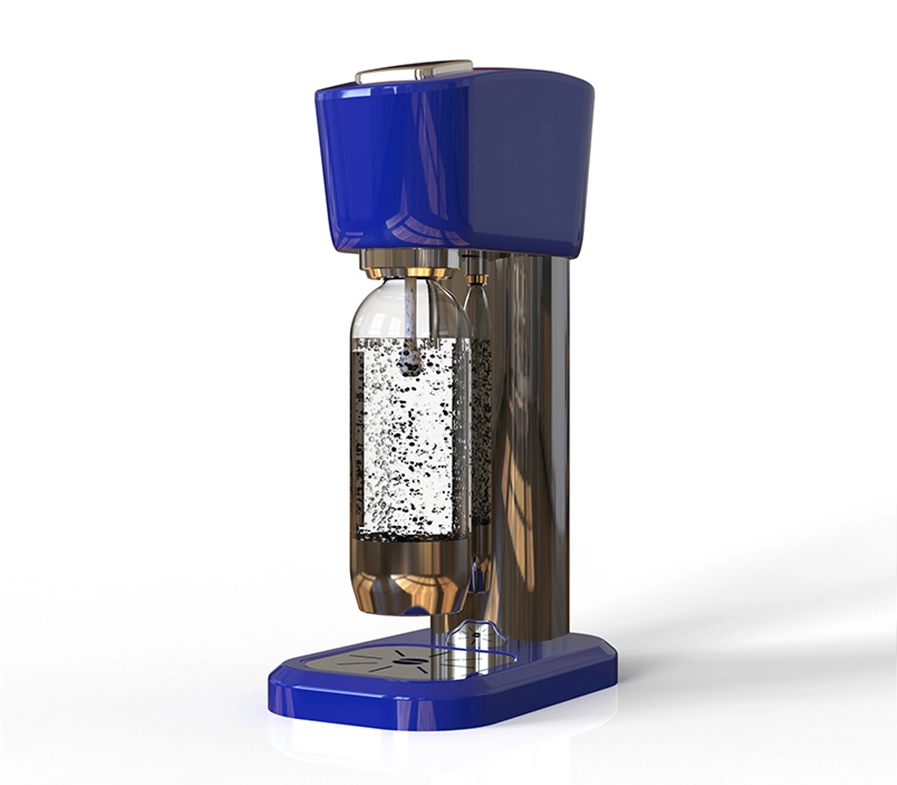
X1 — stainless body, design-led colors
The X1 is the design-led stainless model: a stainless steel body with a chrome button, manual operation, automatic pressure release and dual safety valves, in white, red and black finishes. The standard set is the machine plus a 1000 ml PET bottle with stainless base and cap. Body dimensions 17 × 27 × 44 cm. Where the G15 is bought on engineering detail, the X1 is bought on the shelf photograph — it gives design-led and gift-channel ranges a metal machine without moving to the G15's specification level. Full details sit on the X1 model page and in the stainless steel soda maker range.
View modelCompare the Models
| Model | Body | Operation | Standard set | Best fit |
|---|---|---|---|---|
| G15 | Full 304 stainless steel | Manual press, automatic release | Machine + 1 L PET bottle | Premium and online brands |
| G15 Pro | Full 304 stainless steel | Manual press, detachable head | Machine + 1 L PET bottle (steel base and cap) | Premium lines carbonating juice and water |
| G720 | Plastic, lever design | Lever (handle runs carbonation and release) | Machine + PET bottle set | Volume distributor lines |
| G3 | Plastic, LED carbonation indicator | Top press | Machine + 1000 ml PET bottle | Feature-led retail lines |
| G9 | Plastic | Top press | Machine + 1000 ml PET bottle | Clean, minimal retail lines |
| G8 | Plastic, detachable head | Top press | Machine + 1000 ml PET bottle (500 ml optional) | Buyers wanting a removable carbonating head |
| G830 | Plastic, detachable washable head | Lever | Machine + 1 L PET bottle | Lever action plus a washable head |
| X1 | Stainless steel | Manual button | Machine + 1000 ml PET bottle (steel base and cap) | Design-led stainless lines |
Two one-to-one comparisons are published for the pairs buyers ask about most: G720 vs G15 for the plastic-versus-stainless decision, and the body-family guide linked in the overview above. Every model page carries its own full specification; this page's job is the shortlist, not the datasheet.
Standard on Every Model
Buyers comparing ranges from several factories usually find the differences hidden in components. Ours are stated once, here, because they do not vary by model or by price point.
The valve is CNC-machined brass on all eight models. The valve assembly is the pressure heart of a soda maker — it meters the gas, holds the seal and carries the safety functions. On every Cheersoda model, plastic or stainless, that assembly is brass, machined on CNC equipment. It is the single most consequential component decision in the range, and it is not downgraded on the volume models.
Two safety valves, not one. Every model carries dual safety valves, so pressure relief does not depend on a single component. Pressure release after carbonation is automatic on the G15, G3, G8 and X1, and on the G720 the same handle that carbonates also vents the pressure before the bottle comes off; the G15 Pro shares the G15 platform, and the G830 shares the lever layout.
Food-contact materials are a defined set. The parts that touch water and gas across the range — silicone seals, PET, PA11, POM and ABS components, aluminium and stainless steel — are the materials covered by the food-contact test reports named in the quality section below. When a buyer asks "what touches the drink," the answer is a list, not an assurance.
No model needs power to carbonate. There are no motors, pumps or heating elements anywhere in the range, which removes electrical certification from your import file entirely. The only cells in any model are the indicator cells on the G3 and the optional G720 Pro, and they run a display — nothing else.
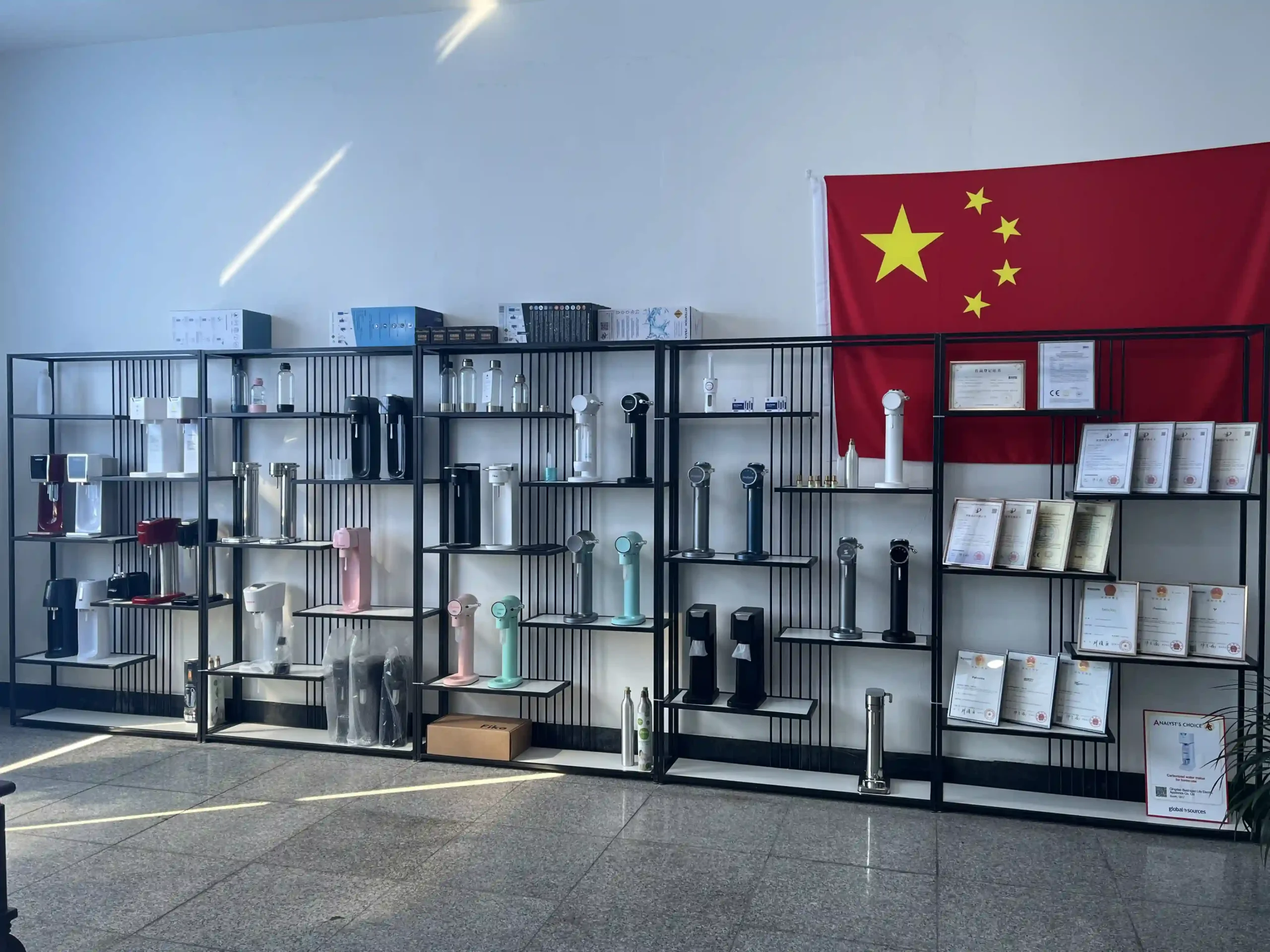
Eight models in production. One cylinder standard.
Request a Model RecommendationBottles and Carbonation Accessories
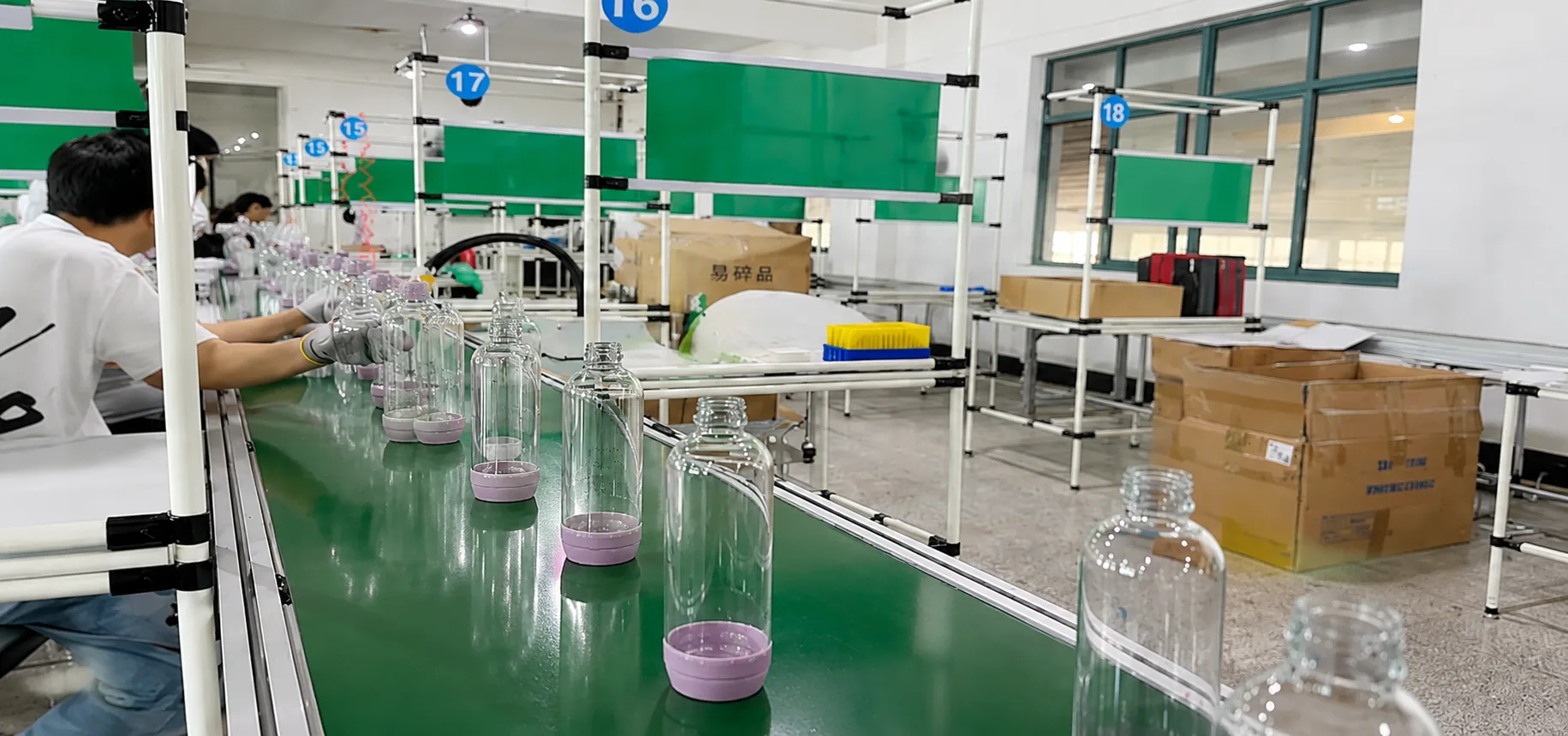
A soda maker program is sold as a set, and the set is planned here — not at the loading dock.
PET bottles — 500 ml and 1000 ml, BPA-free
Every model in the range works with BPA-free PET bottles in 500 ml and 1000 ml. Bottle planning is part of the machine specification: which size ships in the box, whether a second bottle is packed as a retail add-on, and which base and cap finish the set carries (plastic on the G3 set, stainless base and cap on the G15 Pro and X1 sets). Bottle choice changes carton size and shipment weight, so it is fixed before quotation. The full bottle range, materials comparison and bottle-only supply sit on the soda maker bottles page.
Bottles are also the range's repeat-purchase line. Households own a machine for years and replace and add bottles along the way, so retailers and distributors typically plan bottle supply as a continuing accessory program beside the machine program — spare bottles in both sizes, packed for retail, on the same order cycle as the machines. If your channel sells the installed base rather than only the first purchase, tell us at quotation stage and the bottle program is structured with the machine program from the start.
304 stainless steel bottle
For premium sets and accessory shelves, the 304 stainless steel bottle (82 × 82 × 264 mm, 324 g before packaging) is supplied as its own line, packed 40 to a carton. It uses the same bottle interface as our machines and also fits Aarke-type machines built to the same interface, which makes it a practical accessory for buyers whose installed base is mixed. It is sold as an accessory and replacement line alongside machine orders or on its own; the bottles page above carries the specification.
Empty CO2 cylinders
The machines are only half of a carbonation business; the cylinder circuit is the other half. We supply 0.6 L empty CO2 cylinders with the threaded TR21-4 valve standard the whole range uses, shipped and declared as 100% empty for transport. Cylinders are ordered alongside machines for bundle programs, or as a standalone supply line for distributors building a refill or exchange pool. Details and supply structure are on the empty CO2 cylinder supply page, and the CO2 cylinder compatibility guide settles the threaded-versus-Quick-Connect question before it costs anyone a sample round.
Valves, connectors and spare parts
The CNC brass valve at the heart of every model is also available as a component: valves and connectors are sold separately to OEM buyers and component customers, and a soda maker spare parts line — caps, seals, nozzles and service components — supports the machines after sale. If your business is components or after-sales rather than complete machines, start with the valve and connector supply page and tell us the part family you need.
Buyer Scenarios: Who Picks What
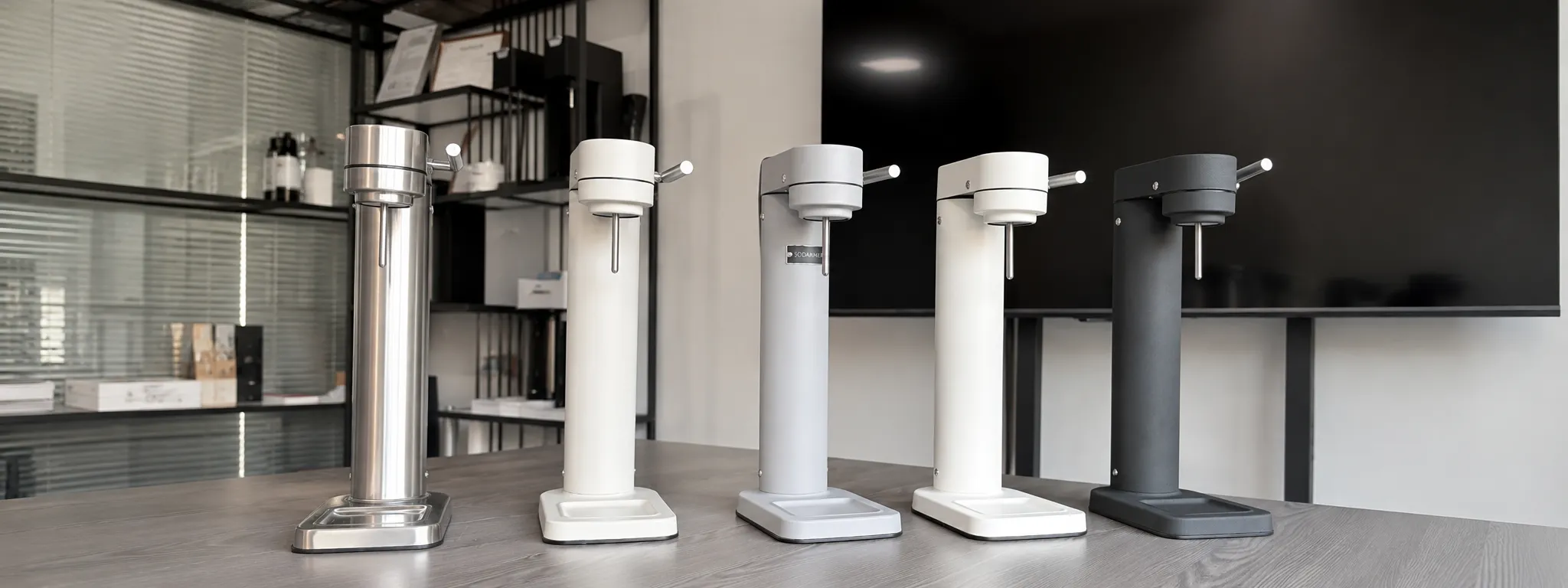
Premium and online brands start at the G15, or the G15 Pro when juice drinks are part of the pitch. The engineering detail — brass valve, removable steel nozzle, pressure-controlled carbonation — is what survives a review page.
Volume distributors start at the G720. A Brazilian distributor built repeat volume of roughly 2,000 units a year on the G720 and G15 together, on public molds, with local-language manuals and barcode planning — the volume route is a proven one, not an experiment.
Feature-led retail lines take the G3, where the LED carbonation indicator is the shelf story, or the G9 where the story is a clean front and a sharper price point on the same platform.
Buyers who prioritise cleaning and service split between the G8 (top press) and the G830 (lever, washable head). This is the one decision in the range that should be made by handling both operations, and samples of the pair are a normal request.
Design-led and gift channels take the X1 — stainless presence and color choice, without the G15's engineering-led specification.
Buyers validating a market use the trial route: a trial order on an existing model, in near-market packaging, before the 300-unit branded run. A Uruguayan buyer validated the category with a 300-unit trial order of the G3 before planning branded volume.
Accessory-led buyers — bottle, cylinder and parts customers — skip the machine sections entirely; the accessories block above is their range.
Customization and OEM Routes
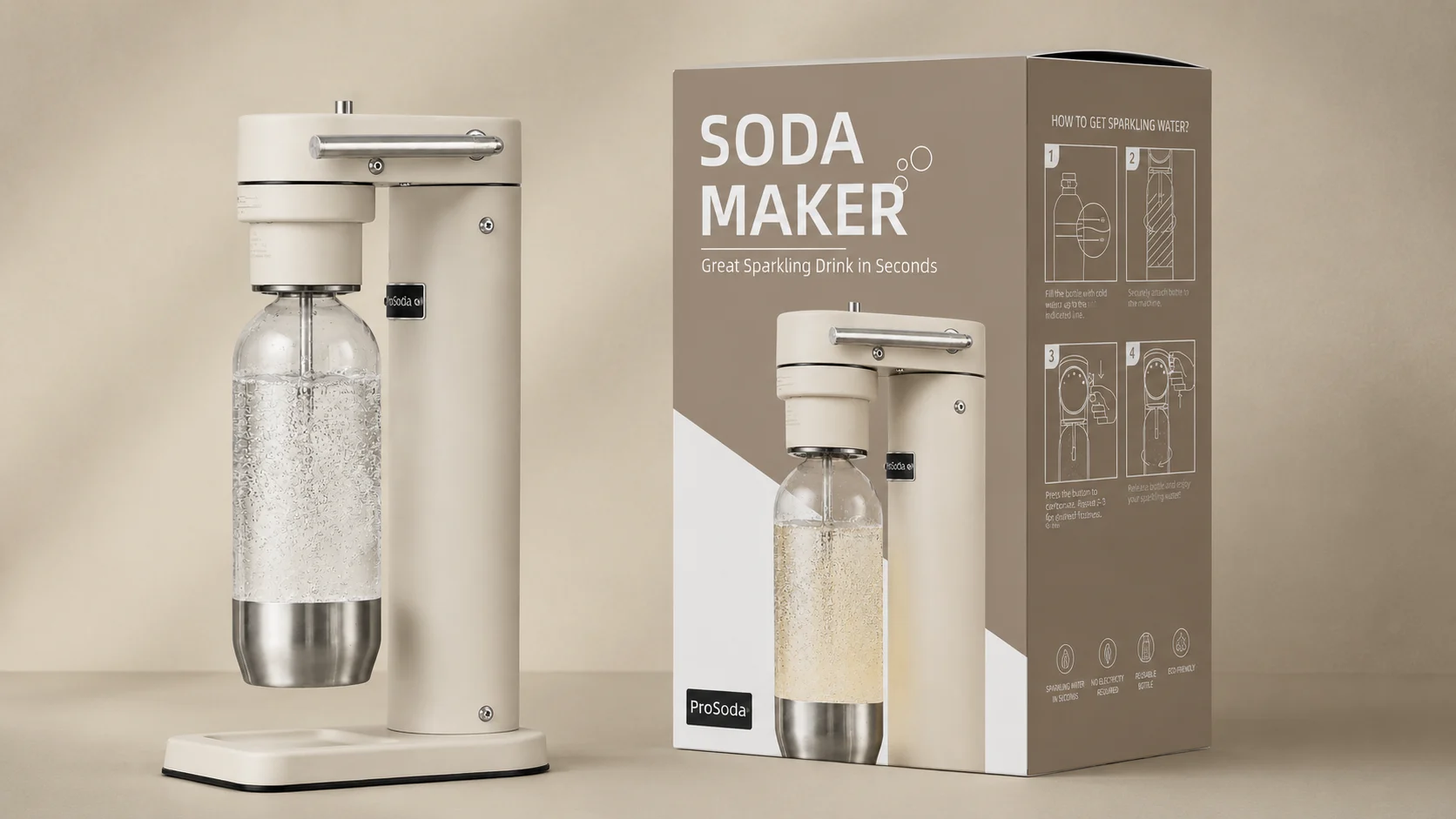
Everything on this page can carry your brand. The summary: logo on machine, box, manual and carton; body, button and trim colors from existing colors or matched to your reference; retail color box artwork (custom boxes print from 300); manual in your market's language; EAN/UPC barcode and SKU labels; carton marks; and the bottle and accessory set planned as part of the specification. Exclusivity is available per model and per market, confirmed case by case.
The full program — scope, process, terms and the eight deliverables a private label project is specified against — is on the private label soda maker page. Buyers whose project changes the machine itself, or who are weighing routes, should read the OEM soda maker manufacturer page and the OEM vs ODM comparison before sampling; this page stays on what the range is, those pages cover what your project makes of it.
OEM Manufacturing
Model selection, product development, tooling and production support for appliance brands and distributors.
Review OEM CapabilityPrivate Label Soda Maker
Logo application, color matching, retail box, manual, barcode and carton-mark coordination.
Review Private LabelManufacturing Process
Product structure review, molding, assembly, packaging and shipment preparation.
View ManufacturingQuality and Compliance
Review inspection procedures and confirm which documents apply to your model, materials and destination market.
Review Quality SupportPacking and Logistics
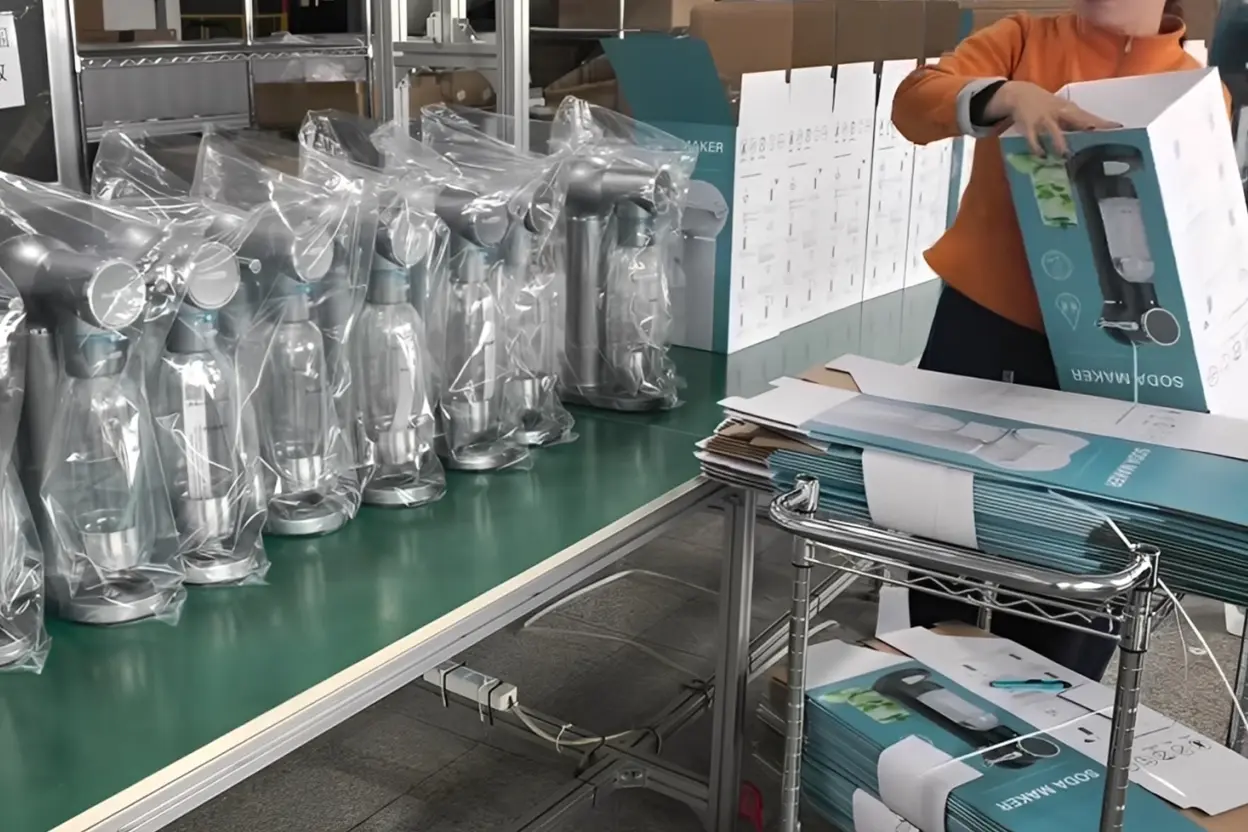
Reference packing data for planning (color box = retail box; container loading excludes CO2 cylinders):
| Model | Color box (cm) | Units / carton | Outer carton (cm) | Carton GW / NW (kg) | 20GP | 40GP | 40HQ |
|---|---|---|---|---|---|---|---|
| G15 / G15 Pro | 27 × 17.5 × 44 | 4 | 56 × 38 × 48 | 10.9 / 9.6 | 960 | 1,920 | 2,400 |
| G720 | — | 6 | 65 × 49 × 49 | ≈12 / — | 1,000 | 2,028 | 2,460 |
| G3 / G9 | 27 × 15.5 × 45 | 6 | 57 × 49 × 48 | 12.3 / 10.8 | 1,056 | 2,208 | 2,760 |
| G8 | 23.5 × 21 × 45.5 | 6 | 65 × 49 × 48 | 12.8 / 11.3 | 1,026 | 2,088 | 2,520 |
| X1 | 29 × 19.5 × 46.5 | 5 | 60 × 50 × 50 | 13.8 / 12.5 | 840 | 1,680 | 2,100 |
G830 packing is confirmed per order configuration at quotation. The worked example from the G720 note above: 500 G720 units pack as 84 cartons at about 13.2 CBM — a part-load inside a 20GP, which is why first orders often pair machine volume with bottles and cylinders to use the container properly. The container loading guide works through the arithmetic for mixed loads.
Customs references for your forwarder: HS 8422309090 for the machines, 3923300000 for PET bottles, 7323.93.00.00 for stainless steel bottles and 7613009000 for empty cylinders, which travel declared 100% EMPTY. Shipments run on EXW, FCA, FOB or DDP terms agreed per order, and the commercial terms are the same across the range: T/T only, 30% deposit, balance before shipment.
One discipline protects every shipment in this section: your exact packing list — model, bottle set, cylinder count, carton configuration — is confirmed in writing before quotation and checked again against the packed goods before release. Container figures in the table are planning references for standard sets; the number your forwarder books against is the confirmed list for your order, not a table value.
Quality Control and Compliance
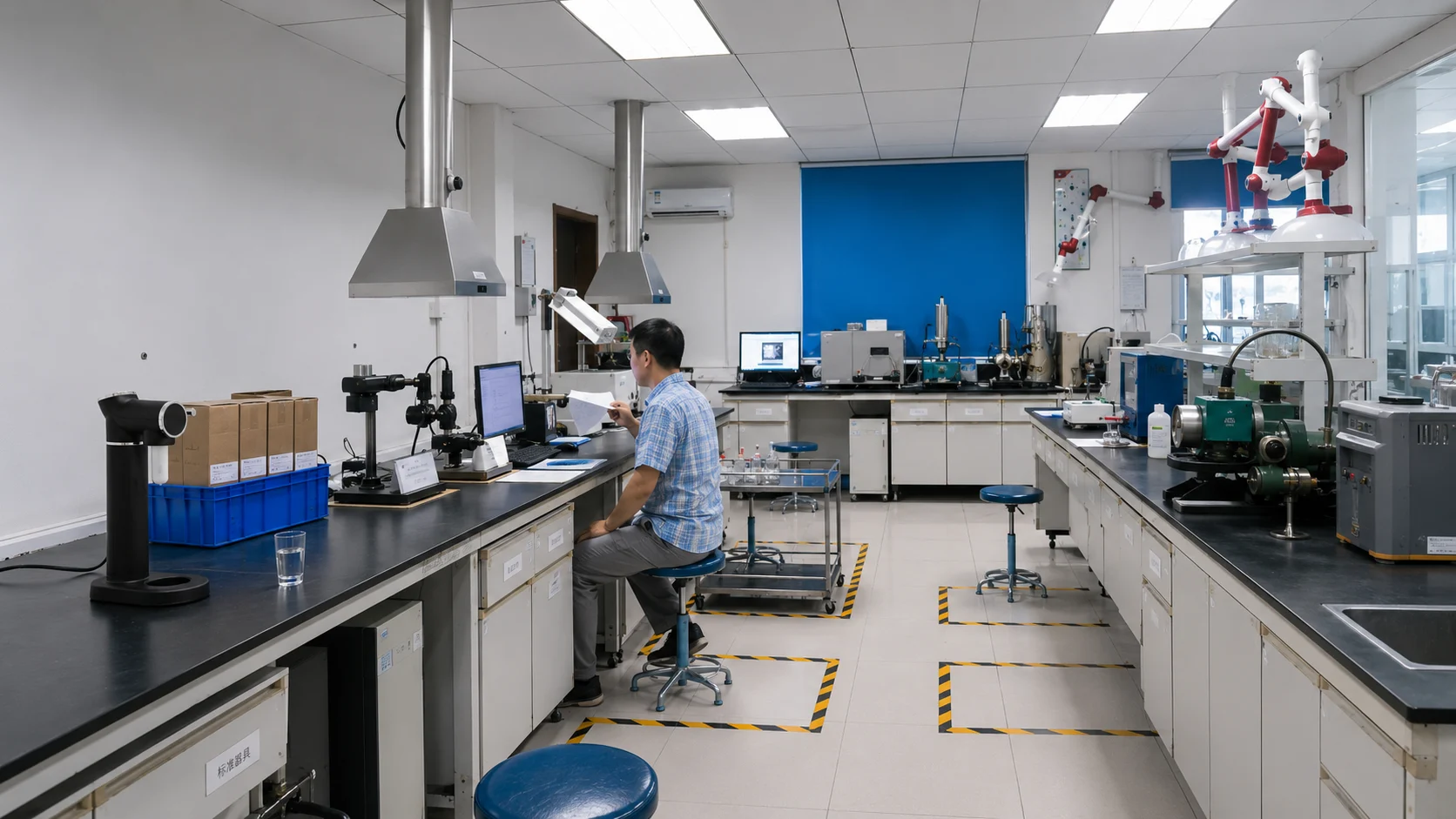
A range page is where buyers decide whether the factory behind the models is real, so the test protocol is stated here in full.
Four inspection stages. Incoming material inspection, in-process checks during assembly, a comprehensive test stage and final inspection before packing, run by a 35-person team that includes 4 dedicated QC staff on three production lines with six injection machines.
Every unit is tested. Each finished machine passes a 100% wet leak test and a high-pressure gas check before packing — unit by unit, not sampled. Alongside it, batches are sampled for burst testing. The burst discipline rests on the factory's own high-pressure laboratory, built in 2018, where valve assemblies are tested at three times standard working pressure before a design enters production. Cartons go through the factory's packaging drop-test routine, because a crushed retail box loses the sale the machine already won. The process in full is on the manufacturing page.
Documents. CE and RoHS documentation and food-contact testing cover the range: the food-contact materials of the machines — silicone, PET, PA11, POM, ABS, aluminium and stainless steel — have been tested by TÜV to LFGB, EU FCM and US FDA 21 CFR food-contact standards, with dedicated reports for the G15 and G15 Pro; RoHS conformity is documented across the model range, and whole-machine certificates are held at the factory. The factory itself is ISO 9001:2015 certified. Document availability is confirmed per model and per destination market at quotation — name the file your channel requires and we confirm it by name. The full position is set out on the quality and compliance page, with background answers on the frequently asked questions page.
The wider record. Between November 2024 and September 2026 the factory shipped 35 wholesale orders totalling 12,065 machines to buyers in 14 countries; its Alibaba storefront carries a 4.94 rating with 100% on-time shipment across its order history.
How to Choose: Five Steps
Fix the body family by price point. Stainless (G15, G15 Pro, X1) for premium shelves, plastic (G720, G3, G9, G8, G830) for volume. This decision is your retail price architecture, not a quality ranking — the valve, safety and test standards are the same across both families.
Fix the operation and the head. Top press (G3, G9, G8) or lever (G720, G830); fixed head, detachable head (G15 Pro, G8), or detachable and washable (G830). If your shortlist holds one of each, sample the pair — this is a handling decision.
Confirm the cylinder standard in your market. Threaded TR21-4 / M18×1.5 supply and refill networks are the go condition for the whole range. If your channel is built around Quick Connect, stop here and talk to us before sampling — no adapter bridges that gap.
Fix the set. Bottle size (500 ml / 1000 ml), one bottle or two, cylinders in the bundle or separate, and the accessory and spare-parts list. The set decides carton size, weight and container use.
Sample, approve, order. Samples are ready in 7 days. Approval of the physical sample is the gate before production: first orders run 35–45 days from approval, repeat orders 30 days.
To start, send: your target market and channel, the model or the price point you are aiming at, estimated quantity, the bottle and cylinder set you have in mind, and your launch date. Partial information is fine — we reply within one business day and name what is still needed.
Frequently Asked Questions
What does the Cheersoda product range include?
What is the MOQ, and can I start smaller?
What is the difference between the G15 and the G15 Pro?
Which models are top-press and which are lever?
Which CO2 cylinders do the machines fit?
Do any models need a battery?
Which bottles come with the machines, and are they BPA-free?
Can I buy bottles, cylinders or spare parts without machines?
Can the range carry my brand?
How do samples and lead times work?
What payment terms do you accept?
What quality testing does each machine pass?
Which documents cover the products?
What warranty covers the range?
Start Your Product Shortlist
Send us the market, the channel and the model — or just the price point you are aiming at, if the model is still open. You will get a reply within one business day: a model recommendation against your price point, the sample timeline, and a formal quotation path for the set you described.
Cheersoda (Qingdao Baishigao Life Electric Appliance Co., Ltd.), No. 919 Chengkang Road, Chengyang District, Qingdao, China.
Written by Helen Ho, OEM Consultant — I work with importers and brands on the manufacturing side of their soda maker programs, and I review every model shortlist and project scope personally before a quotation is issued.
Request a Product Quote
Tell us the model and the volume you are planning. You will get a reply within one business day — a model recommendation, the sample timeline, and a formal quotation path.