OEM Soda Maker Manufacturer in Qingdao, China
OEM Quote Within 24 Hours. Send the model and quantity — a formal quote lands in your inbox within one business day. Sample Fast Track: samples ready in 7 days.
Cheersoda is the soda maker business unit of Qingdao Baishigao Life Electric Appliance Co., Ltd. — an OEM soda maker manufacturer in Qingdao, China, producing manual home soda makers for importers, distributors, supermarket brands and home appliance companies since 2015. Business evaluation samples, logo, color and packaging customization, and factory photos, videos and export documents are all available before you commit to a production order.
Program facts at a glance: MOQ 300 units per model · trial orders on existing models · samples ready in 7 days · first order 35–45 days after approvals · repeat orders 30 days · monthly capacity 20,000 units · ISO 9001:2015 certified plant · 1-year warranty · T/T terms.
From Your First Sample to a Branded Order
Start with a sample
For sample steps and timing, see our sample order guide. One-unit samples are available for business evaluation. We confirm the model, sample fee and freight before payment.
Request a sampleFor buyers who want the process in more depth, our OEM manufacturing guide for private label buyers explains each production and quality step in detail.
Confirm your MOQ
MOQ depends on the model, color and customization. Cheersoda's standard MOQ is 300 units. Share your expected quantity - we will confirm the suitable options and quotation.
Discuss quantity and pricingPlan your launch
First orders normally take about 35–45 days with logo and packaging arrangements; repeat orders about 30 days. Custom tooling has a separate schedule. Shipping time is additional.
The final timeline is confirmed against model availability, artwork approval, payment and production arrangements.
Two Starting Points for Your Product Range
Compare these models first, or ask us to recommend a model for your target market.
G720 - Standard Range
A starting option for distributors and private-label market testing. Review the model specification and request quantity-based pricing.
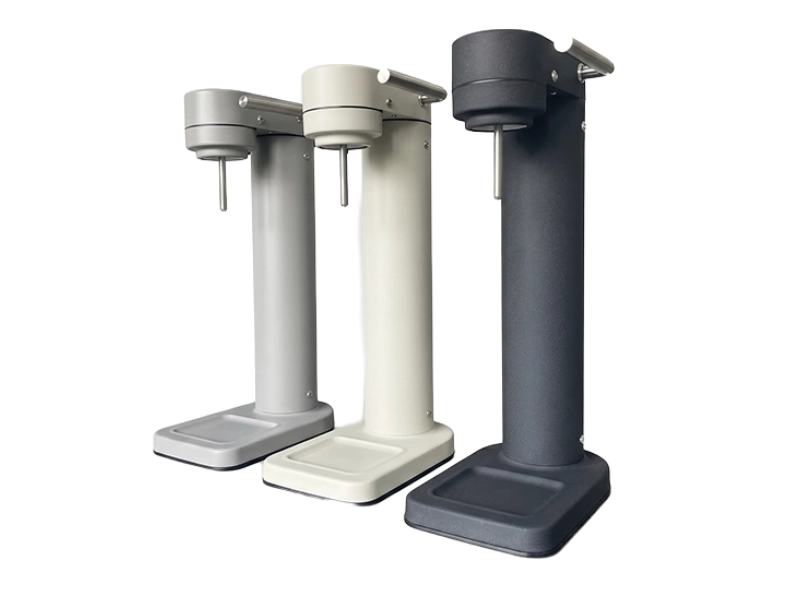
G15 - Stainless Steel Range
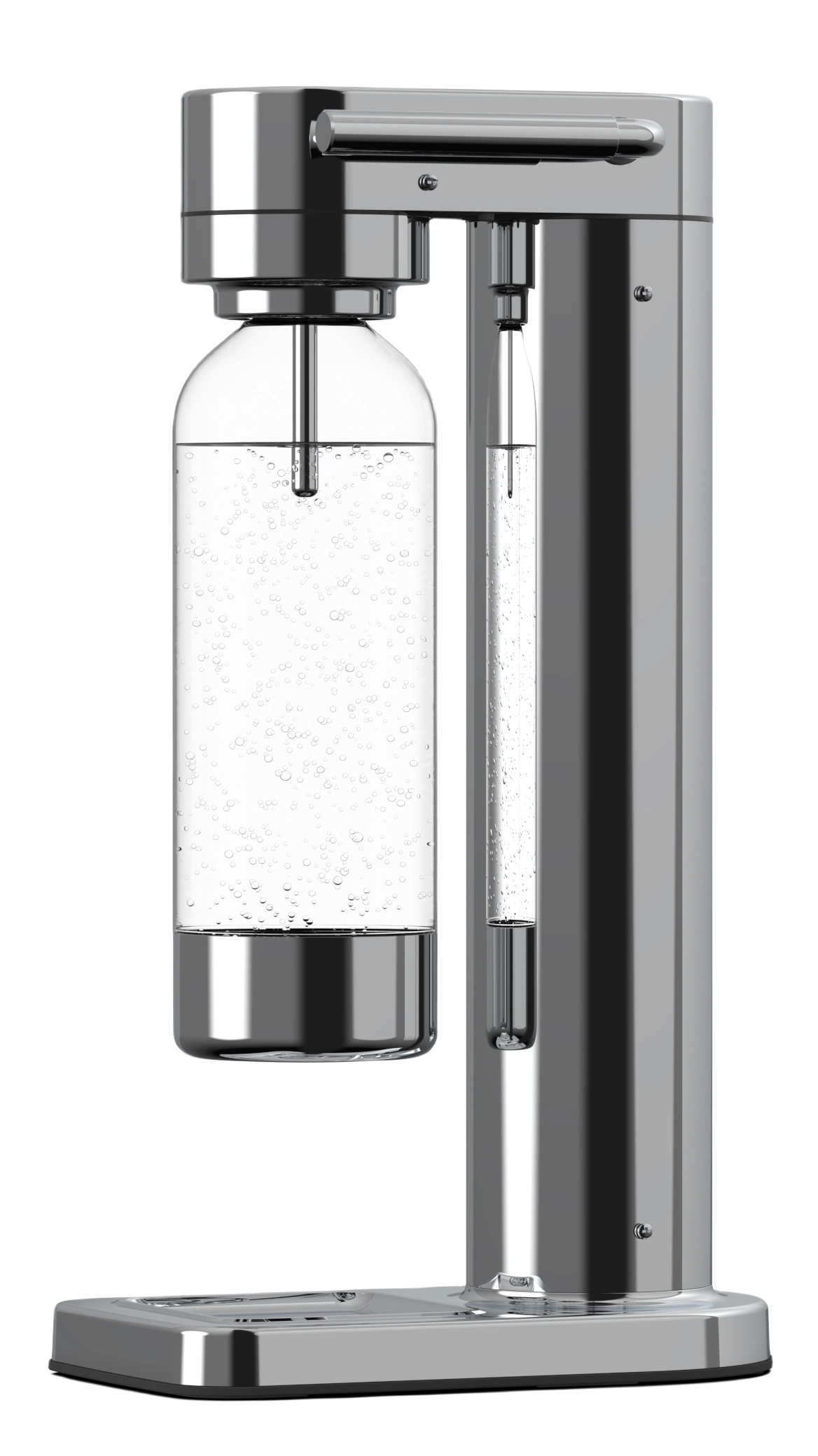
A stainless steel housing option for brands building a higher-value kitchen appliance range.
Meet Your Manufacturing Partner in Qingdao
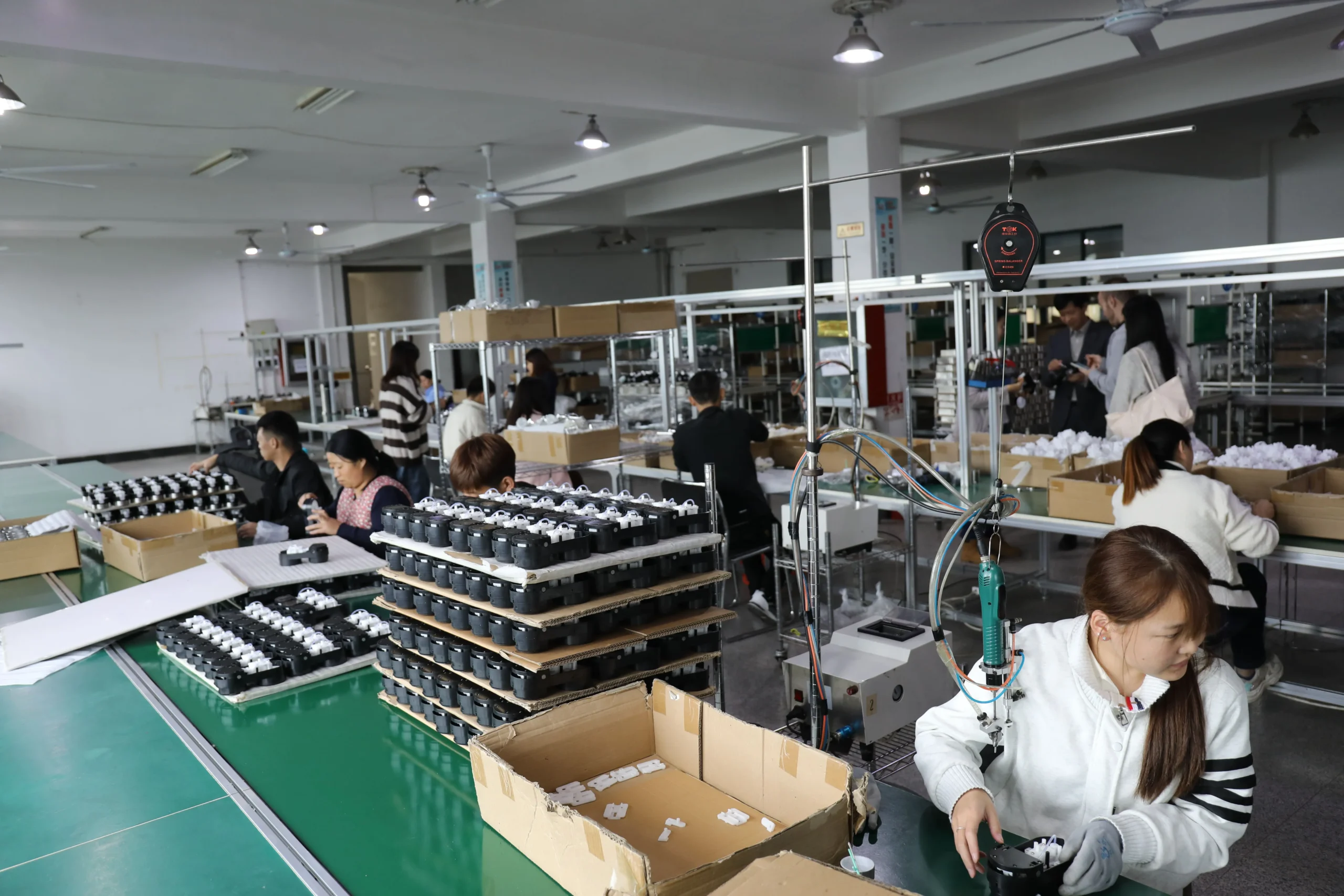
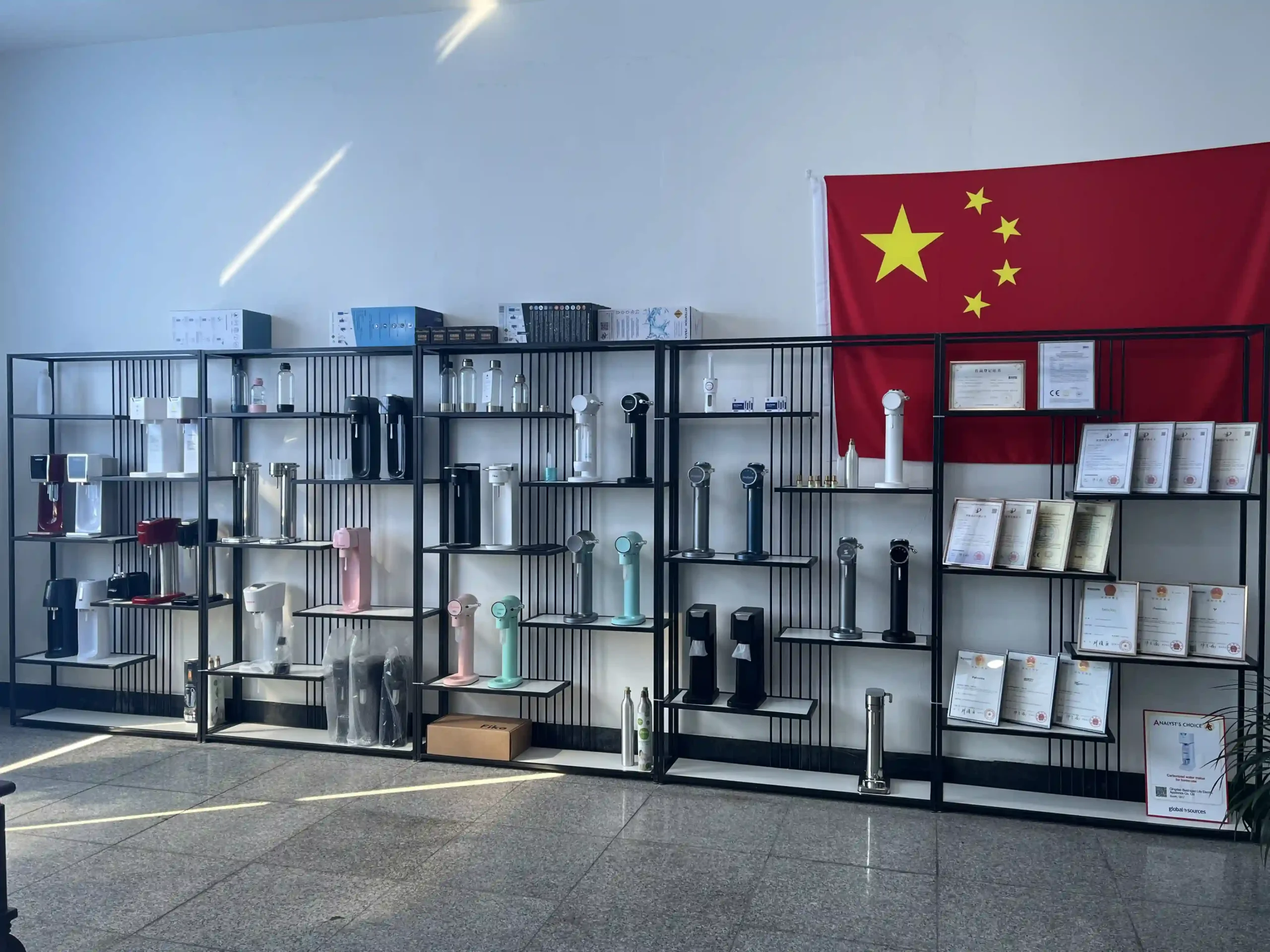
OEM buyers need to know who is actually handling the product, sample review, packing, and shipment. This section shows the factory environment behind Cheersoda's soda maker OEM projects.
- Cheersoda is the soda maker business unit of Qingdao Baishigao Life Electric Appliance Co., Ltd.
- The factory supports OEM/ODM soda maker projects for importers, distributors, private-label brands, and appliance companies.
- Buyers can review factory photos, sample room, assembly area, and video evidence before discussing samples or trial orders.
- We support commercial production orders and business evaluation samples. Local cylinder filling must be arranged separately in the destination market.
OEM Soda Maker Manufacturing for Home Appliance Projects
An OEM soda maker manufacturer is a factory that produces home soda makers to a buyer's brand and specification — model selection, logo, colors, packaging and documents — on its own production lines and under its own quality system. The buyer owns the brand and the sales channel; the factory owns the tooling, the testing and the production risk.
That distinction decides how your project runs. An OEM order at Cheersoda is built on models in regular production, configured and branded to your specification, and released to the line only after a physical sample is approved. Structural changes and buyer-funded tooling are handled as ODM projects on the same factory floor. What you are evaluating on this page is the manufacturing side of that offer: the plant, the model range, the starting quantities, the sampling gate and the inspection protocol. Brand-layer programs run from the same factory — the scope summary further down this page sets out what is executed here and where the full branding workflow lives.
Why Buyers Source From a Manufacturing Factory
Production is in-house, not relayed.
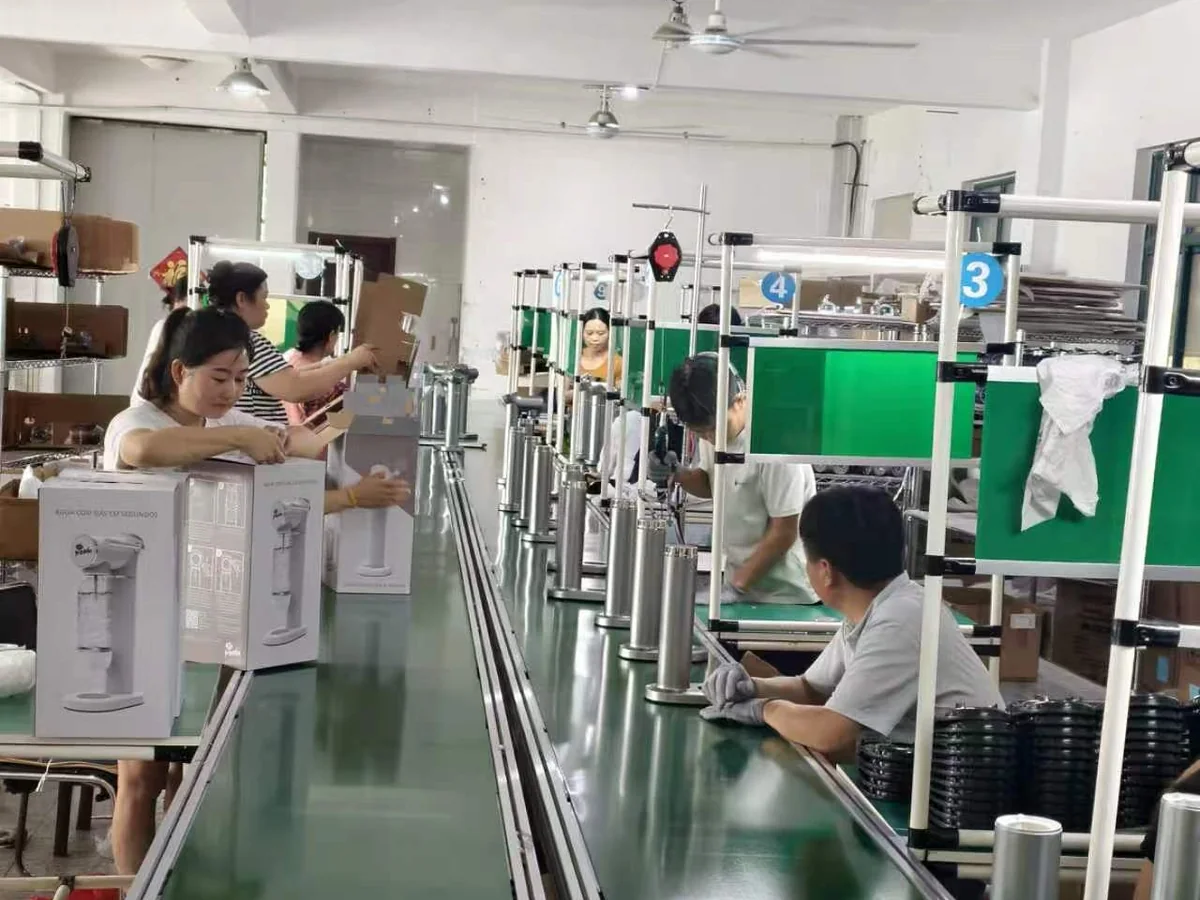
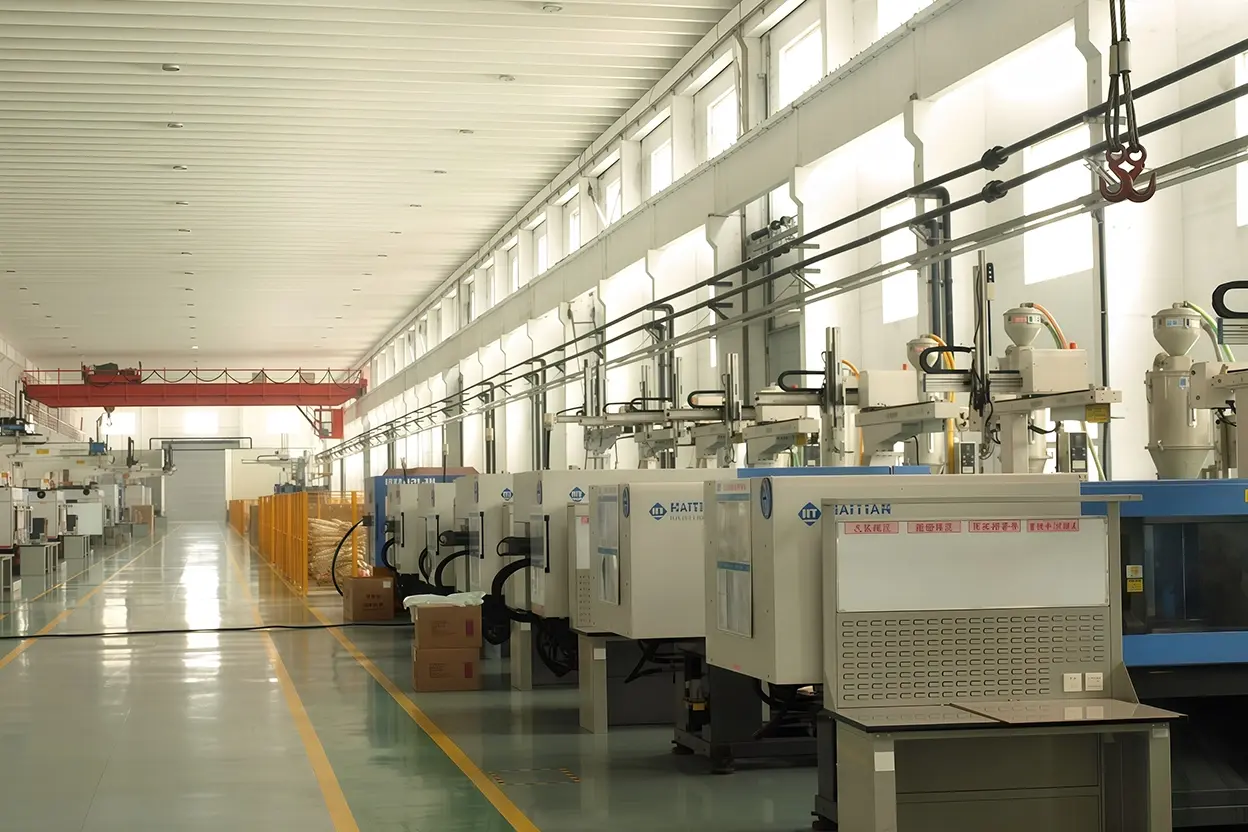
Injection molding, assembly and testing sit inside one Qingdao plant: six injection machines, three production lines, and the factory's own test laboratory. When your specification changes, the change is executed on the line — not forwarded to an unnamed subcontractor.
Pressure safety is tested, not asserted.
The factory built its high-pressure burst-test laboratory in 2018 and burst-tests valves at three times standard pressure. Every finished unit — not a sample from the batch — passes a wet leak test and a high-pressure air test before packing.
The documents exist before you commit.
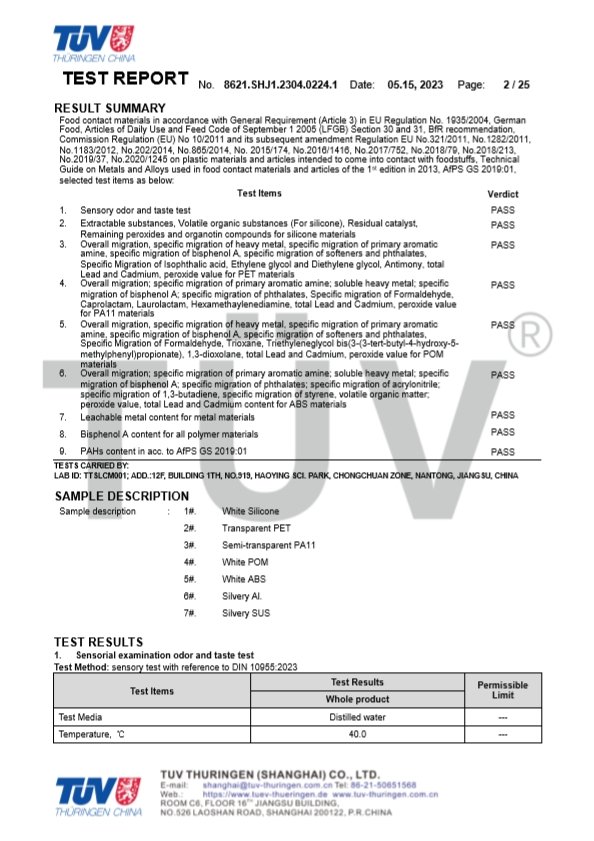
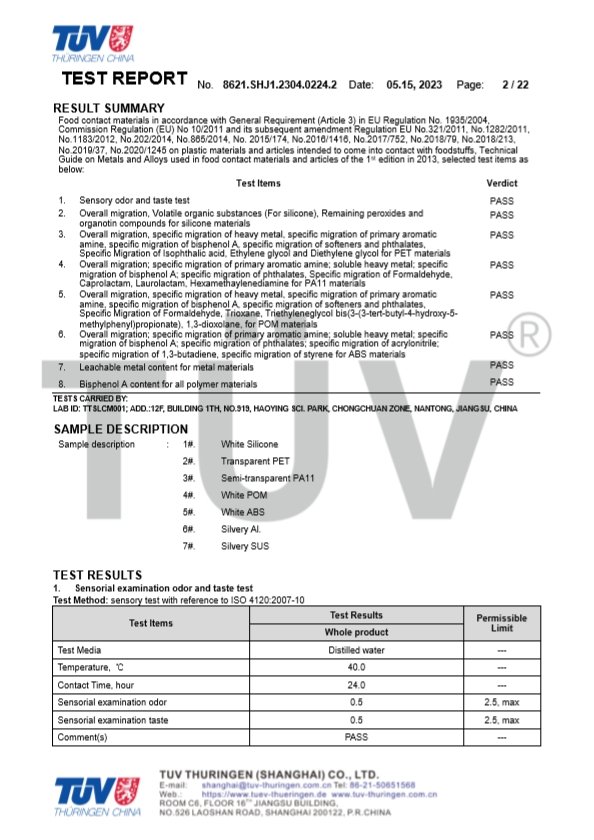
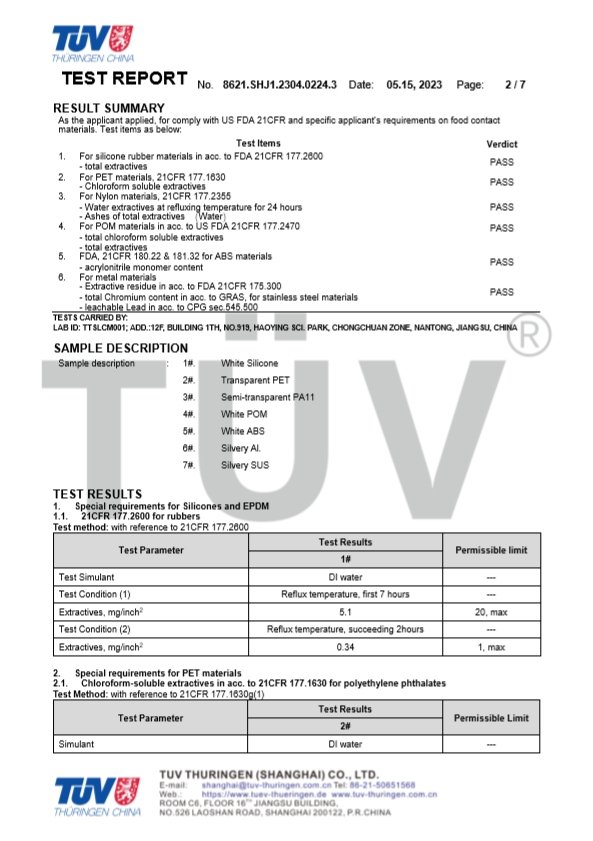
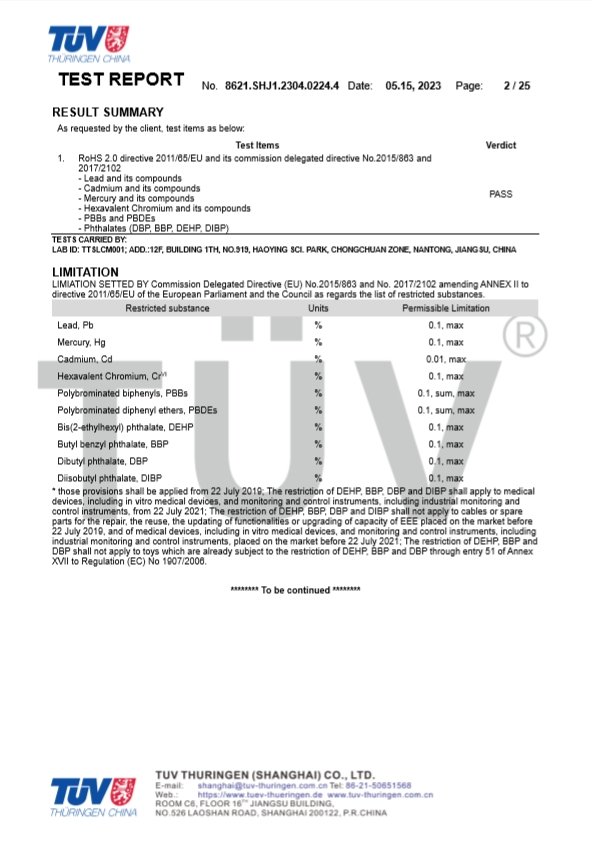
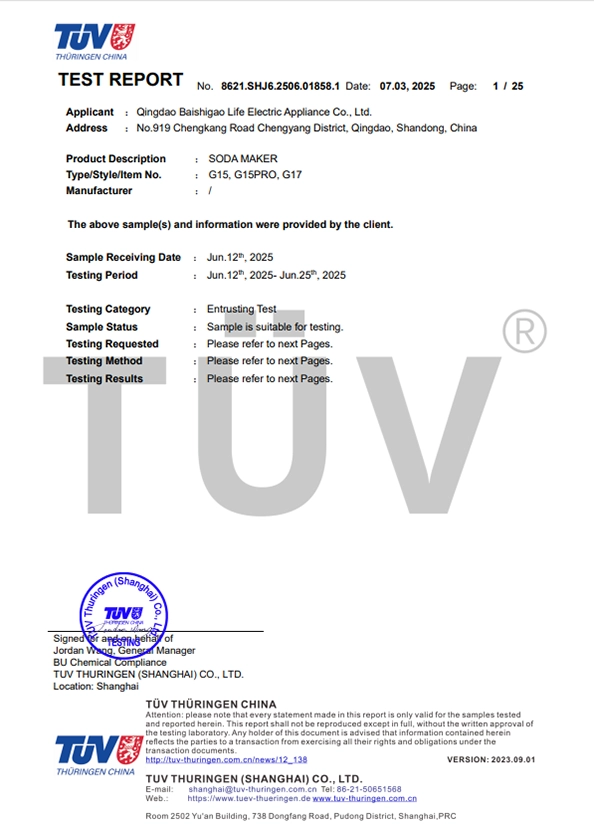
Food-contact materials across the range carry TÜV test reports, RoHS conformity is documented per model family, and the compliance section below states exactly what can be requested for your selected model and market. You review files that exist today.
Starting quantities are stated up front.
One MOQ across the range, a defined trial-order route, and samples ready in 7 days. You can plan a launch calendar from this page instead of discovering the numbers across five emails.
Repeat orders run on filed approvals.
The approved sample, the change list and the drawing version are kept as the production reference, so a reorder is a scheduled production slot — 30 days — rather than a new negotiation.
The Factory Behind the Program
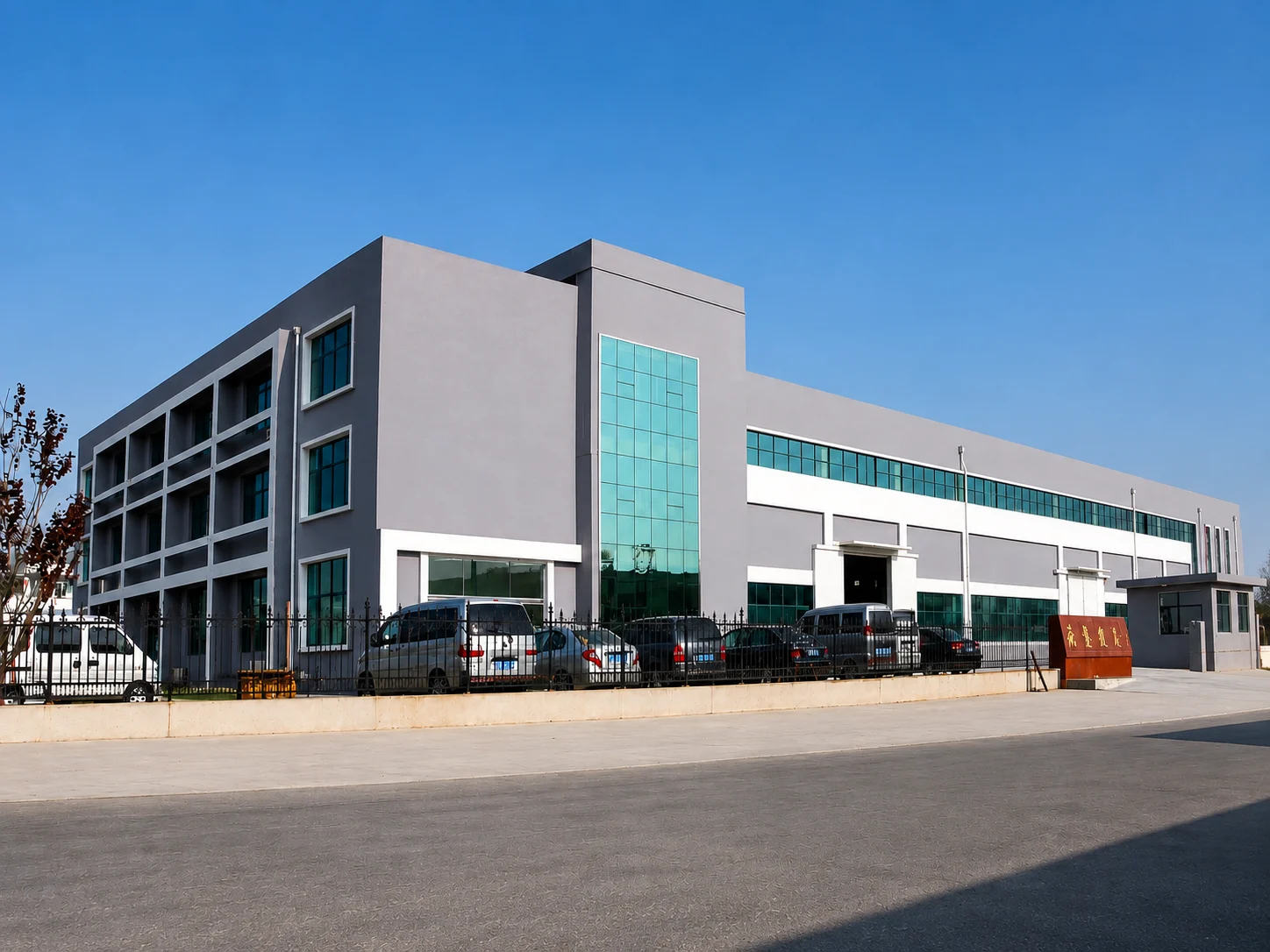
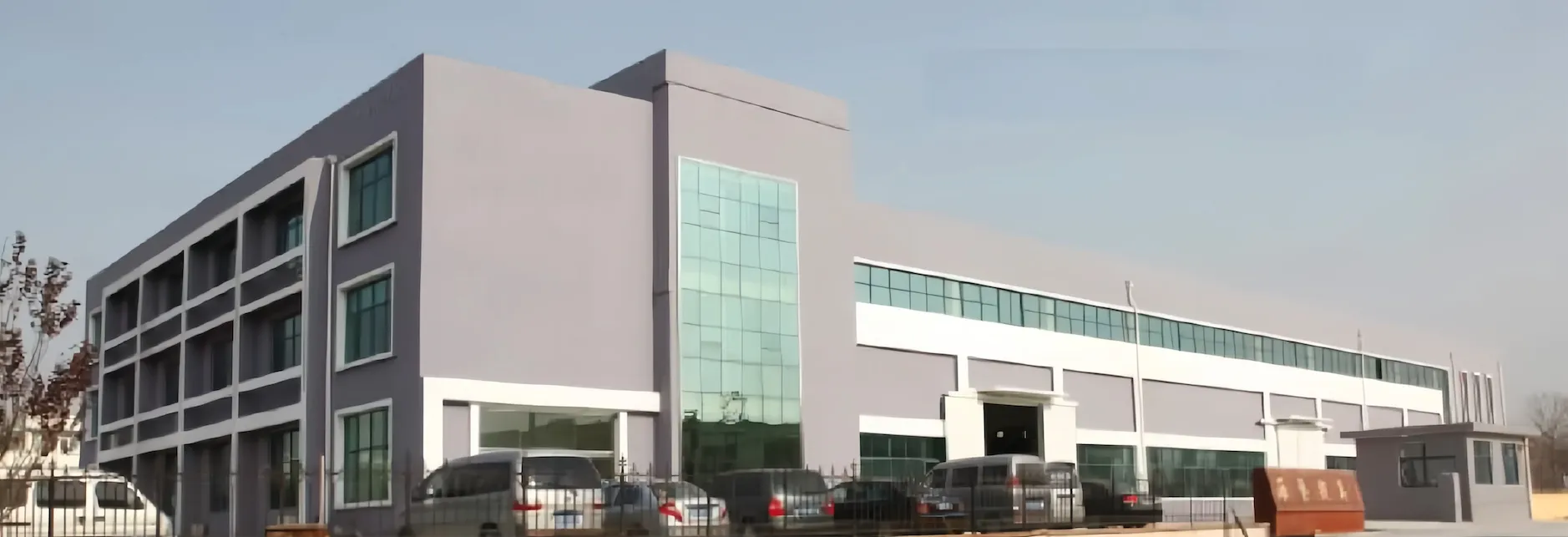
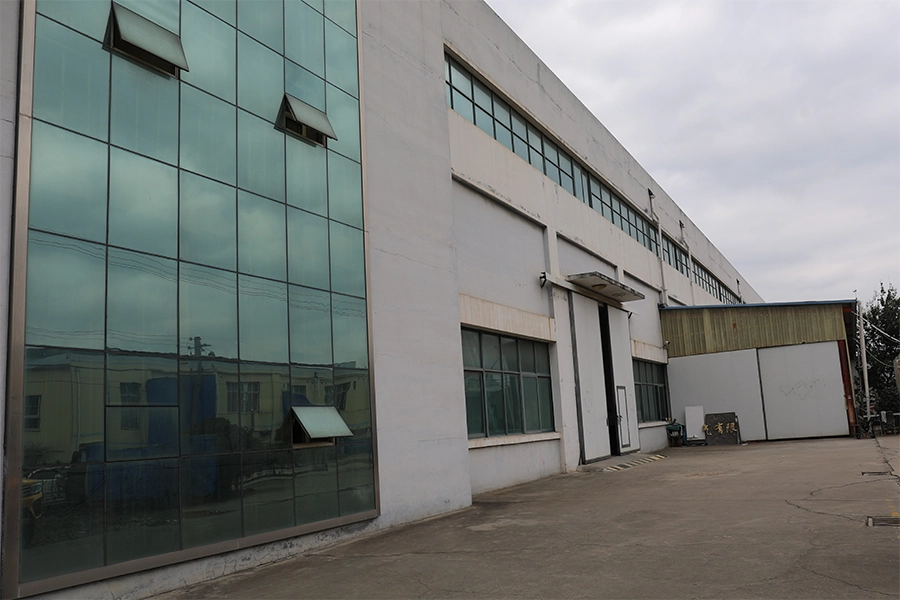
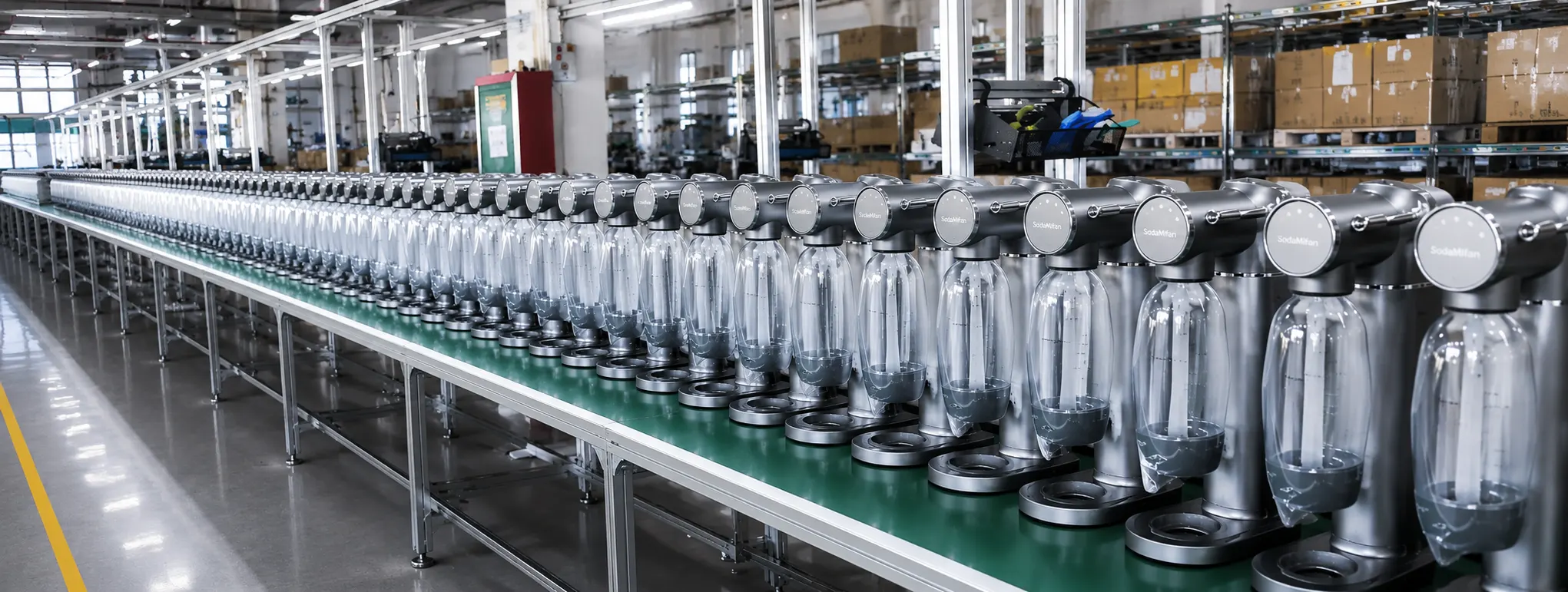
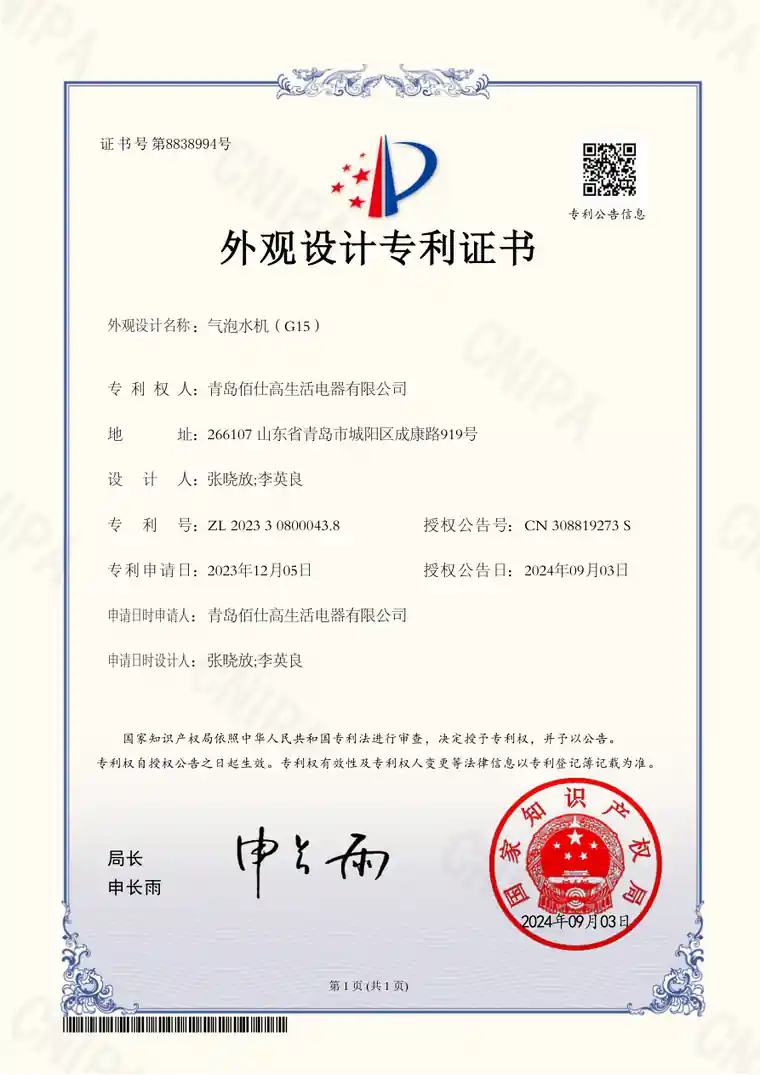
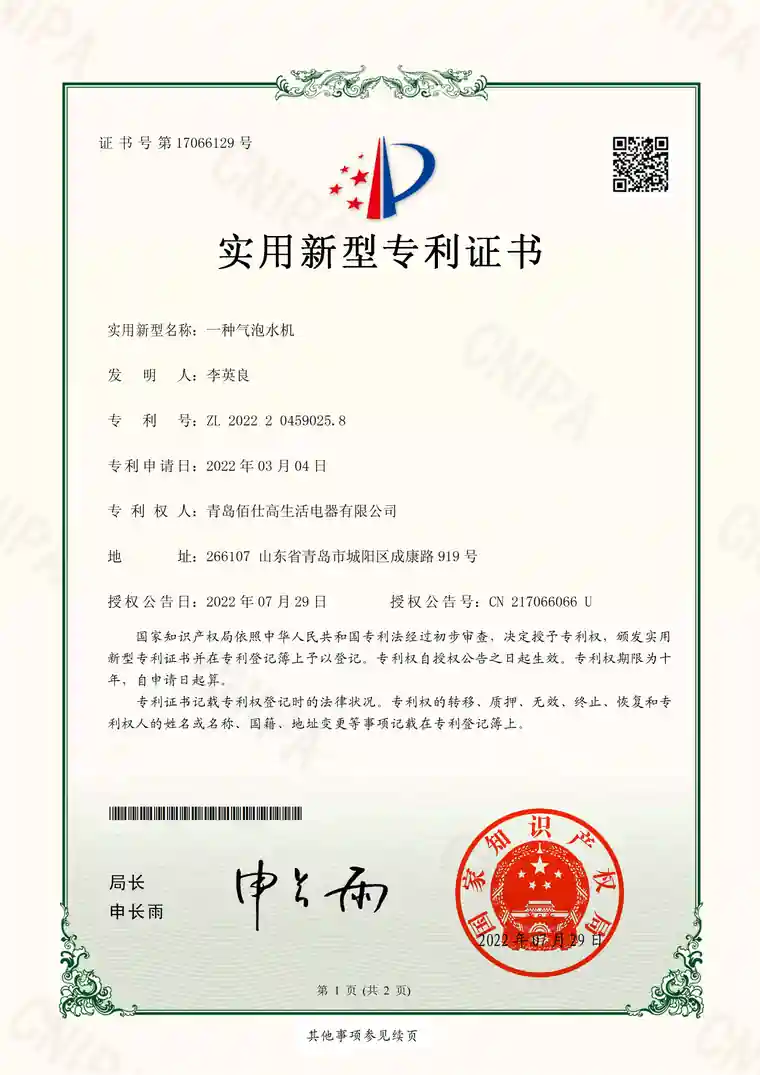
The program runs in a 15,500 m² plant in Chengyang District, Qingdao: three production lines, six injection machines, a 35-person team including four QC staff, and a monthly capacity of 20,000 units. The factory has produced home carbonation appliances since 2015 and operates under an ISO 9001:2015 quality system. It also holds its own soda maker patents, including a design patent on the G15 — the models in this program are the factory's own designs, not assembled copies.
Buyers can review the plant before any project discussion: line layout, assembly and testing areas, and packing operations are documented on the manufacturing and factory capability page, and the factory video page carries the assembly, pressure-testing, molding and packing footage. Two of the order records in the evidence section below began with the buyer visiting this plant in person.
What the capacity figures mean for your order: a 300-unit branded run and a 3,000-unit distributor order are both small against 20,000 units of monthly capacity, so production slots are not the constraint on your launch date. The approval chain is — sample sign-off, artwork release and carton confirmation govern the schedule, which is why this page sets those gates out in full.
OEM and ODM Soda Maker Projects
Cheersoda provides structured manufacturing support based on MOQ, tooling feasibility, and specific project requirements. Our engineering and production teams assist buyers through the following scopes:
- ■Standard model selection: Buyers can compare body material, bottle capacity, and valve structure.
- ■Logo and color customization: Align housing and button colors with brand identity.
- ■Private label packaging: Confirm retail box format and instruction manual layouts.
- ■Bottle and accessory matching: Select compatible PET/stainless bottles and cylinder valves.
- ■Sample confirmation: Review physical samples against target market requirements before mass production.
- ■Export documentation support: Coordinate compliance files, packing lists, and commercial invoices.
- ■Mass production planning: Structured assembly based on confirmed specifications.
- ■Quality inspection: Rigorous wet leak testing and packing checks.
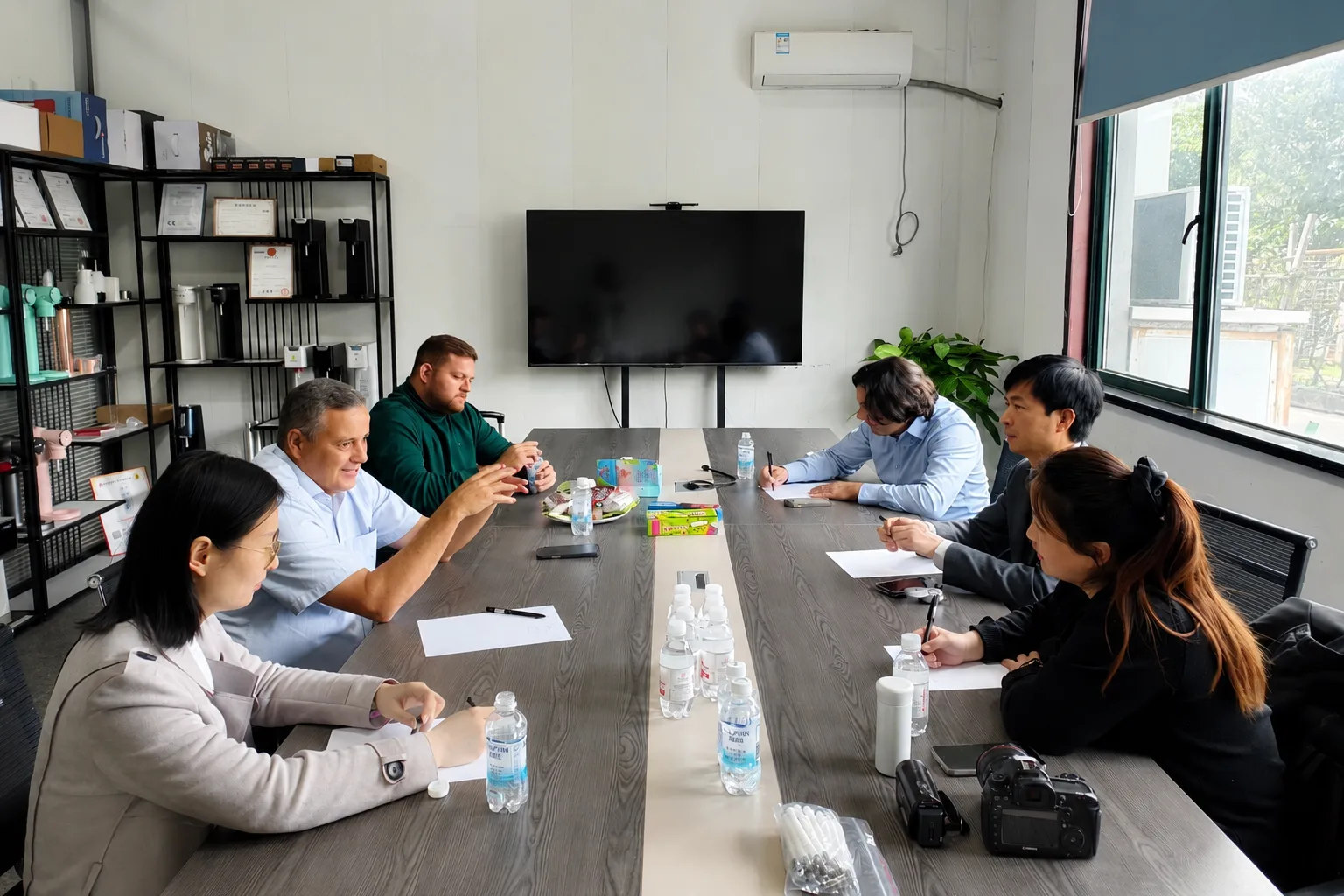
OEM vs ODM Support
OEM Project
Suitable for buyers with existing product direction, brand packaging, and channel plans.
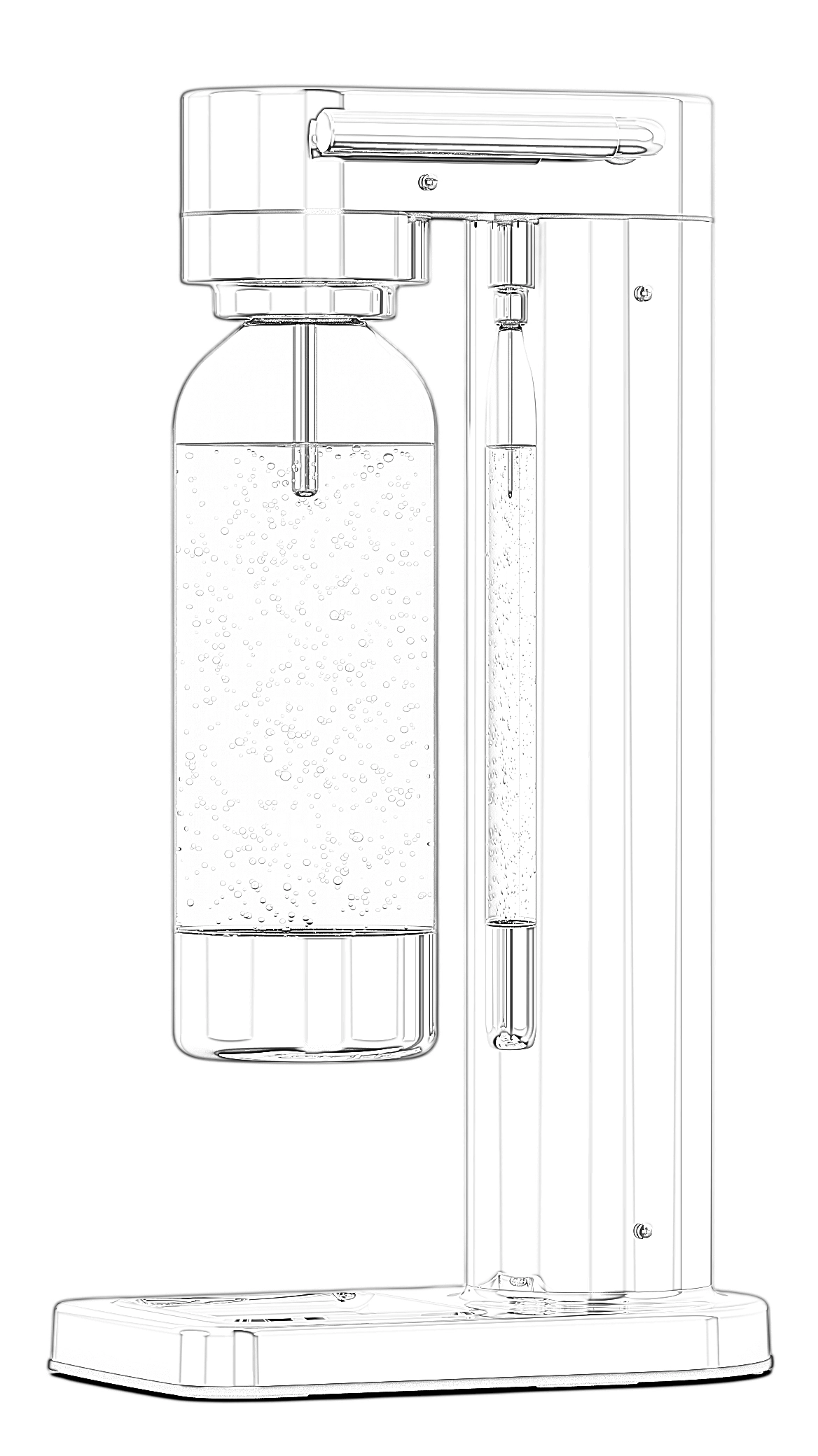
ODM Project
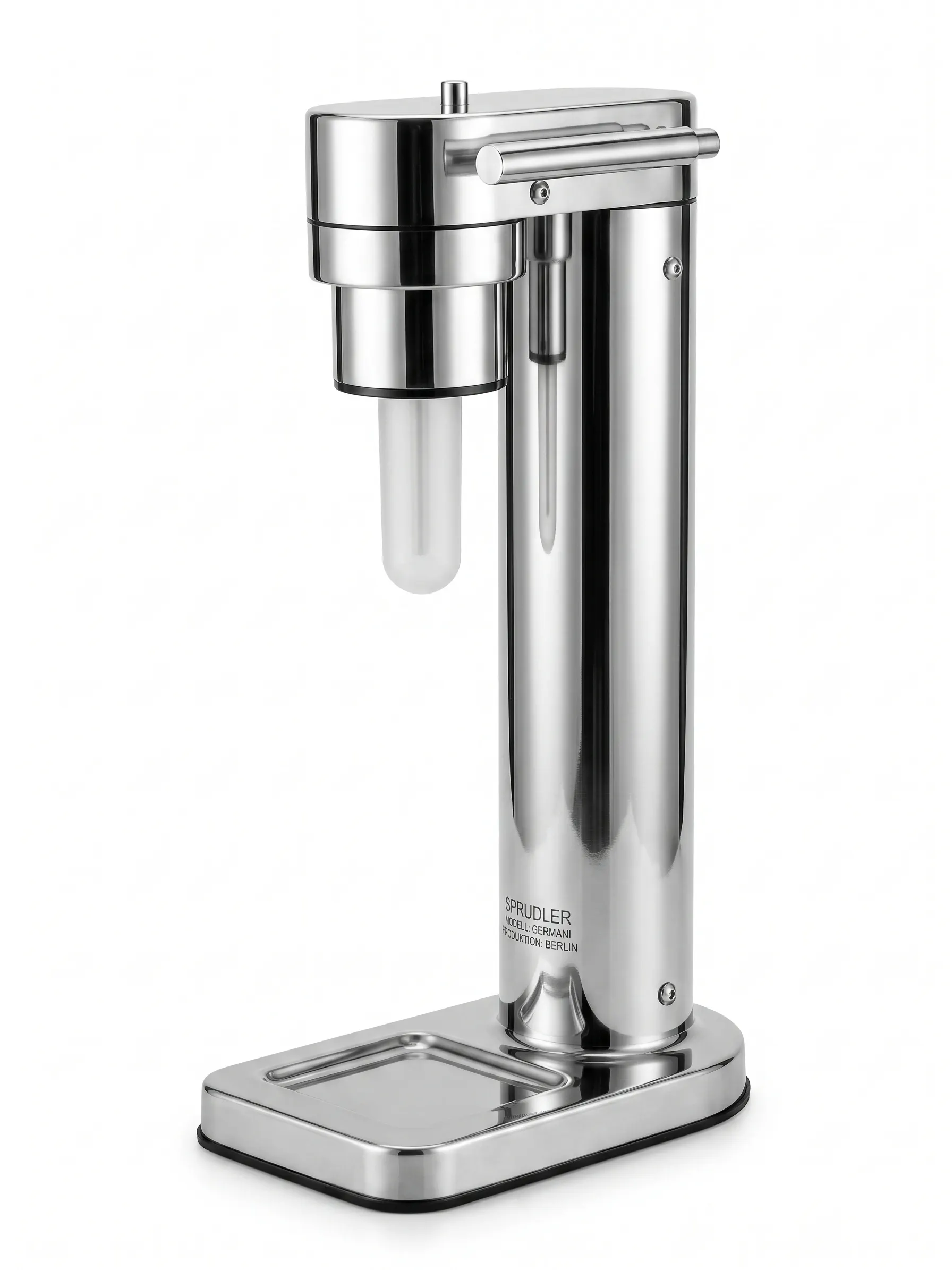
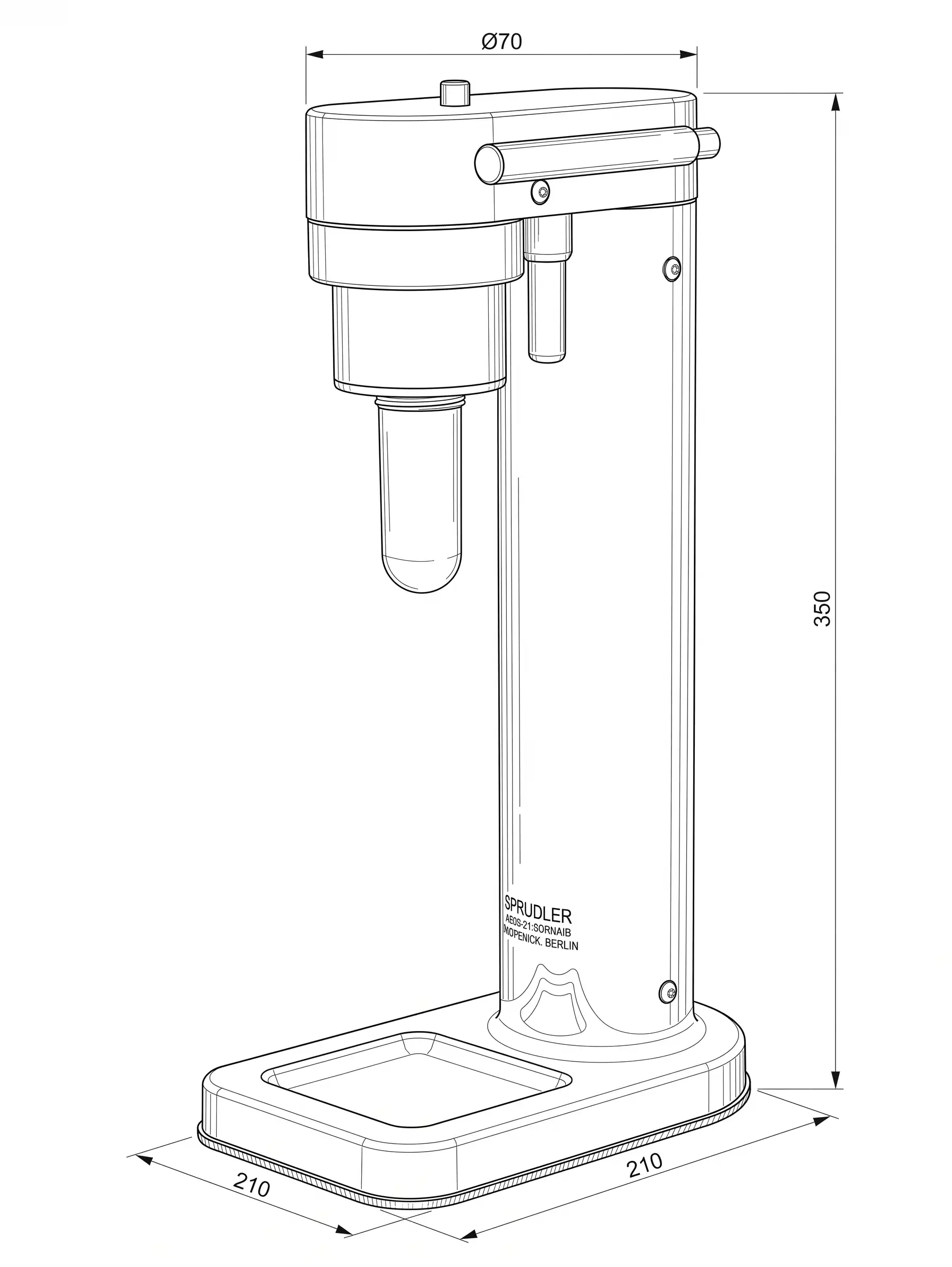
Best for buyers needing adjustments to appearance, packaging, or accessory combinations based on existing structures. Private tooling depends on order volume, structure feasibility, and development budget.
Model Range at a Glance
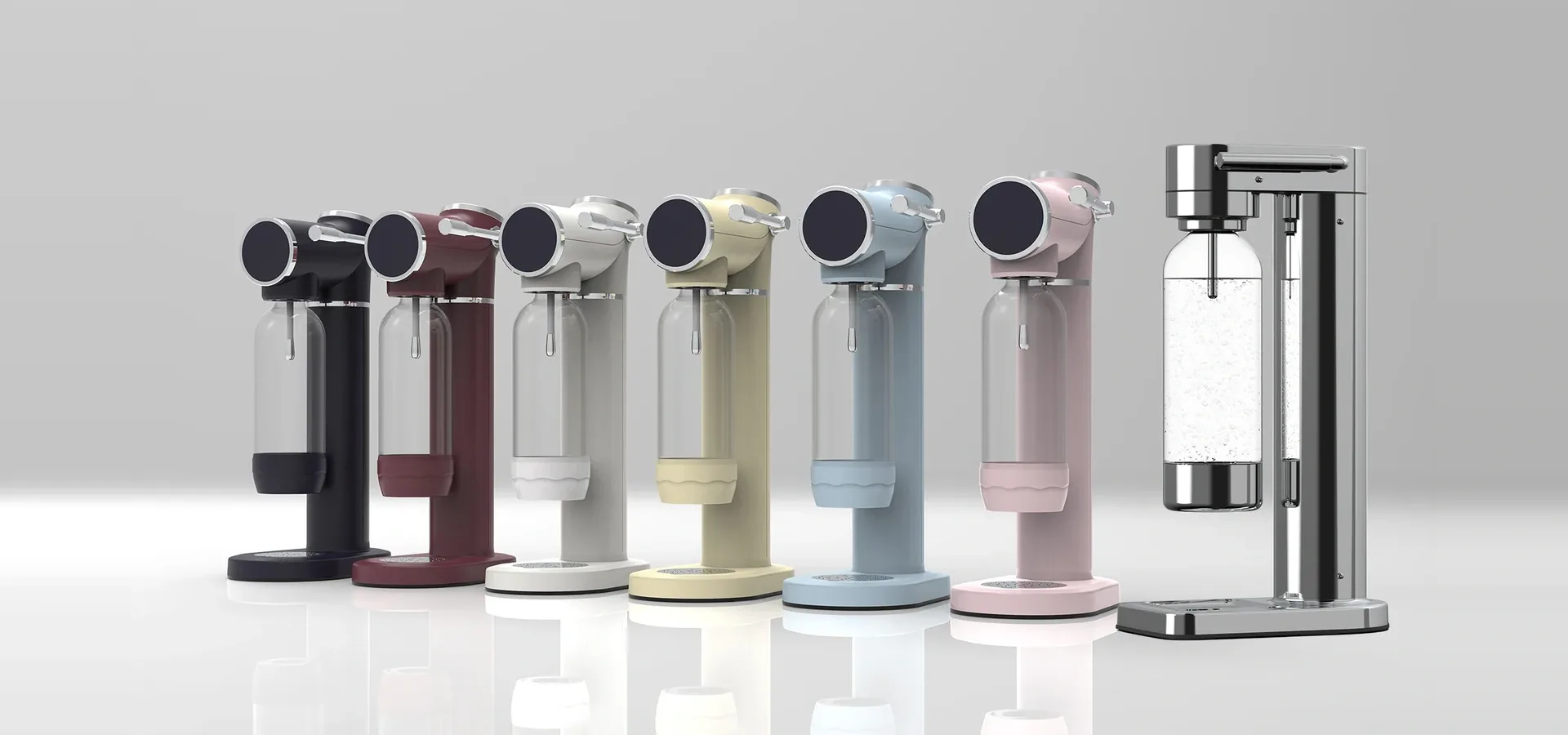
Every model in the range is a manual machine — no power supply, no plug — with a CNC brass valve and dual safety valves. Buyers compare body material and operation first; the table below is the whole range on one screen.
| Model | Body | Operation | Standard set | Best fit |
|---|---|---|---|---|
| G15 | Full 304 stainless steel | Lever | Machine + 1 L PET bottle | Premium and online brands |
| G15 Pro | Full 304 stainless steel | Lever; detachable head with juice / pure-water modes | Machine + 1 L PET bottle with steel base and cap | Premium lines needing a removable head |
| G720 | Plastic | Lever | Machine + PET bottle set | First OEM orders and distributor volume |
| G3 | Plastic | Top press; LED carbonation indicator | Machine + 1 L PET bottle | Feature-led retail lines |
| G9 | Plastic | Top press | Machine + 1 L PET bottle | The G3 platform without the LED indicator |
| G8 | Plastic | Top press; detachable head | Machine + 1 L PET bottle | Buyers wanting a removable carbonating head |
| G830 | Plastic | Lever; detachable washable head | Machine + 1 L PET bottle | Lever action plus a washable head |
| X1 | Stainless steel | Manual button | Machine + 1 L PET bottle with steel base and cap | Design-led stainless lines |
The G15 stainless steel soda maker anchors the premium end — full 304 stainless body, a removable one-piece 304 stainless nozzle and a pressure-ready sound signal. The G720 lever soda maker is the standard starting point for distributor programs, and the G3 top-press soda maker adds an LED carbonation indicator for shelf differentiation. The full model range index and the wider stainless steel soda maker range carry full specifications per model.
Choosing Between Stainless, Lever and Top-Press
Three decisions settle most model selections. Body material sets your shelf position: full 304 stainless (G15, G15 Pro) and stainless X1 support premium price points and design-led channels; the plastic range carries distributor and promotional volume. Operation sets the user experience your reviews will describe: lever models (G720, G830) carbonate with a horizontal pull; top-press models (G3, G9, G8) press from above. Head design settles cleaning and mode questions: the G8 and G830 share a detachable carbonating head — the difference is actuation, top-press against lever, and the G830 head is washable — while the G15 Pro head detaches and switches between juice and pure-water modes. If two models still look equal after those three decisions, the sample stage is where the difference shows: order one of each and let your team run the review checklist on both.
B2B Soda Maker Manufacturing Capability
Our facility in Qingdao is equipped to handle comprehensive assembly and testing processes for home carbonation devices. We focus on structural integrity and consistent performance for every production batch.
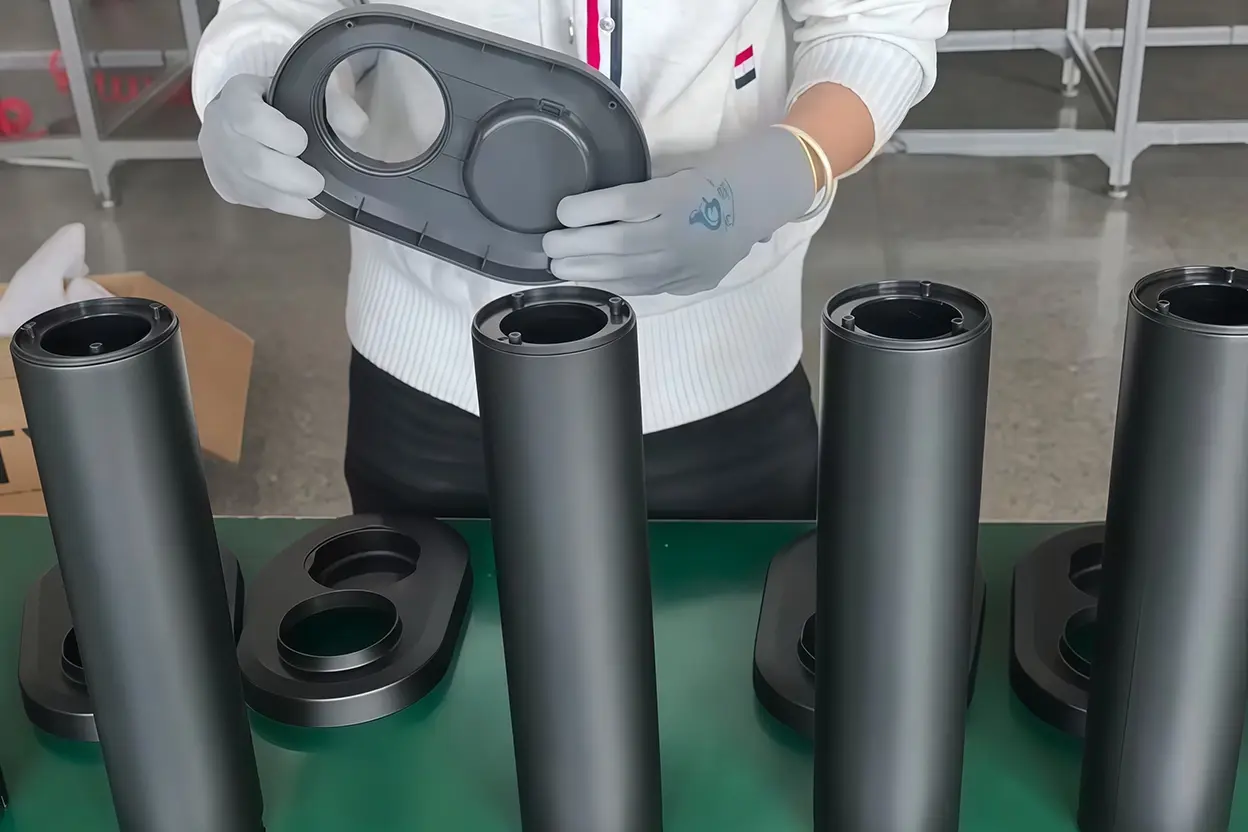
Component confirmation
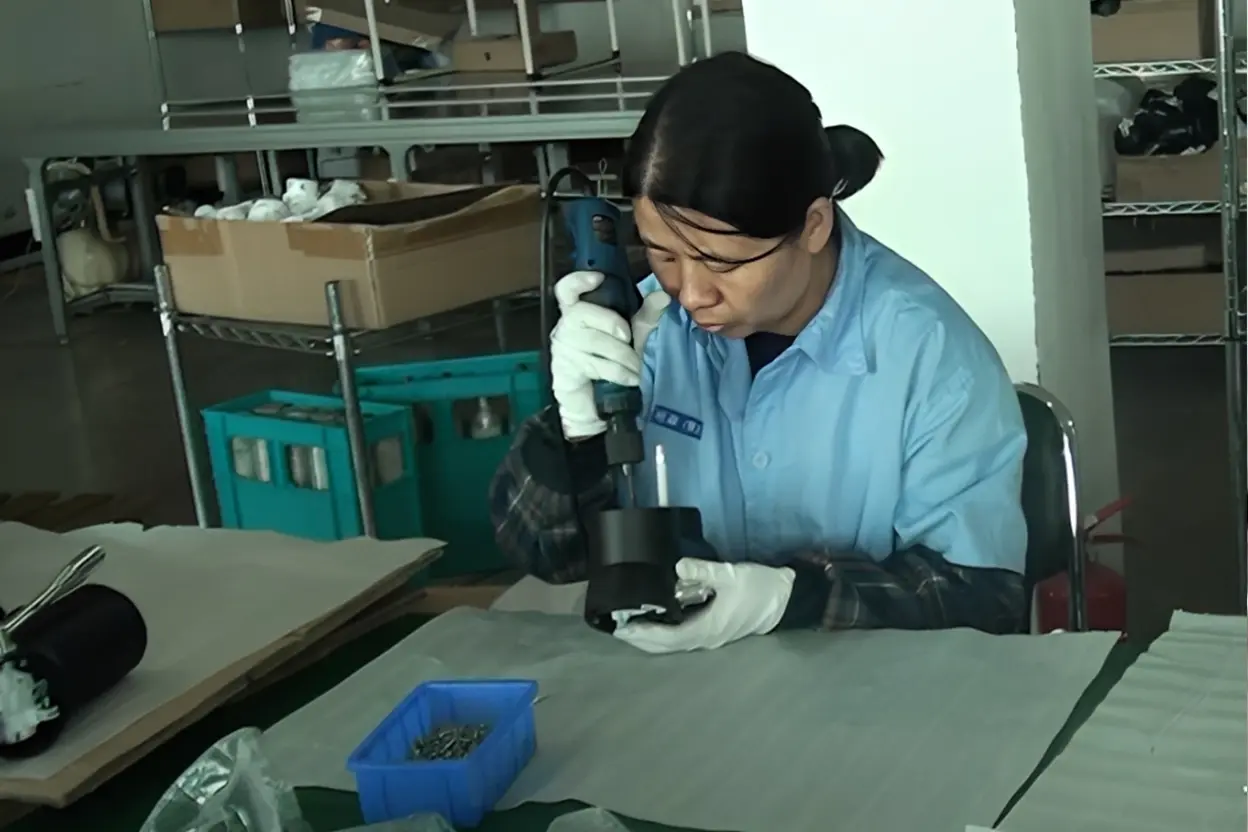
Housing and valve fitting
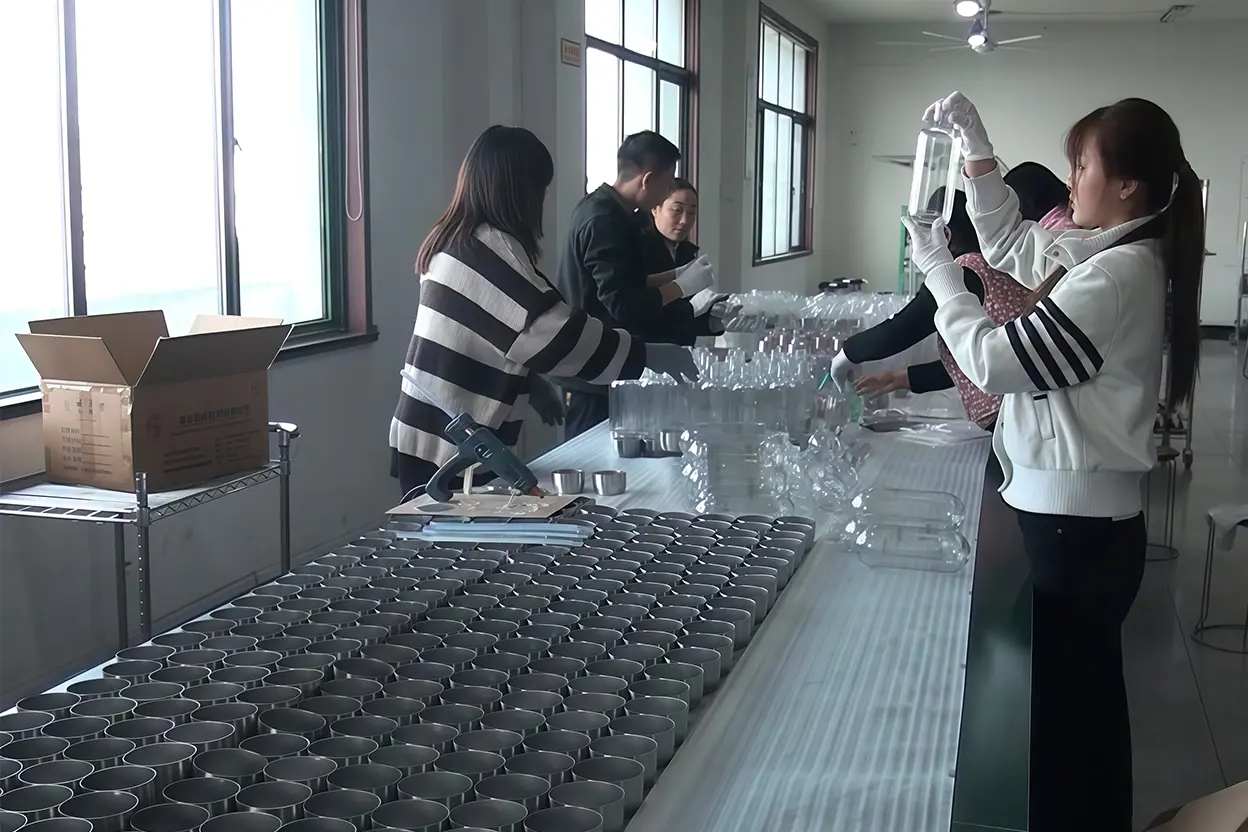
Bottle compatibility review
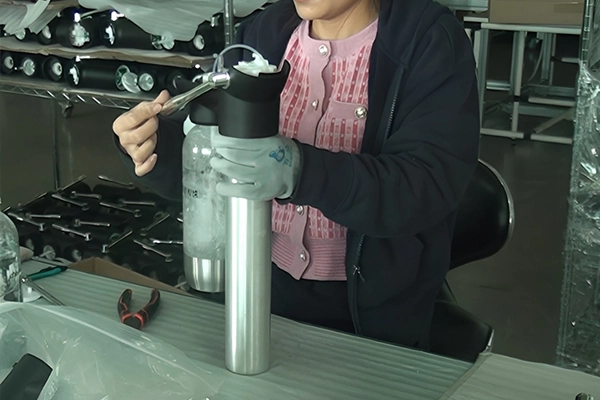
Wet leak testing
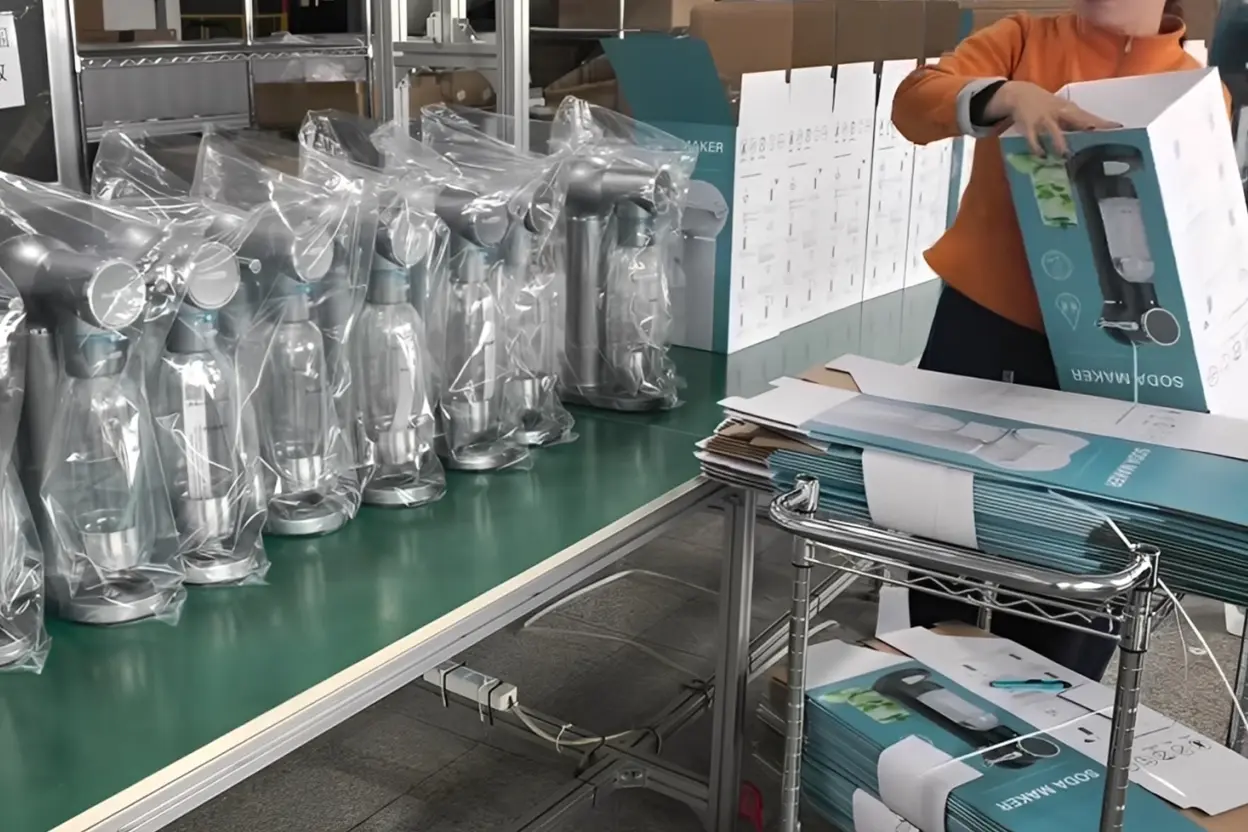
Packing inspection
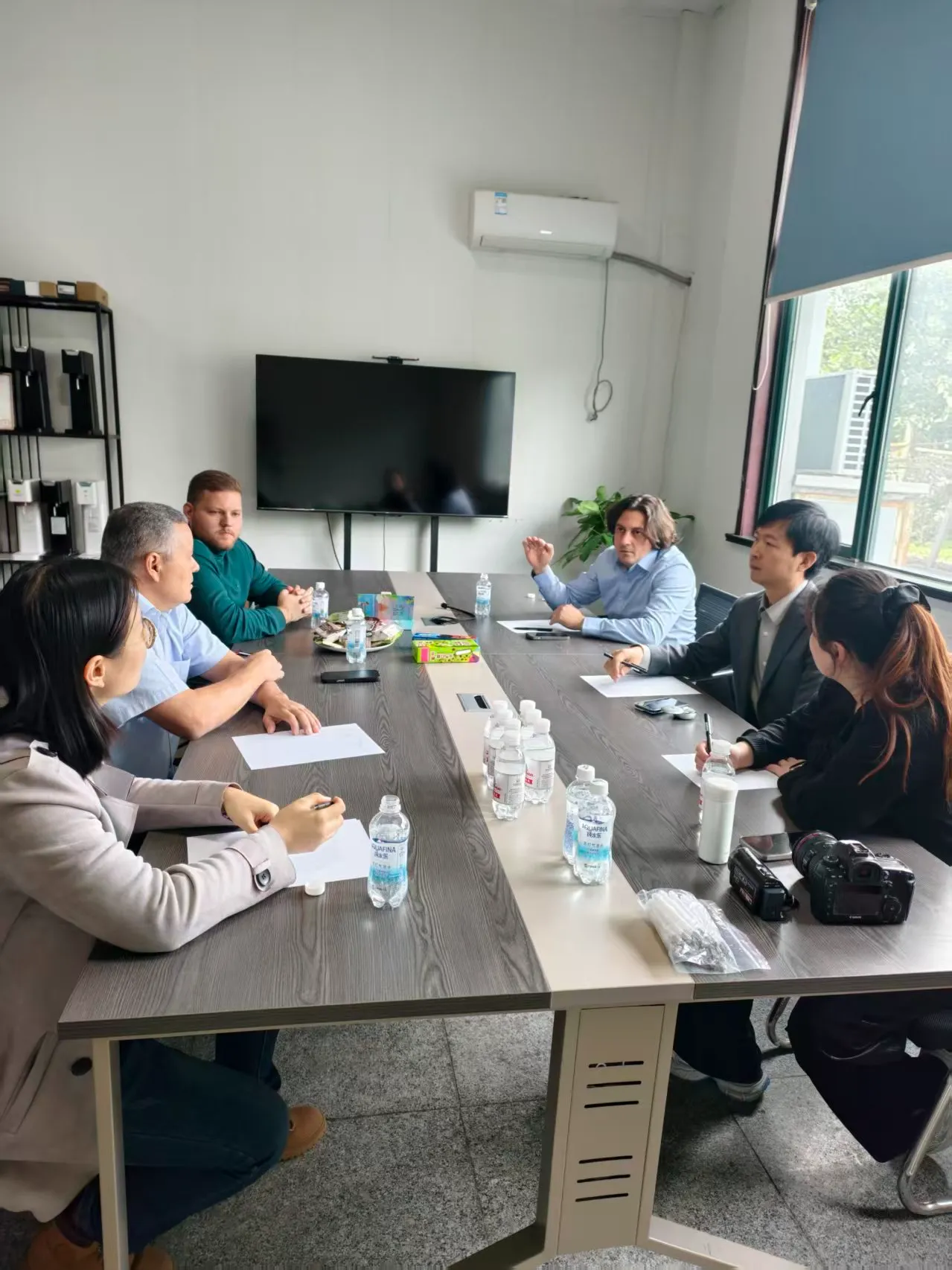
Export coordination
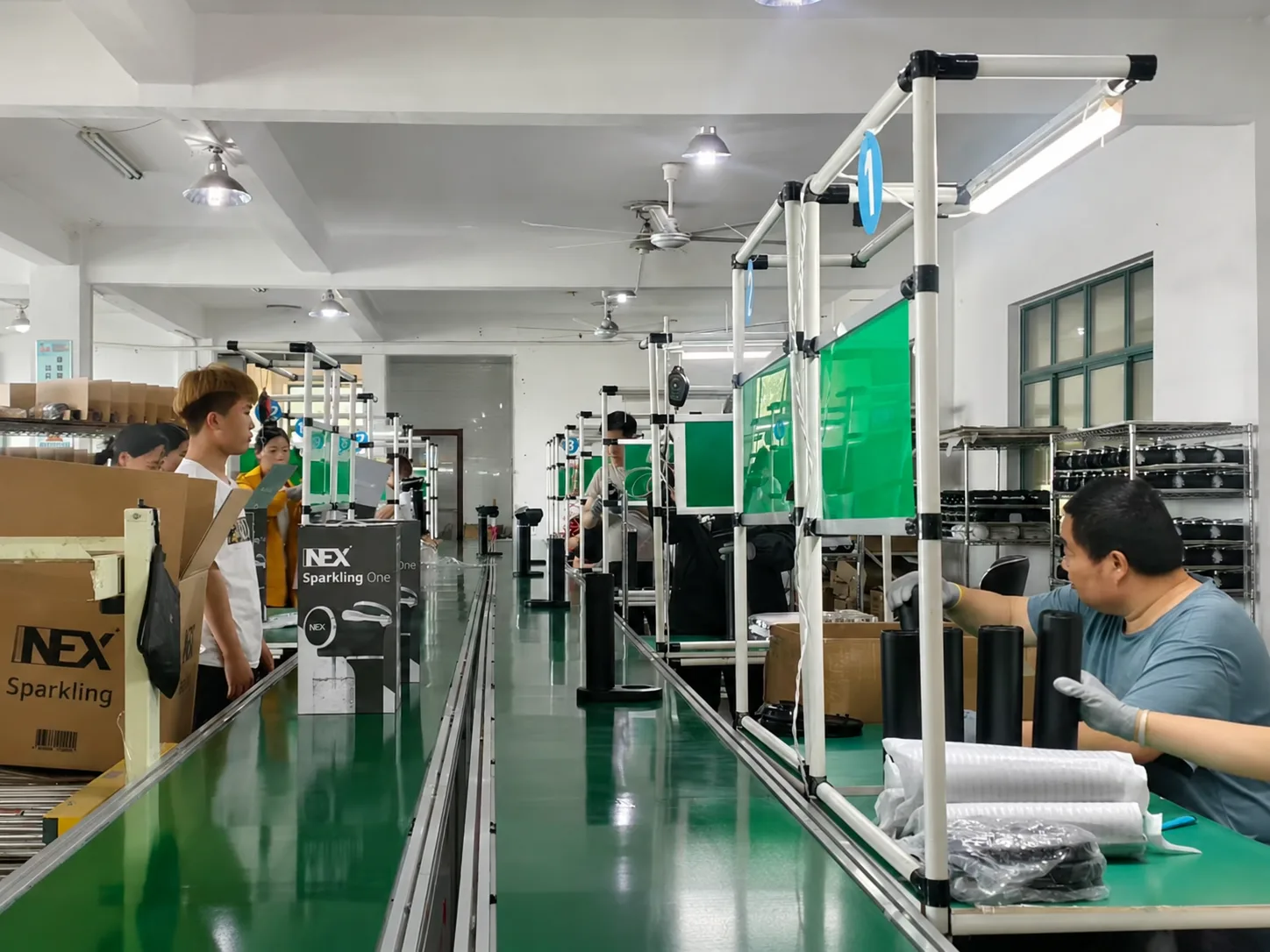
Assembly line
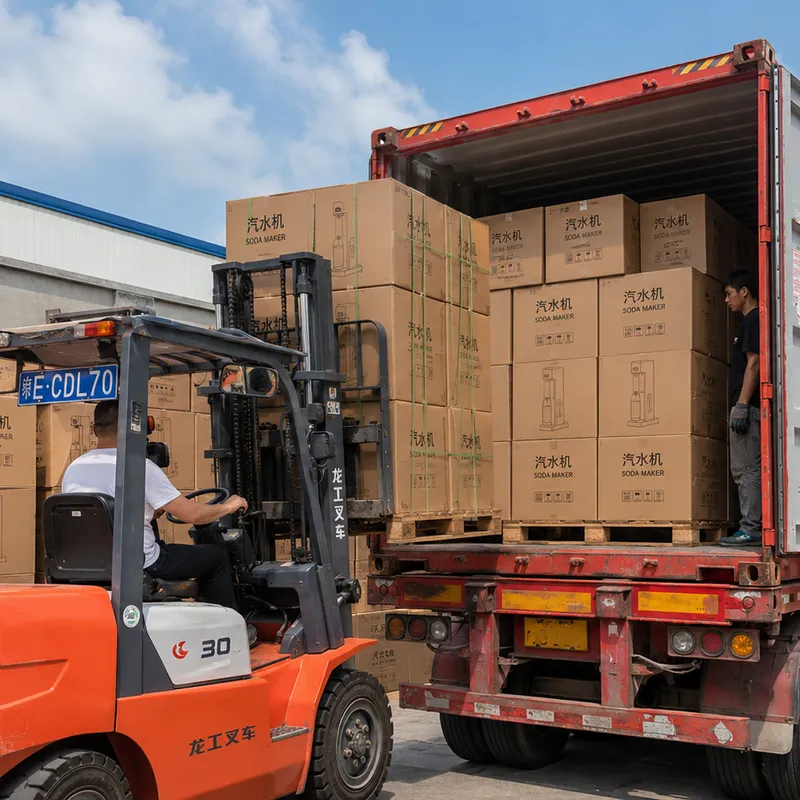
Warehouse & Shipping
15,500 m² facility | 20,000 units / month capacity | 3 production lines | 6 injection machines | ISO 9001:2015 certified
View Manufacturing CapabilitySoda Maker Product Range for OEM Buyers
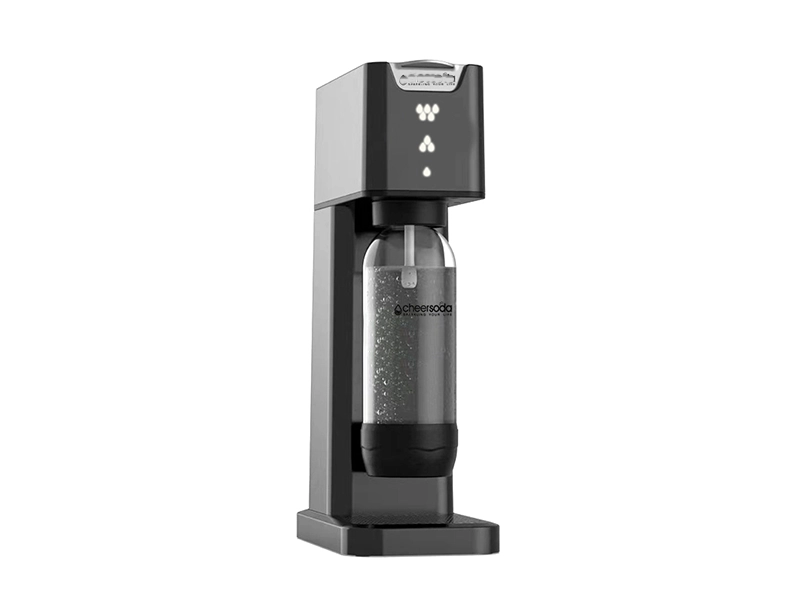
Sparkling Water Maker
Standard home carbonation models available for private label configuration and bulk export.
View details →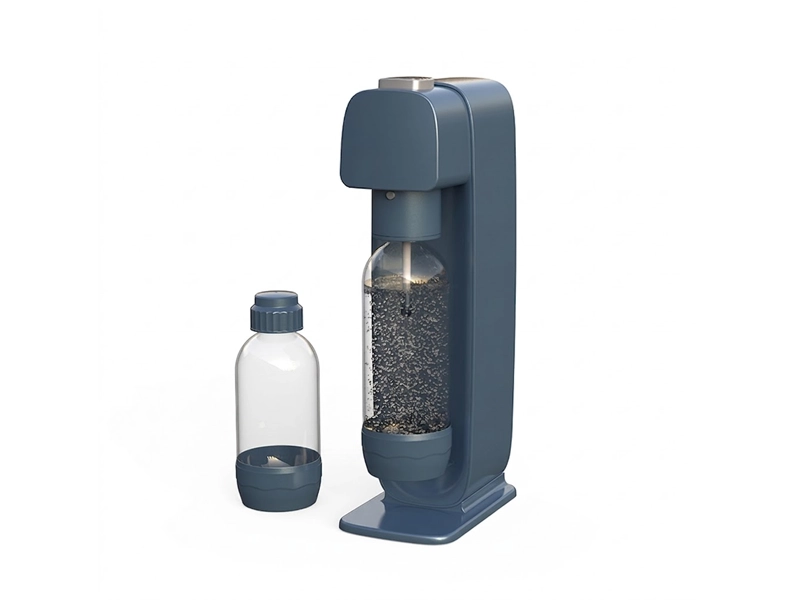
Seltzer Maker
Manual seltzer production units designed for retail distribution and brand customization.
View details →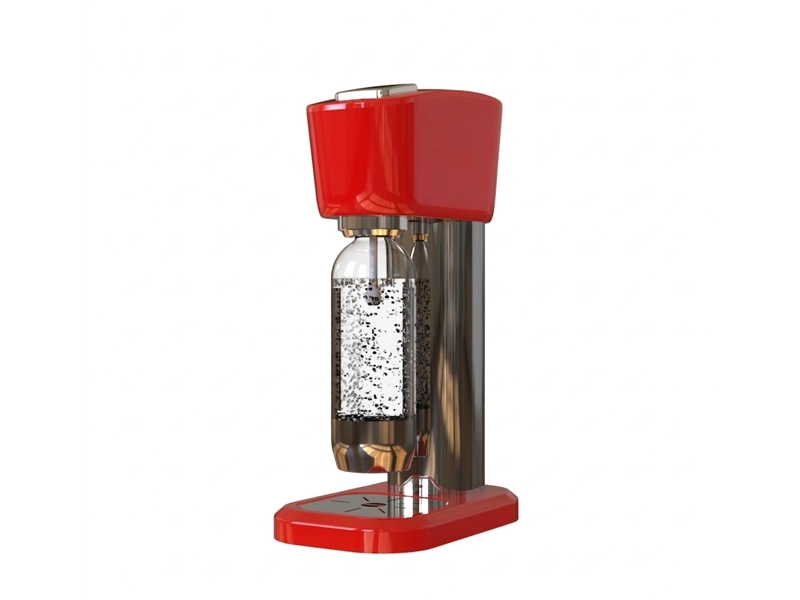
Carbonated Drink Maker
Model-specific beverage applications; confirm the permitted liquids and cleaning instructions for the selected machine.
View details →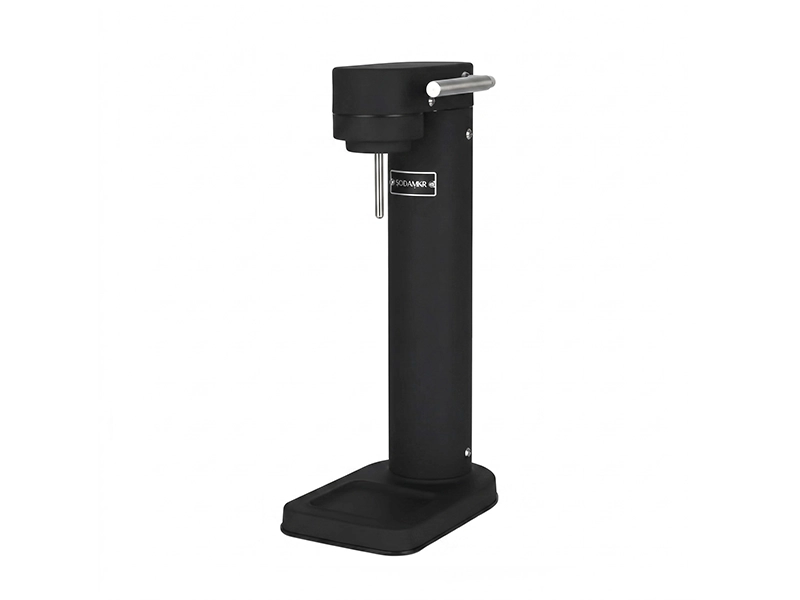
Stainless Steel Soda Maker
Stainless steel housing models for brands targeting higher-value retail channels, kitchen appliance distributors, and private-label projects that need a stronger exterior finish.
View details →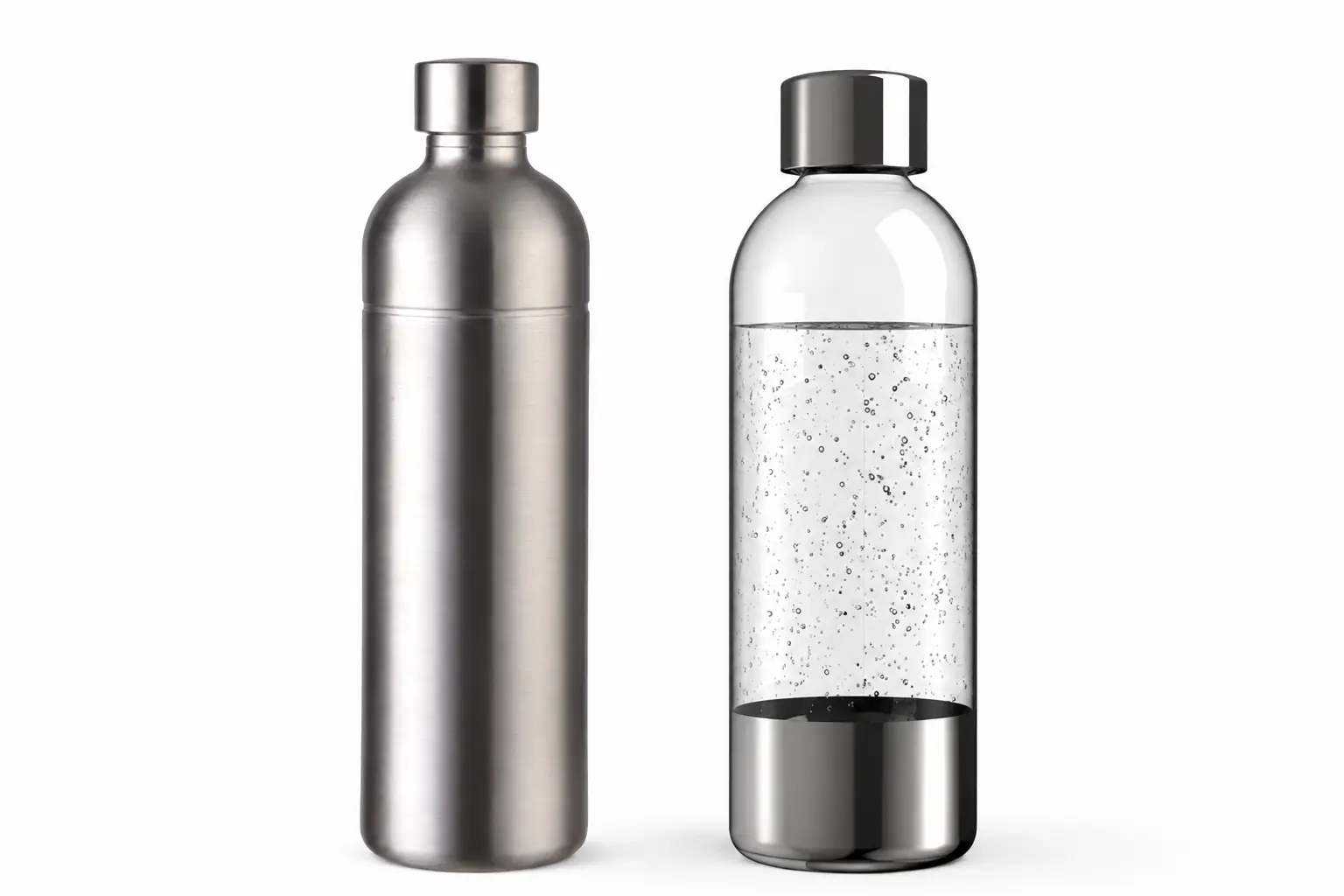
Soda Maker Bottles
PET and specialized bottles supporting custom printing and material compliance.
View details →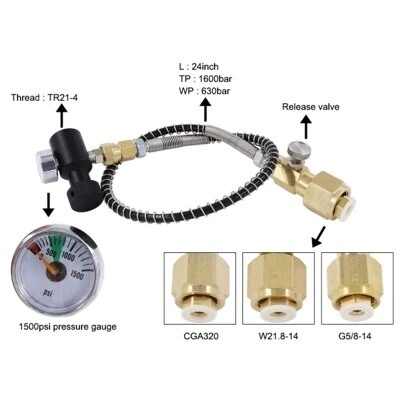
CO2 Cylinder Accessories
Valves and connection components supporting standard home carbonation systems.
View details →Four Ways to Start
| Route | Quantity | What it establishes | Timing |
|---|---|---|---|
| Evaluation sample | From one unit | Model fit, operation, cylinder compatibility, finish quality | Ready in 7 days |
| Trial order | On existing models | Real channel response before a branded production run | Quoted per model; runs on existing models |
| Standard OEM run | 300 units per model | Full branded production: logo, colors, packaging, documents | First order 35–45 days after approvals |
| Tooling / ODM project | Confirmed per project | An exclusive structure or shell design | Engineering review first, then a project schedule |
One MOQ, stated plainly: the MOQ is 300 units per model, the same across the full range, stainless and plastic alike. The trial order is not a smaller MOQ — it is a separate market-validation route on existing models, run before (or instead of) a first branded order. Custom color boxes also print from 300 boxes, so a buyer who starts with a trial can print the full box run once and hold the surplus at the factory for the repeat order. Our MOQ guide works through the quantity logic in more detail.
Sampling: How Evaluation and Approval Work
Samples are ready in 7 days in the configuration you select — model, finish and bottle set confirmed before preparation starts. The sample stage is a working review, not a formality: it is the last point where configuration mistakes are cheap.
Before approving a sample, buyers usually review eight points: appearance and finish; bottle fitting; CO2 cylinder compatibility; carbonation operation; logo position; packaging; the instruction manual; and carton information. Written approval closes the stage, and the approved sample becomes the inspection reference for production — logo position, finish, bottle fit and packing are checked against it, not against a rendering.
If the review raises a change — a logo position, a finish, a bottle set — it is written onto the change list with an owner and an approval status, and the sample is re-confirmed against that record. Nothing carries into production as a verbal understanding; the change list, the drawing version and the sample approval record are the same documents the line later works from.
For the production and quality steps behind the sample in more depth, our OEM manufacturing guide for private label buyers walks through each stage.
Sample Review Checklist
Before approving a sample, buyers usually review the following critical points to ensure mass production alignment:
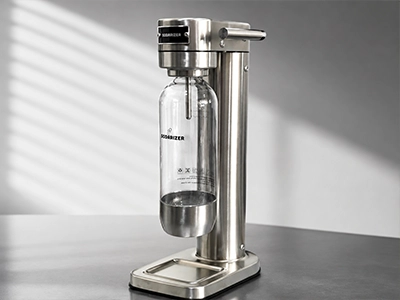
Machine appearance
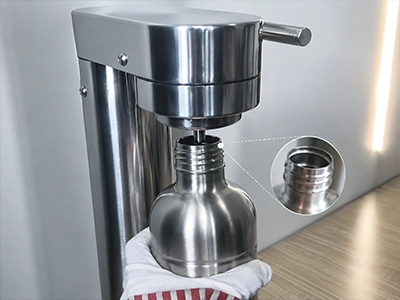
Bottle fitting
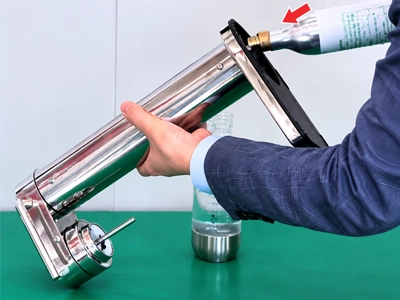
CO2 cylinder compatibility
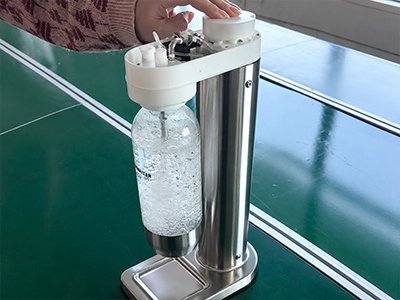
Carbonation operation
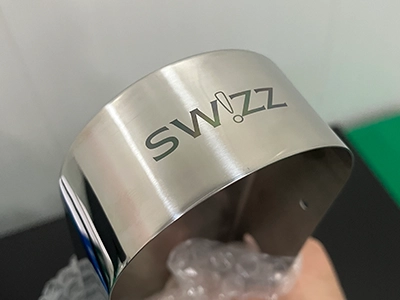
Logo position
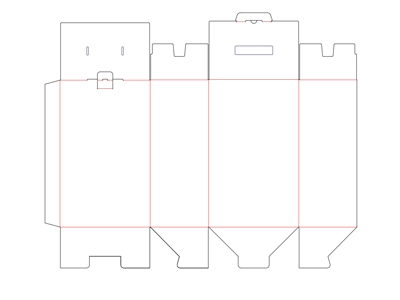
Retail box layout
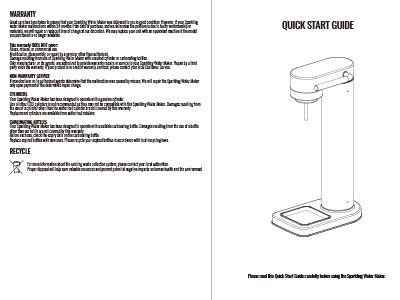
Instruction manual
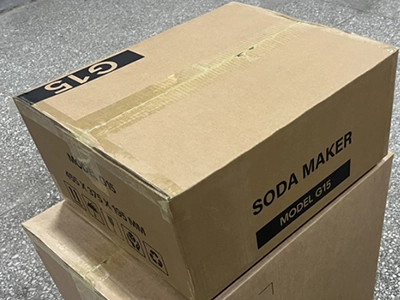
Carton information
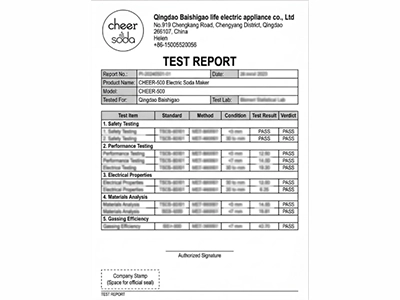
Test record
OEM Process: From Inquiry to Shipment
Inquiry and project background. Target market, preferred model or price point, estimated quantity, packaging scope and launch date. A formal quote follows within one business day.
Model and market review. The model is confirmed against your channel and price point, and the compliance documents your market requires are named at this stage — before sampling, not after production.
Quotation and MOQ confirmation. The quote is built on the confirmed configuration: model, bottle set, branding scope and packaging level, against the 300-unit MOQ or the trial-order route.
Sample and packaging confirmation. The physical sample is prepared in 7 days and reviewed against the checklist above; box artwork is checked against the die-line in parallel.
Pre-production approval. Four records are closed before the line starts: the change list (every agreed change to color, logo position, bottle, accessories and packaging, each with an owner and approval status); the drawing version (approved number and revision date, so sample and production configurations stay aligned); the sample approval record; and the production milestones (artwork release, material preparation, assembly, inspection, packing, shipment readiness).
Mass production and inspection. Assembly, logo application and testing run against the approved sample under the four-stage QC protocol set out below.
Packing and shipment. Carton marks and the packing list are confirmed against your receiving requirements, pre-shipment photos are taken, and goods are released against the balance payment on the agreed trade terms.
Sample Confirmation Evidence Before Production
Before mass production, buyers usually confirm the physical sample from appearance, bottle fitting, CO2 cylinder compatibility, carbonation operation, logo position, packaging, manual, and carton information.
Machine Appearance
Bottle Fitting
CO2 Cylinder Compatibility
Carbonation Operation
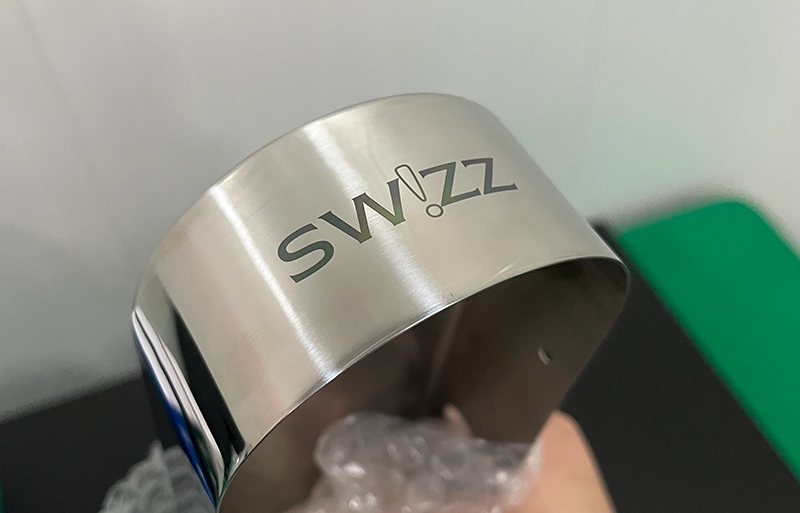
Logo Position
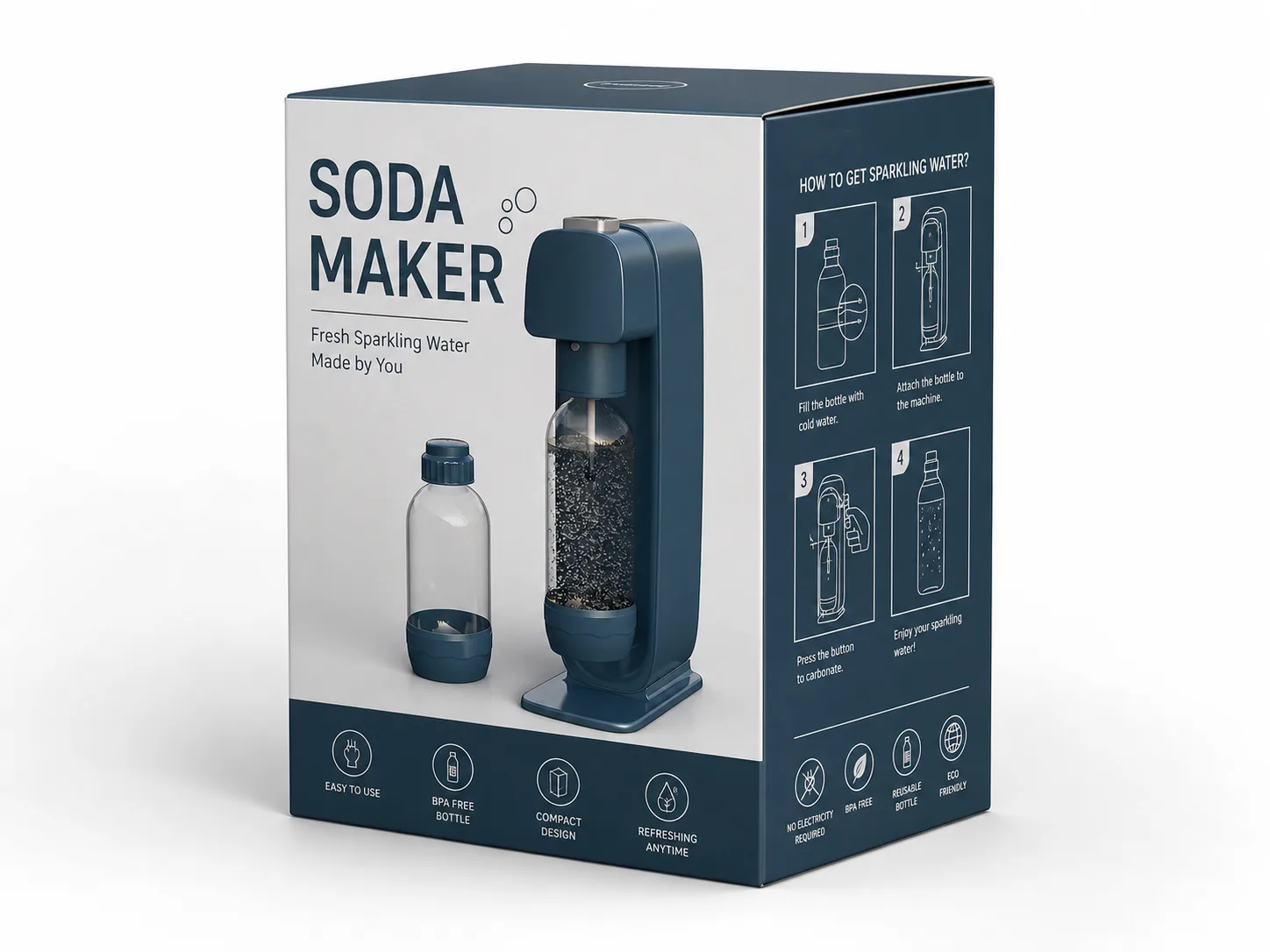
Retail Box Layout
Instruction Manual
Carton Information
Sample confirmation is where both sides reduce avoidable mistakes before tooling, packaging, mass production, and shipment move forward.
Discuss Sample Review
Every unit wet-tested and air-tested before it is packed.
Request an OEM QuotePre-Launch Evidence Checklist
Before an OEM order moves into production, both sides confirm the documents and records that control the approved configuration. We can review the following items with the buyer and link each record to the selected model.
Change List
Record the agreed changes to housing color, logo position, bottle, carbonation controls, accessories and packaging. Each open point has an owner and approval status.
Drawing Version
Keep the approved drawing number, revision date and marked changes together. Production uses the released version so the sample and mass-production configuration stay aligned.
Sample Approval Record
Confirm the sample model, finish, logo artwork, labels, instruction materials and functional comments. Written approval closes the sample stage before the order is released.
Production Milestones
Track artwork release, material preparation, assembly, inspection, packing and shipment readiness. The milestone plan gives buyers a clear point for each update.
Production Quality Control
Four inspection stages. Incoming material inspection, in-process checks during assembly, a comprehensive test stage, and final inspection before packing. Four QC staff run the protocol across the three lines.
Every unit is tested. Each finished machine receives a 100% wet leak test and a high-pressure air test before it is packed. Alongside that unit-level testing, production batches undergo sampling burst testing — a batch discipline that sits on top of the valve laboratory program, where valves are burst-tested at three times standard pressure. The two levels are stated separately because they are different commitments: full testing on every unit, sampling on the destructive test.
Packaging is inspected as well. Retail box layout and carton information are reviewed before mass packing, and cartons go through the factory's packaging drop-test routine, so the box your customer opens is the box that was approved.
Materials, Valves and Cylinder Compatibility
The pressure components decide field reliability, so the facts are stated plainly. Every model uses a CNC brass valve — machined brass across the plastic and stainless range alike — and every model carries dual safety valves. On the G15, the carbonating nozzle is one-piece 304 stainless steel and removable: it unscrews for washing, and its fine aperture is designed against the clogging and freezing that plastic nozzles suffer. Bottles are BPA-free PET in 500 ml and 1000 ml across the range; a stainless steel bottle that also fits Aarke-type machines is available as an accessory line.
One compatibility fact belongs in every sourcing plan: our machines use the threaded CO2 cylinder standard (TR21-4 / M18×1.5 — the 425 g / 60 L threaded cylinder) used by threaded SodaStream-type systems and most refill networks. They do not fit Quick Connect cylinders, and no adapter changes that. Confirm your market's cylinder standard before sampling; it is a go/no-go check at step 2 of the process, not a detail to discover at shipment. Background on carbonation and cylinder standards sits on the water carbonator hub, and bottles, cylinders and accessories are listed on the product and accessory range page.
A Manual Platform, Deliberately
The factory's engineering focus is manual home carbonation: secure bottle installation, cylinder compatibility, pressure-release structure design and consistent carbonation without a power supply. For an OEM buyer, a manual platform removes an entire layer of market-by-market friction — there are no plug variants, no voltage versions and no electrical certification track standing between the approved sample and a multi-market launch. Carbonation pressure is generated by the user and controlled by the valve set and dual safety valves described above.
The range is household equipment, and its boundaries are stated as plainly as its capabilities: industrial carbonation plants and beer dispensing equipment are outside this factory's manufacturing range.
Private Label and Custom Tooling
The brand layer is executed on the same production lines: logo printing, body and button colors, retail box, user manual, shipping carton and accessory matching are all confirmed against the approved sample before mass production. The scope in summary:
The full branding workflow — artwork review, the eight project deliverables, box printing and barcode planning — is set out on our private label soda maker page. This page stays on the manufacturing side: capability, models, quantities and the sampling gate. Private tooling depends on order volume, structure feasibility, target market requirements and development budget, and is quoted per project after engineering review.
Customization Options Matrix
| Logo | machine body, bottle, gift box, manual |
| Color | housing color, button color, bottle cap color |
| Packaging | retail box, master carton, barcode, warning label |
| Accessories | PET bottle, stainless steel bottle, CO2 cylinder accessories |
| Documents | manual, carton mark, inspection record, compliance files |
| Tooling | available based on volume, structure feasibility, and budget |
Certification and Compliance Documents
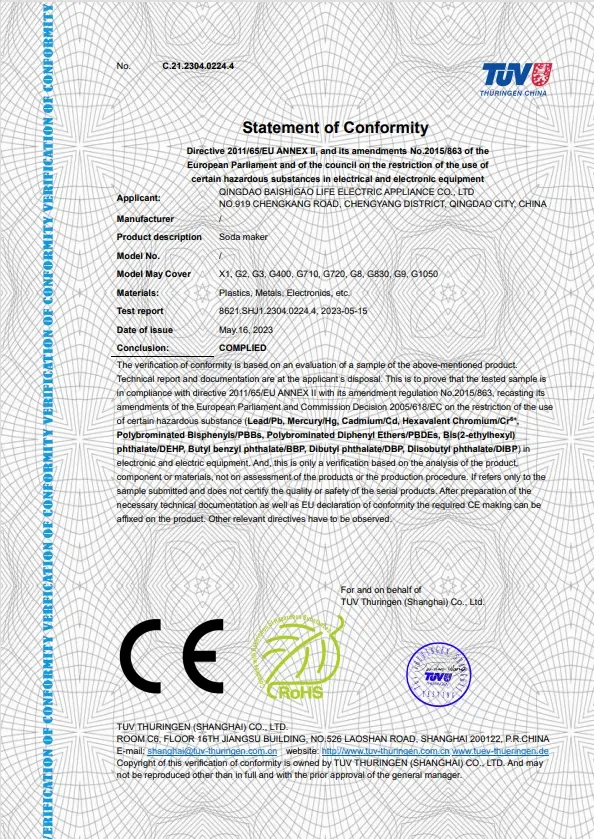
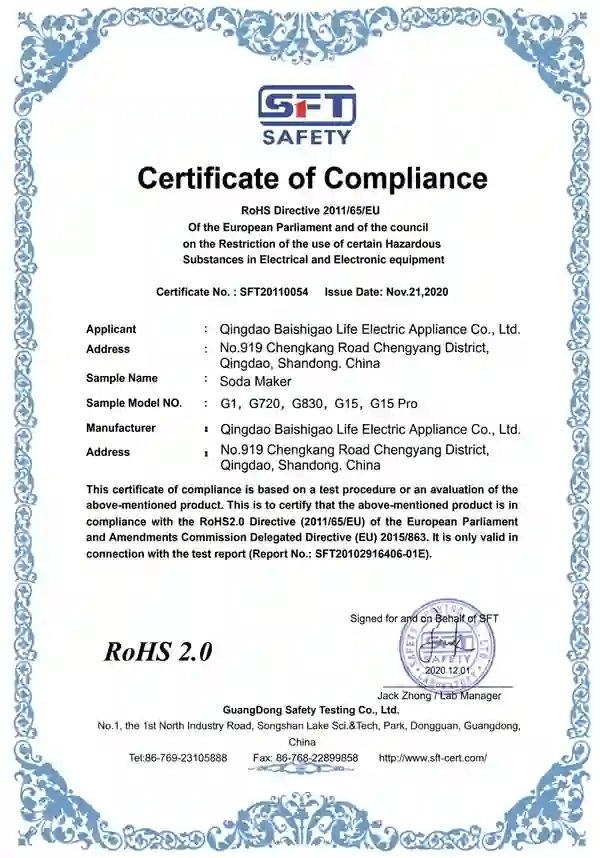
Different markets require different documents, so the position is stated here in full. CE and RoHS documentation and food-contact testing cover the product range: the food-contact materials of the machines — silicone, PET, PA11, POM, ABS, aluminium and stainless steel — have been tested by TÜV to LFGB, EU FCM and US FDA 21 CFR food-contact standards, with dedicated TÜV reports for the G15, G15 Pro and G17. RoHS conformity is documented by a TÜV Statement of Conformity covering ten models and an SFT compliance certificate covering the G15 and G15 Pro among others. The factory itself is ISO 9001:2015 certified. Which reports exist for which model, and how inspection records are kept, is set out on the quality and compliance page.
Document review runs as a five-step sequence on every OEM order: model selected, material confirmed, document checked, buyer review, shipment file prepared. Availability is confirmed per model and per market at quotation — if your importer or retailer needs a specific file, name it in the inquiry and we confirm it by name. In practice, European buyers ask first for the LFGB and EU FCM food-contact reports, and US buyers for the FDA 21 CFR food-contact reports; both sets come out of the same TÜV material test program, and RoHS conformity is confirmed for the model family you select. Claims printed on your box and manual are reviewed against the files for your model at artwork stage. Background answers are collected on the frequently asked questions page.
Export Documentation Support
We coordinate the following shipment documents as applicable. Required documents and import clearance arrangements depend on the destination and agreed order terms:
- Commercial invoice
- Packing list
- Carton information
- Material declaration where applicable
- Food-contact material documents where applicable
- Buyer-specific inspection files
- Product photos and packing photos before shipment
Document Samples
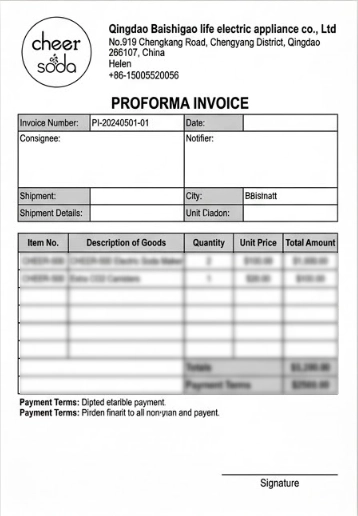
Proforma Invoice
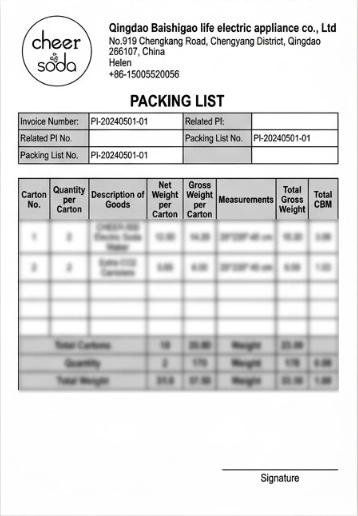
Packing List
Order Evidence From Running Programs
Factory claims are not enough for a sourcing decision, so the record is stated with the same specificity as the specifications. Buyers are identified by country only.
Germany — G15 premium line. A German e-commerce brand moved from plastic models to a metal line after patent review and a paid partial mold modification, starting at 1,000 G15 units and scaling through 2,000 to 4,000 units on repeat orders, with ongoing inspection at each stage.
Brazil — distributor line, G720 and G15. A Brazilian distributor launched on mature public molds with Portuguese documents and barcode support after visiting the factory, and now repeats at around 2,000 units a year across the two models.
Hong Kong — repeat program. A Hong Kong buyer reorders around 300 units at a time on a filed specification, with packing checks, pre-shipment photos and document coordination handled factory-side on every shipment.
Uruguay — the trial route. A Uruguayan buyer validated the category with a 300-unit trial order of the G3 — the same 300 unit trial route described in our terms — before planning branded volume.
The wider record. Across the factory's Alibaba storefront, 35 wholesale orders between November 2024 and September 2026 total 12,065 machines shipped to buyers in 14 countries, with a 4.94 store rating and 100% on-time shipment. The full project records are on the OEM soda maker case studies page.
Packing and Shipment Support
For importers and distributors, shipment preparation is not only about putting products into cartons. Carton marks help your warehouse receive, store and identify goods after import; the packing list and shipment files are prepared from the confirmed order details; and product and packing photos are provided before shipment, with loading recorded when a buyer requires it. Reference packing data for the three most common starting models (loading excludes CO2 cylinders):
| Model | Units / carton | Outer carton (cm) | Carton GW (kg) | 20GP | 40GP | 40HQ |
|---|---|---|---|---|---|---|
| G720 | 6 | 65 × 49 × 49 | ≈12 | 1,000 | 2,028 | 2,460 |
| G3 | 6 | 57 × 49 × 48 | 12.3 | 1,056 | 2,208 | 2,760 |
| G15 | 4 | 56 × 38 × 48 | 10.9 | 1,200 | 2,480 | — |
A worked example: a 300-unit G3 run packs as 50 cartons at about 6.7 CBM — a part-load, which is why starting orders are often planned together with bottle and accessory volume. Export documents are coordinated as applicable: commercial invoice, packing list, carton information, material declarations and food-contact documents where required, and buyer-specific inspection files.
Every shipment leaves with its packing evidence prepared and checked. Buyers need carton marks, packing records, pre-shipment photos, and container loading coordination before goods leave the factory.
Carton mark confirmation
Carton marks help distributors receive, store, and identify goods after import.
Packing list support
Packing list and shipment files are prepared based on order details.
Container loading support
Loading preparation can be recorded with photos or videos when required by the buyer.
Business Terms
| Item | Program terms |
|---|---|
| MOQ | 300 units per model, all models |
| Trial order | On existing models, as a market-validation route |
| Custom color boxes | Printed from 300 boxes; surplus from a trial run is stored at the factory for your reorder |
| Samples | Ready in 7 days; sample approval is required before bulk production |
| Lead time | First order 35–45 days after approvals; repeat orders 30 days |
| Payment | T/T only — 30% deposit, balance before shipment |
| Warranty | 1 year |
| Trade terms | EXW, FCA, FOB or DDP, agreed per order |
| Exclusivity | Available per model × per market, confirmed case by case |
| Tooling ownership | Buyer-paid molds belong to the buyer; modifications to public molds belong to the buyer for the modified parts |
On exclusivity, one clarification that protects both sides: existing exclusivity arrangements cover specific custom-developed models in specific markets. They do not close a whole country to standard public-mold models — name the model and the market in your inquiry and we confirm what is available.
Risk Control for B2B Buyers
The structured process above exists to close six sourcing risks we see repeatedly:
-
Wrong model selection — exact model specifications are defined before sampling, so expectations are aligned on the physical object.
-
Packaging artwork mismatch — artwork is checked against approved files and die-lines before printing.
-
Bottle and accessory incompatibility — bottle and cylinder fit are tested during sample review, before production.
-
Late sample confirmation — the sample timeline and approval gate are fixed at quotation, keeping the production slot realistic.
-
Unclear compliance documents — document scope per model and market is clarified before sampling or production.
-
Carton and labeling errors — carton marks and shipment documents are double-checked against the confirmed order before loading.
What to Send Before Requesting a Quote
Five items make the first reply a formal quote instead of a round of questions: your target market, the model you are considering (or your price point, and we will recommend), the estimated quantity, your packaging requirements, and any specific compliance needs. Add your launch date if you have one — the sample, approval and production dates are planned against it. If the model is still open, say so; model recommendation against your market and channel is part of the first reply.
For Brands, Importers and Distributors
Whether you are evaluating your first model or expanding an existing range, share your market and order plan with us. Single-unit business samples are welcome; this is not a consumer retail checkout or a local CO2 refill service.
About the Author
Helen Ho — OEM Consultant
I work with importers and brands on the manufacturing side of their soda maker programs, from model selection and sampling through production approval, and I review every OEM project scope personally before a quotation is issued.
Expert Tip
Confirm Your Cylinder Standard Before You Compare Models
Every Cheersoda machine is built for the threaded CO2 cylinder standard (TR21-4 / M18×1.5). Cylinder standards differ by market, and a mismatch only surfaces after the goods land — so name your market's standard in your first message, and we will confirm compatibility before anything is quoted.
Frequently Asked Questions
What is the MOQ for OEM soda maker projects?
Can I start with a trial order before committing to 300 units?
How do samples work, and how long do they take?
How long does an OEM order take from inquiry to shipment?
Can Cheersoda support private label packaging and instruction manuals?
What is the difference between an OEM and an ODM soda maker project?
Can I review factory videos before starting an OEM project?
Can I visit the factory, or arrange an inspection before shipment?
Which CO2 cylinders do your machines fit?
What documents are available for the EU and US markets?
What payment terms do you accept?
What warranty covers OEM orders?
Who owns the mold if we pay for tooling — and can I get exclusivity?
Do you sell single soda makers to retail customers?
What information should I send before requesting an OEM soda maker quote?
Start an OEM Soda Maker Project
Start with your target market and estimated quantity. If you have not chosen a model, say so — model recommendation is part of the first reply, together with the confirmed MOQ route, the sample plan and the formal quotation path.
Request Quote — inquiry form · WhatsApp +86 15005520056 · sales@customsodamaker.com
Cheersoda (Qingdao Baishigao Life Electric Appliance Co., Ltd.), No. 919 Chengkang Road, Chengyang District, Qingdao, China.
We use your details to respond to your inquiry. After review, we will confirm the relevant model, quotation and next steps. If no reply arrives, please check your spam folder or contact Helen directly.