
Home Soda Maker Supplier for Importers
Plan your import order with the commercial invoice, packing list, shipping term and freight handover agreed in advance. We coordinate export documents and factory loading details for your destination. Cheersoda's standard MOQ is 300 units.
Why Importers Need More Than a Unit Quote
When sourcing home soda makers, the unit quote is only one part of the decision. Importers also need clear specifications, stable packaging, CO2 cylinder matching, export documents, payment coordination and shipment planning before they can place a confident order. A supplier who only quotes a price leaves the importer to discover the rest at the port: a cylinder that does not fit, a document that does not match the bill of lading, a carton mark the warehouse cannot read. Planning those items before the deposit is what turns a first order into a repeatable import program.
Local CO2 System Matching
A machine is useless if it doesn't fit your local gas cylinders. We verify TR21-4, Quick Connect, or regional thread types before you place a deposit. This check belongs before production, not after arrival, because a wrong configuration cannot be fixed at the destination without cost and delay.
Clear Export Documents
Customs clearance delays cost money. We provide accurate Commercial Invoices, Packing Lists, and specific carton marks required by your warehouse. Documents are checked against the bill of lading before the vessel sails, so the set that arrives matches the set customs sees.
Packaging & Language
Retail success requires localized packaging. We manage multi-language manuals, color box printing, and private label logo placement to your exact specifications. A manual in the wrong language or a color box without the required marks creates retail problems that no freight discount can fix.
Forwarder Coordination
Whether you buy FOB or CIF, our logistics team communicates directly with freight forwarders to ensure smooth container loading and timely vessel departure. The forwarder is treated as part of the order team, not as an afterthought once production ends.
Transparent Payment Terms
No surprises. We structure clear deposit and balance schedules (T/T) tied to PI confirmation and inspection stages, protecting both factory and importer. The payment rule is simple and fixed: T/T only, 30% deposit, balance before shipment.
After-Sales & Spare Parts
We advise on essential spare parts (like extra seals or nozzles) to include in your container, ensuring you can handle local customer service efficiently. After-sales stock planned with the first order is what keeps retailers ordering after the launch.
Landed-Cost Planning for a First Import
Importers do not buy a unit price; they buy a landed cost. Before requesting a quotation, map the components that sit between the factory gate and your warehouse shelf: the goods value, ocean freight, marine insurance where applicable, import duties, port and handling charges, and inland delivery. The shipping term decides which of these the factory arranges and which you arrange — that is why the FOB, CIF, and DDP comparison below matters more than any single freight quote. A quotation that looks cheap on FOB terms can land expensive if the freight leg is unplanned, and a CIF quotation can look expensive until the insurance and booking work it includes is counted. Ask for the term that matches your logistics capability, not the term with the lowest headline number.
FCL or LCL: Which Fits a First Import
Full container load (FCL) suits a first bulk order: one consignee, one container, one document set, and the carton plan fills the container as calculated. Less than container load (LCL) suits small trial shipments where a full container is not yet justified: the goods share a container, and the forwarder consolidates the booking. The choice affects freight cost, handling, and timing, so confirm it with your forwarder before the Proforma Invoice is prepared — the carton counts and CBM on the documents must match the load actually booked. Either way, the same export documents, carton marks, and loading photos apply.
Who Do We Supply?
Our manufacturing and export processes are specifically optimized for B2B buyers looking to import manual home soda makers in volume.
Home Appliance Importers
Expanding kitchenware portfolios with high-margin carbonation devices.
Beverage Product Importers
Syrup and flavor distributors adding hardware to increase customer lifetime value.
Private Label Brands
Companies seeking reliable OEM manufacturing to build their own soda maker brand.
Regional Wholesalers
Distributing container loads to local retail chains and supermarkets.
Existing Import Companies
Adding a profitable new product line to established logistics channels.
CO2 Network Operators
Gas refill businesses importing machines to drive cylinder exchange volume.
Recommended Models for Import Strategies
Select the right machine based on your market positioning, whether you need a fast-moving entry-level product or a premium private label flagship.

Model G720
The Market Tester. Cost-controlled and easy to position. Ideal for first-time trial orders, rapid market testing, and entry-level retail assortments. Simple, durable design. Actuation: lever. Best for initial import ROI. High container loading capacity. Standard 1L PET bottle.
Quote G720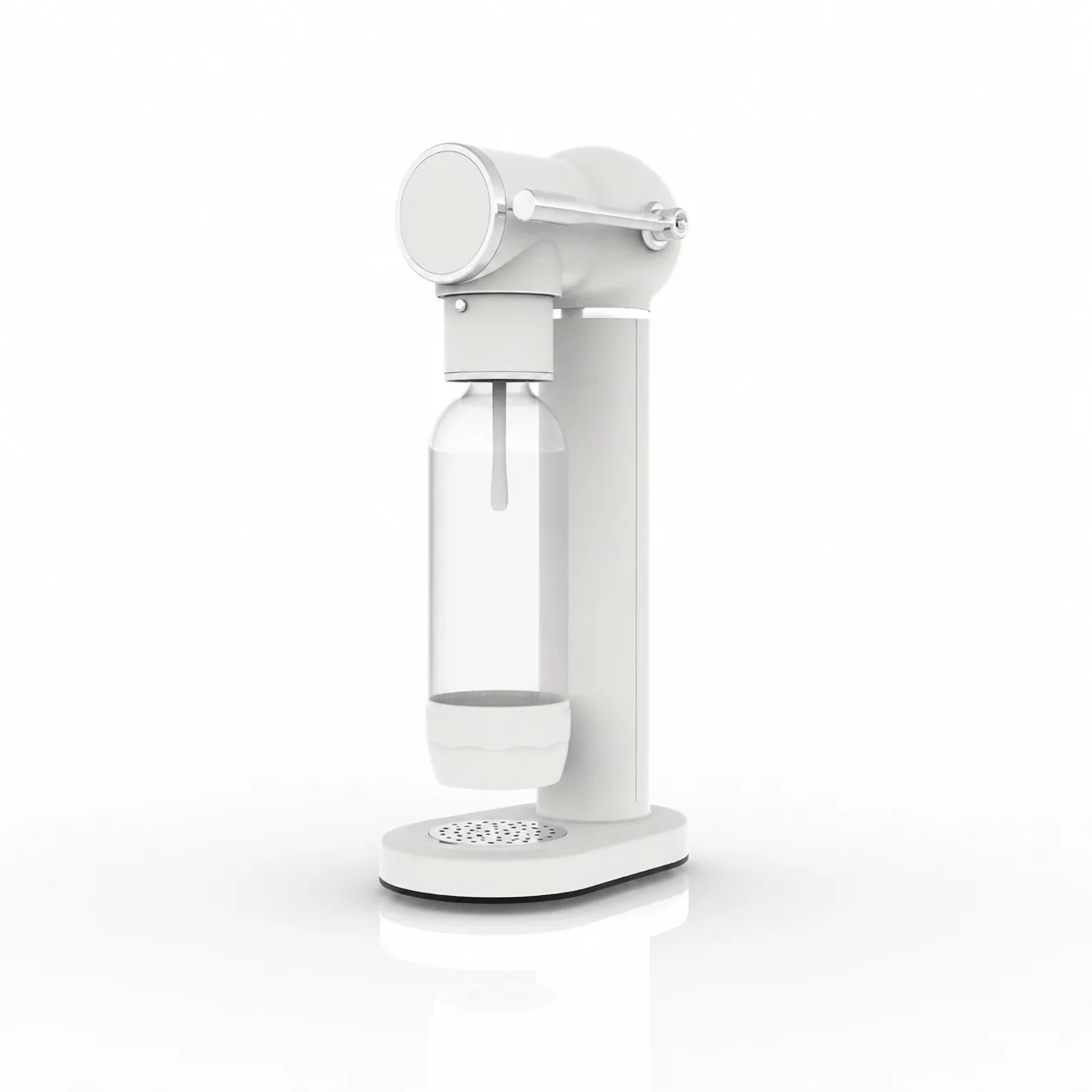
Model G830
The SKU Expander. Offers distinct visual differentiation from standard models. Perfect for importers looking to add a mid-tier SKU to their existing appliance catalog. Actuation: horizontal lever, with a detachable sub-carbonator head that can be washed. Unique aesthetic appeal. Balanced landed-cost position. Excellent for department stores.
Quote G830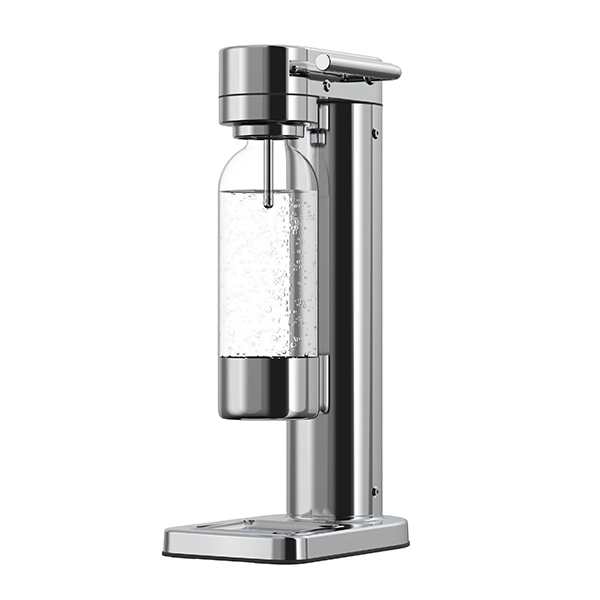
Model G15
The Premium Brand Builder. Features a full 304 stainless steel body with a high-end feel. Designed for importers establishing a premium private label image in upscale retail environments. Actuation: lever. Premium stainless steel finish. Higher retail margin potential. Strong brand presence. Matte black finish is in stock; matte graphite requires a 300-unit minimum.
Quote G15
Model G15 Pro
The Flagship Choice. Our top-tier offering with enhanced display aesthetics. Suitable for buyers with comprehensive brand packaging plans looking to dominate the category. Actuation: lever. The G15 Pro differs from the G15 in exactly two ways: a detachable head, and a juice and pure-water mode switch. Maximum shelf impact. Advanced structural design. Flagship product positioning.
Quote G15 ProModel G3 and G9 Value Tier
The value tier for price-led retail. The G3 is an all-plastic top-press model with an LED indicator, and the G9 mirrors the G3 without the LED. Both give importers a value-priced manual option for entry assortments, so a channel can carry a good-better-best range from a single supplier.
Choosing Between the G720 and the G830
Both are plastic lever models, and importers often compare them first. The G720 is the workhorse: the most cost-controlled option, the highest container loading capacity in the plastic range, and the simplest story for entry retail. The G830 adds a maintenance-friendly design: a horizontal lever, a detachable sub-carbonator head that can be washed, and a different visual silhouette for shelves where the G720 already sits.
Choose the G720 when the priority is testing the market at the lowest risk. Choose the G830 when the channel needs a second SKU with a visible difference, or when buyers ask about cleaning. Either way, confirm the CO2 configuration before ordering — both models are produced in the configuration your market uses.
Packing and Container Loading Plan
Importers plan freight on carton data. The table below gives the packing facts for the import range so a first order can be costed before quotation.
| Model | Color box (cm) | Export carton | Units per carton | Container loads (20 ft / 40 ft / 40 ft HQ) |
|---|---|---|---|---|
| G720 | 23.5 × 21 × 45.5 | 65 × 49 × 49 cm, about 12 kg | 6 | 1,000 / 2,028 / 2,460 |
| G830 | 23.5 × 21 × 45.5 | 65 × 49 × 48 cm | 6 | 984 / 2,028 / 2,460 |
| G15 and G15 Pro | 27 × 17.5 × 44 | 56 × 38 × 48 cm | 4 | 960 / 1,920 / 2,400 |
| G3 | 27 × 15.5 × 45 | 57 × 49 × 48 cm | 6 | 1,056 / 2,208 / 2,760 |
Flexible Shipping Terms for Importers
We adapt to your logistics setup. Whether you have a long-standing relationship with a freight forwarder or need us to manage the ocean freight, we provide clear responsibilities based on standard Incoterms.
FOB Qingdao
Most StandardYou handle the ocean freight via your designated forwarder. We cover factory production, inland transport to Qingdao port, and export customs clearance.
Best for: experienced importers with established logistics partners.
CIF
Factory AssistedWe manage the production and arrange ocean shipping to your destination port, including marine insurance. You handle import customs and final delivery.
Best for: buyers who want to simplify origin logistics and shipping booking.
DDP
Door to DoorWe handle everything from factory to your warehouse door, including import duties. Availability depends on destination country, volume (CBM), and local customs.
Best for: specific projects requiring hands-off delivery (subject to confirmation).
Which Shipping Term Fits Your First Order
Choose the term by your logistics capability, not by habit. Choose FOB Qingdao when you already work with a freight forwarder you trust: you control the ocean leg, the booking, and the freight rate, while we cover production, inland transport to Qingdao port, and export customs clearance. Choose CIF when you want origin logistics handled for you: we arrange ocean shipping and marine insurance to your destination port, and you take over at import customs and final delivery.
Choose DDP only for specific projects where hands-off delivery matters and the destination, volume, and local customs allow it — confirm DDP availability before assuming it, since it depends on the destination country, volume in CBM, and local customs practice. For a first order, FOB is the most common choice among experienced importers, and CIF is the most common choice among buyers who want fewer origin tasks. Either way, state the term in the inquiry so the quotation, the carton plan, and the document set are built for it.
Export Documents & Coordination
Smooth customs clearance relies on accurate paperwork. Our export team ensures your document package is complete and compliant before the vessel arrives.
- Commercial Invoice and Packing List: accurate weights, CBM, and item descriptions matching the Bill of Lading.
- Sales Contract / PI: clear terms protecting your purchase and specifying quality standards.
- Carton Marks and Loading Photos: custom printed marks for your warehouse, plus photographic proof of empty and loaded containers.
Document Verification
Standardized commercial invoices and packing lists ensure zero delays at destination ports. Weights, carton counts, and CBM on the documents match the loaded container, so customs sees the same shipment the forwarder booked.
Customs & HS Codes
HS codes used on our export declarations. Confirm the correct codes with your customs broker for the destination market.
- Soda maker: 8422309090
- PET bottle: 3923300000
- Stainless steel bottle: 7323.93.00.00
- Empty gas cylinder: 7613001000
Declaration elements: product name and function as declared; brand and model declared as "none" where not applicable. Duty treatment follows the destination classification, so the code set above is the starting point for the customs broker, not the final word: confirm the codes, the duty rate, and any required product documentation with your broker before the Proforma Invoice is prepared, since a reclassification after shipment is far harder to correct than one caught at quotation.

Forwarder Handover Checklist
For FOB orders, the forwarder handover decides whether loading runs on schedule. Send the following with the booking so the factory loading plan can be fixed before production ends: booking reference, container type and size, loading date window, load port, consignee details, and any carton mark file. Our logistics team communicates directly with your designated forwarder to arrange container booking, factory loading schedules, and document handover. Loading photos and final documents are provided after loading, so the importer and the forwarder hold the same record of what left the factory. If the loading date moves, tell the forwarder immediately — a missed loading window costs more than a rescheduled one.
Critical: CO2 Compatibility Check
Before importing, you must confirm the CO2 cylinder standard in your target market. The standard machine set does not include a gas cylinder; empty cylinders can be ordered separately. Machines must perfectly fit the local refill network.
TR21-4 (Screw-in)
The most common global standard (especially in Europe and parts of Asia). We provide precisely machined threads for a leak-free seal.
Quick Connect
A push-in interface, increasingly popular in many regions. We offer compatible locking mechanisms for these newer cylinder types. Machines configured for Quick Connect and machines configured for threaded cylinders are different configurations — confirm which one your market uses before ordering.
Other Standards (CGA320 / M18x1.5)
If your market uses direct large tank connections or specific regional valves, we can discuss adapter compatibility during the quoting phase.

PET Bottles & Retail Packaging
For most importer projects, standard 1L BPA-free PET bottles are the practical starting point. They are lightweight, safer for international shipping, and easier to control within retail packaging dimensions compared to heavy glass alternatives.
- Included: 1L PET bottle with standard pressure ratings. PET bottles are available in 500 ml across the range. Base and cap material follows the model: metal models carry a stainless base and cap, plastic models a plastic base and cap.
- Custom Color Box: designed to your brand's artwork die-cut.
- Manuals: localized printing in your target language.
- Master Cartons: 5-ply export standard to prevent transit damage.
Private Label Approval Before Bulk Production
Private label artwork, color box, and manual language are confirmed before bulk production begins, and the mass production sample is confirmed against the approved details. This approval step is what keeps the delivered goods identical to the sample your retailers approved. Logo placement follows the model's surface material: silk-screen or laser-etched logo integration on the machine body and PET bottle.
Factory Quality Control for Export Orders
Quality control runs in four stages. Every unit passes a 100% wet leak test and a high-pressure gas check. Burst testing is batch sampling, not a per-unit claim, and it is kept separate from the per-unit inspection in our documentation. The factory is ISO 9001 certified. CE, FDA, LFGB, and RoHS cover all products, with whole-machine certificates held by the factory and documentation available on request for your market.
Spare Parts Planning for the First Year
After-sales for importers is a stocking decision, not a reaction. The wear components to plan for are replacement silicone seals, gas nozzles, and pressure relief valves. We provide a recommended spare parts list with the quotation, sized to the first order, so the first warranty question can be answered from local stock. Review the spare parts position at each reorder: wear parts move at a different pace from machines, and a channel that runs out of seals stops answering its retailers. Warranty is 1 year. Bottle supply follows the same logic — PET bottles are consumables, and a channel that runs out of bottles stops selling machines.
The Import Process: From Inquiry to Delivery
A clear, step-by-step path designed to minimize risk for first-time orders.
Initial Inquiry
Send us your target country, preferred model, and expected first order quantity. We review your needs and check basic feasibility. Crucial step to prevent useless inventory.
Confirm Specs & CO2
We finalize the model, confirm the local CO2 valve standard, and discuss bottle and packaging needs.
Sample or Trial Order
Order a sample to test locally, or proceed with a small initial trial order to verify market demand. Testing quality and gas compatibility firsthand. Sample lead time is 7 days. Standard T/T terms apply.
PI & Payment
We issue the Proforma Invoice. You arrange the deposit to begin mass production. Payment terms: T/T only, 30% deposit, balance before shipment.
Production & Loading
Manufacturing, quality inspection, and coordination with your forwarder for container loading. Providing loading photos and final documents. First-order lead time is 35–45 days; repeat lead time is 30 days once specifications are locked by the Proforma Invoice.
Payment Terms for Importers
We maintain transparent financial processes. Terms are fixed by the factory rule, not negotiated per shipment.
- • Sample orders: paid fully in advance, including courier freight. Samples are charged; the copy states lead time only, never an amount.
- • Bulk orders (T/T): 30% deposit upon PI confirmation, balance before shipment.
- • Methods: bank transfer (T/T) only.
The Proforma Invoice locks the specifications, the quantity, and the payment schedule. No order moves to mass production before the deposit is confirmed.
Repeat Orders and Range Expansion
An import program is decided by the second order. Repeat lead time is 30 days once specifications are locked by the Proforma Invoice, so reorders do not repeat the sample and approval cycle unless something changes. Add the second model after the first one has proven its retail price, its cylinder fit, and its after-sales pattern. A common path is to open with the G720, then add the G15 for premium retail, or add the G15 Pro where the channel wants a stronger beverage story. Review spare parts and bottle supply at each reorder, since both move at a different pace from machines. Keep the Proforma Invoice, the carton mark file, and the loading photos from the first order — the second order reuses all three.
Import Risk Controls Before Shipment
First-time importers carry four risks, and each has a control before the vessel sails. Wrong configuration is controlled by the CO2 compatibility check before production. Wrong goods are controlled by the mass production sample confirmed against the approved details. Wrong documents are controlled by matching weights, carton counts, and CBM on the commercial invoice and packing list against the bill of lading. Wrong condition is controlled by loading photos showing the empty container and the loaded container, plus carton marks printed per your warehouse requirements. None of these controls cost extra time when they are planned with the order; all of them cost dearly when they are added after arrival.
Real Scenarios We Handle
South American Importer
Started with a trial order to test local TR21-4 cylinders. We held production until their local forwarder confirmed the shipping route, ensuring no storage fees.
European Private Label Buyer
Compared FOB and CIF terms heavily. We provided detailed CBM calculations for the G15 model, helping them optimize pallet stacking for lower per-unit freight costs.
Middle East Distributor
Needed specific spare parts (extra O-rings and nozzles) included in the bulk shipment for local after-sales support.
See Our Factory in Action
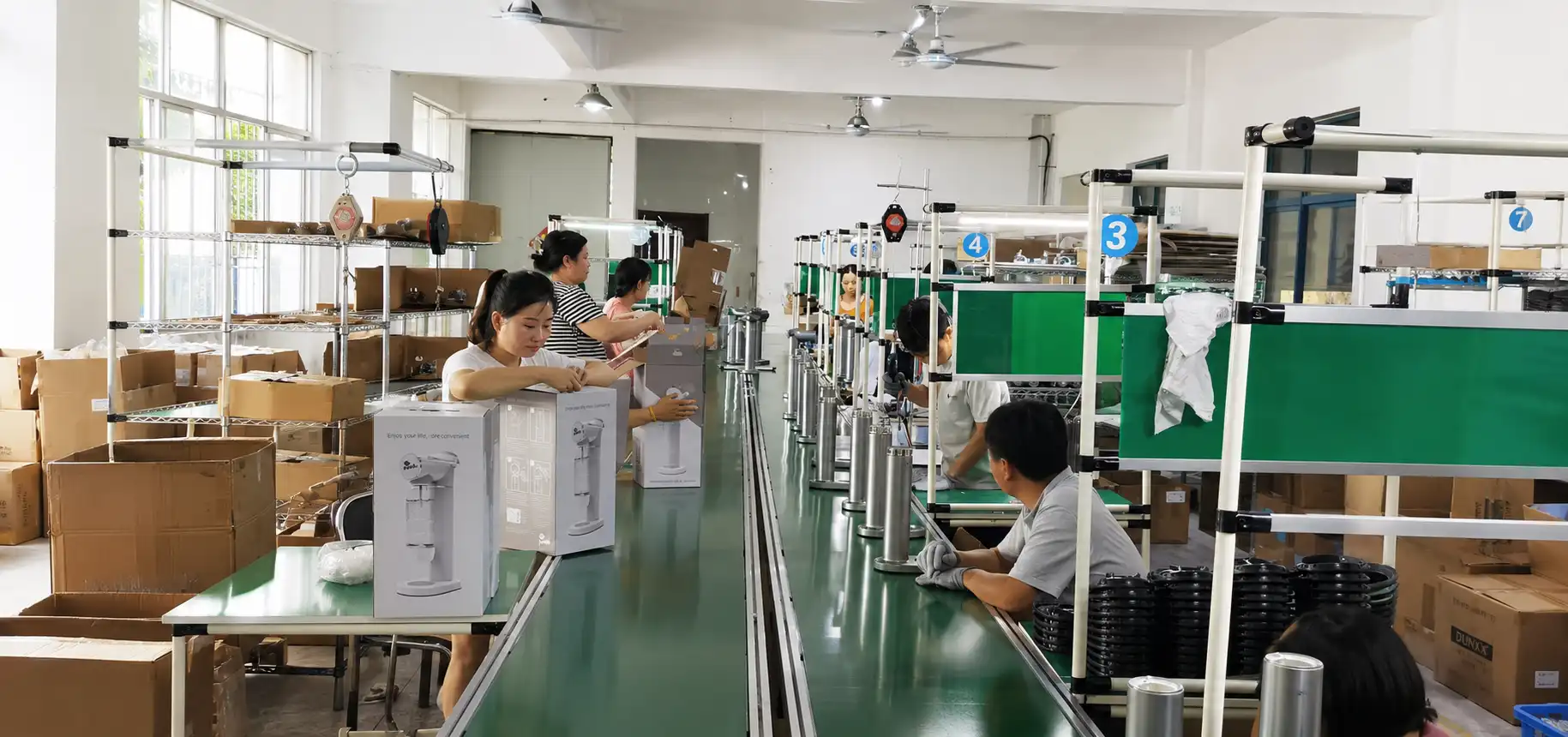
Quality control and production processes for global export. Two factory videos show what the document set cannot: laser logo marking for private label orders, so a brand owner can see how the logo is applied to the machine body; and pressure testing for OEM orders, showing the high-pressure gas check every unit passes. Watch both before the buyer meeting — a retailer who has seen the testing trusts the specification sheet more than one who has only read it.
Manual and Label Localization
Retail packaging for import must read correctly in the destination market. Manuals are printed in the target language, safety warnings are formatted to local consumer requirements, and carton marks follow the warehouse format. Logo placement, color box artwork, and manual language are confirmed before bulk production begins, so the delivered goods match the approved sample. If your market requires a specific warning wording or a specific mark format, send it with the inquiry — localization fixed after production is far more expensive than localization fixed at artwork approval.
What to Prepare Before Requesting a Quote
To help us provide the fastest and most accurate FOB/CIF quotation, please gather this information: target country, preferred model (for example G720), first order quantity, CO2 cylinder type, PET bottle quantity, packaging language, logo and private label need, shipping term (FOB/CIF), destination port, and whether you need a sample first.
Ready to Import Home Soda Makers?
Fill out the details below for a fast, accurate factory quotation.
Related guides: soda maker models.
Frequently Asked Questions by Importers
Answers to common queries regarding sourcing, shipping, and customization.