
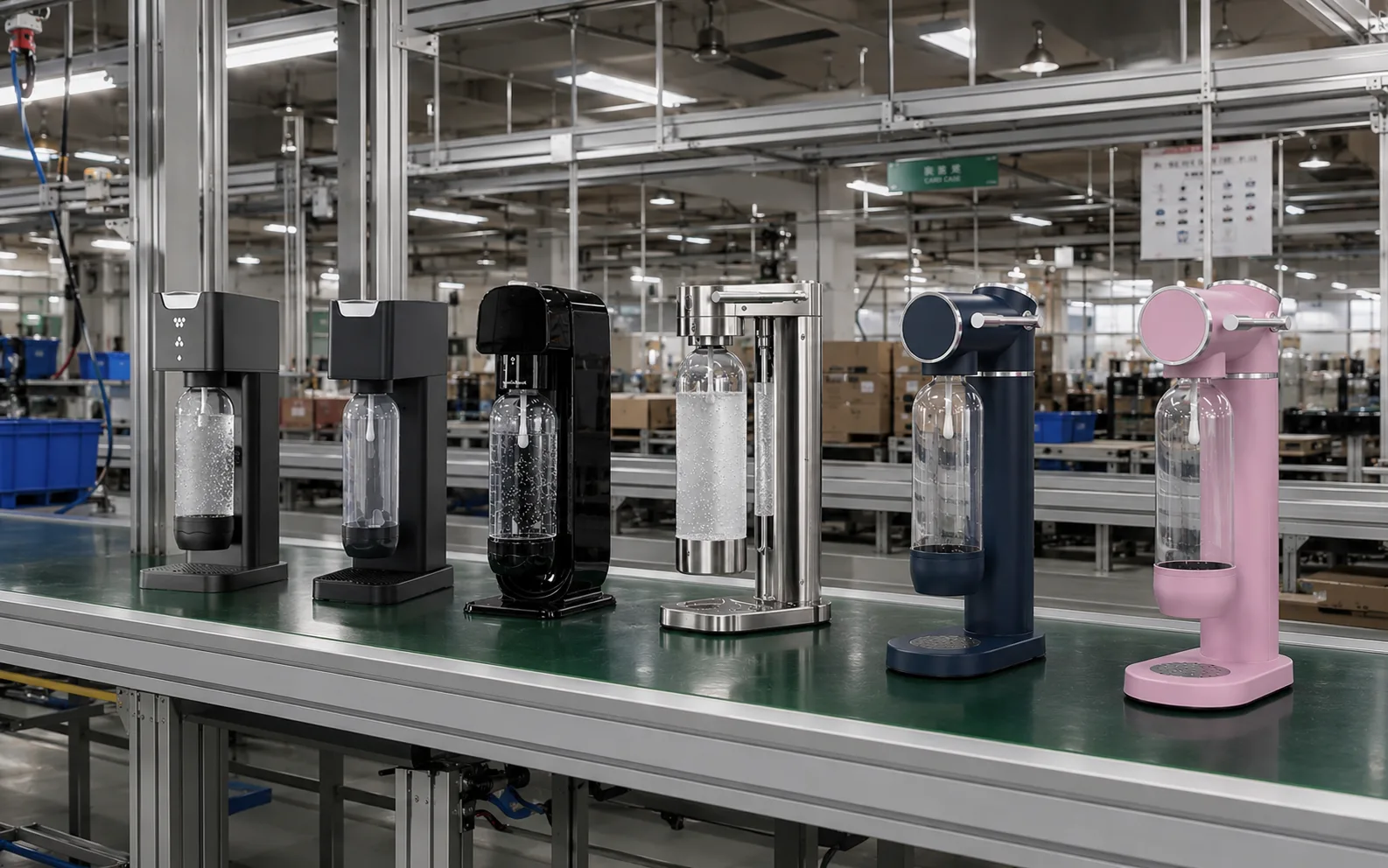
Home Sparkling Water Makers for Brand Product Lines
Cheersoda supplies factory-made sparkling water makers and soda makers for importers, distributors, appliance brands, and private-label product programs. Buyers can select standard models, confirm packaging, match bottles and accessories, and prepare samples before mass production.
This page is the working overview of that supply: what the product is, how the range divides, how a unit is built and checked, and how an OEM project runs from first inquiry to export carton. Every figure on it — capacity, MOQ, lead times, testing — is the same figure carried on the model pages and the factory pages, because a sourcing decision made on one page has to survive being checked on another.
What Is a Sparkling Water Maker for OEM Projects?
A sparkling water maker is a manual home carbonation system used to carbonate bottled water with food-grade CO2. The user locks a filled bottle into the machine, presses a button or a lever, and CO2 from a threaded cylinder dissolves into the water under pressure — no electricity, no plumbing, no consumable pods. For B2B buyers, the product is usually sourced as a private-label appliance with selected body design, bottle type, packaging, instruction manual, and accessory configuration. Cheersoda supports this process from model selection to sample review and mass production.
The naming varies by market, and the variation matters commercially rather than technically. "Sparkling water maker" is the water-focused term most European and North American brand programs use; "soda maker" is the broader shelf term; "seltzer maker" is the traditional US wording. Behind all three names sits the same manual platform — eight production models in this range — which is why this page treats the terms as one sourcing category and spends its length on the things that actually differ between projects: operation, body material, head design, bottle set, and the cylinder standard sold in the destination market.
One boundary is worth stating at the top: every model in the range is threaded. The machines take classic screw-in 425g / 60L cylinders (TR21-4 / M18×1.5), the standard that refill and exchange networks across Europe, the Americas, and most export markets are built on. None fits SodaStream Quick Connect, and no adapter exists — a fact buyers confirm before model selection, not after the first container.
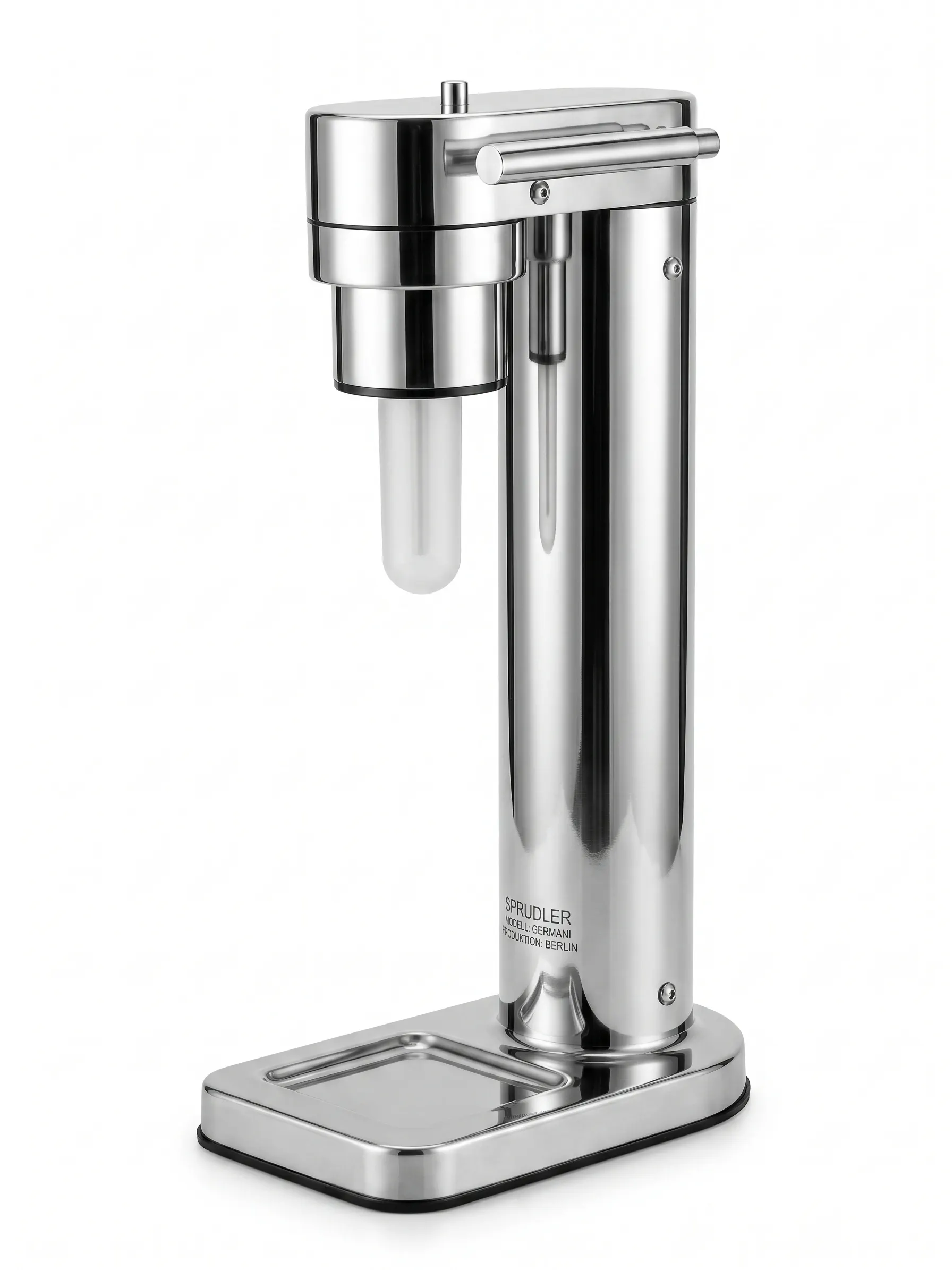
Factory-Side Sparkling Water Maker Supplier
Factory-side support for private-label, importer, and distributor programs.
| Company: | Qingdao Baishigao Life Electric Appliance Co., Ltd. |
|---|---|
| Brand: | Cheersoda |
| Location: | Qingdao, Shandong, China |
| Business Type: | OEM/ODM soda maker manufacturer |
| Product Category: | Sparkling water makers, soda makers, home carbonation systems |
| Buyer Type: | Importers, distributors, private-label brands, appliance companies |
"Factory-side" is a working description, not a slogan. It means the party answering your inquiry is the party that moulds the bodies, assembles the heads, runs the leak tests, and packs the cartons — model questions go to the people who build the model, document questions to the people who hold the files, and schedule questions to the people who run the line. For a buyer managing a launch date, that directness is worth more than a marginally faster first reply from an intermediary who has to ask the factory anyway.
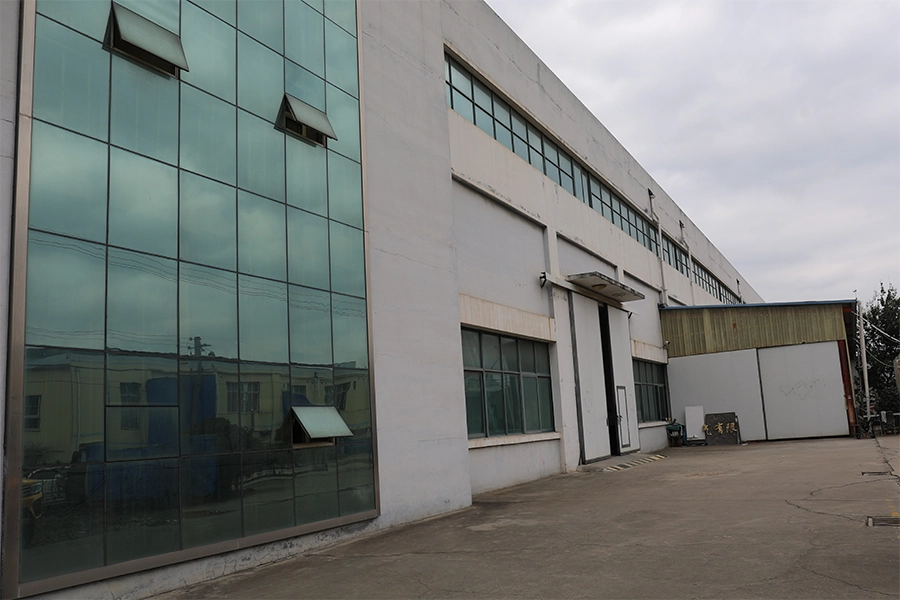
Factory Snapshot for Sparkling Water Maker OEM Buyers
Cheersoda operates from Qingdao and supports OEM/ODM sparkling water maker projects from model selection to production review. We focus on direct factory-side communication, sample review, assembly, testing, packing, and export preparation. Built for private-label brands, importers, distributors, and retail buyers.
The Qingdao plant covers 15,500 m² with 3 production lines, 6 injection machines and a 20,000 units/month capacity across the range, operates to ISO 9001, and has produced carbonation appliances since 2015. Thirty-five staff, including four dedicated QC, run the plant — small enough that a project is handled by named people, large enough to hold a multi-container schedule.
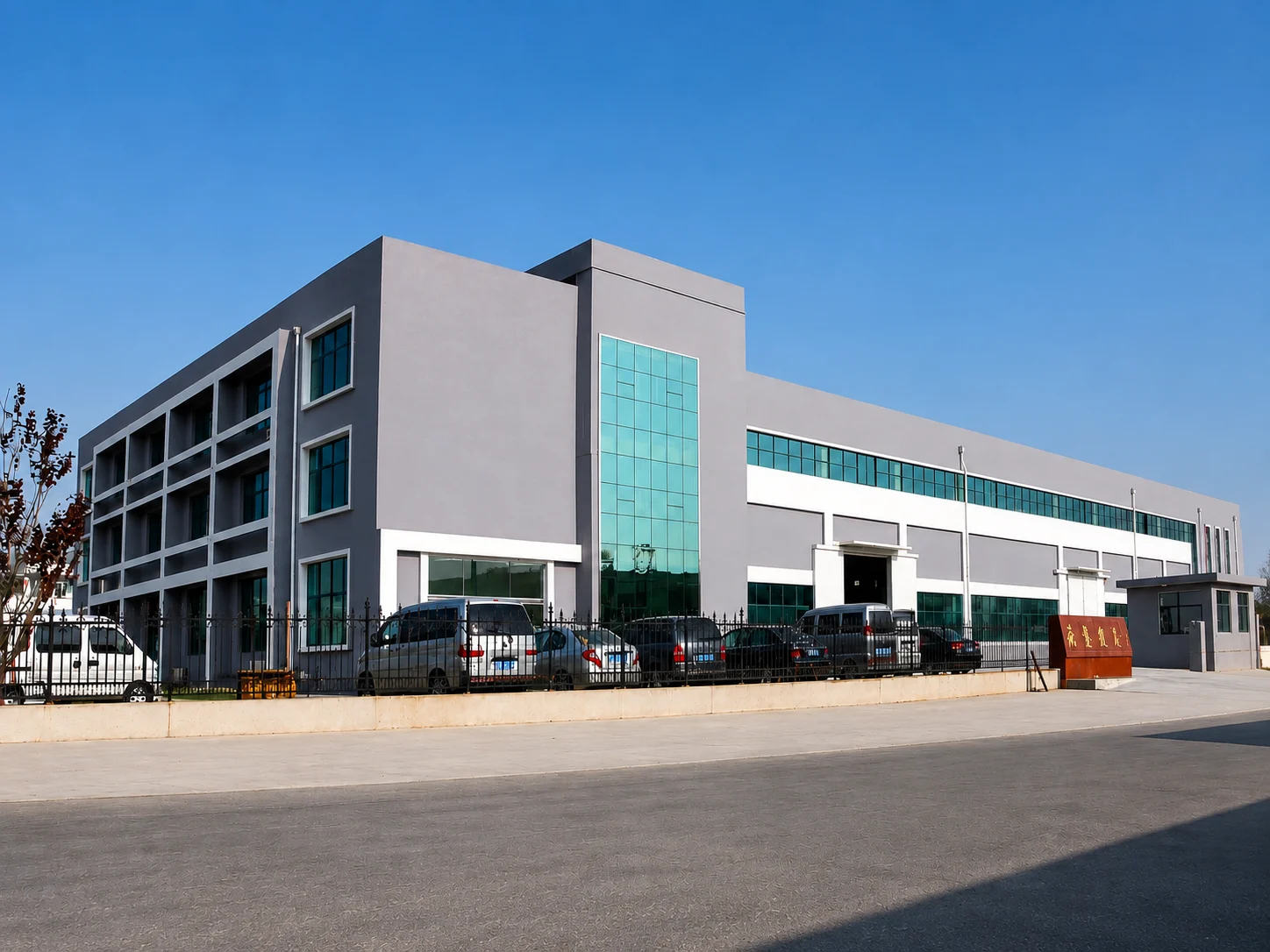
Qingdao Factory Exterior
Factory location and production base for soda maker OEM/ODM projects.
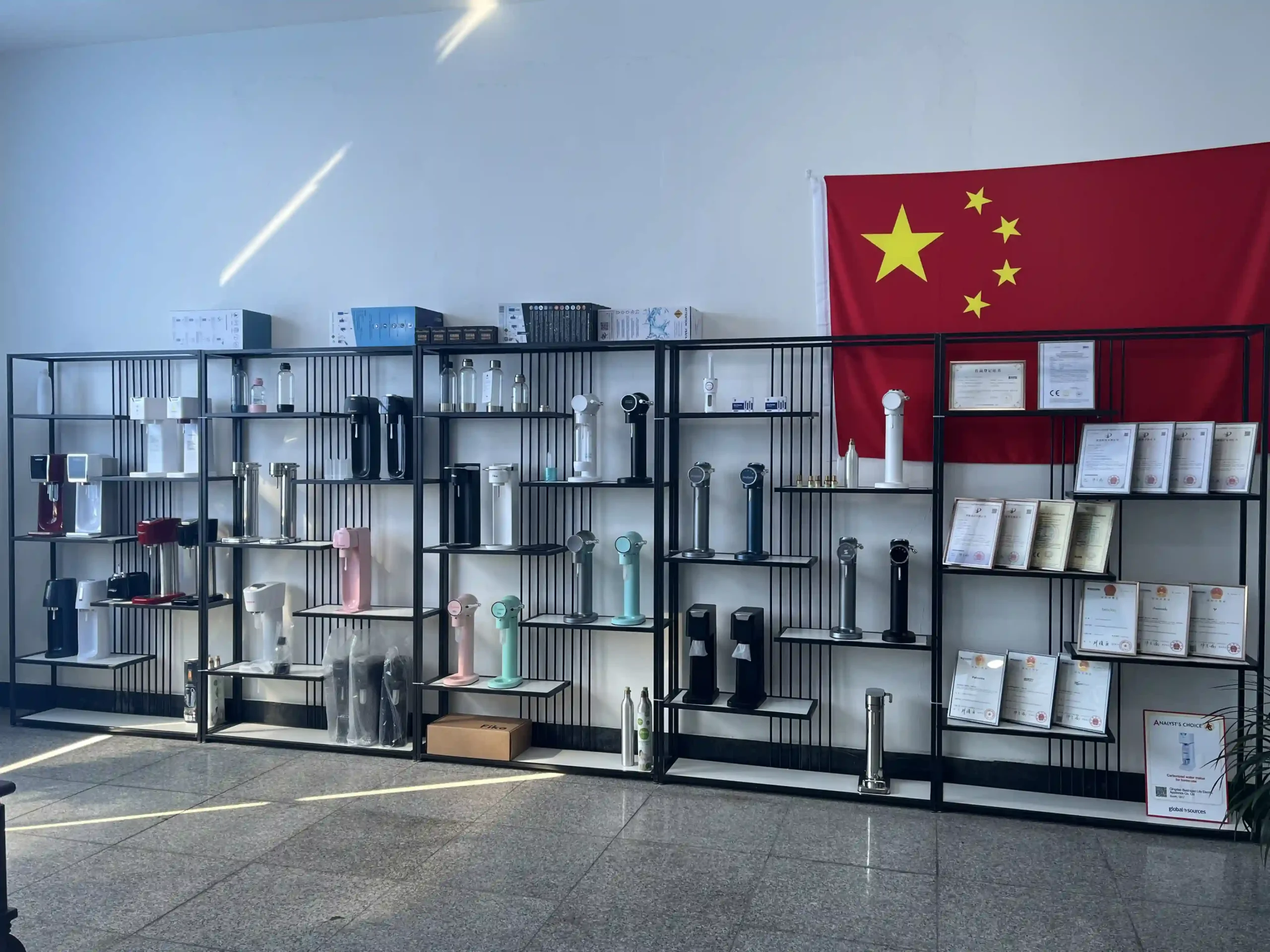
Sample and Model Review Area
Buyers can review available soda maker models, bottle matching, finish options, and packaging direction before sample approval.
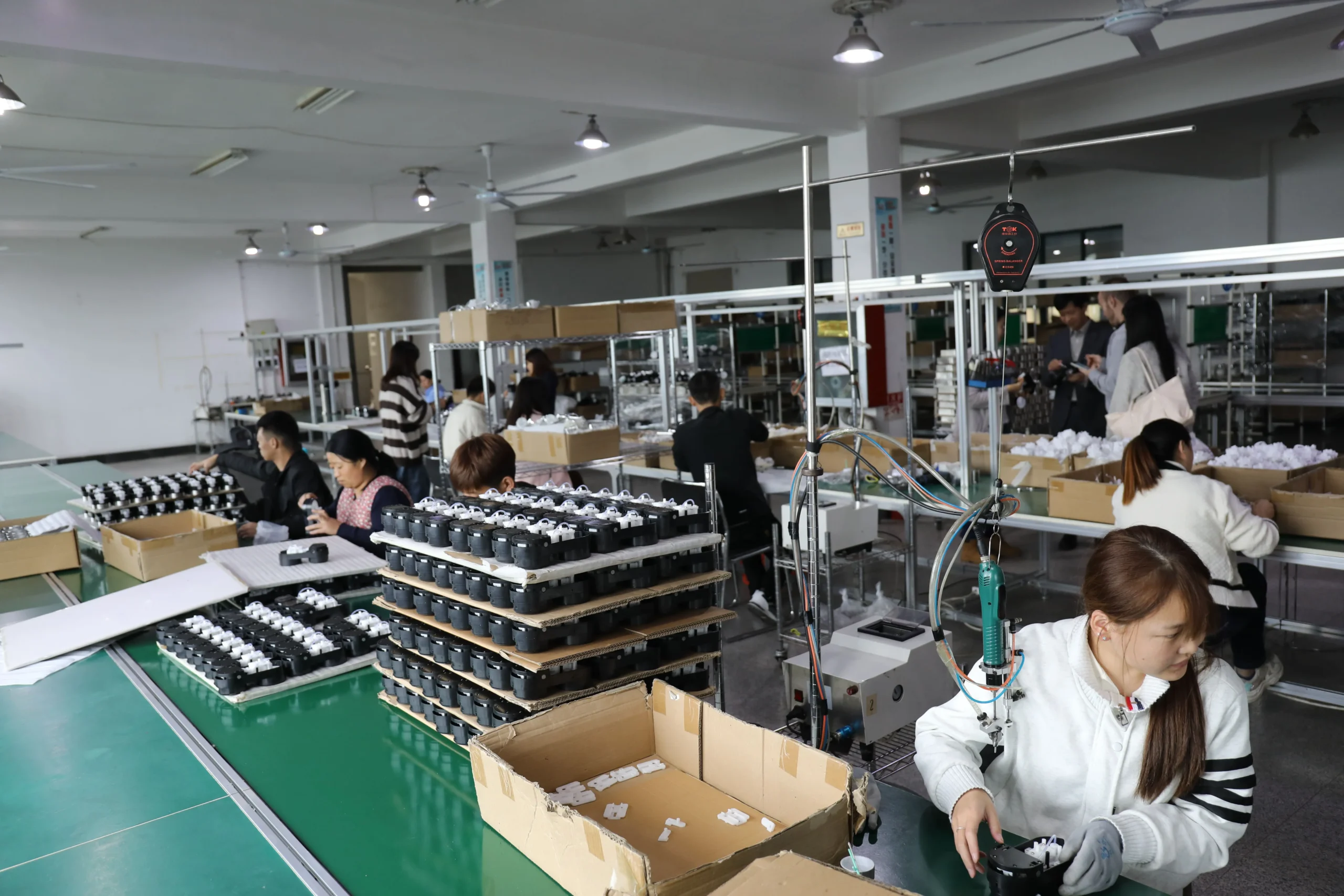
Assembly and Inspection Area
Product assembly, component fitting, and basic function checks are handled before packing.
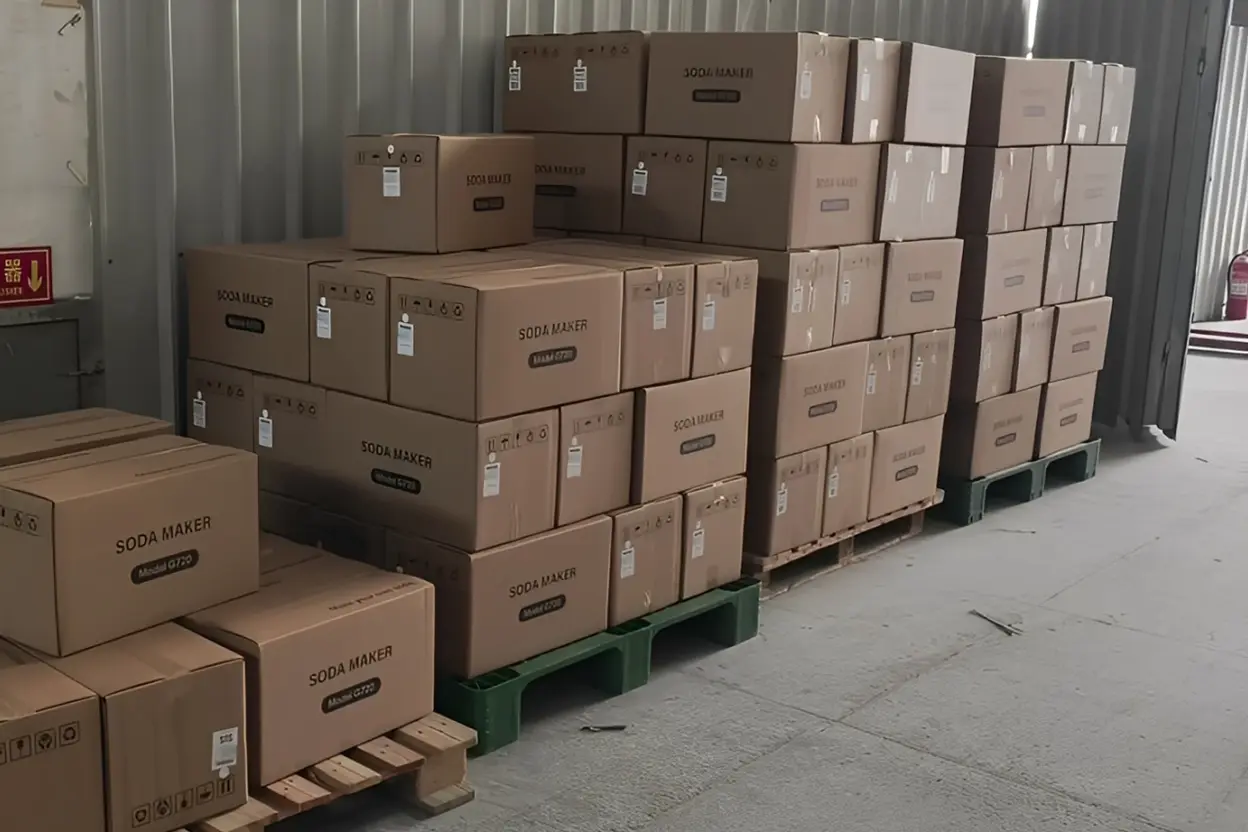
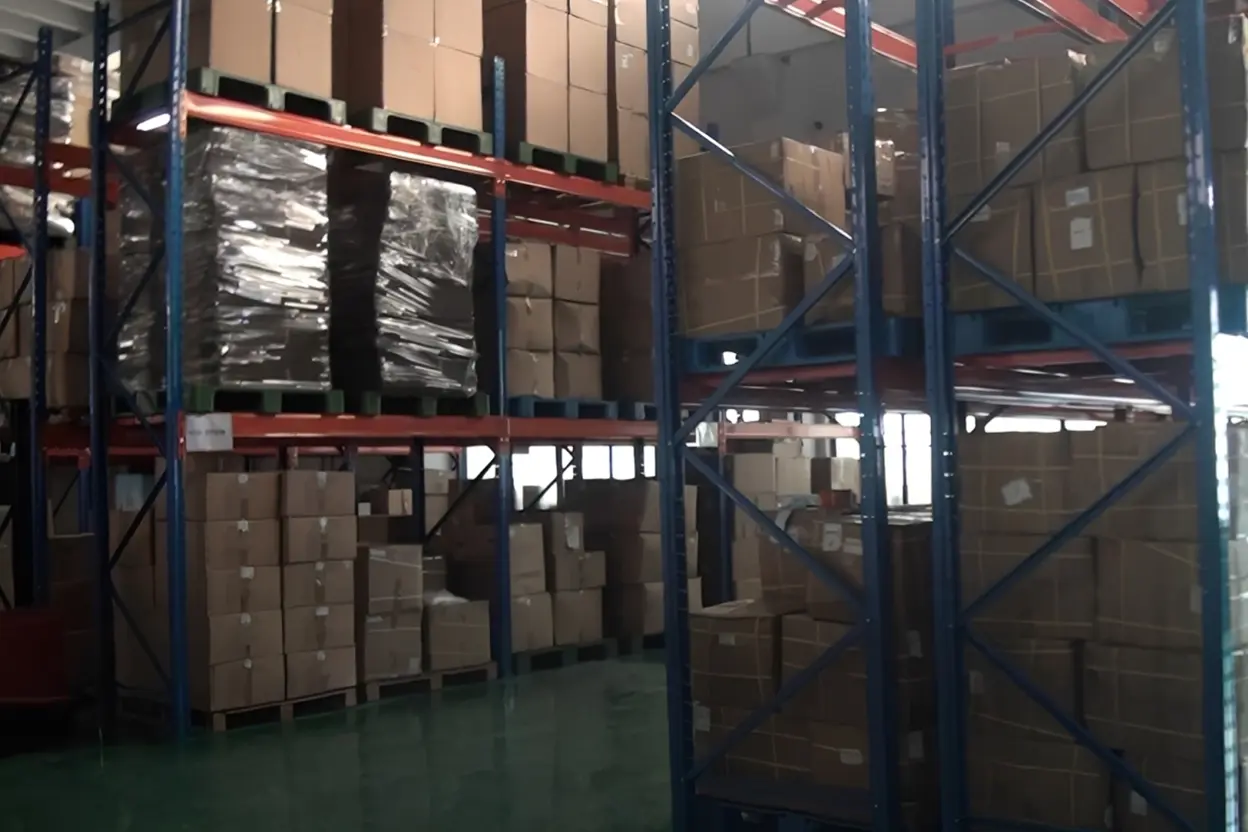
Packing and Shipment Preparation
Carton marks, retail boxes, accessory layout, and pre-shipment photos can be reviewed before delivery.
Sparkling Water Maker Product Range
Core configurations and terminology variations for global sourcing projects. The range is eight production models; the six entries below are the doors buyers actually walk through, and each door names the models behind it.
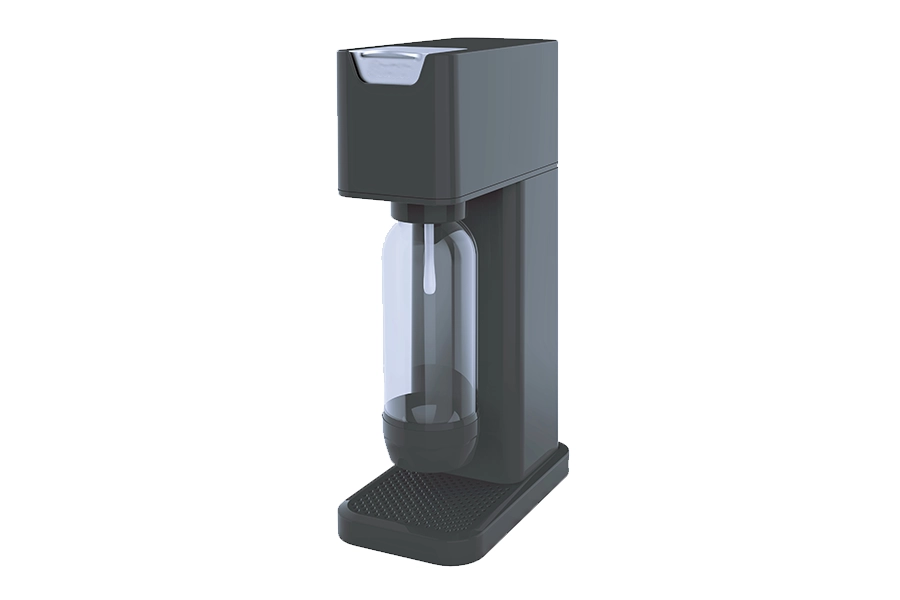
Standard Sparkling Water Maker
For private-label starter projects and distributor programs: the top-press plastic models (G3, G9, G8) that carry most first orders, because the specification is simple, the packing is efficient, and the retail price point is reachable.
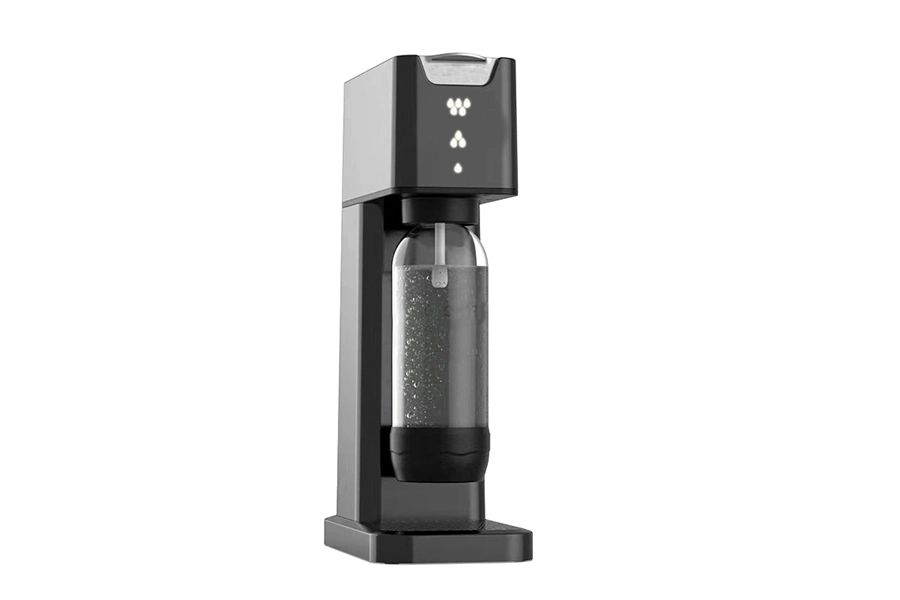
Push Button Soda Maker
Manual top-press operation, simple structure, suitable for retail packaging programs. The G3 adds an LED carbonation indicator; the G9 is the same platform with no electronics at all; the G8 adds a detachable head.
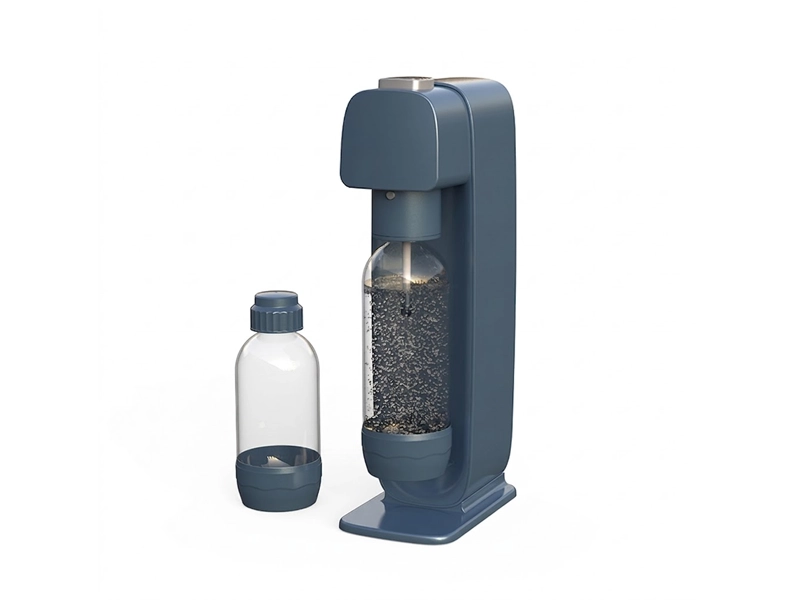
Metal Housing Soda Maker Option
For appliance brands needing stronger retail shelf presentation and a clearer product position: the stainless-steel X1, the range's compact metal entry with a manual press.
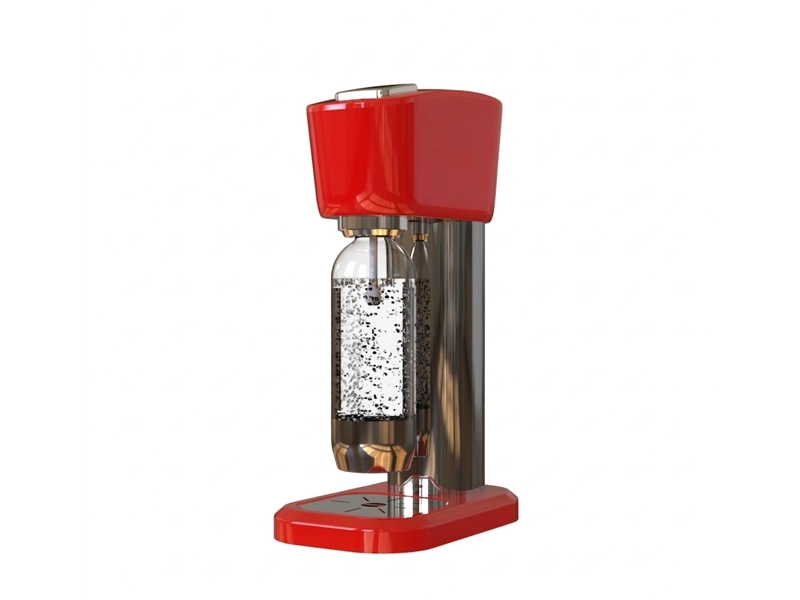
Seltzer Maker
Home carbonation models, bottle options and retail packaging support for US private-label programs, where "seltzer" is the word the shelf already uses.
Review Seltzer Maker Options →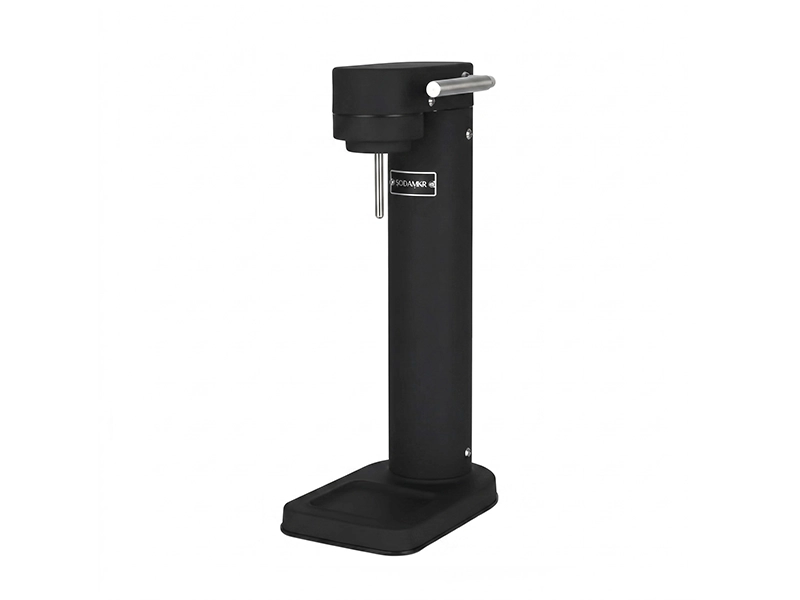
Stainless Steel Soda Maker
For metal housing and upper-tier OEM positioning: the full-304 G15 and G15 Pro.
View Stainless Steel Models →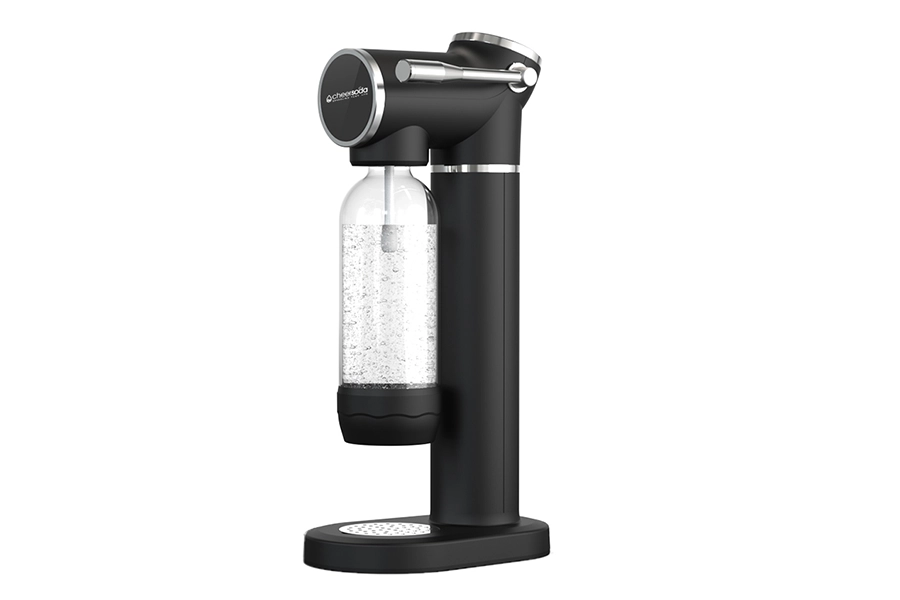
Carbonated Drink Maker
For projects requiring carbonation beyond water, where product structure allows: the G15 Pro by design, the G8 and G830 through project-confirmed trials.
View Drink Makers →Every model ships as a standard set of machine + 1L PET bottle (metal models with stainless base and cap), every model takes the same threaded cylinder, and every model is private-label capable from the same 300-unit MOQ — the differences that matter are operation, material, and head design, compared side by side on the models hub.
How B2B Buyers Choose a Sparkling Water Maker Model
Model selection usually starts with target market, expected retail price, packaging format, and accessory configuration. Cheersoda can help buyers compare standard structures before sample confirmation.
The working checklist experienced buyers bring:
- target market
- retail price range
- body material
- bottle capacity
- CO2 cylinder compatibility
- packaging format
- MOQ & customization
- compliance document needs
Two of those items decide more than the rest. The cylinder standard decides whether the product can be sold at all in the destination market — a threaded machine in a Quick-Connect-only retail environment is dead stock, whatever its price. And the retail price range decides the body: plastic platforms carry volume price points, stainless platforms carry the premium shelf, and no amount of finish work moves a model convincingly from one shelf to the other. Fix those two first and the model list usually narrows to one or two candidates, which is exactly the state a sample order should start from.
OEM and Private Label Options
Customization depends on selected model, MOQ, artwork confirmation, and production schedule.
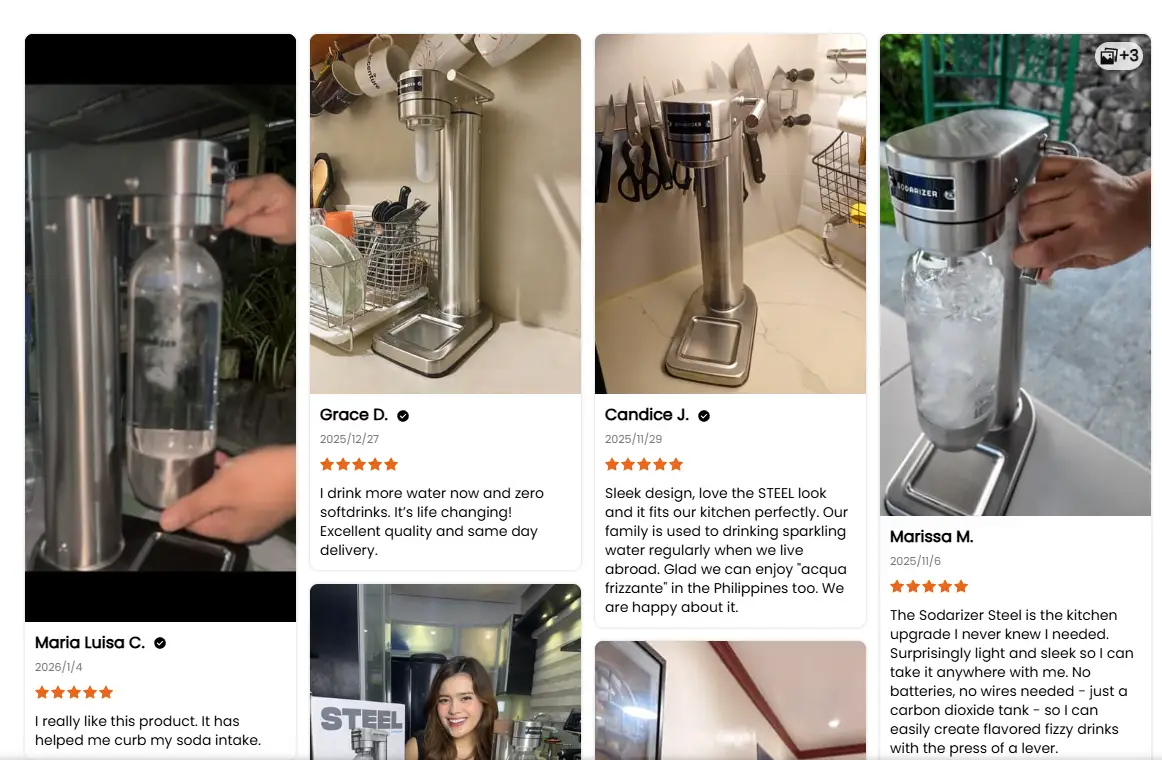
The scopes are standard; the discipline is in the confirmation sequence. Colours and finishes are approved on the physical sample, not on a screen rendering; logo position is checked on the curved surface it will sit on; box artwork and manual wording are frozen before printing, not during packing. Programs that respect that sequence launch with the product they approved. Programs that approve from PDFs discover the difference at the photo stage, when the only remaining fix is a delay.
Learn more about private label soda maker projectsWholesale Soda Maker Supply for Importers and Distributors
Cheersoda supports B2B batch supply, sample confirmation, packaging approval, and shipping documents. We operate as a factory-side partner, not a retail wholesale marketplace.
- Standard model supply
- Bulk order discussion
- Export carton planning
- Private label packaging & accessory matching
- Factory-side communication
The distinction matters for how orders behave. A marketplace seller optimizes for the transaction; a factory partner optimizes for the repeat — the same model, the same packing, the same document set, order after order, with the approved sample retained as the reference both sides measure against. Distributor programs in particular live or die on that consistency, because the second container is sold against the reputation of the first. Trial orders of 300 units in the full intended configuration are the standard bridge between a sample and the first 300-unit production run.
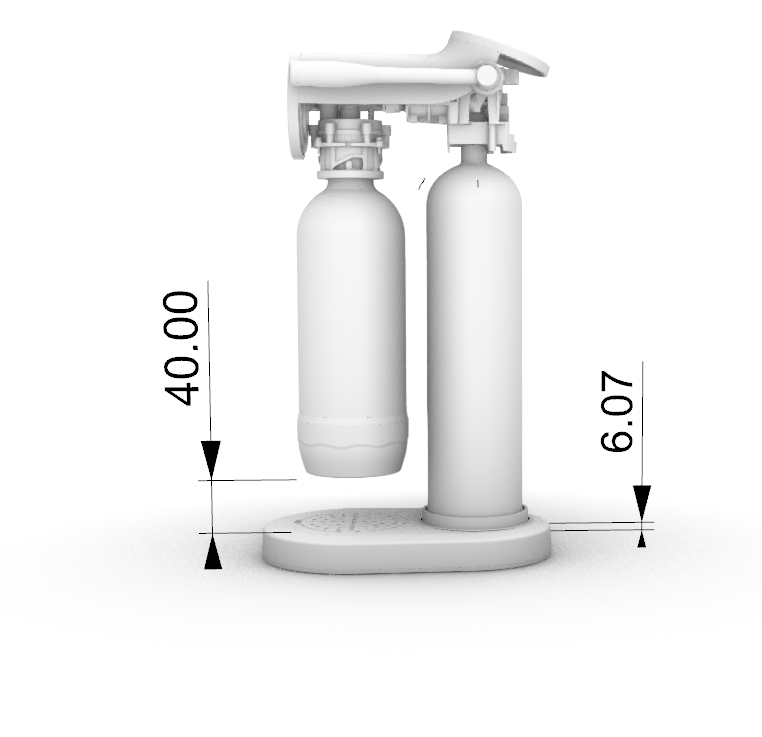
Manual Home Carbonation System Structure
Understanding the core components for soda maker machine manufacturing.
-
1
Main body The housing structure, in plastic or stainless steel depending on the model, carrying the cylinder chamber and the bottle lock.
-
2
Carbonation button or lever The mechanical trigger for releasing CO2 into the bottle: a top press on the G3, G9 and G8, a lever on the G720, G830, G15 and G15 Pro, a manual press on the X1. No model uses electricity to carbonate.
-
3
Bottle locking area The screw-in interface that secures the bottle during carbonation; fit is model-specific and is confirmed on samples.
-
4
CO2 cylinder connection A threaded connection (TR21-4 / M18×1.5) for classic screw-in 425g / 60L cylinders, on every model in the range. The range does not fit Quick Connect cylinders, and no adapter is offered.
-
5
Pressure release structure & compatible bottle system Safety valves to vent excess pressure — double safety valves across the range, with automatic pressure release on the models that carry it — and the matched pressure-resistant bottle the system is tested with.
Five parts, one job: hold pressure safely, release it predictably, and do it the same way on the ten-thousandth cycle as on the first. The structure has no electronics to fail (the G3's LED indicator is the single exception, and it only reports the cycle — a CR123A cell runs the light, never the carbonation), which is why the manual platform suits markets where service networks are thin and a product that cannot break down electrically earns its shelf place.
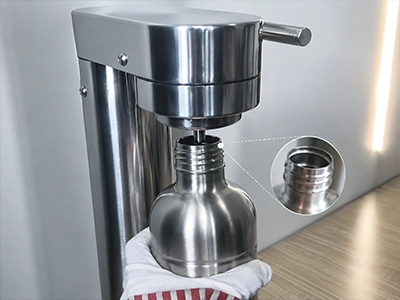
Bottle and Accessory Matching
A sparkling water maker is not a standalone unit. B2B buyers usually need to confirm bottle capacity, material, packaging combinations, CO2 cylinder compatibility, instruction manuals, and accessories.
PET bottles
Standard BPA-free carbonation bottles: 1L in every model's standard set, 500 ml available in the range.
Stainless steel bottles
Reusable bottle options for programs whose positioning supports a metal accessory.
CO2 cylinder accessories
Valves and connection parts around the threaded standard.
Caps & spare parts
Replacement caps and seals, planned at quotation rather than after launch.
Cheersoda also supplies the carbonation hardware behind these programs as a water carbonator manufacturer — machines, bottles and threaded cylinders from one factory, which is what makes a multi-model program's accessory planning simple: one bottle standard to check per model, one cylinder standard for the whole range.
Sparkling Water Maker Manufacturing Process
Each order follows confirmed specifications, sample approval, and inspection steps before shipment.
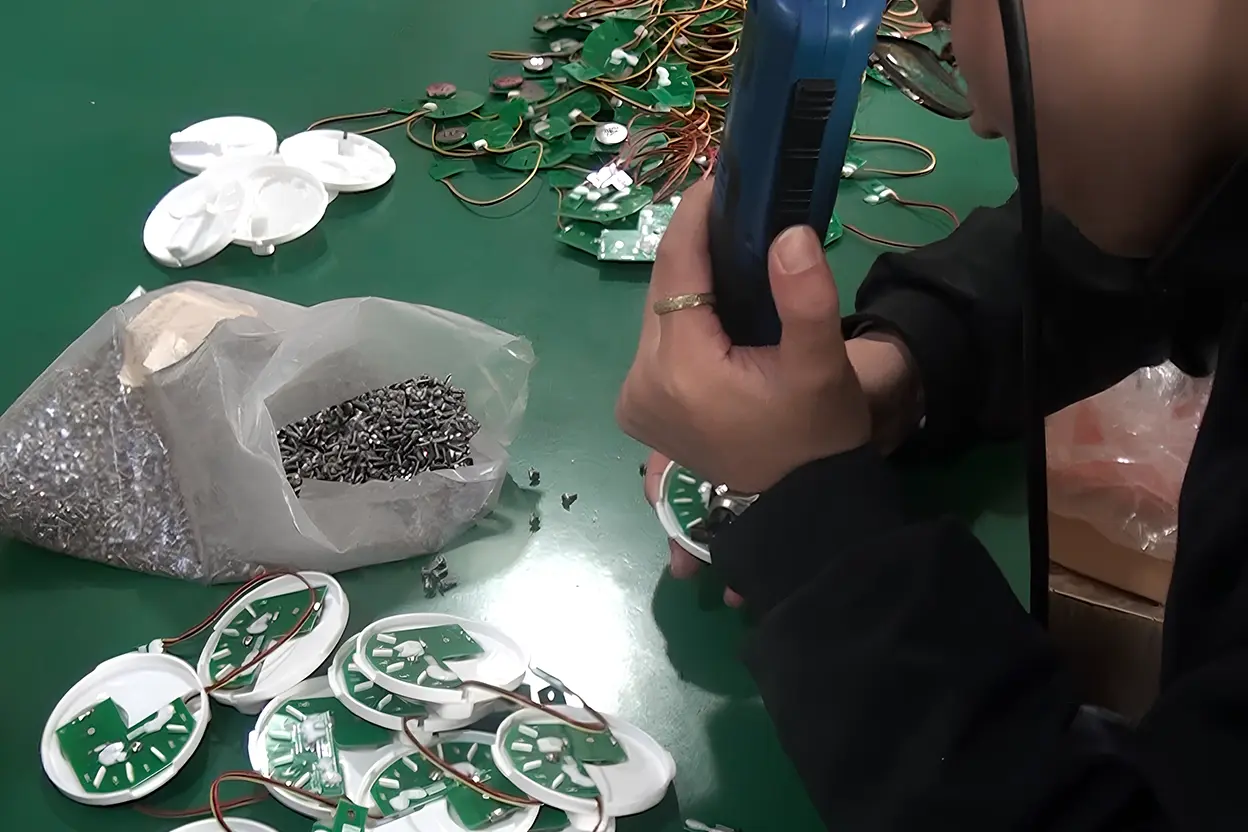
Component preparation & body assembly
Moulded bodies and components are prepared against the confirmed model's specification.
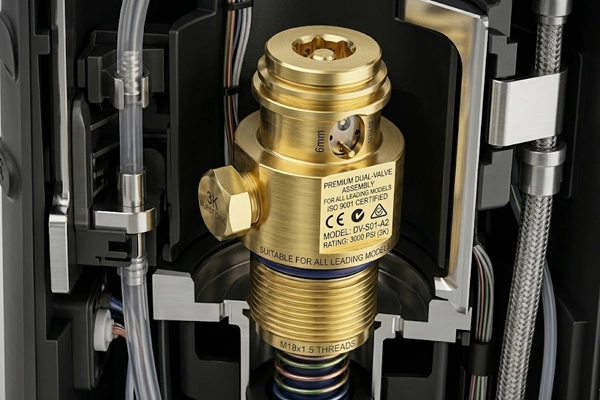
Valve and bottle fitting
The brass valve core and the bottle interface are fitted and checked as a pair, because the seal between them is where carbonation performance lives.
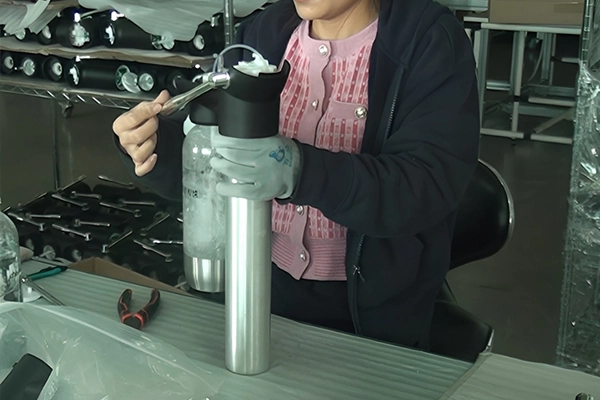
Wet leak testing & appearance inspection
Every finished unit passes a 100% wet leak test and a high-pressure gas check before it is allowed to be packed.
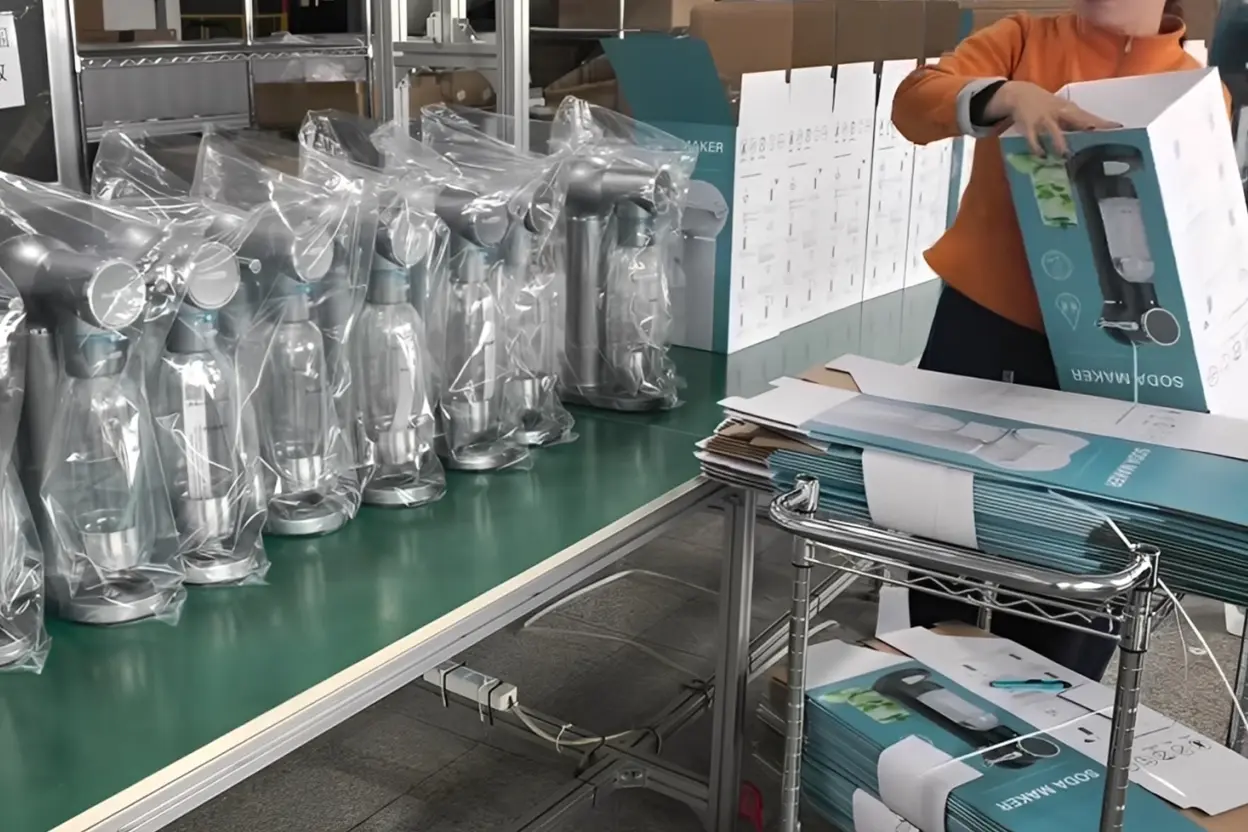
Packaging inspection & export packing
The retail set is checked against the approved sample's configuration before the export carton is sealed.
Production Evidence From Our Soda Maker Assembly Line
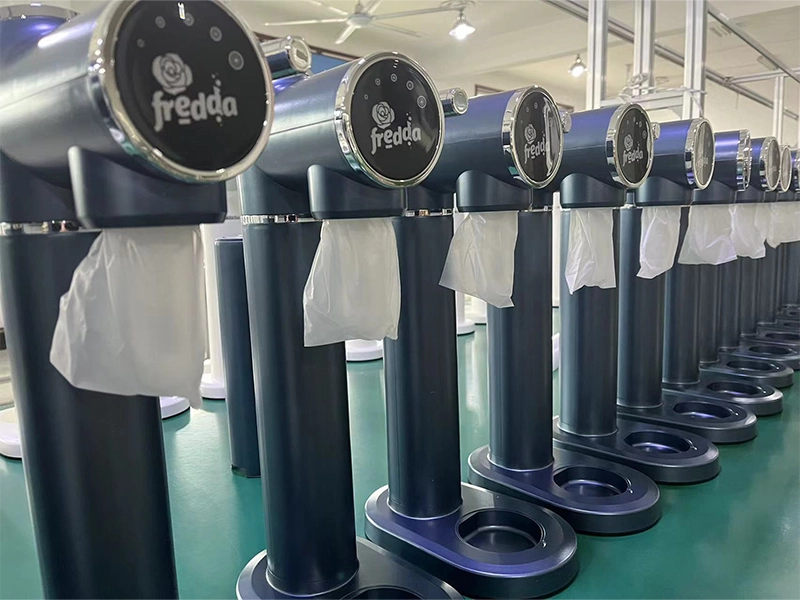
Sparkling water maker manufacturing and home carbonation system assembly are reviewed through a step-by-step factory workflow. For OEM buyers, the critical checkpoints in factory-side manufacturing include component preparation, soda maker assembly for the machine head, bottle matching, leak testing, and packing control before shipment.
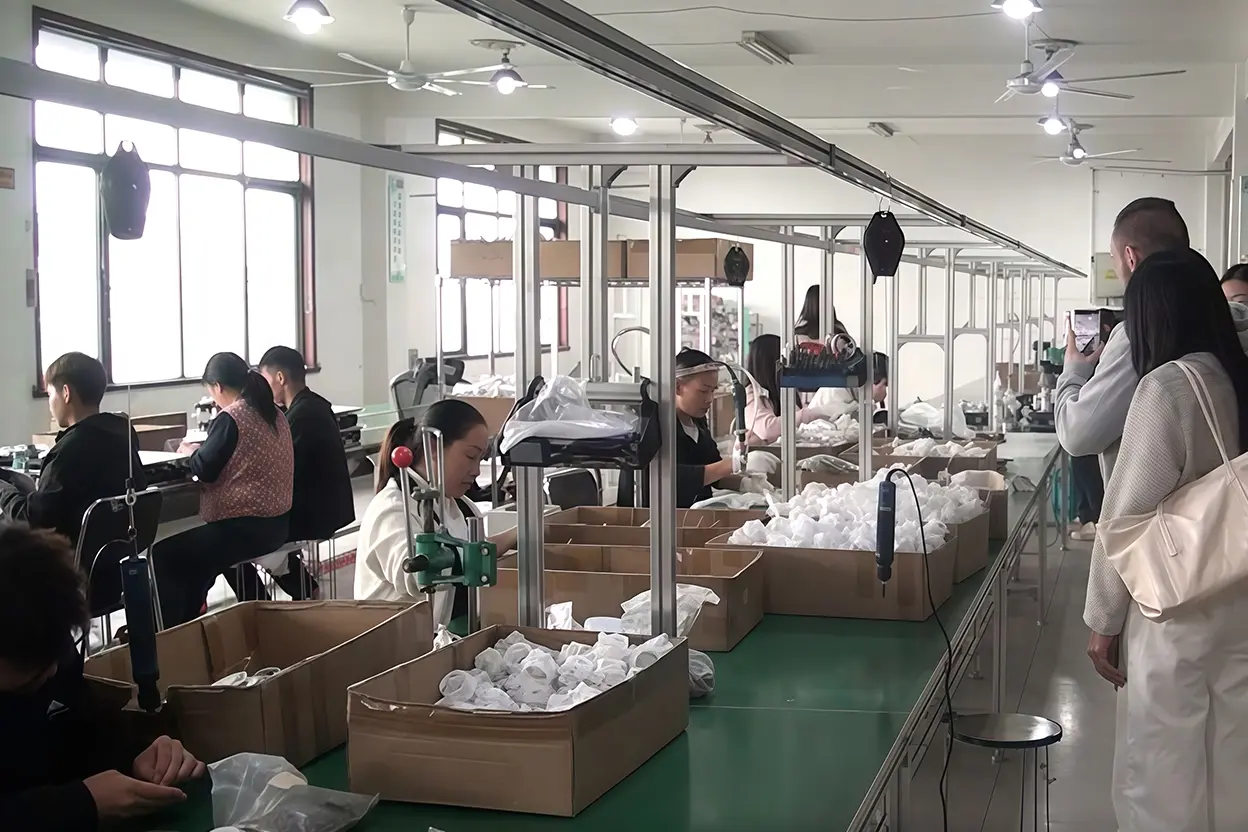
Step 1 — Production Line Review
Production line planning helps match the selected soda maker model, order quantity, and packing requirement.
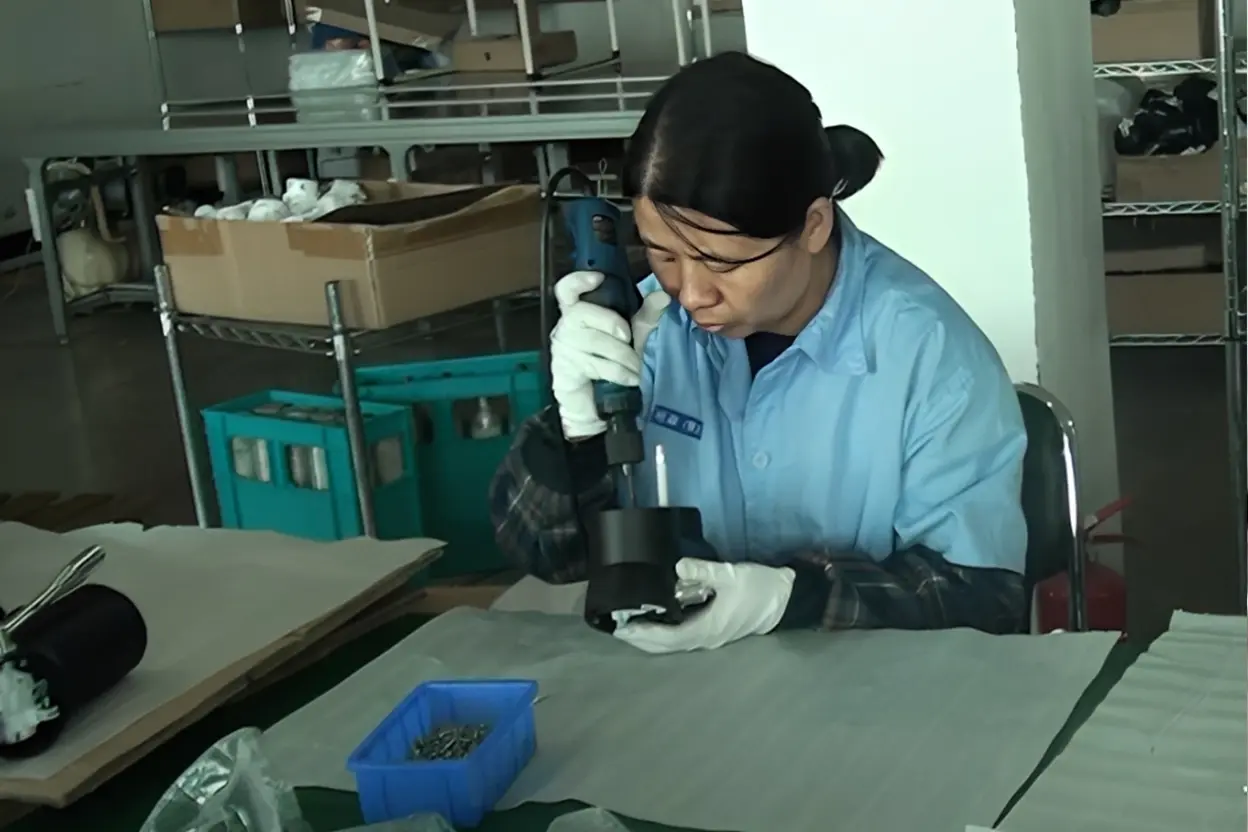
Step 2 — Machine Head Assembly
Machine head and key carbonation components are assembled and checked before the unit moves to function review.
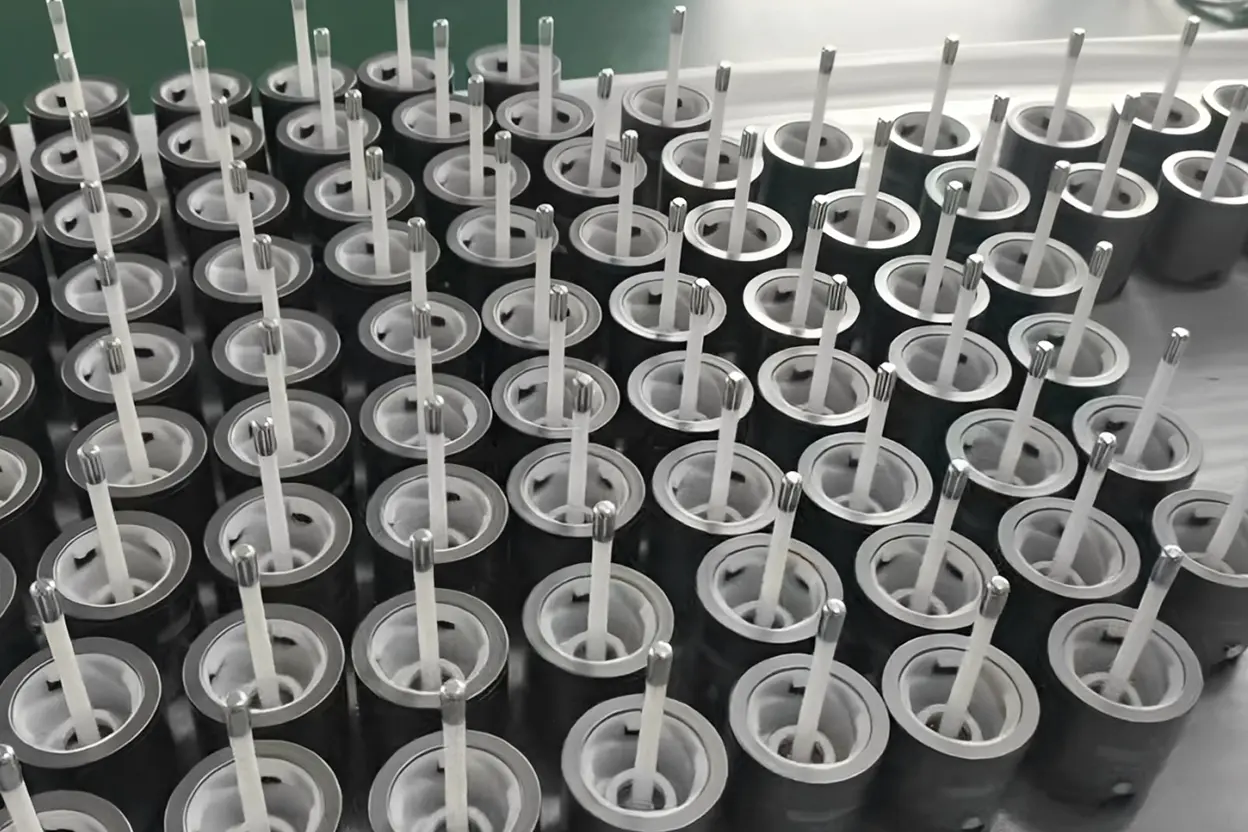
Step 3 — Component Production
Core parts and fittings are prepared according to the confirmed model and private-label order requirement.
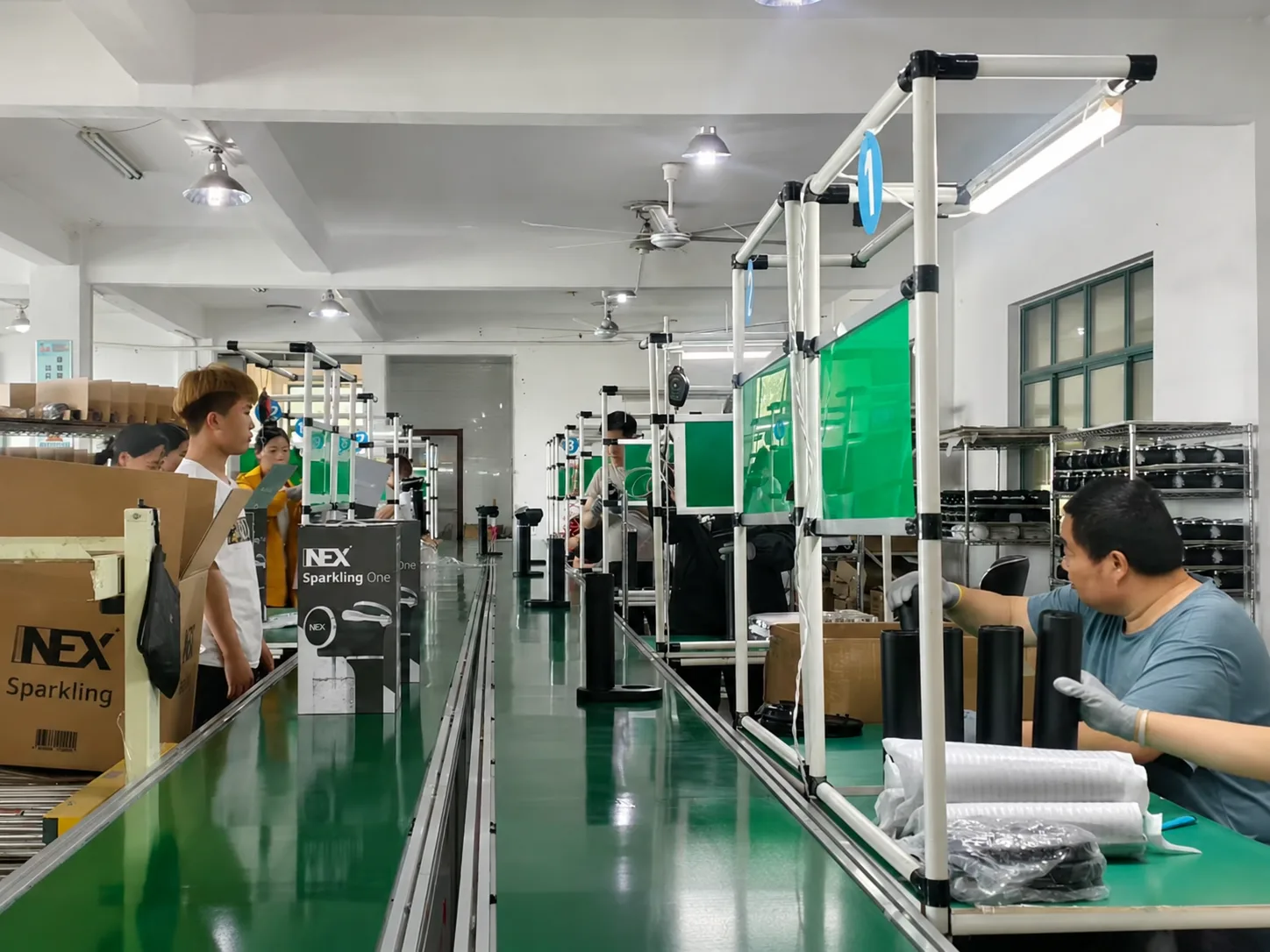
Step 4 — Assembly Line Check
Assembly flow, product handling, and basic inspection steps are reviewed before packing.
Evidence is a sourcing tool, not decoration. A buyer who has seen the head assembled, the valve fitted, and the leak test run — on video, in photos, or in person — is pricing a known process; a buyer who has only seen finished-product photography is pricing a promise. This page links the evidence at the points where the claims are made, which is where it belongs.
Watch Factory VideosQuality Checks Before Shipment
Production quality is monitored at key assembly stages to ensure carbonation performance and safety.
Testing and Compliance Proof Buyers Can Review
As part of our commitment to transparent OEM soda maker compliance, buyers can access detailed soda maker testing records. Our sparkling water maker quality control process ensures products meet targeted regional standards, including LFGB, EU FCM, and RoHS guidelines.
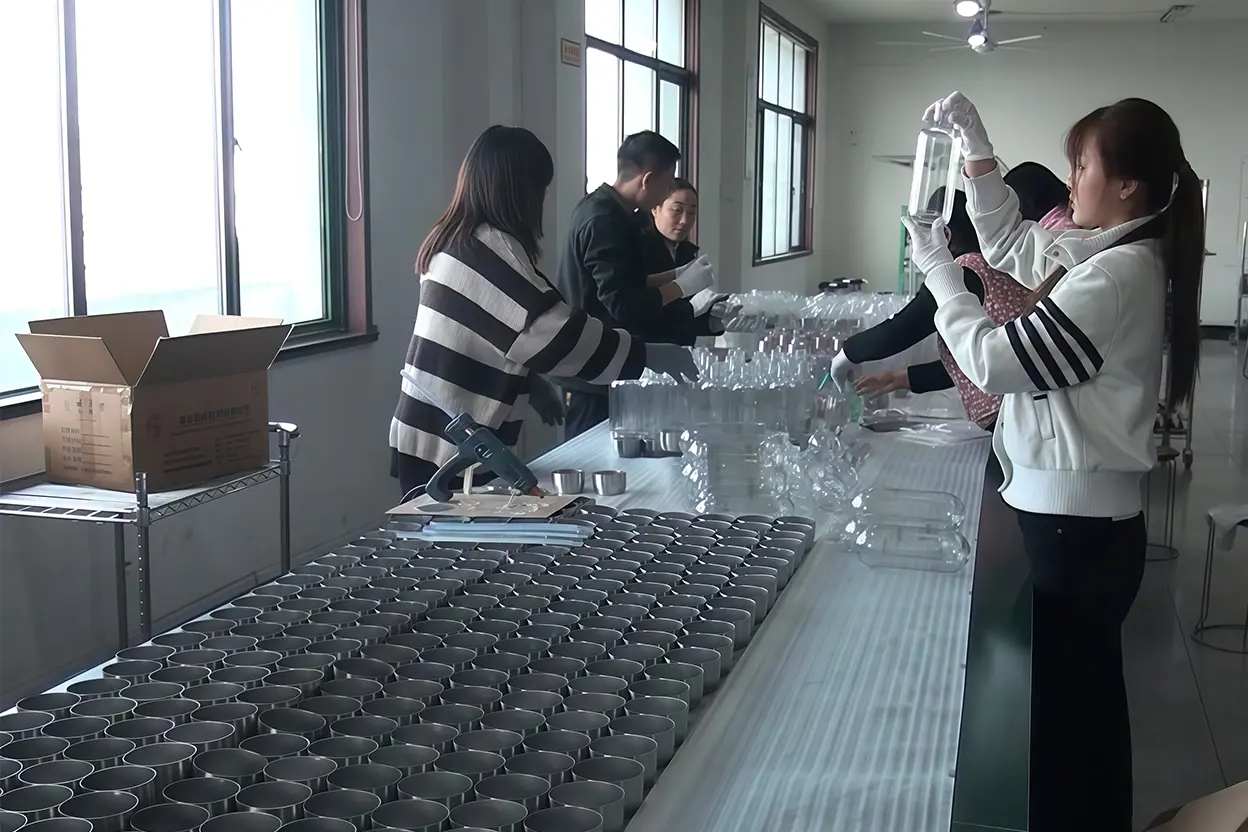
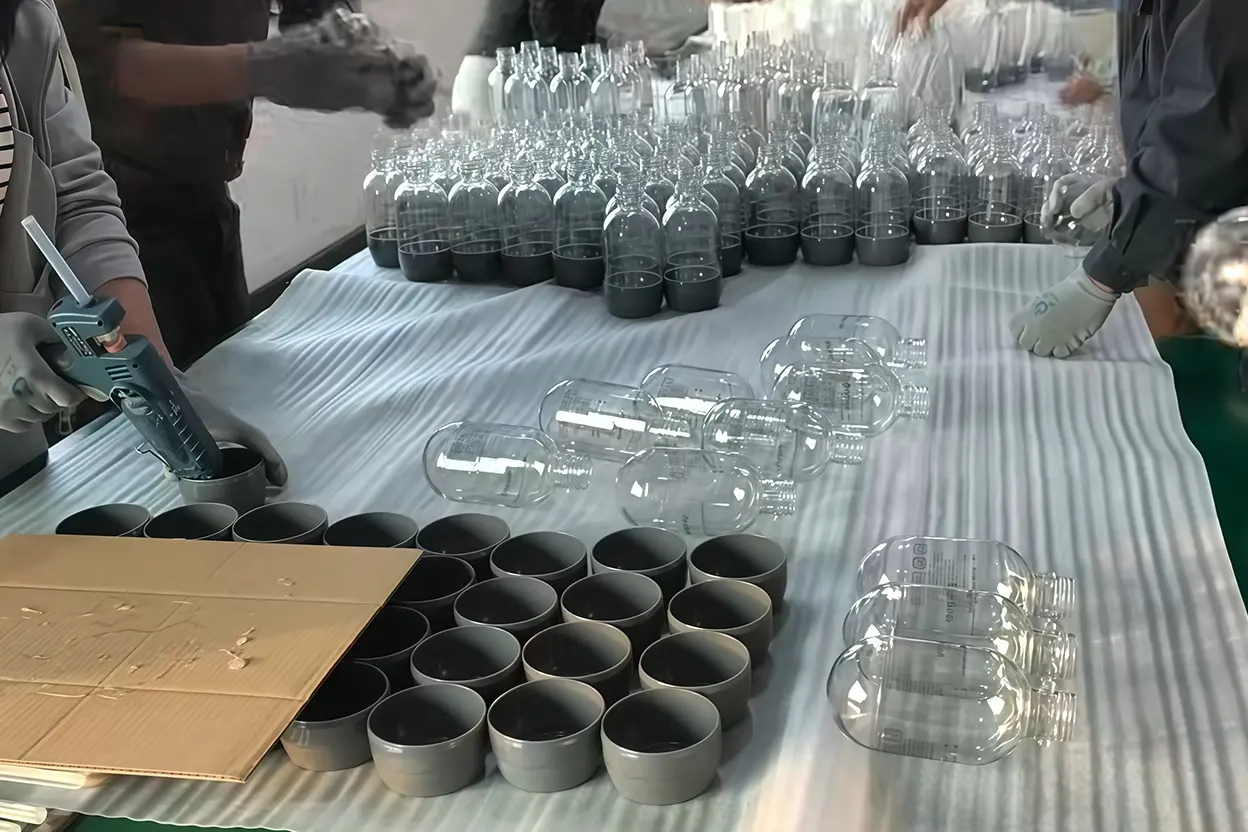
Bottle Detection
Bottle size, fitting, and basic appearance are reviewed before matching with the selected soda maker model.
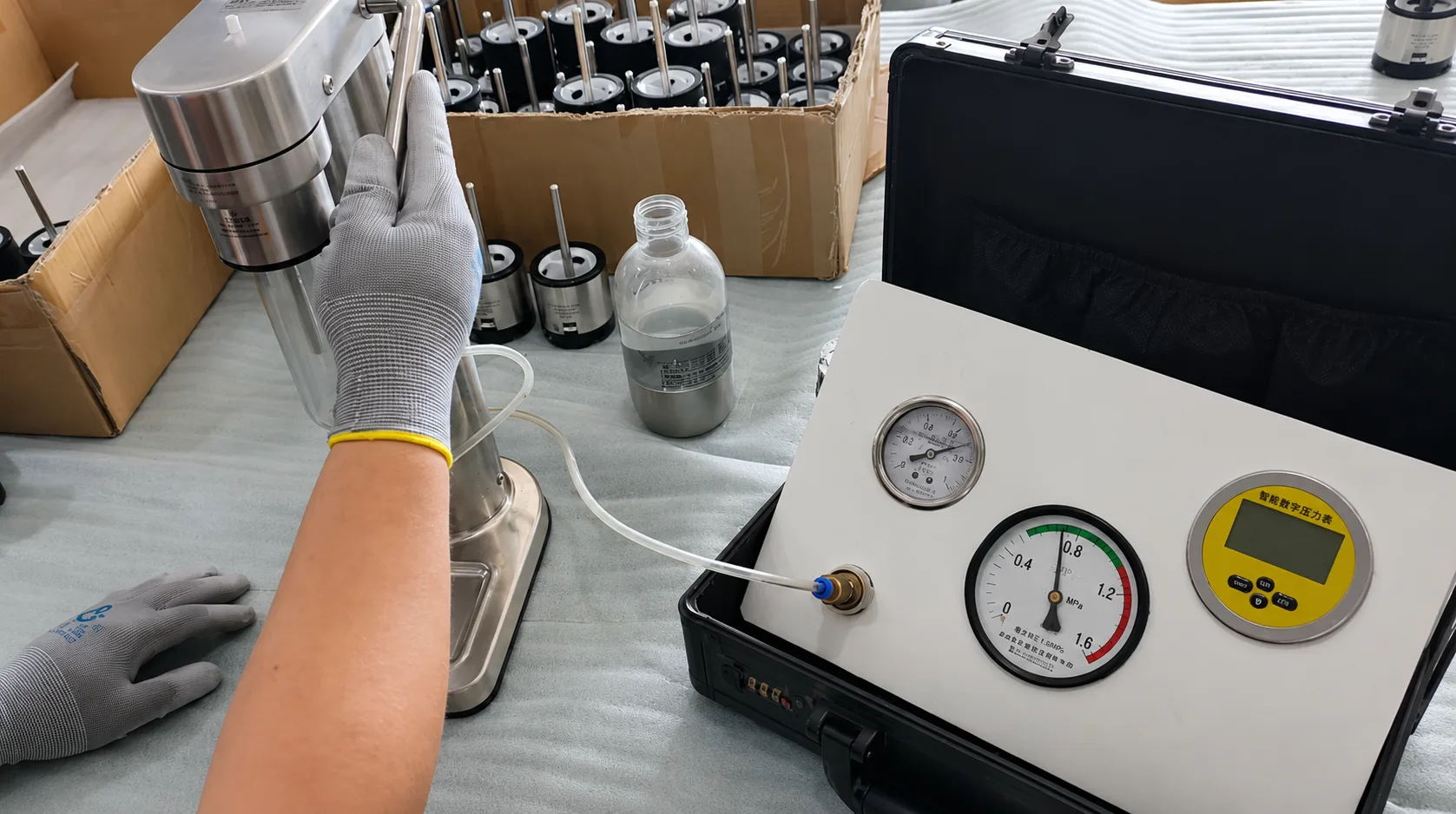
Pressure Test Review
Pressure-related checks are reviewed according to the selected model, bottle configuration, and order requirement.
Wet Leak Testing
Water-contact and leakage-related checks help confirm basic sealing performance before packing.
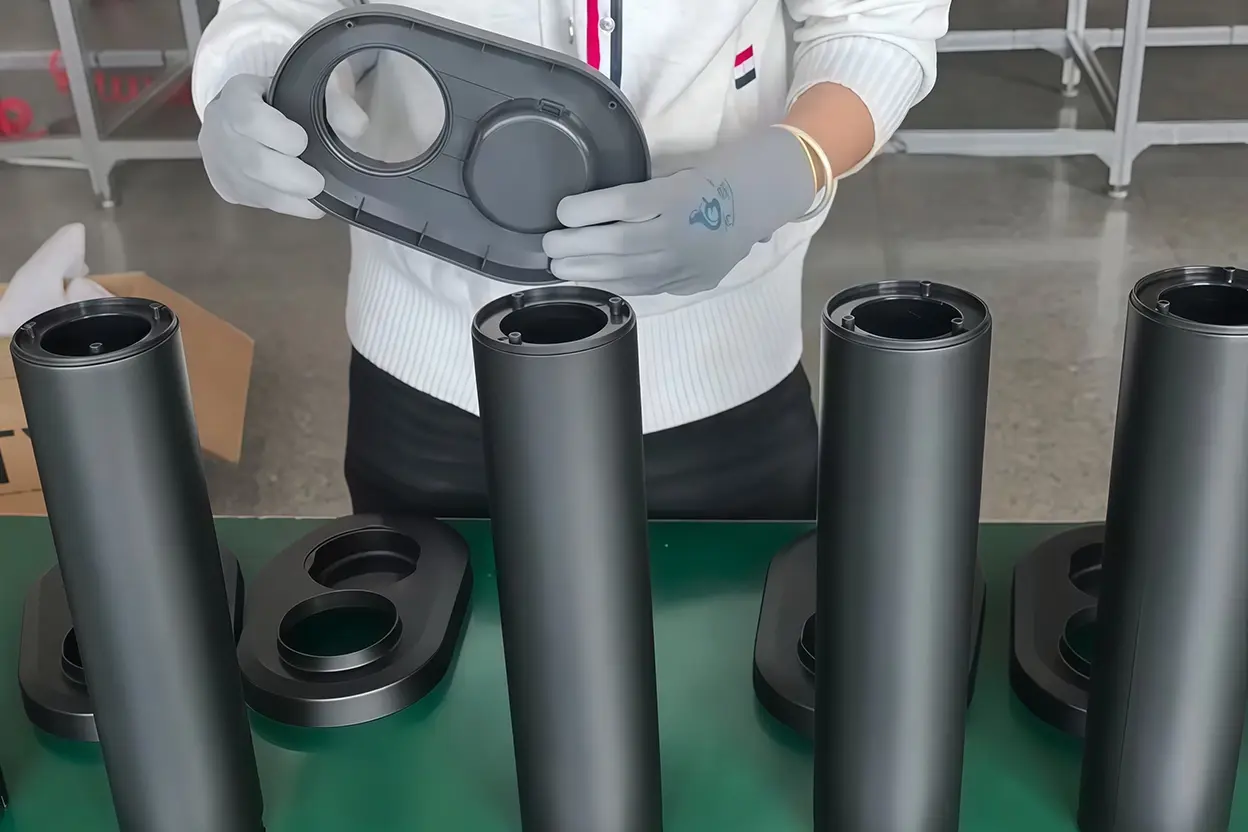
Inspection Record
Appearance, fitting, operation, and packing-related checks can be reviewed during production and before shipment.
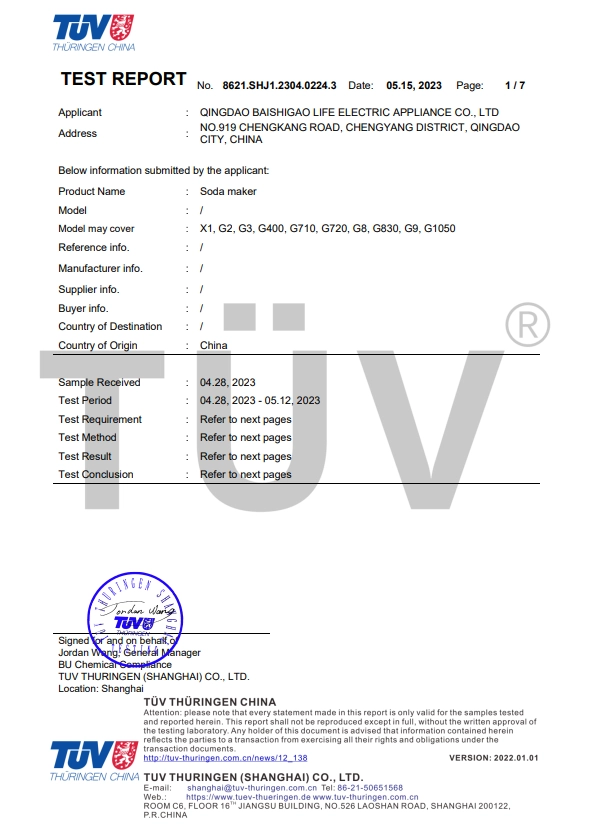
FDA Document Review
Buyers can review available FDA-related documents where applicable to the selected product and market requirement.
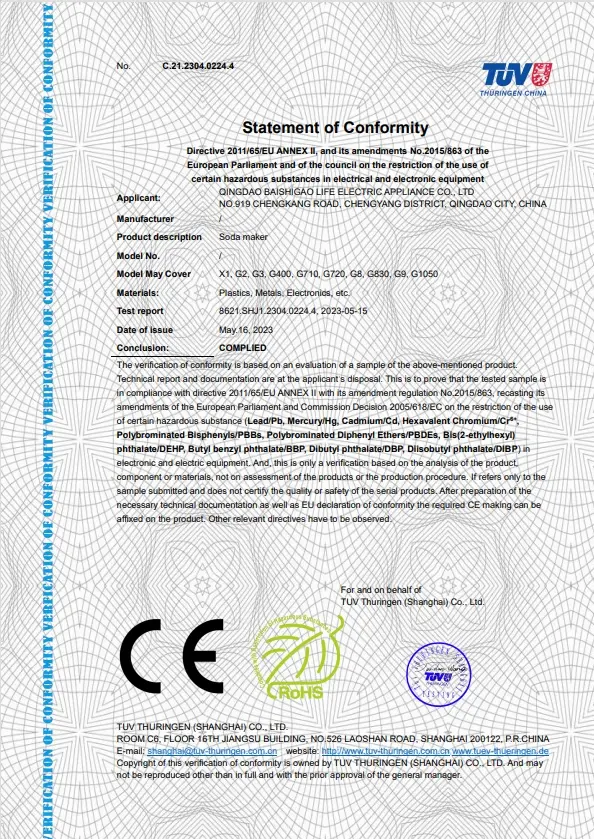
CE and Compliance File Support
CE and other compliance files can be reviewed according to the target market and confirmed order requirement.
The compliance position itself is range-wide and simple: FDA / LFGB / CE / RoHS cover all products, whole-machine certificates are factory-held, and the document set for an order is confirmed against the frozen configuration at sample approval — target market named at quotation, labels and manual checked against final artwork before printing. Document scope depends on the selected model, target market, and order requirement; buyers confirm required files during quotation and sample review.
Review Quality & ComplianceSample Review Before Mass Production
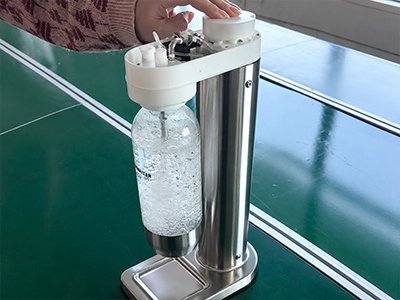
Before full-scale assembly begins, a pre-production sample is prepared to verify physical details and functionality. Samples are charged (sample + courier quoted for your address) and ready in about 7 days — built in the intended production configuration, because a sample in the wrong colour or bottle set approves nothing.
Sample Confirmation Checklist
- Model appearance
- Logo position
- Bottle fitting
- CO2 cylinder compatibility
- Carbonation operation
- Retail box layout
- Instruction manual
- Carton information
The approved sample is retained as the production reference for the order — the document both sides measure the bulk against. The full process is set out in the sample order guide.
Retail Packaging for Private Label Sparkling Water Makers
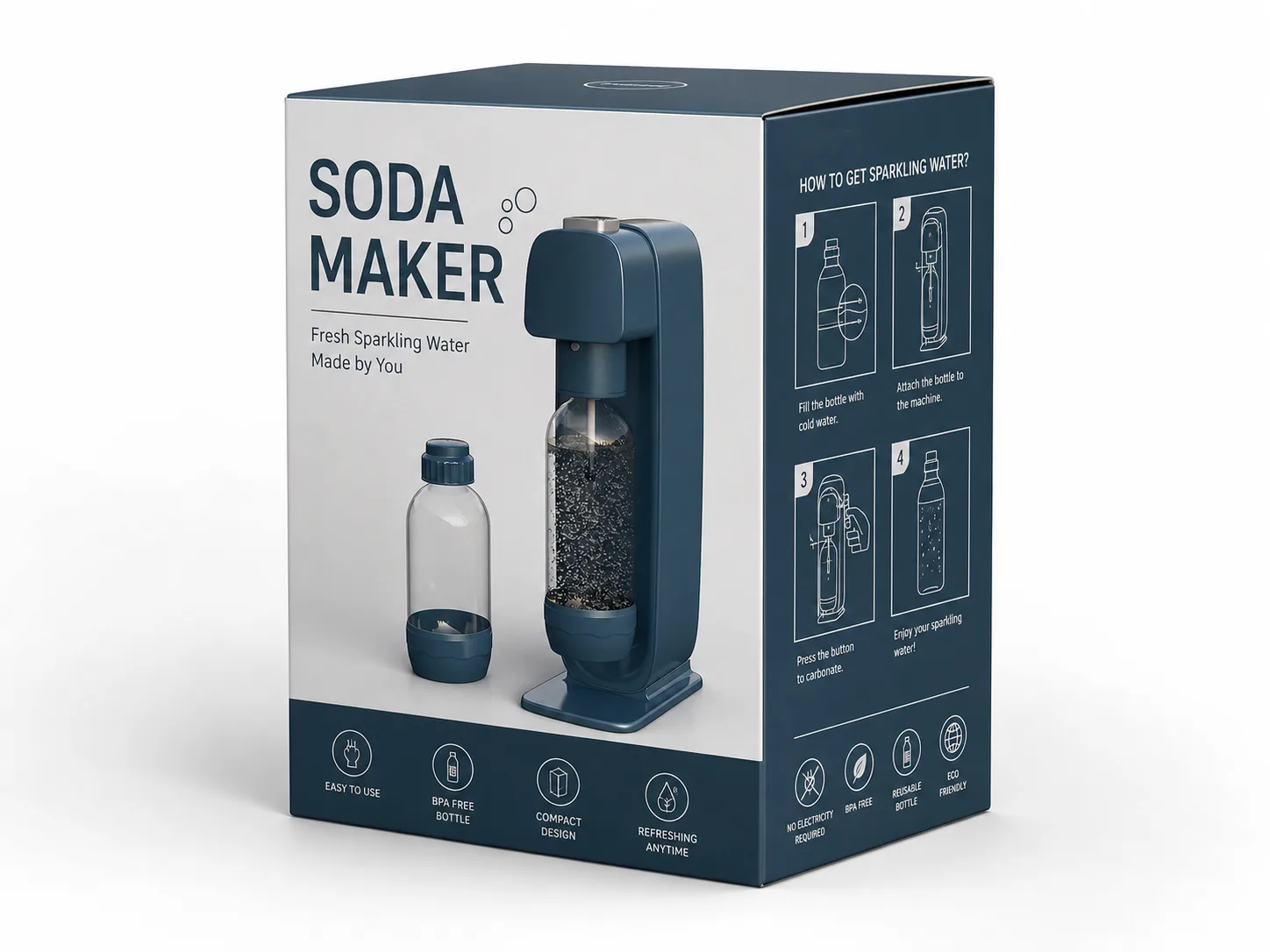
Packaging should be confirmed before sample approval to reduce artwork mismatch and shipment preparation errors. Cheersoda supports customized packaging configurations including:
- Color box
- Master carton
- Instruction manual
- Product label
- Barcode area
- Accessory layout
- Shipping marks
Retail packaging carries more of the product's commercial weight than buyers sometimes budget for: it is the shelf communication, the instruction set, and the compliance surface in one object. The manual carries the model's operation and safety wording in the market's language; the box carries the claims the market's rules allow; both are checked against the final artwork before printing, on the model's standard box format, with the accessory layout photographed before the first carton is sealed.
Packaging and Shipment Proof for OEM Orders
For private label sparkling water maker packaging projects, packing is part of the sourcing decision. Buyers need the machine, bottle set, manual, accessory pack, and carton marks to arrive as one retail-ready system.
Packing Line Check
Packing quality check before boxing.
Carton Information Review
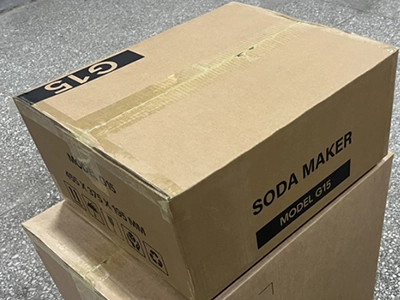
Carton data checked against the order: model, quantity, gross weight, marks.
Starter Kit Packing Reference
How starter configurations are laid out for first-order programs.
Bottle and Accessory Matching
The set composition confirmed as packed, not as quoted.
Private Label Product Presentation
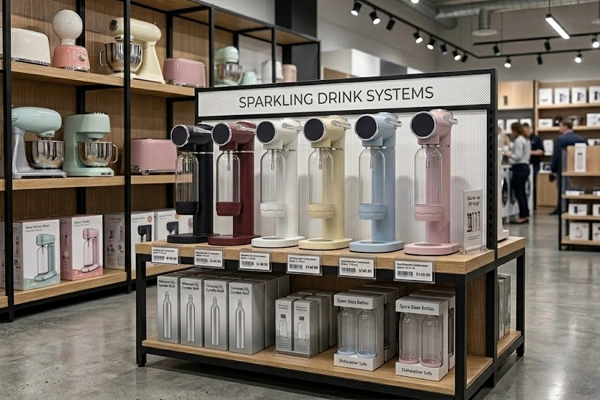
The finished presentation a buyer's customers will see.
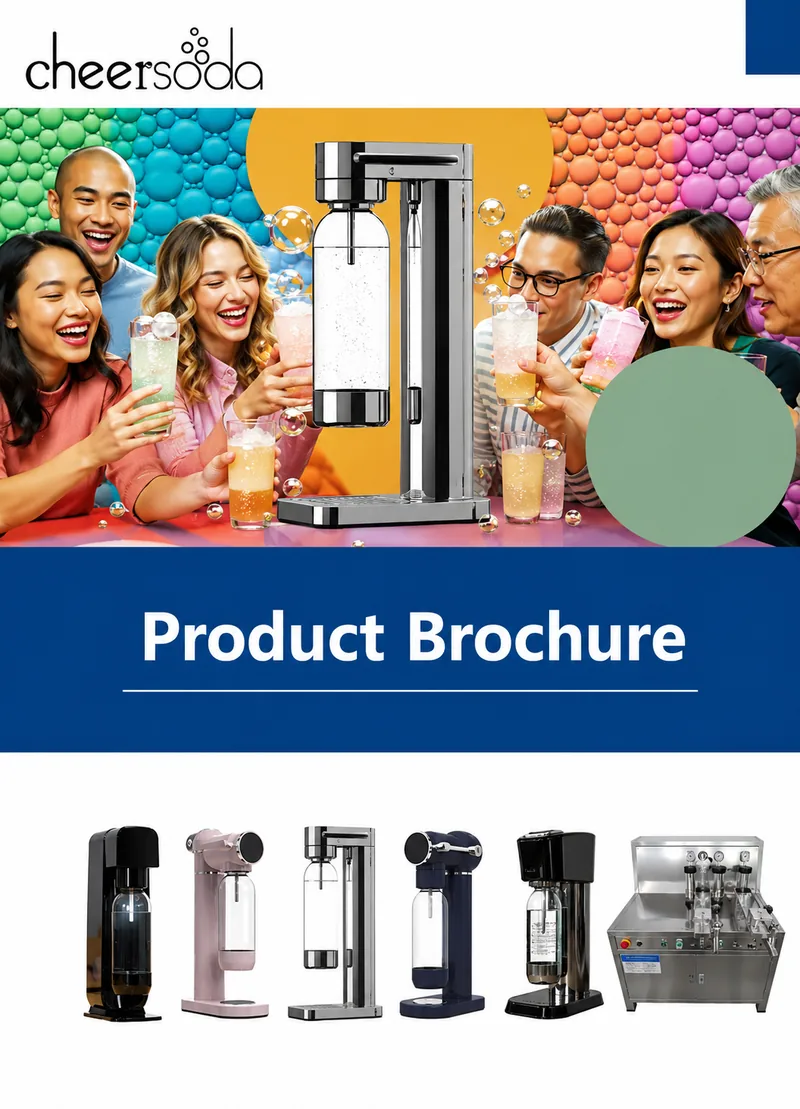
Catalog and Product File Support
The catalogue and product files that support the program's listings.
Container planning uses the same packing data as the model pages — colour-box and outer-carton dimensions, units per carton, and 20GP/40GP/40HQ reference loads per model — so the freight maths a buyer builds at quotation is the maths the shipment is packed to.
How a Sparkling Water Maker OEM Project Works
Inquiry & Market Info
Target market, channel, and quantity frame everything downstream.
Model Recommendation
One or two candidate models against the market and price shelf.
Quotation & MOQ
Pricing against the frozen specification; MOQ 300 per model, trials of 300 units available.
Sample & Packaging
The production-configuration sample and the artwork set are approved together.
Pre-production
Materials and components are prepared against the approved sample.
Mass Production
First orders run 35–45 days; repeat orders about 30 days.
Inspection & Packing
The four-stage checks close with the 100% leak and gas checks, then export packing.
Export Coordination
Shipping documentation prepared; balance is settled before shipment under T/T terms (30% deposit).
Payment is T/T on every project — 30% deposit, balance before shipment — and production carries a 1-year warranty. The sequence is deliberately boring: every step closes a question the next step would otherwise reopen, which is what keeps a 35–45 day first order from becoming a 70-day one.
OEM Project Evidence From Real Buyer Programs
Review verified sparkling water maker OEM case study records detailing how Cheersoda supports private label soda maker project requirements and soda maker distributor growth globally. Case details are summarized without buyer names; full project review can be discussed during supplier evaluation.
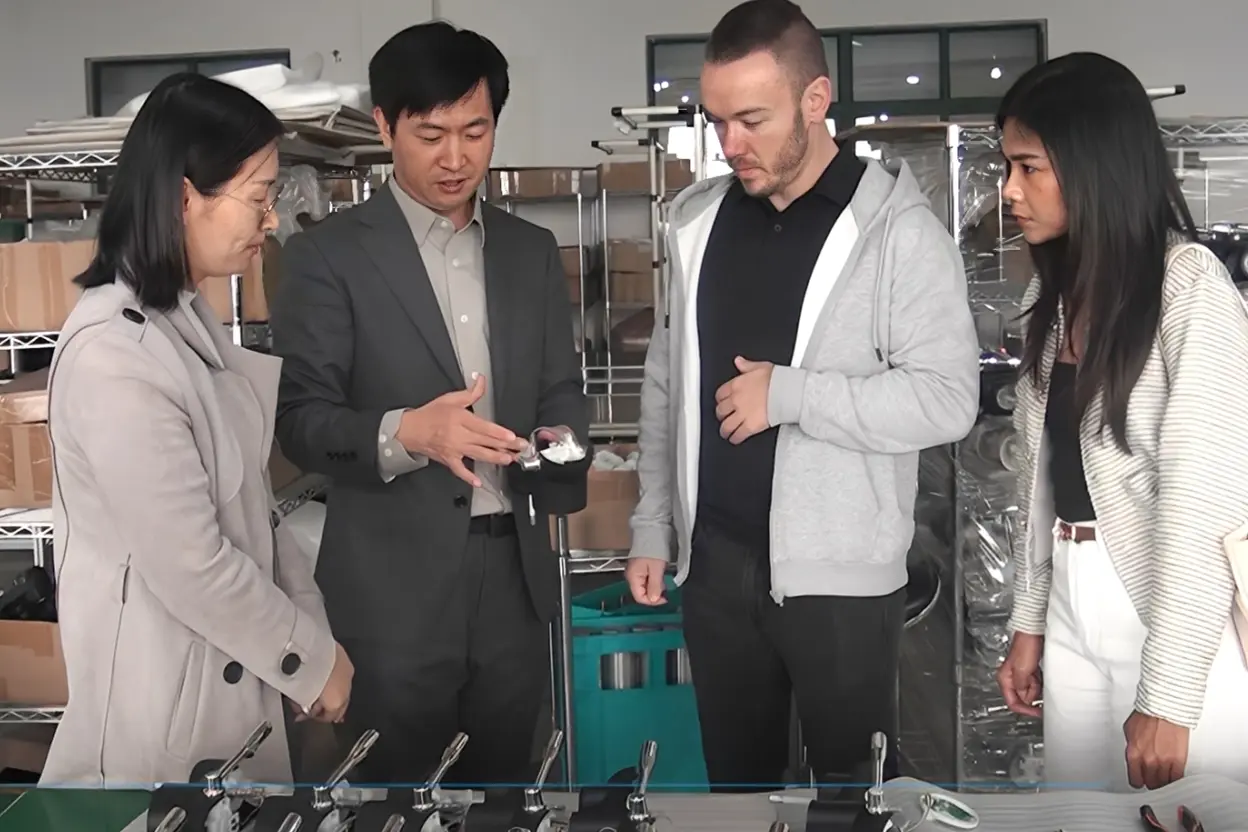
Germany Private-Label Program — Existing Mold Adjustment and Annual Exclusive Agreement
A German buyer selected an existing soda maker platform and paid for mold adjustment based on brand and channel requirements. The project started with a 1,000-unit trial order. After product review and online channel feedback, repeat order volumes increased step by step, including 2,000-unit and 4,000-unit batches. The buyer focused on health-oriented positioning, detail review, and stable quality control.
Evidence points: existing mold adjustment · private-label packaging direction · trial order before repeat orders · 100% inspection requirement · annual exclusive cooperation.
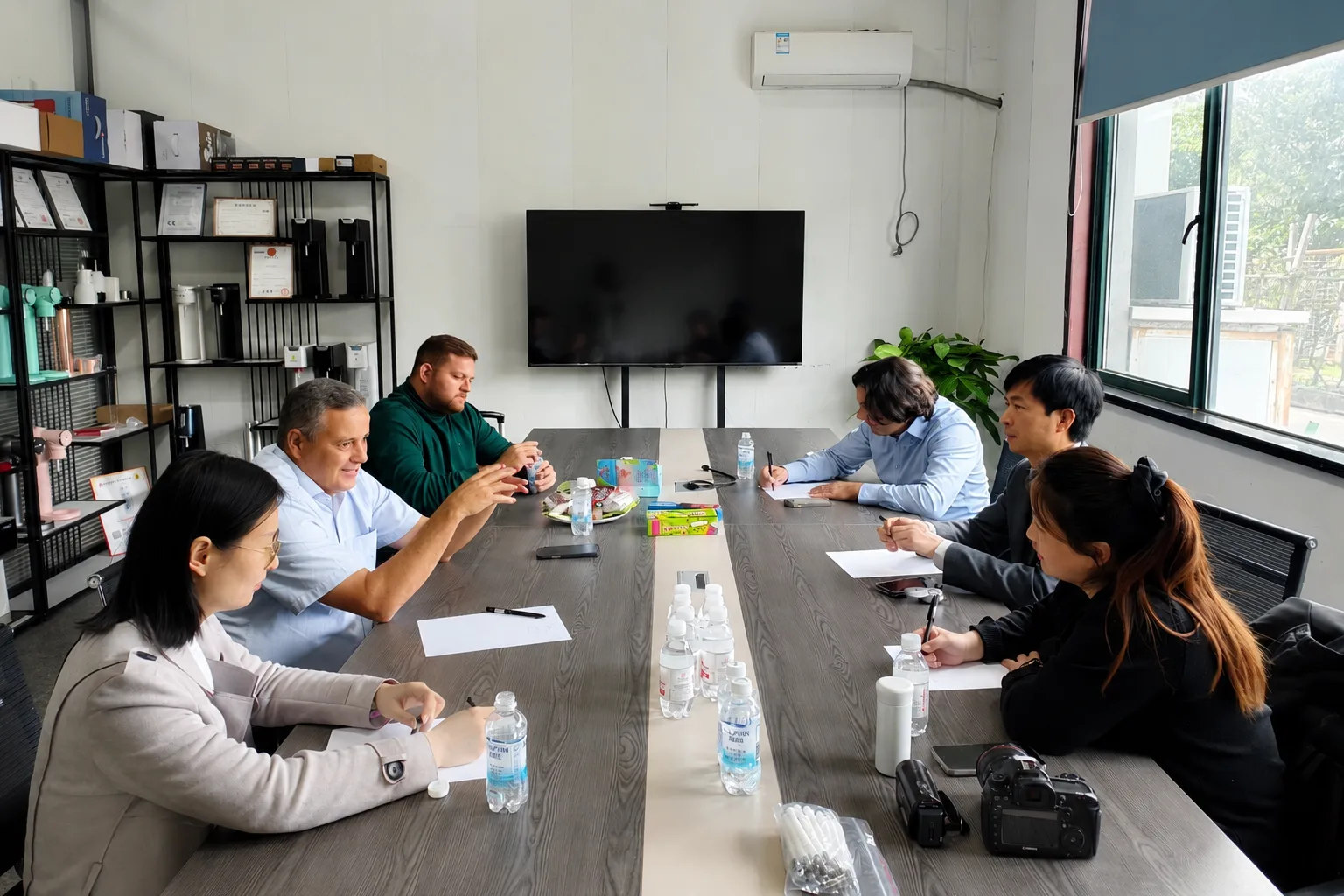
Brazil Distributor Program — Factory Visit, Public Mold Selection, and Local CO2 Chain Support
A Brazilian buyer met Cheersoda at the Canton Fair and scheduled a factory visit before placing a 1,000-unit order. The project used an available public mold and included exclusive distribution support under an agreement for the model and market concerned. The buyer invested in a local CO2 filling setup, allowing the soda maker, cylinder support, and refill chain to work together in the market. Cheersoda protects regional cooperation by directing local inquiries to the appointed distributor where an exclusive agreement is active.
Evidence points: Canton Fair contact · factory visit before order · public mold selection · local CO2 refill chain · exclusive distributor protection.
Prepare the Product for Your Market
Product names vary by market. Tell us your destination country and sales channel, and we will recommend suitable product wording, specifications and packaging information.
Destination Market
Confirm the country, the local cylinder system (the range is threaded; a Quick-Connect-only market needs a different plan), and the documents your importer or retailer expects. The machines need no plug and no power supply; the one documentation exception is the G3's LED cell, whose paperwork is complete and on file.
Sales Channel
Share whether the product is planned for e-commerce, appliance retail, supermarkets, distribution or a branded beverage program — the channel decides the packaging weight and the accessory set.
Packaging and Product Files
Review the product name, specifications, warnings, instruction manual, barcode, bottle set and retail packaging before sample approval.
Related reading: the CO2 cylinder compatibility guide settles the cylinder question in full, and soda water vs sparkling water explains how the same drink is named across markets.
Factory Proof for B2B Buyers
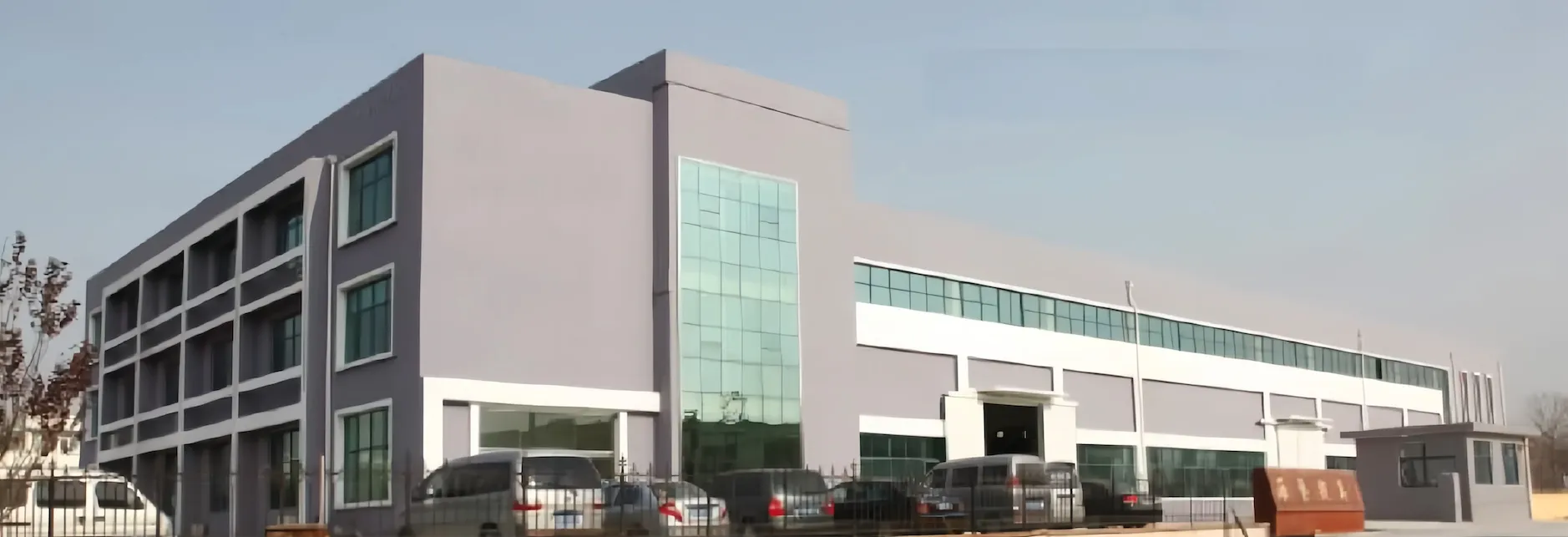
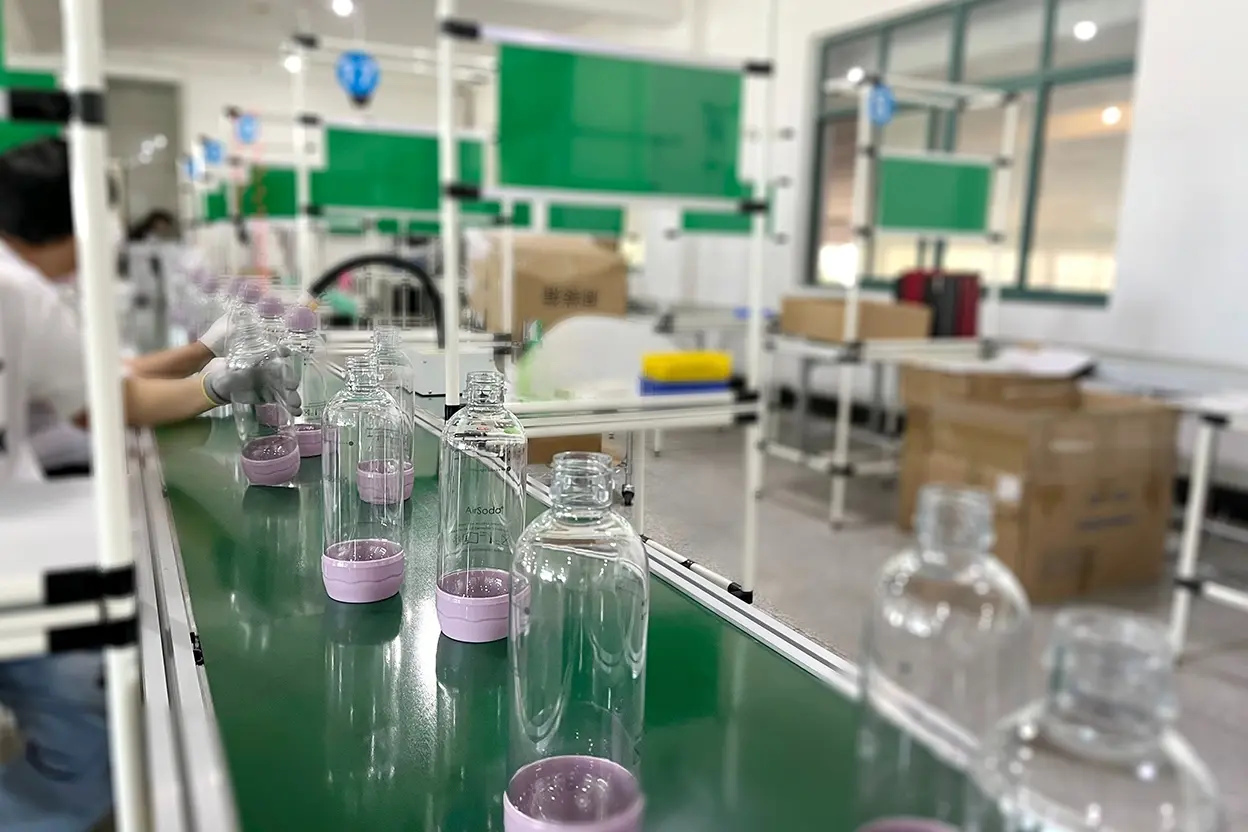
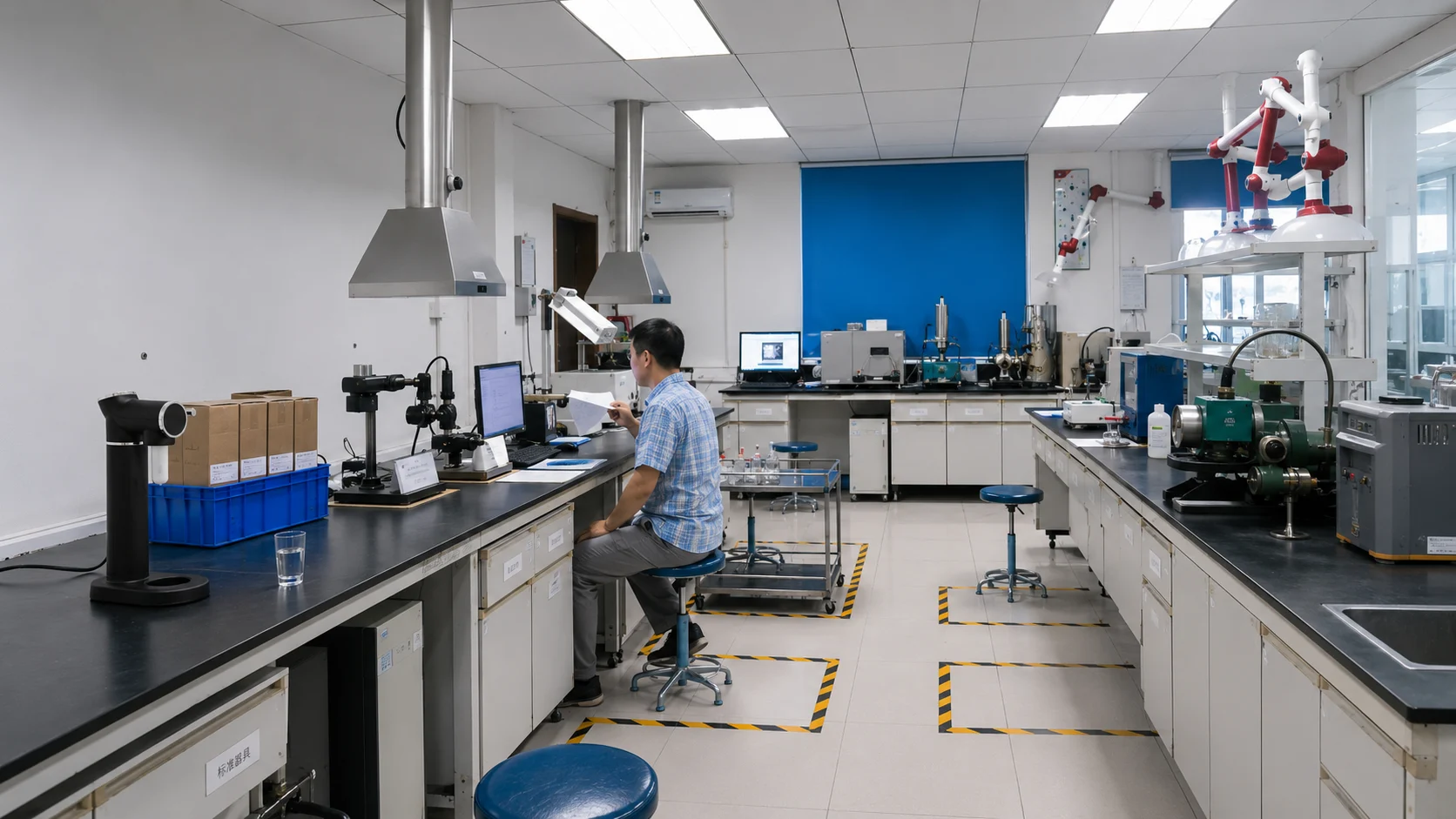
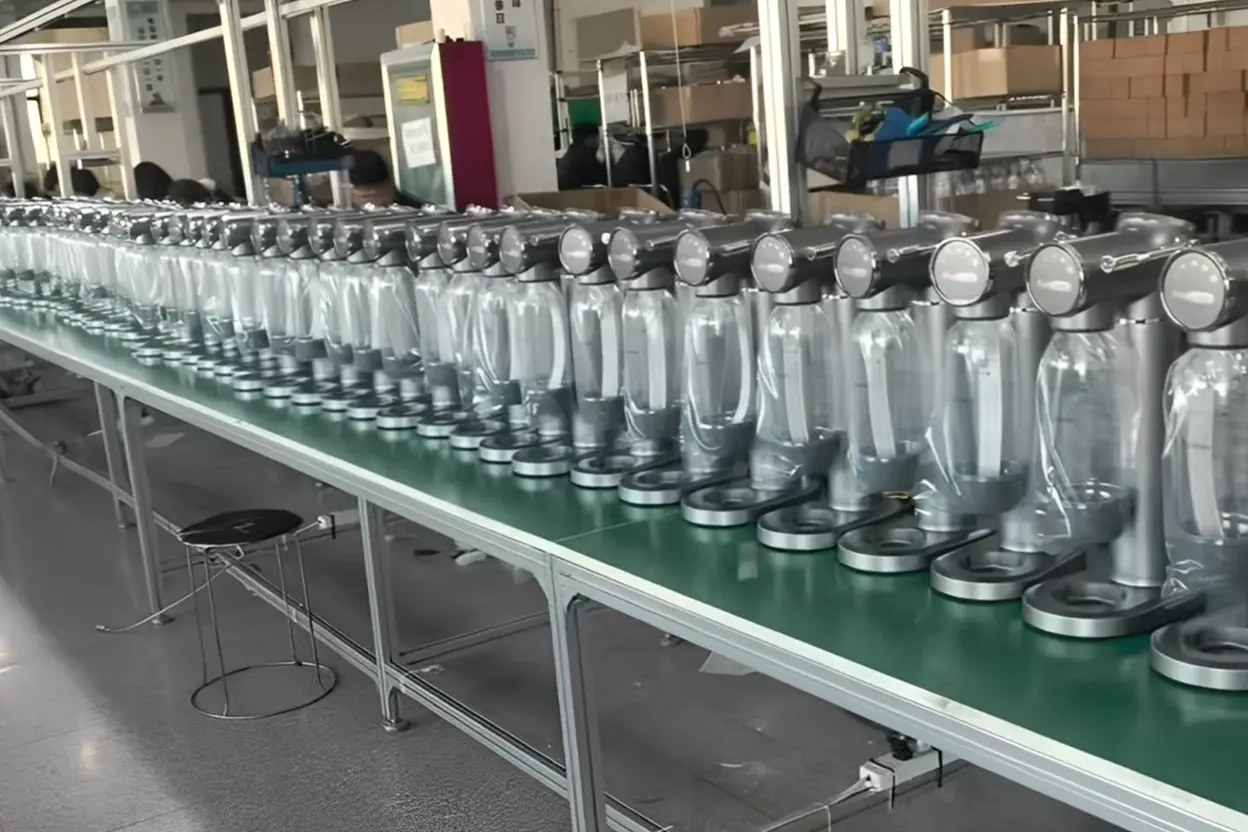
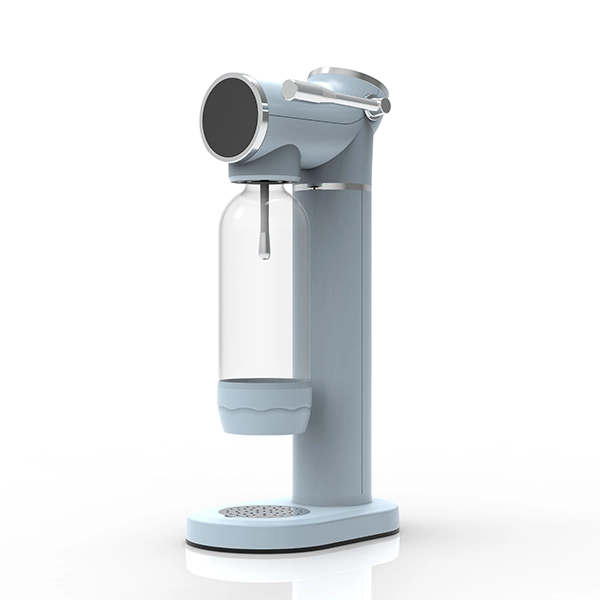
Visual verification of manufacturing capabilities: Factory Exterior · Assembly Area · Testing Process · Factory Video · Catalog Overview.
Built for importers, distributors, private-label brands, appliance companies and retail buyers sourcing home soda makers in volume. A factory visit — in person, or through the video and photo record — remains the fastest due diligence there is; buyers who cannot travel before a first order can review the same evidence this page links, and visit before the second.
Factory Proof, Testing Proof, and Shipment Proof
For sparkling water maker OEM projects, buyers usually want to see more than model photos. This section connects the product page with real factory-side evidence: where the machines are assembled, how key parts are checked, and how orders are prepared for shipment.
Factory Proof — Assembly and Project Review in Qingdao
Buyers can review factory photos, production flow, sample handling, and model selection before confirming a private label sparkling water maker project. This is especially useful for importers comparing standard models, public mold options, and custom packaging routes.
Testing Proof — Pressure, Leakage, and Function Checks
Before shipment, the project team checks carbonation performance, water-contact parts, bottle matching, appearance details, and packaging consistency. For B2B buyers, this testing evidence helps reduce risk before repeat orders or distributor launches.
Shipment Proof — Packing, Carton Marks, and Export Preparation
For OEM orders, the shipment stage includes carton packing, bottle set confirmation, barcode or carton mark checks, export documents, and loading preparation. Buyers can use this proof to evaluate whether the supplier can support market testing and repeat orders.
Choose the right OEM route before asking for a quote.
If you are still comparing model level, market positioning, packaging, and bottle set, review the linked pages first — they help our team recommend a model instead of sending a generic price sheet:
Request OEM Model Recommendation
Send your target model, estimated quantity, target market, packaging requirements, and compliance needs. Cheersoda will review your request and reply with suitable model options, MOQ reference, sample plan, and export support notes.