A reliable China import plan starts before the quotation: confirm the model, trade term, documents, packing data, inspection point and CO2 supply plan. Close these details before production so the importer can review cost, shipment and receiving requirements with fewer surprises.
A buyer should confirm six items before requesting a final quotation: target country, expected quantity, preferred model, required branding, bottle configuration, and intended CO2 supply method. Price becomes meaningful only after these variables are fixed.
Step 1
Start With a Procurement Brief, Not a Price Request
A message asking for the “best soda maker price” gives a supplier too little information to prepare a useful offer. A factory may have several manual models, metal and plastic structures, different bottle sizes, optional accessories, and separate packaging arrangements. Two quotations can therefore describe products that look similar in a photograph but have different materials, included items, packing methods, and inspection requirements.
Prepare a one-page brief before contacting a China soda maker supplier. It does not need to be a formal specification. It only needs to remove the assumptions that normally cause price revisions later.
| Decision | Information to provide | Why it changes the offer |
|---|---|---|
| Market | Country, sales channel, and target launch date | Determines documents, language, packaging, and scheduling |
| Order size | Sample quantity, first order, and 12-month forecast | Affects MOQ, component planning, and unit cost |
| Product | Preferred model, material, color, and bottle size | Prevents comparison between different configurations |
| Branding | Logo method, retail box, manual, barcode, and carton mark | Creates artwork, printing, and setup work |
| CO2 plan | Local cylinder source or empty-cylinder requirement | Changes compatibility checks and shipping scope |
| Trade terms | EXW, FOB, or another agreed Incoterm | Defines which local and export costs are included |
For a new private-label project, it is sensible to separate the market-test configuration from the long-term product plan. The first order may use an existing color and standard bottle to reduce risk. A custom color, modified structure, or private tooling can be evaluated after the initial sales data is available. Our private label soda maker service page explains the difference between standard branding and deeper product development.
Step 2
Verify Who Will Manufacture and Inspect the Order
A polished website does not prove that the seller controls product design, assembly, testing, or corrective action. Before importing soda makers from China, verify which operations are performed by the quoted supplier and which are outsourced. Outsourcing is not automatically a problem, but responsibility must be clear.
Evidence worth requesting
- A live factory video call showing the assembly and test areas
- Current production photographs with identifiable models
- Business licence and consistent company details on the PI
- Relevant test reports with model names and applicant details
- A written inspection flow for the exact order configuration
- Recent packaging or shipment evidence for comparable projects
Warning signs
- The beneficiary name does not match the agreed contracting party
- Certificates are supplied without model numbers or complete pages
- The quotation omits the bottle, accessories, packaging, or trade term
- Production starts before the signed specification and artwork approval
- Every technical question is answered with “no problem” but no record
- The supplier refuses a reasonable inspection arrangement
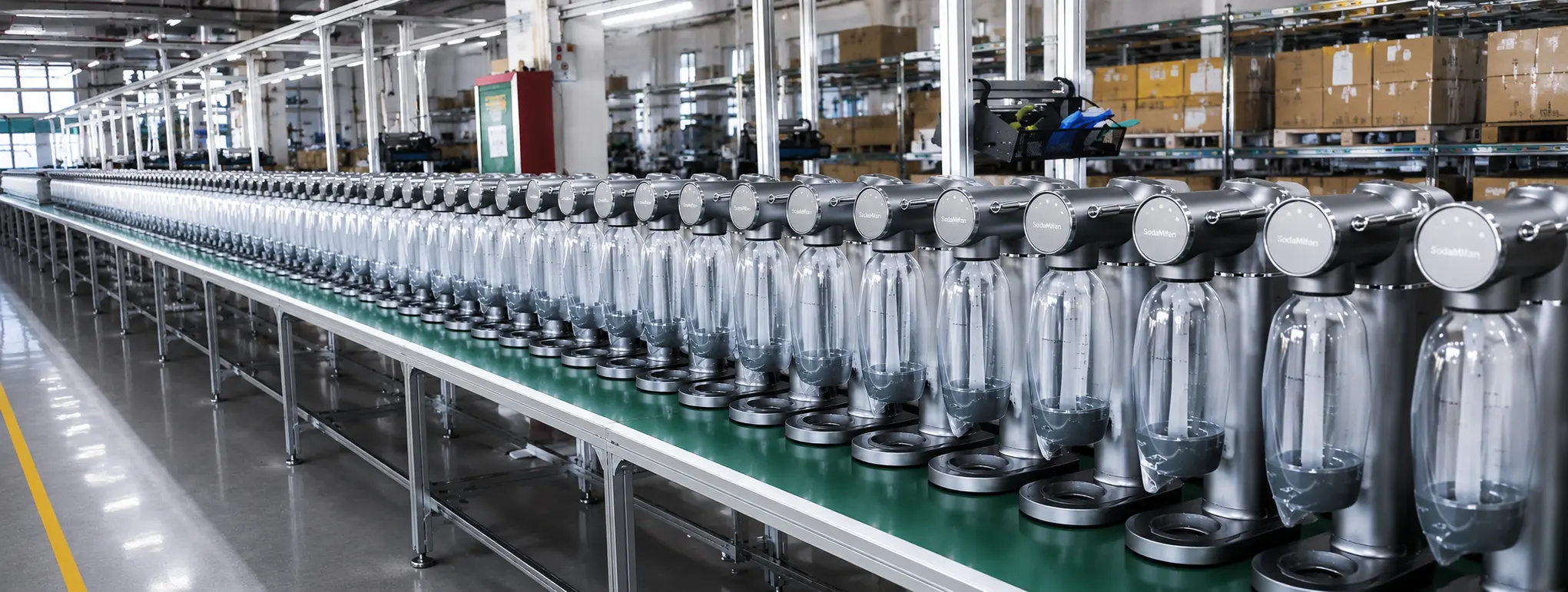
The useful question is not simply “Are you a factory?” Ask who owns the tooling, who approves incoming materials, where functional testing occurs, who signs the final inspection report, and who has authority to stop shipment. Those answers reveal the actual control structure. Buyers can also review our Qingdao factory information, manufacturing capability, quality and compliance controls, and factory video library before arranging a call or visit.
Buyer expectations also differ by destination market. The leading brands and price bands are mapped in our guides to the top soda maker brands in Germany and the top soda maker brands in Ireland.
Step 3
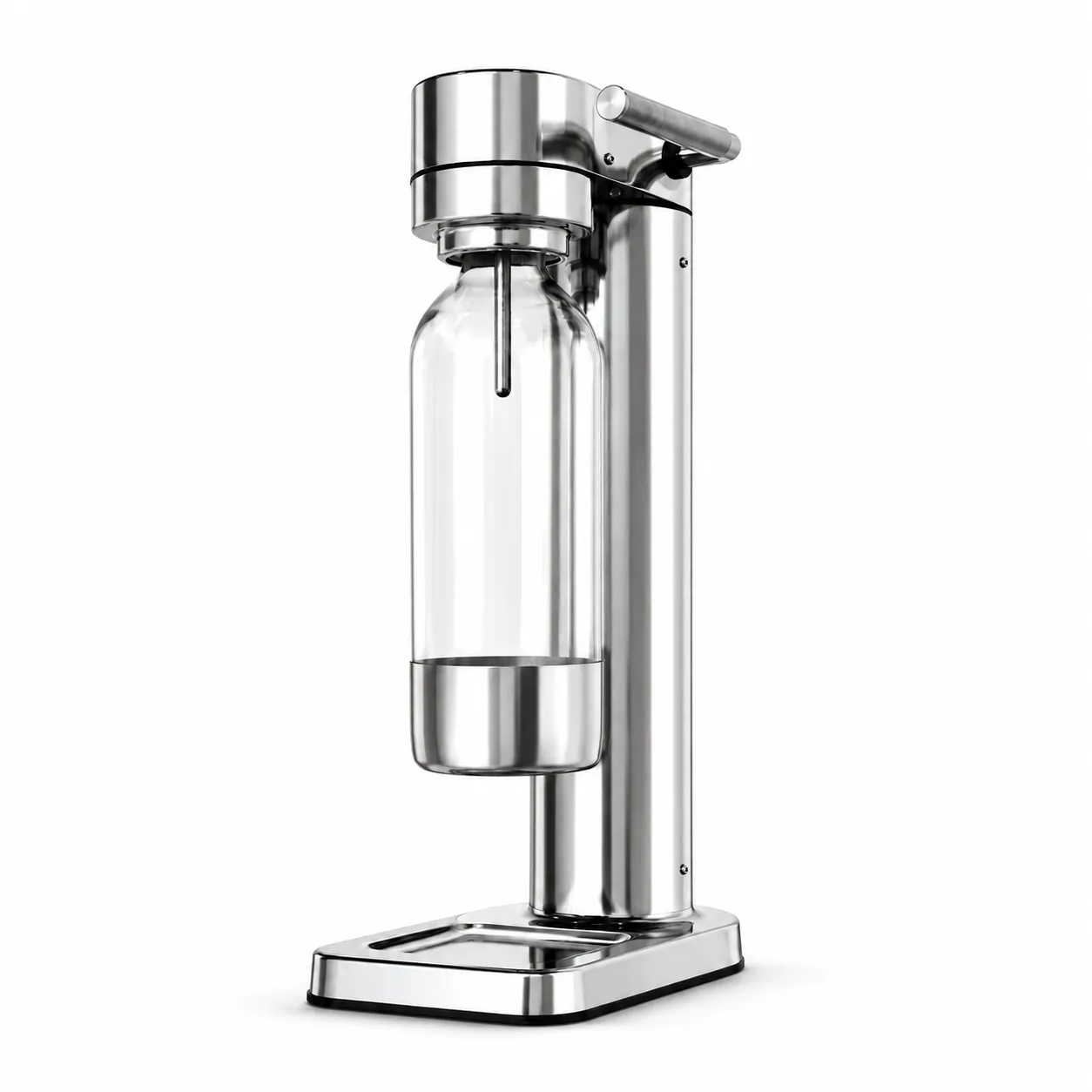
G15 — full 304 stainless steel body, CNC brass valve, double safety valve. MOQ 300 units.
See the G15 →Treat the Sample as a Production Approval Gate
A sample order should answer defined questions. It is not merely a small retail purchase. Use it to check operation, perceived quality, bottle fit, cylinder connection, surface finish, color, logo position, cleaning access, and the information required for local instructions.
Keep a written sample review sheet. Record photographs and short videos of anything that needs correction. Vague comments such as “make it stronger” or “the color should be better” are difficult to execute. State the location, the observed issue, the required result, and whether the change must be reflected in the pre-production sample or can be confirmed by production evidence.
Receive
Check model, bottle, accessories, finish, and visible transport damage.
Operate
Run repeated carbonation cycles using the intended cylinder connection.
Review
Record usability, stability, noise, release behaviour, and cleaning access.
Approve
Sign the final specification, reference sample, artwork, and change list.
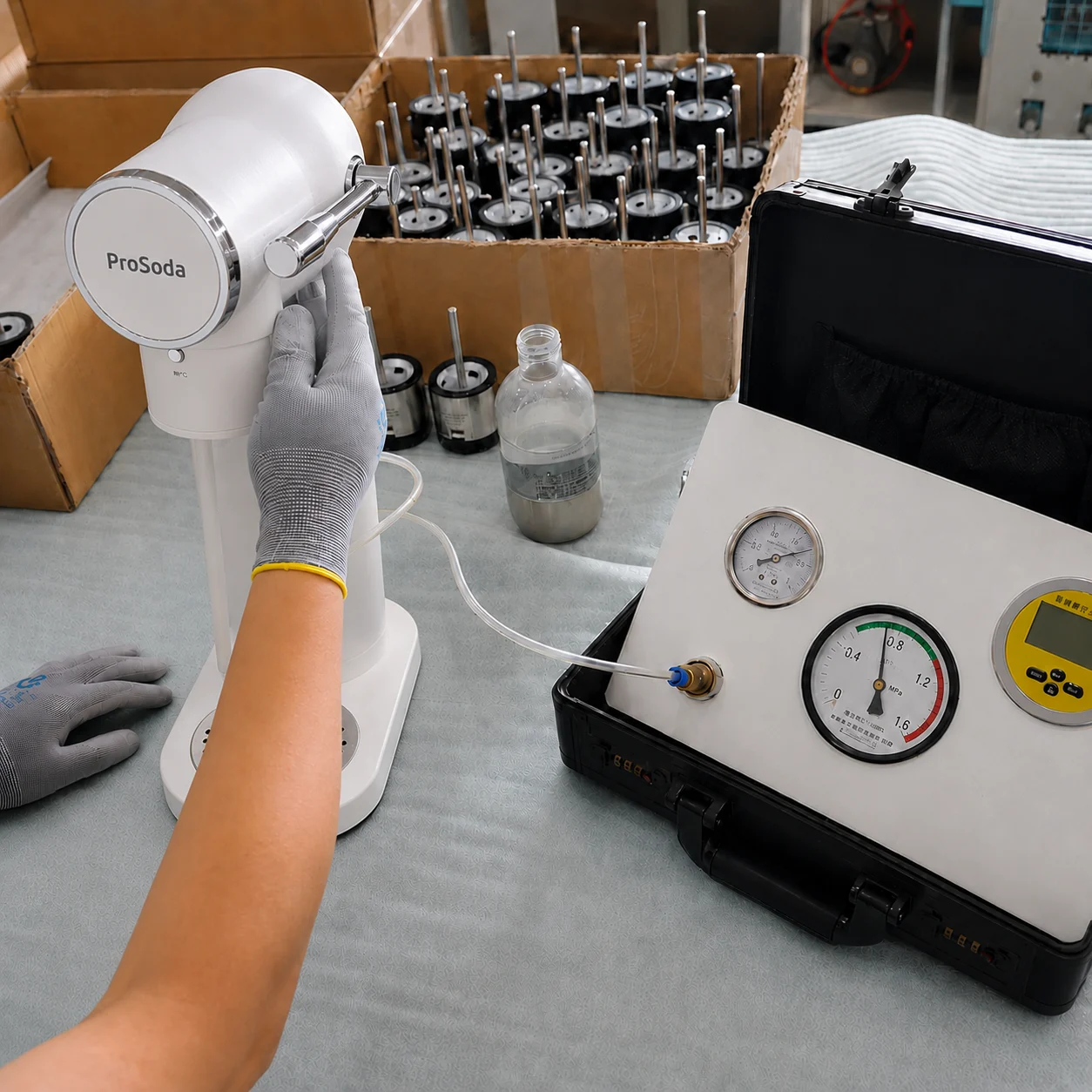
Do not approve mass production only from a catalogue photograph if appearance is commercially important. Retain one approved sample with the buyer and one with the factory whenever possible. The approved unit becomes the comparison reference for production and pre-shipment inspection. See the separate soda maker sample order guide for a more detailed sample checklist.
Step 4
Compare the Complete Landed Project, Not One Unit Price
The lowest unit price is not always the lowest procurement cost. A quotation may exclude the bottle, retail packaging, printing setup, export handling, inspection, spare parts, or inland transport. Before comparing suppliers, convert each offer into the same commercial scope.
| Cost area | Questions to settle before the PI |
|---|---|
| Machine configuration | Exact model, material, color, included bottle, and accessories |
| Customization | Logo method, number of print positions, Pantone color, and setup charge |
| Retail packaging | Color box, insert, manual, labels, barcode, and artwork responsibility |
| Outer packing | Units per carton, carton dimensions, gross weight, marks, and pallet use |
| Quality control | Routine factory checks, buyer inspection, and reinspection responsibility |
| Trade term | Named place or port and the exact version of the agreed Incoterm |
| Payment | Deposit, balance trigger, bank charges, and sample payment |
| After-sales reserve | Spare parts, replacement handling, warranty boundaries, and claim evidence |
MOQ should be linked to the customization level
A standard-color machine in neutral packaging may support a smaller market-test order than a project requiring a custom body color and printed retail box. Printing suppliers also have their own economic quantities. A buyer asking for a low MOQ, multiple colors, several carton designs, and a low unit price is combining requirements that pull production economics in opposite directions.
Ask for two quotations when the market is untested: a low-risk trial configuration and a target-volume private-label configuration. This reveals which costs disappear or become more efficient at volume. The final MOQ must be confirmed for the selected model and branding scope; it should not be copied from a different product page.
Samples are commonly paid before dispatch. For mass production, a deposit with the balance linked to an agreed shipment milestone is common, but the signed PI or sales contract controls the transaction. Do not send funds to a newly introduced beneficiary without written confirmation and an independent verification step. See our payment terms guide and FOB vs CIF vs DDP guide for how milestones and freight responsibility are written into a quotation.
Step 5
Match Compliance Documents to the Product and Destination
There is no universal certificate package for every soda maker project. Requirements depend on the destination, product construction, food-contact parts, bottle, cylinder arrangement, sales channel, and claims made on the packaging. The importer should confirm local obligations with a qualified customs broker, compliance consultant, or testing laboratory before approving the order.
Do not accept a folder of unrelated certificates as proof. Check the report number, applicant, manufacturer, product name, model list, test standard, issue date, and complete report pages. Confirm that the production configuration uses the same relevant materials and components described by the documentation.
Product file
Specification, bill of included items, drawings where applicable, approved sample, test reports, and inspection requirements.
Packaging file
Retail artwork, local-language manual, warnings, barcode, importer details, carton marks, and recycling or material labels where required.
Shipment file
Commercial invoice, packing list, transport document, origin document when required, and agreed inspection evidence.
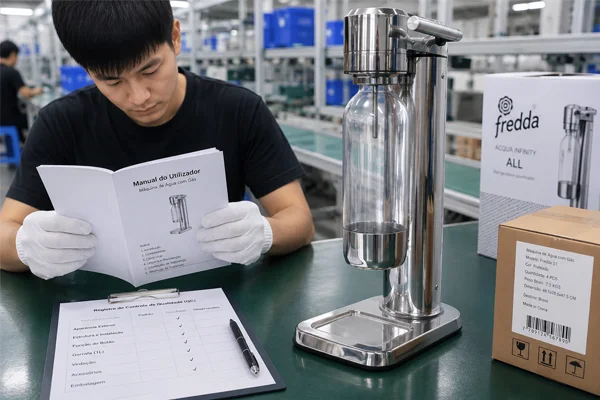
Separate the soda maker from the CO2 supply plan
Many new importers assume that a machine order automatically includes filled CO2 cylinders. It often does not. Filled gas cylinders create transport and local regulatory issues that differ from the machine itself. Some projects source compatible cylinders locally; others evaluate empty cylinders under a separate scope. Confirm the valve or thread standard, cylinder dimensions, regional availability, filling network, transport classification, and responsibility for local compliance before the retail launch.
This is a commercial planning issue as much as a technical one. A good machine without an accessible gas supply creates customer complaints and weak repeat sales. Keep cylinder decisions visible in the project schedule even when the cylinders are purchased from another supplier. Our CO2 cylinder and carbonator accessories page explains the product boundary for B2B projects.
Step 6
Build Inspection Into Production Before the Balance Is Due
Inspection is most useful when it is planned before defects occur. The purchase specification should state what will be checked, how the sample size is selected, what evidence is required, and what happens if the result is unacceptable. A last-minute request to “check everything” is not an inspection plan.
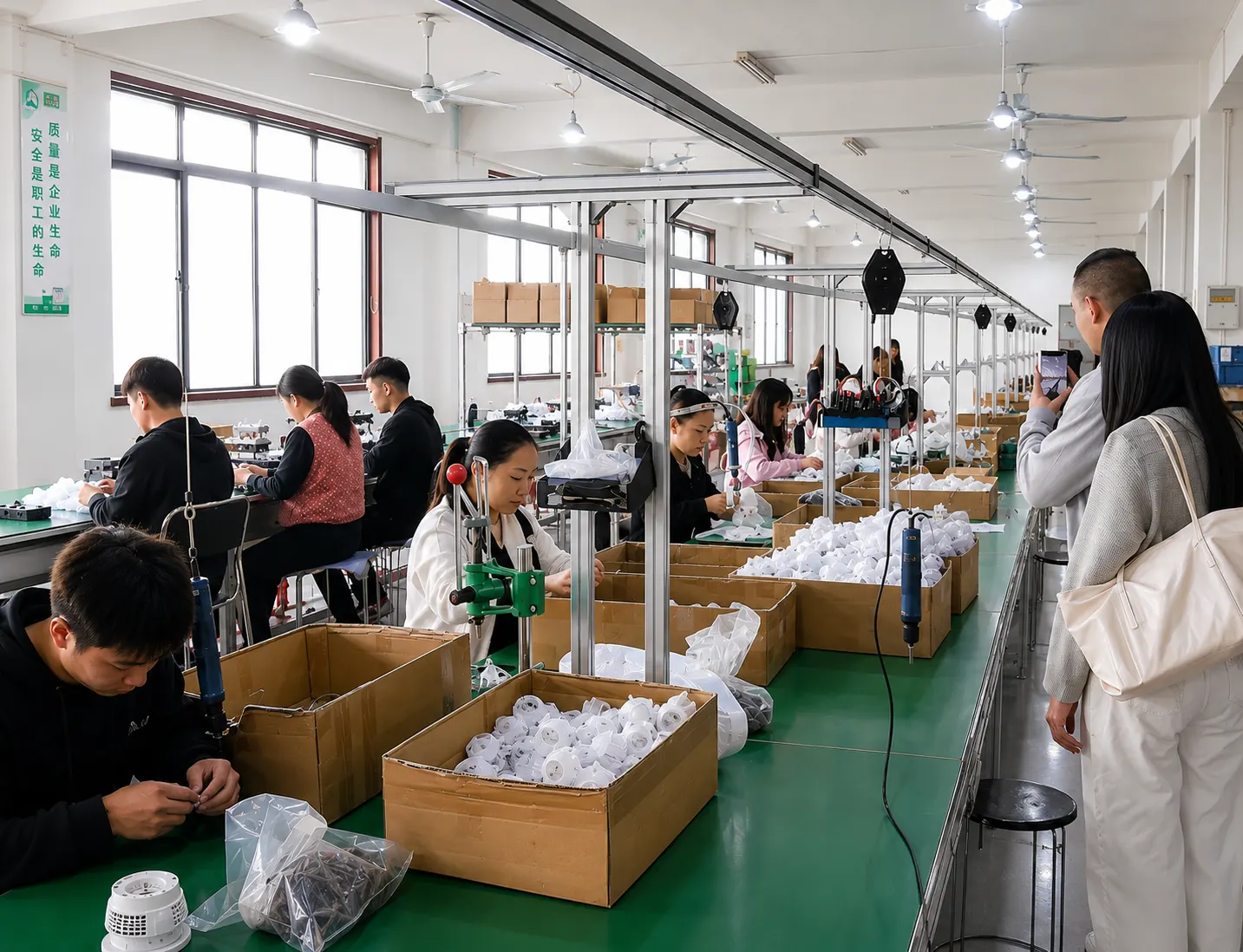
Four inspection layers
- Incoming: appearance, dimensions, material identity, and component condition.
- In-process: assembly fit, fastening, tubing or sealing points, and work instructions.
- Functional: carbonation operation, release behaviour, leakage checks, and bottle fit.
- Pre-shipment: appearance, quantity, accessories, labels, packaging, carton marks, and records.
Factory evidence
Molding process for soda maker components
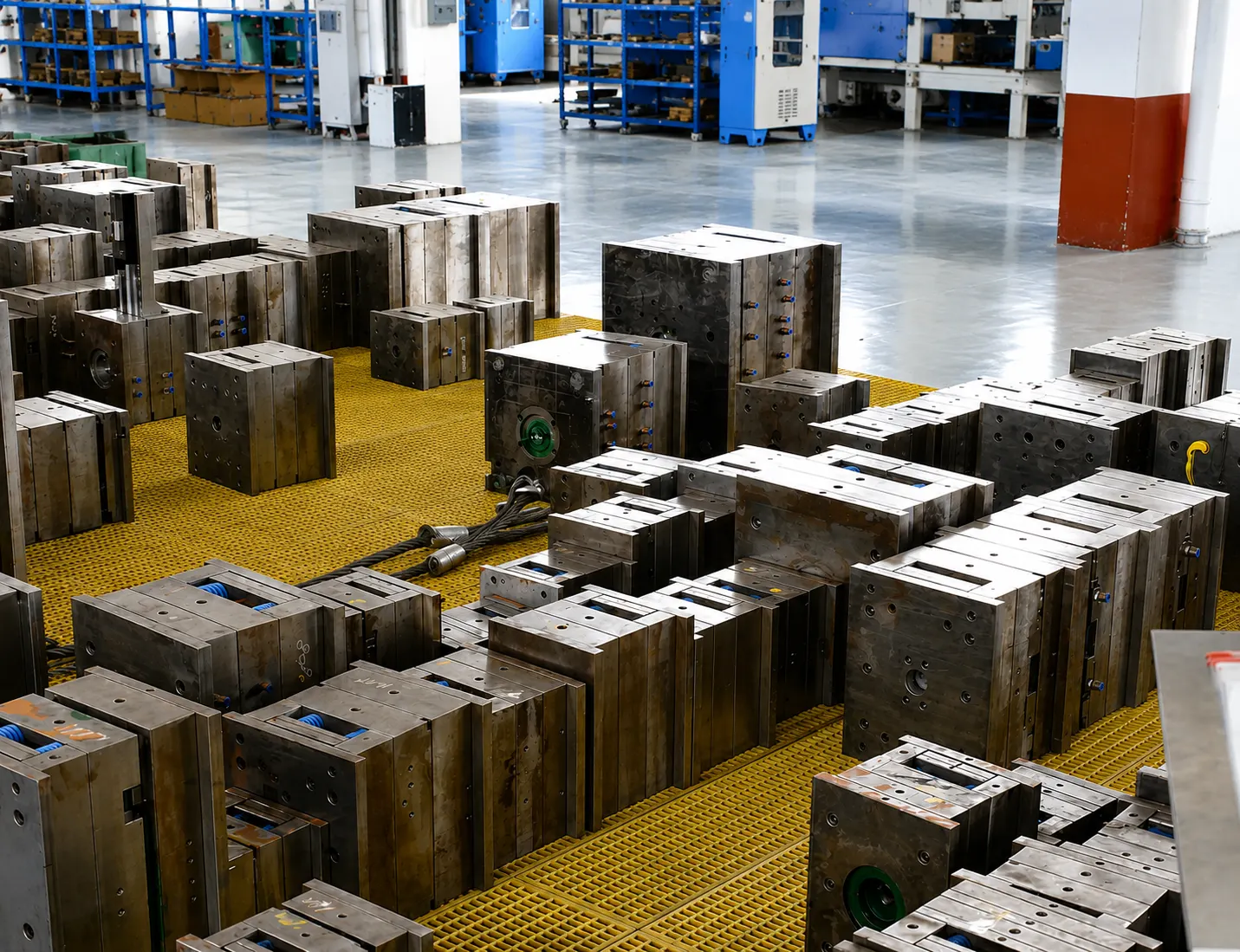
This factory footage shows part of the component molding process. Video cannot replace tooling records or an agreed inspection report, but it helps a remote buyer verify that manufacturing evidence exists beyond finished-product photographs.
If the buyer appoints a third-party inspector, send the approved specification, sample photographs, packaging artwork, purchase order, and defect classification directly to the inspector. Otherwise, the inspector may verify quantity and general workmanship without checking the details that matter to the brand.
Step 7
Confirm Packing and Shipping Data Before Booking Freight
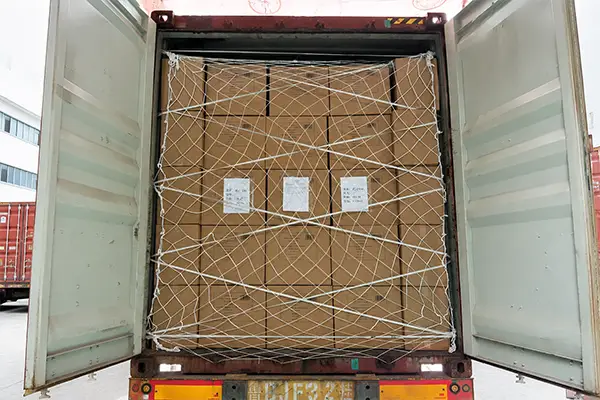
Freight should not be estimated from product photographs. Obtain the final carton size, units per carton, net weight, gross weight, total cartons, total volume, pallet requirement, and loading quantity. Use approved production packing data for the booking rather than an early catalogue estimate when possible.
| Term | Useful when | Buyer should confirm |
|---|---|---|
| EXW | The buyer or forwarder can manage pickup and China-side export arrangements | Loading point, export capability, inland cost, and documentation responsibility |
| FOB | The buyer wants the supplier to deliver the export-cleared cargo to the agreed port | Named port, local charges, cutoff date, and the forwarder handover process |
| CIF/CFR | The buyer requests main carriage to the destination port | What the quoted freight covers, insurance where applicable, destination charges, and local clearance |
Incoterms do not replace a complete sales contract. State the named place or port, shipment window, split-shipment rules, document method, and charge allocation. Destination port fees, duty, tax, customs examination, local delivery, and storage may remain the buyer’s responsibility even when ocean freight is included.
Before the cargo leaves China, reconcile the commercial invoice, packing list, purchase order, carton count, gross weight, consignee details, and transport instructions. Ask the customs broker to verify tariff classification and destination requirements; classification can vary according to construction and local customs interpretation, so it should not be guessed from another importer’s shipment.
Use our packaging guide for the packing plan and our container loading guide for carton data and loading records.
Working timeline
A Practical First-Order Sequence
The exact lead time depends on the model, order volume, customization, material availability, artwork approval, testing, and factory schedule. The sequence below is more important than a generic promise of a certain number of days.
Brief and model shortlist
Confirm market, quantity, configuration, cylinder plan, and target date.
Quotation and sample
Align commercial scope, order samples, and record required corrections.
Specification approval
Approve the reference sample, artwork, manual, carton marks, and inspection plan.
Production and evidence
Monitor material readiness, production milestones, and corrective actions.
Inspection and balance
Complete the agreed inspection and payment milestone before release.
Shipment and document check
Reconcile final packing data, transport instructions, and customs documents.
Decision tool
First-Order Risk Register
| Risk | Early control | Evidence to retain |
|---|---|---|
| Wrong market configuration | Confirm local bottle, cylinder, label, and document requirements | Approved specification and compliance review |
| Unexpected price additions | Compare complete configuration and named trade term | Itemized quotation and signed PI |
| Artwork delays | Set one owner and approval deadline for every file | Final print-ready artwork with version number |
| Sample differs from production | Retain reference samples and measurable requirements | Signed sample record and production photographs |
| Quality dispute | Define defect classes, sampling, and remedy before production | Inspection standard, report, images, and videos |
| Freight or customs surprise | Give final packing data to the broker before booking | Broker confirmation, packing list, and booking record |
Buyer questions
Importing Soda Makers From China: FAQ
What information is needed for an accurate soda maker quotation?
Provide the destination market, quantity, model or material preference, color, bottle configuration, logo method, retail packaging requirements, CO2 supply plan, and requested trade term. Without these items, quotations may not describe the same scope.
Should a first-time importer start with a standard model?
Often yes. An existing model with limited branding reduces tooling cost and shortens the number of technical decisions. A structural modification or private mold is more suitable when the buyer has validated demand, a clear design brief, and a sufficient volume plan.
Can a buyer import the soda maker without CO2 cylinders?
Yes, many projects source compatible cylinders locally. The buyer must still confirm the machine connection, cylinder dimensions, local availability, and customer instructions before launch. Machine compatibility does not establish local cylinder compliance.
Which certificates are required?
Requirements depend on the product configuration and destination. Ask a local compliance specialist or customs broker to define the applicable standards, then check that supplier reports cover the relevant model, materials, and applicant. Do not rely on a generic certificate list.
How long does a private-label order take?
Lead time starts after the commercial terms, specification, sample changes, artwork, packaging, and deposit conditions are settled. Model availability, quantity, custom color, packaging, material readiness, testing, and the production calendar all affect the schedule. The confirmed PI should state the project-specific basis.
Is a third-party pre-shipment inspection necessary?
It is a useful risk-control option, especially for a first order or a new configuration. The buyer should give the inspector the approved specification and defect criteria. A generic inspection without those documents may miss brand-specific requirements.
Is EXW always cheaper than FOB?
Not necessarily. EXW can appear cheaper because China-side pickup, export handling, and other costs are outside the quoted price. Compare the total cost to the same shipment point and confirm who can legally and practically manage the export process.
How should importers handle spare parts and claims?
Agree on common spare parts, quantities, claim evidence, response time, and replacement method before shipment. Photograph carton labels and product identification when reporting a problem so the supplier can trace the production batch.
Prepare your RFQ
Send a Project Brief for Model and Import Planning
Tell us your destination market, expected quantity, preferred product style, bottle requirement, branding scope, and target delivery window. Our team will identify the information still needed before preparing a configuration-based quotation.
Related guides: soda maker guide for importers.