How We Selected and Ranked the Brands
This is a market-relevance list, not a laboratory test and not a claim that every company owns a soda maker factory in Germany. We reviewed active German product pages, current model availability, range breadth, CO2 and bottle ecosystems, positioning, after-sales information and visibility in recent German product comparisons.
Stiftung Warentest's 2025 comparison included models from Aarke, BRITA, GROHE, Mysoda, SodaStream and Sodapop, confirming the relevance of those six names in the German market. The remaining brands were included because they maintain active German product ranges and offer a clearly differentiated proposition.
Top 10 at a Glance
| Rank | Brand | Brand origin | Current positioning in Germany | Representative product line | Best known for |
|---|---|---|---|---|---|
| 1 | SodaStream | Israel / PepsiCo | Mass-market ecosystem leader | Terra, DUO, E-DUO | Wide retail presence and proprietary Quick Connect ecosystem |
| 2 | BRITA | Germany | Water-treatment brand extending into carbonation | sodaONE, sodaTRIO | Consumer trust in drinking-water products |
| 3 | Aarke | Sweden | Premium design specialist | Carbonator 3, Carbonator Pro | Metal construction and minimalist design |
| 4 | Mysoda | Finland | Sustainable Nordic design | Glassy, Woody, Ruby 2 | Wood-composite housings and glass option |
| 5 | GROHE | Germany | Premium water-system extension | Blue Fizz | Preset carbonation and water-system credibility |
| 6 | Sodapop | Germany | Flexible mid-market system | Logan, Cooper Pro | Glass, PET and stainless-steel bottle choices |
| 7 | Philips GoZero | Netherlands | Accessible mainstream appliance range | GoZero ADD4900 series | Simple manual operation and broad appliance recognition |
| 8 | WMF | Germany | Premium kitchen-appliance entrant | Element One | Automatic carbonation and stainless-steel styling |
| 9 | Luckymoose | Germany | Growing direct-to-consumer specialist | Infinity, Infinity-S | Large dishwasher-safe stainless-steel bottles |
| OEM alternative | Cheersoda | China | B2B OEM/ODM manufacturing partner | G3, G720, G15 and G15Pro | Private-label development, production and export support |
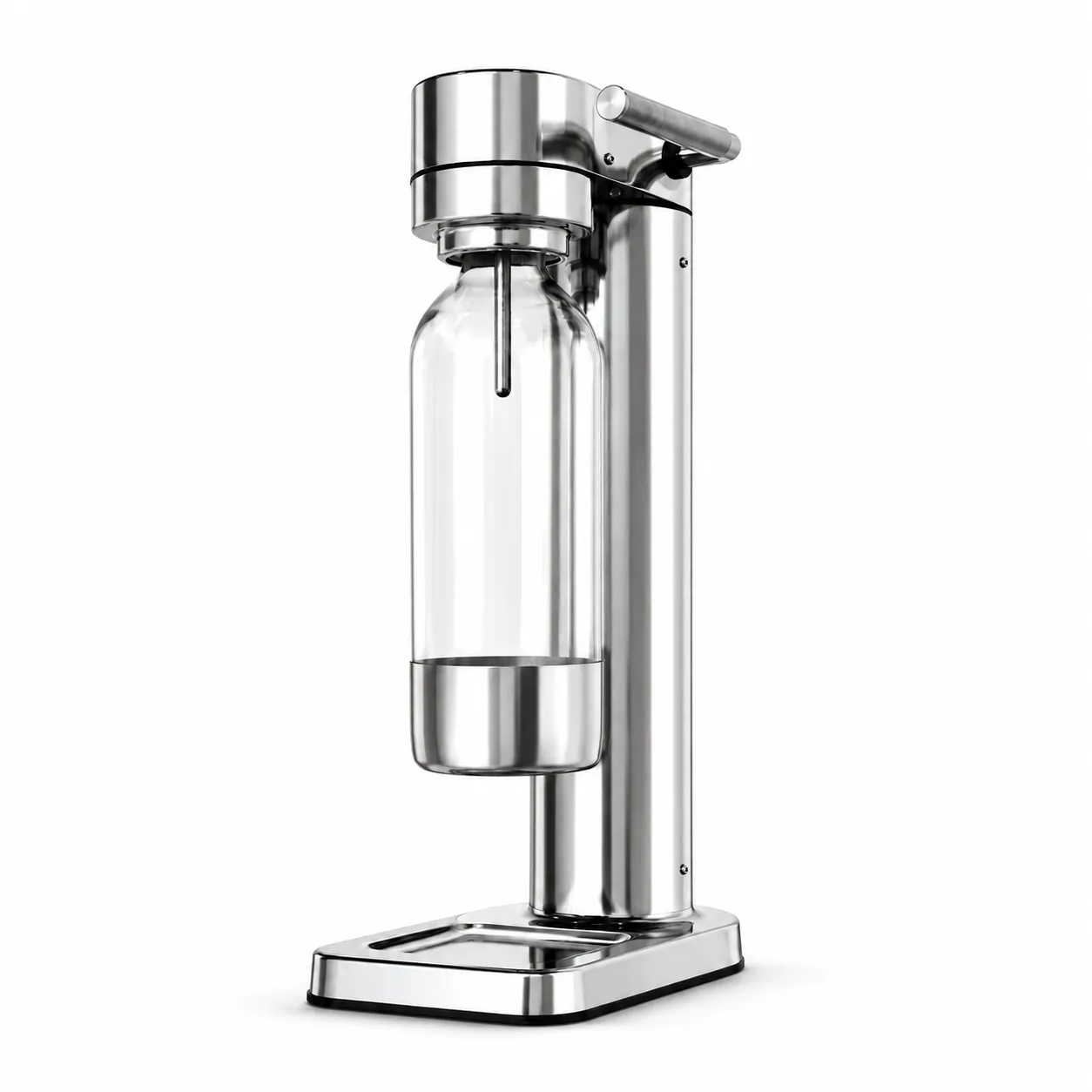
G15 — full 304 stainless steel body, CNC brass valve, double safety valve. MOQ 300 units.
See the G15 →Ranked Brand Profiles
1. SodaStream
- Brand type
- Global consumer carbonation system
- German-market models
- Terra, DUO and electric E-DUO families
- Primary advantage
- Retail distribution, syrups, bottles and cylinder-exchange ecosystem
SodaStream is the benchmark against which most German soda maker launches are compared. Its advantage is not only the machine: it combines recognizable hardware, replacement bottles, branded flavors and a widely understood CO2 exchange process. Current German offerings span entry-level PET-bottle machines, systems accepting glass and plastic bottles, and electric models.
For new brands, SodaStream illustrates both the value and the risk of an ecosystem strategy. A proprietary connection can strengthen retention, but it also creates resistance when German shoppers already own standard screw-in cylinders.
Official reference: SodaStream Germany model comparison.
2. BRITA
- Brand type
- German drinking-water and filtration specialist
- Representative lines
- sodaONE and sodaTRIO
- Primary advantage
- High trust around household drinking-water treatment
BRITA has a natural route into home carbonation because German consumers already associate the name with tap-water improvement. Its soda maker range gives buyers a familiar alternative to SodaStream while keeping the purchase decision within the wider drinking-water category.
The key strategic lesson is brand adjacency: a company with authority in filtration can extend into carbonation more credibly than an unknown general appliance label. For distributors, BRITA also shows how filters, bottles and carbonation can sit within one water-focused portfolio.
Official references: BRITA sodaONE documentation and sodaTRIO documentation.
3. Aarke
- Brand type
- Swedish premium kitchen-design brand
- German-market models
- Carbonator 3 and Carbonator Pro
- Primary advantage
- Recognizable metal form language and premium presentation
Aarke helped turn the soda maker from a utility appliance into a kitchen design object. The Carbonator 3 addresses users who want a compact freestanding machine, while the Carbonator Pro adds an enclosed glass-bottle format. Its German storefront also supports bottles, CO2 cylinders and spare accessories.
Aarke's importance is larger than its unit volume alone: the brand established a premium reference point for metal finishes, controlled detailing and countertop presence. Many new projects now arrive at factories with an “Aarke-like quality level” request, even when the required mechanism or bottle system is different.
Official reference: Aarke Germany.
4. Mysoda
- Brand type
- Finnish soda maker specialist
- German-market models
- Glassy, Woody and Ruby 2
- Primary advantage
- Renewable wood-composite design and differentiated colors
Mysoda competes through material storytelling and Nordic design. Woody and Ruby 2 use wood-composite housings, while Glassy targets consumers who prefer a protected glass-bottle system. In 2026 German comparison coverage, Mysoda models remain visible across both value and premium segments.
The brand demonstrates that sustainability claims work best when they are connected to a visible product decision. A renewable composite housing is easier for a buyer to understand than a generic statement that a product is “eco-friendly.”
Official reference: Mysoda Germany soda maker range.
5. GROHE
- Brand type
- German-origin water-system and bathroom/kitchen brand
- Representative line
- GROHE Blue Fizz
- Primary advantage
- Preset fizz levels and credibility in engineered water products
GROHE Blue Fizz brings water-system engineering into a countertop format. The official product page highlights one-button carbonation, selectable light, medium or strong levels, stainless-steel water-contact components and compatibility with approved 425 g standard cylinders.
This positioning appeals to households that want a more controlled process than repeated manual button presses. It also shows that automatic operation does not always require a large electrical appliance; mechanical control and user feedback can create a more structured experience.
Official reference: GROHE Blue Fizz.
6. Sodapop
- Brand type
- German soda maker and beverage-accessory brand
- German-market models
- Logan and Cooper Pro
- Primary advantage
- Broad choice of glass, PET and stainless-steel bottle configurations
Sodapop covers both accessible starter products and more flexible sets. Cooper Pro targets the simpler PET-bottle segment, while Logan is sold in combinations that include glass, PET or stainless-steel bottles. The range also extends into syrups and related accessories.
This multi-bottle approach reflects a real German-market tension. Glass communicates taste neutrality and household use, PET is light and economical, and stainless steel supports portability and dishwasher cleaning. No material wins every use case.
Official reference: Sodapop soda maker range.
7. Philips GoZero
- Brand type
- Global consumer-appliance brand
- German-market models
- GoZero ADD4900 series
- Primary advantage
- Simple manual use under a widely recognized appliance name
Philips GoZero models occupy an accessible part of the German market. Current German pages show manual machines with adjustable carbonation, no electricity requirement and PET or dishwasher-safe bottle options, plus separate cylinder and bottle accessories.
The proposition is deliberately easy to understand. That matters in retail, where complex technical differentiation may receive only seconds of shopper attention. A recognizable master brand can also reduce perceived risk for a new appliance category.
Official reference: Philips Germany soda maker range.
8. WMF
- Brand type
- German kitchenware and appliance brand
- Representative line
- Element One
- Primary advantage
- Three selectable fizz levels and automatic stop in a metal body
WMF's Element One uses the brand's premium kitchen credentials to compete in home carbonation. Its current product page highlights a stainless-steel housing, three carbonation levels, push-button automatic operation, a bayonet bottle connection and compatibility with common screw-in CO2 cylinders rather than Quick Connect.
WMF shows how a mature kitchen brand can enter the category with a focused hero product instead of a large model family. The design and user interface must feel consistent with the brand's existing countertop appliances.
Official reference: WMF Element One.
9. Luckymoose
- Brand type
- German direct-to-consumer specialist
- German-market models
- Infinity and Infinity-S
- Primary advantage
- Large reusable stainless-steel bottles and a clear plastic-reduction message
Luckymoose is an example of a younger German brand building a focused category position without trying to copy the market leader's entire ecosystem. The standard Infinity combines an ABS housing with an automatic stopping concept, while Infinity-S moves into a full stainless-steel housing and continuous manual CO2 control.
The strongest distinction is the bottle program. The brand promotes dishwasher-safe 304 stainless-steel bottles in several capacities and positions them as durable alternatives to time-limited PET bottles. Its support content also publishes compatibility guidance and replacement-parts information.
Official reference: Luckymoose Infinity range.
Cheersoda (OEM alternative)
- Company type
- China-based B2B soda maker OEM/ODM supplier
- Representative lines
- G3, G720, G15 and G15Pro
- Primary advantage
- Private-label model selection, customization, production and export-project support
Cheersoda is different from the first nine companies in this list. It is not presented as a German consumer brand or a product sold through German retail. It is included as a manufacturing option for German importers, distributors and online brands that want to create their own soda maker line instead of reselling an established name.
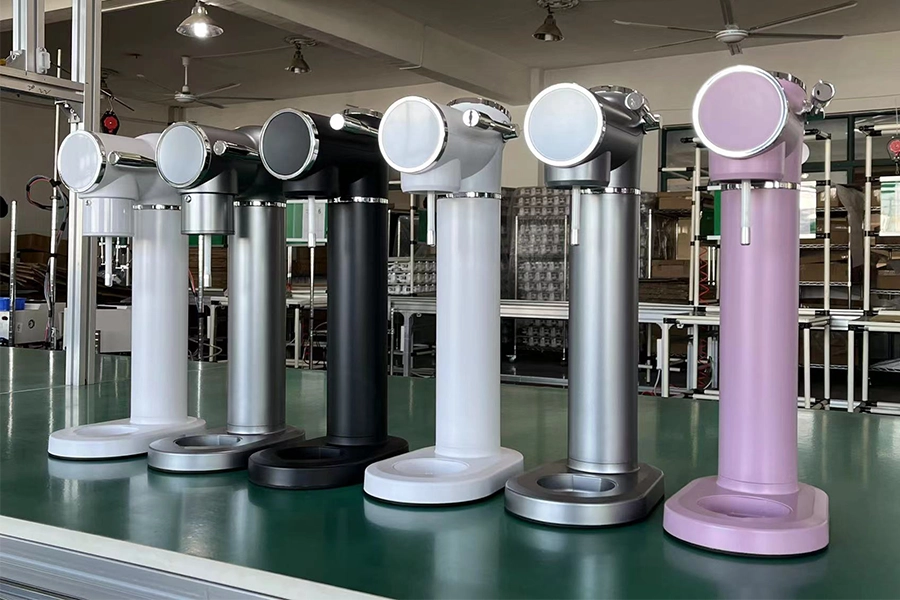
The product range covers entry-level market-test models, distributor-oriented public-mold options and more premium metal-positioned machines. Project work can include model selection, logo and color review, packaging, manuals, sample confirmation and production planning according to the buyer's intended market and order size.
For German projects, the practical starting point is not “Which machine is best?” but “Which model fits the target retail price, bottle strategy, local CO2 exchange route and launch quantity?” Those inputs determine whether a standard private-label route or a more differentiated tooling project is commercially realistic.
Company references: OEM soda maker manufacturing, G15 stainless-steel model and Germany private-label project.
Disclosure: This article is published by Cheersoda. Cheersoda is intentionally placed last and is identified as a B2B OEM supplier—not as a German retail brand. The inclusion is relevant to readers researching manufacturing options and is not presented as independent consumer-test recognition.
What the German Market Tells New Soda Maker Brands
German Brand Does Not Automatically Mean German Factory
Country-based “manufacturer” lists often mislead readers by mixing legal brand owners, distributors and original equipment manufacturers. A brand may control industrial design, packaging, marketing and after-sales service in Germany while the pressure-bearing product is manufactured by an OEM partner in Asia.
That structure is normal, but B2B buyers should verify who controls each risk. Ask who owns the mold, where the valve and bottle are produced, which party conducts pressure and functional tests, who approves engineering changes and how defective batches are traced.
For a real project example, see our Germany private-label soda maker case study. It explains how a German online brand progressed through product review, tooling decisions and repeat production without presenting the brand owner and the OEM factory as the same company.
OEM Checklist for Launching a Soda Maker in Germany
- Define the retail segment: entry, mainstream, premium metal, glass-bottle, stainless-bottle or multi-beverage.
- Confirm the CO2 route: document the local cylinder connection and exchange availability before ordering tooling or packaging.
- Select the bottle system first: bottle material changes the machine structure, safety enclosure, cleaning instructions and replacement plan.
- Review actual test evidence: request reports for the exact bottle, water-contact parts and model—not a generic factory certificate.
- Test every user step: cylinder installation, bottle locking, carbonation, pressure release, bottle removal, cleaning and replacement-part access.
- Prepare German-market content: German manual, warnings, carton information, customer-service details and accurate compatibility language.
- Protect differentiation: clarify mold ownership, color exclusivity, logo position and whether the same appearance can be offered to another buyer.
- Run a controlled pilot: approve samples and packaging, then review a small or staged order before scaling retail inventory.
Buyers comparing production partners can also review our OEM soda maker manufacturing process, G15 stainless-steel soda maker model and quality and compliance overview.
Planning a Private-Label Soda Maker for Germany?
Send your target retail price, expected order quantity, preferred bottle material, CO2 connection, branding scope and launch schedule. Cheersoda can review model fit, sample requirements, packaging, documentation and production feasibility before you commit to a bulk order.
Request an OEM Review Explore Private Label Options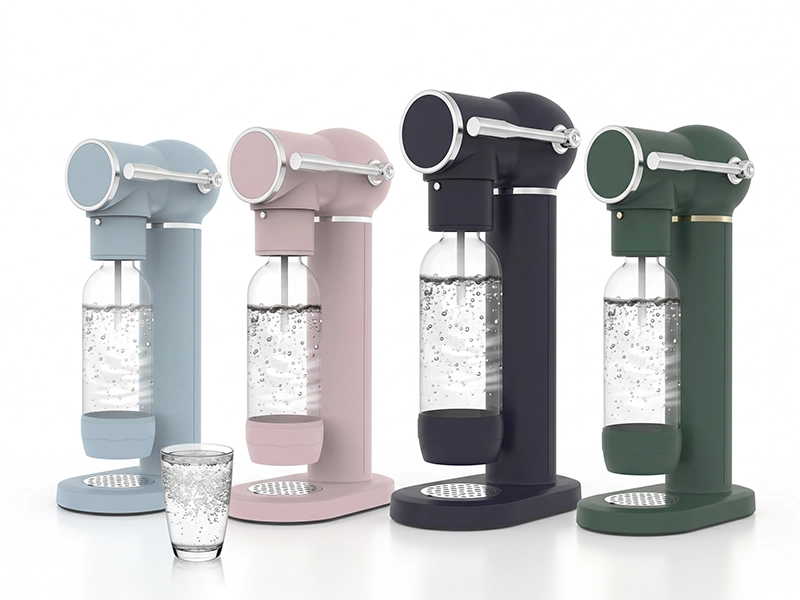
This German list sits inside a bigger picture: our worldwide roundup of the top 10 soda maker manufacturers shows how the German names rank globally.
Frequently Asked Questions
What are the most visible soda maker brands in Germany?
SodaStream is the benchmark ecosystem, while BRITA, Aarke, Mysoda, GROHE, Sodapop, Philips, WMF and Luckymoose maintain relevant current consumer offerings. Cheersoda is included separately as a B2B OEM option for German companies planning their own private-label range.
Are the soda makers sold by German brands made in Germany?
Not necessarily. Brand ownership, product design, final assembly and component manufacturing may occur in different countries. Buyers should verify the actual factory and quality-control responsibility for each model.
Which CO2 cylinder system is most suitable for a German private-label launch?
There is no universal answer. Standard screw-in cylinders have broad familiarity, while SodaStream Quick Connect is a proprietary ecosystem. Confirm the buyer's intended retail and exchange channel before selecting the machine interface.
Is a glass, PET or stainless-steel bottle better?
PET is light and economical, glass is taste-neutral and dishwasher-friendly when used in a protected system, and stainless steel is durable, portable and suitable for dishwasher-cleanable premium programs. The machine must be engineered and validated for the selected bottle.
Can every soda maker carbonate juice or wine?
No. Most home soda makers are designed for plain water only. Carbonating other beverages requires a suitable pressure-release mechanism and cleaning process. Follow the exact manufacturer's instructions.
What information should a German brand send to an OEM factory?
Provide target quantity, retail channel, price position, bottle material, CO2 connection, logo and color requirements, packaging concept, required documentation and target launch date.
Editorial Sources
- Stiftung Warentest: Wassersprudler comparison, 2025
- Current official German product pages linked in each brand profile; checked August 16, 2026.
- Luckymoose product and manufacturing information
Editorial disclosure: This article is written by Cheersoda, an OEM/ODM soda maker supplier. The ranked list is based on public market evidence and product differentiation, not undisclosed sales data or paid placement. Brand names belong to their respective owners. Product ranges and compatibility information can change; verify details with the brand before purchase or sourcing decisions.