
G9 Soda Maker for OEM Orders
Cheersoda OEM Sparkling Water Maker — the G3 Platform Without the LED
Send the model and quantity — a formal quote lands in your inbox within one business day. Sample fast track: samples ready in 7 days.
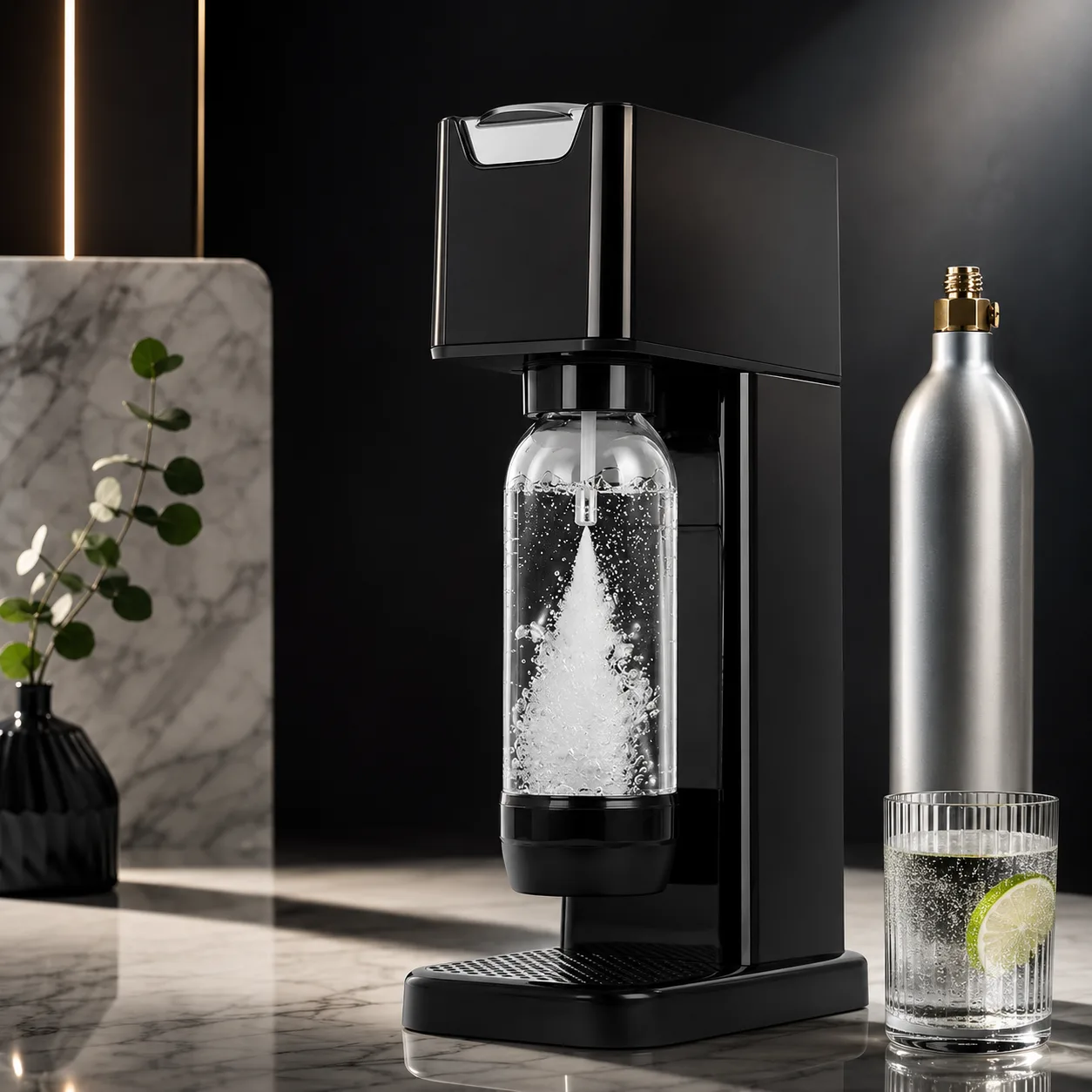
The G9 is the simplest soda maker in our range: a manual top-press machine with no LED, no battery and no electronics of any kind — the G3 platform with the indicator removed, keeping the same body, the same painted button, the same double safety valves and the same automatic pressure release. It is built for private-label programs that want a clean, entry-level SKU: nothing to charge, nothing to certify as an electrical product, and nothing electronic to explain to an end user.
Manual / No Power No Battery Automatic Pressure Release MOQ 300 Units Lead Time: About 30 Days (Repeat Orders); First Orders 35–45 Days.
Standardize Your Sparkling Water Maker Line
The G9 soda maker is developed specifically as a standardized manual model for importers, distributors and private label brands. By focusing on essential carbonation mechanics without requiring electricity — and without carrying any battery or display — the G9 provides a stable, highly definable SKU that simplifies the OEM purchasing process and end-user instruction.
Unlike multi-beverage systems, the G9 is dedicated strictly to carbonated water. That single-purpose design is a commercial feature, not a limitation: a buyer can specify the entire product in one line — model, body colour, button colour, bottle, box — and every unit in the order is identical to the sample that was approved. Standardization is what makes a 300-unit private-label order behave like a much larger one: no variant matrix, no electronics sourcing, no firmware or display component anywhere in the bill of materials.
The standardization also simplifies everything downstream of the factory gate. There is no lithium cell in the product, so there is no battery documentation in the shipping file, no cell-related carrier question, and no market where the product is treated as an electrical appliance. The G9 crosses borders as what it is: a manual kitchen product with a pressure cylinder ecosystem around it, documented like one.
For a distributor, a one-line specification also means one-line inventory. There are no voltage variants to split stock across, no display version to forecast separately, and no regional plug or charger to kit. Reorders are the same SKU as the first order, so sell-through data from a trial or a first 300 units reads directly onto the repeat order — the buyer is scaling a known product, not re-qualifying a new one. That is the practical meaning of "standardize your line": the G9 is the SKU a program can build its reorder rhythm on.
Core Features for OEM Projects
Top-press operation.
The painted button on top is the whole interface — press to carbonate. First-time users need almost no instruction, which keeps manuals short and support questions rare.
No LED, no battery, no power.
The G9 carries no electronic component at all. There is nothing to charge, no cell to replace, and no display to fail — the specification a buyer approves is purely mechanical.
Automatic pressure release.
After carbonation, the machine vents the bottle pressure automatically before removal — the safety behaviour is built into the cycle, not left to the user.
Double safety valves.
Two independent valves guard the pressure path, the same safety architecture as the rest of the range.
Painted button.
The button is a painted component, colour-matched to the brand — a visible custom element on an entry-level model.
Standard PET bottle set.
One 1,000 ml PET bottle (BPA-free, plastic base and cap) in the standard set; a 500 ml bottle is also available.
Standard Manual Operation Workflow
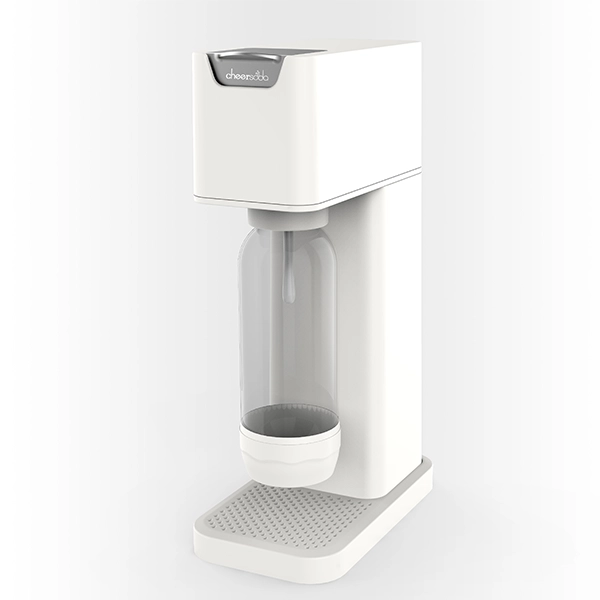
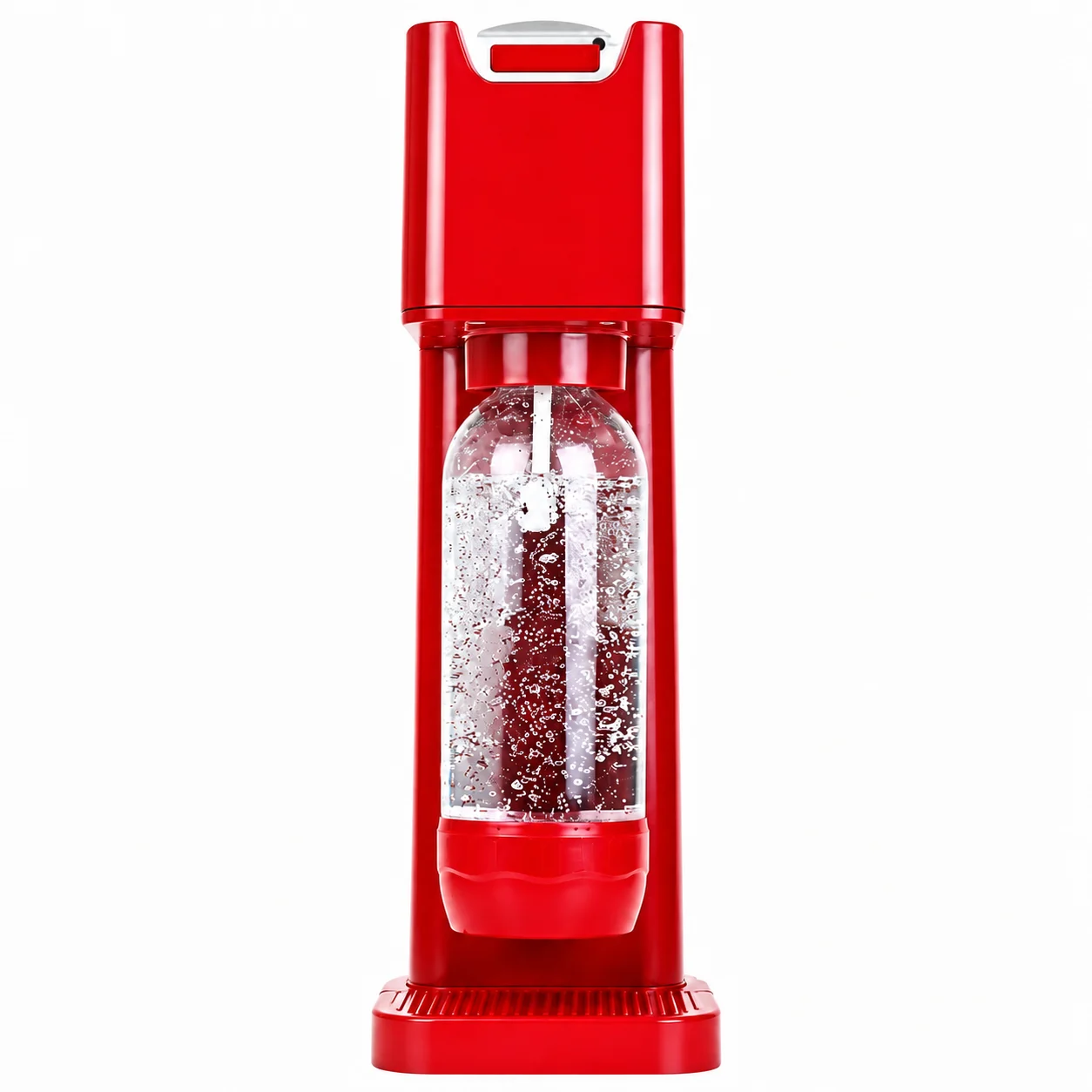
Fill and lock the bottle.
Fill the PET bottle with cold water to the fill line and lock it into the machine.
Press the button.
Press the top button in short presses; the cylinder does the work and the water carbonates.
Discharge.
The automatic pressure release vents excess pressure before the bottle is removed.
Remove and serve.
Unlock the bottle and pour — still or sparkling is the only choice the user ever makes.
Carbonation level is controlled the manual way: by the number of presses. Short presses for a lighter fizz, additional presses for a stronger one, with a short pause between presses so the gas dissolves rather than foams. There is no dial and no readout — the user learns their own press count in the first two or three bottles, which is exactly how the installed base of manual carbonator users already behaves.
Because there is no indicator to read and no setting to select, the workflow is the shortest in the range. For retail programs this matters twice: the printed manual can stay to a single quick-start sequence, and the product demonstration — in a store, on a listing video, in a customer's kitchen — takes under a minute. The operation video in Section 11 shows the full cycle.
Automatic Pressure Release
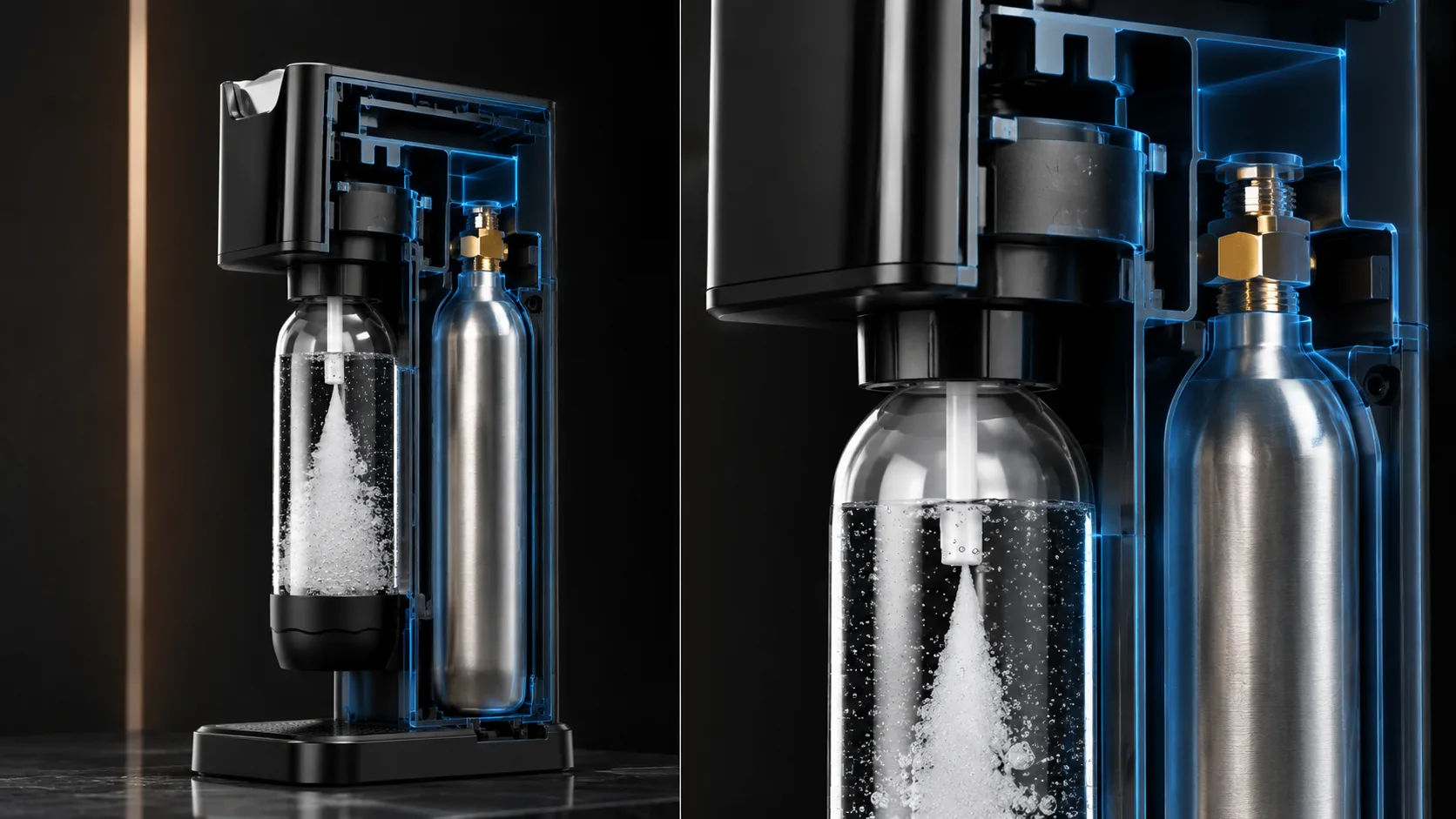
Pressure management is where a manual carbonator earns its safety record. On the G9, the pressure path is deliberately simple: carbonate in short presses, and the automatic pressure release vents the bottle before removal, so the user never opens a pressurised bottle against resistance.
For an OEM buyer, the value is in what this removes from the after-sales picture. The most common beginner mistake with manual carbonators — forcing a bottle out while it is still under pressure — is designed out of the sequence. The release step is not an instruction the user must remember; it is a stage of the cycle the machine performs. That is why the G9's manual can present one workflow with no warning-heavy detours, and why distributors who have handled display-equipped models often find the simpler machine generates the quieter support inbox.
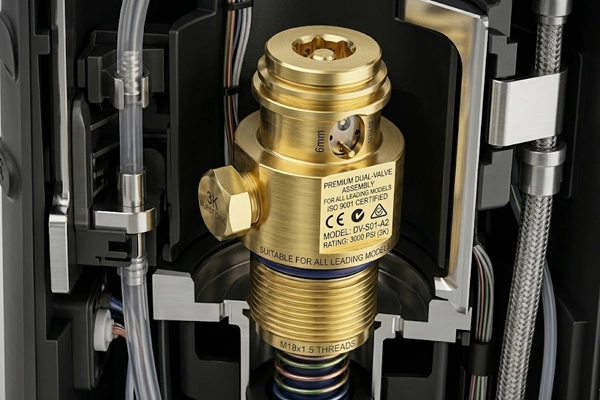
Safety Valve & Bottle Locking
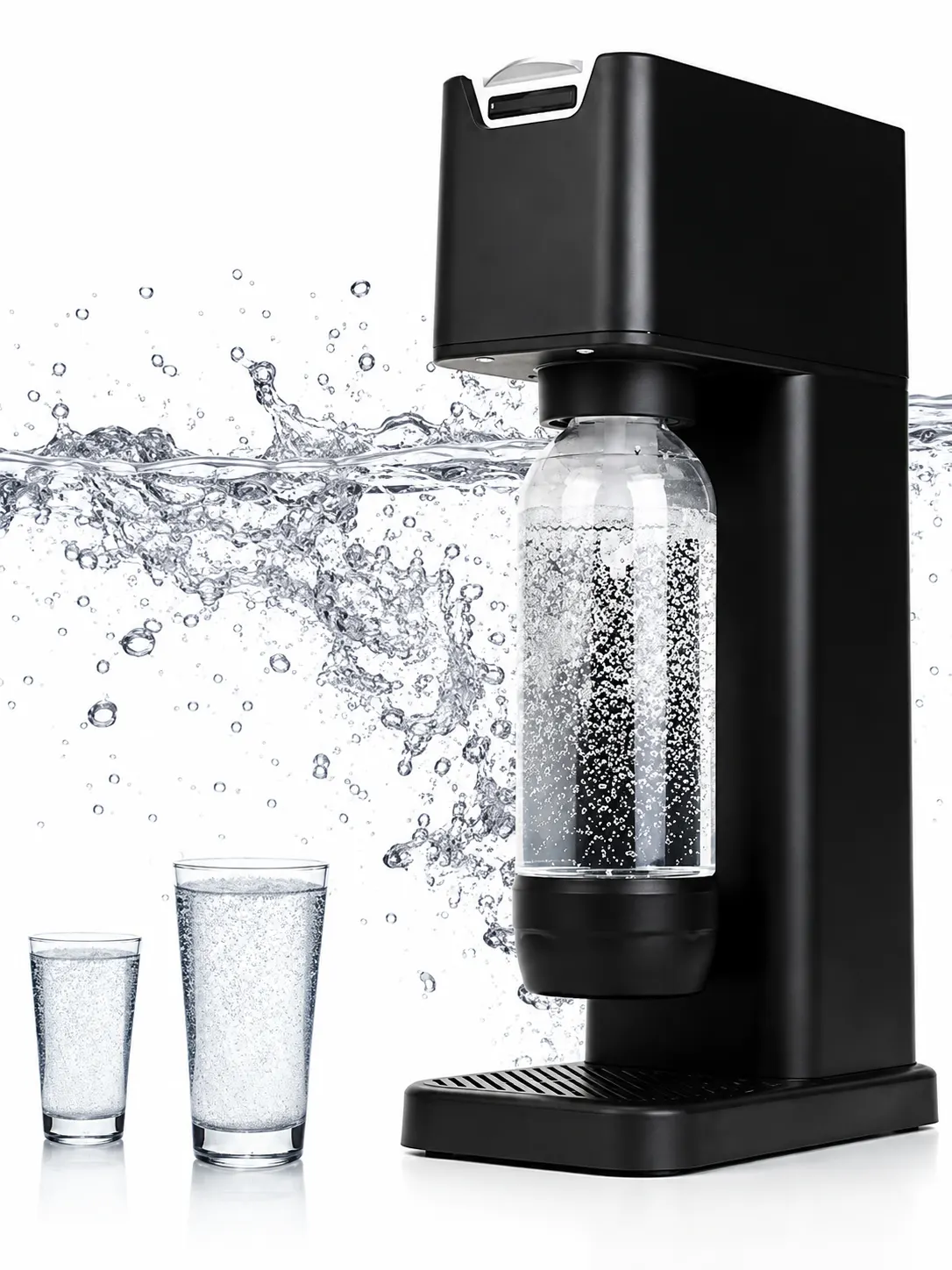
Double safety valves.
The G9 uses the range's double-valve structure: two independent valves on the pressure path, so a single valve event never leaves the bottle unguarded.
Valve testing.
Valve assemblies are design-tested at three times standard working pressure in the factory's burst-test laboratory (built 2018); burst testing itself is run as batch sampling.
Bottle locking.
The PET bottle locks into the carbonation head with a positive engagement the user can feel; the bottle installation check is part of the assembly process, and bottle fit is re-checked in final inspection.
Full-unit testing.
Every finished G9 passes the range-wide 100% wet leak test and a high-pressure gas check before it is boxed — full inspection, not sampling (Section 13).
Painted Button Customization
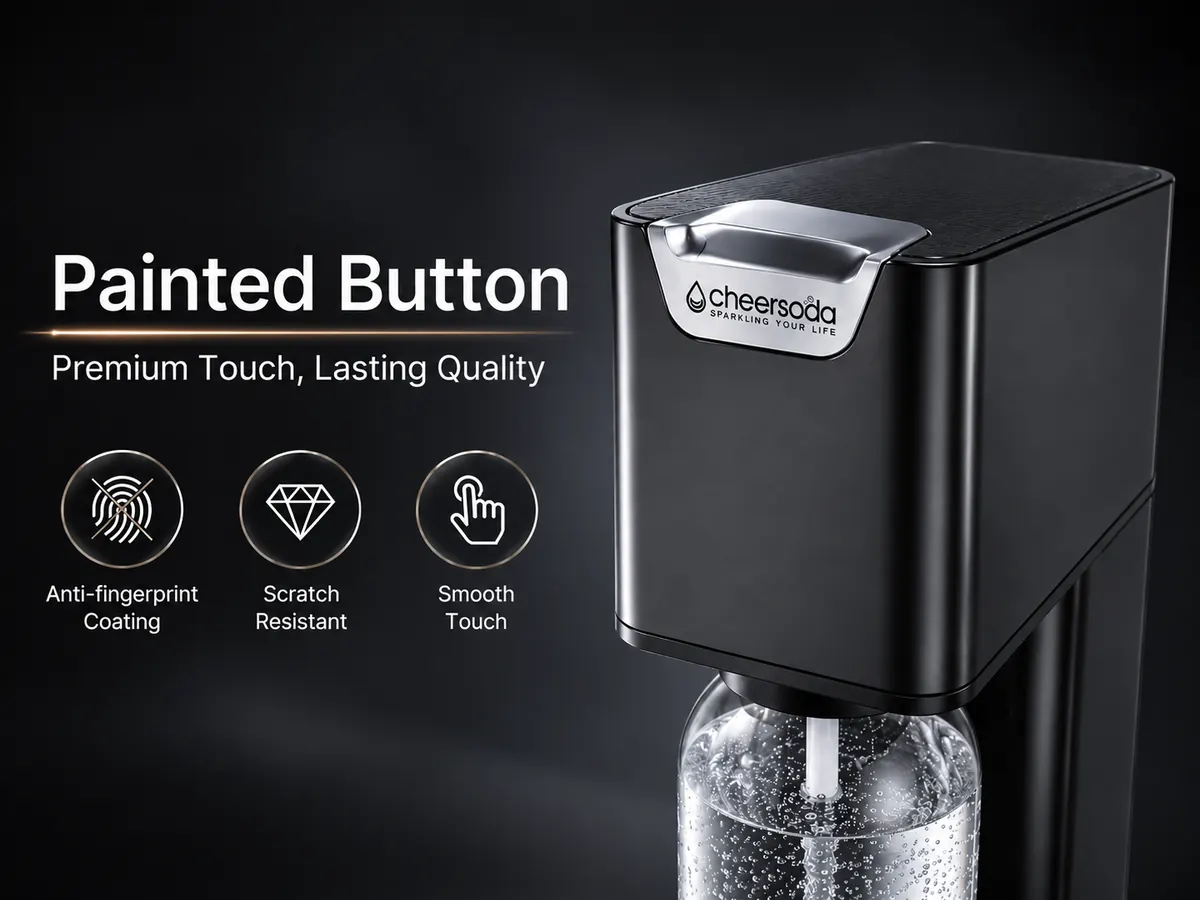
The tactile interface of the G9 is centred on its prominent painted button — and on an entry-level model, this component does outsized brand work. In OEM projects it serves as the primary colour-recognition point of the whole product.
Brand colour at the lowest cost point. The painted button can be matched to your brand colour, set to match the body, or set to contrast with it. A standard white or black body with a brand-colour button reads as a custom product on the shelf, at a fraction of the cost of a full custom-colour body program — which is why many first private-label runs standardise the body and spend their customisation budget on the button, the box and the manual.
Approval discipline. Button colour is approved on the physical sample, never from a screen or a photo — paint reads differently under retail lighting. The sample set (Section 17) is produced in your intended button colour for exactly this reason. The RFQ form at the bottom of this page carries a dedicated field for your button colour requirement; use it, and the quotation and the sample are built around it from the first reply.
Standard Accessory Setup
The standard G9 set is one machine plus one 1,000 ml PET bottle (BPA-free, plastic base and cap). Around that core, the set can be extended on the soda maker bottles range:
500 ml bottle.
Also available for programs that retail a smaller format.
Extra bottles.
Additional PET bottles can be quoted into the set — the two-bottle set is the common retail configuration.
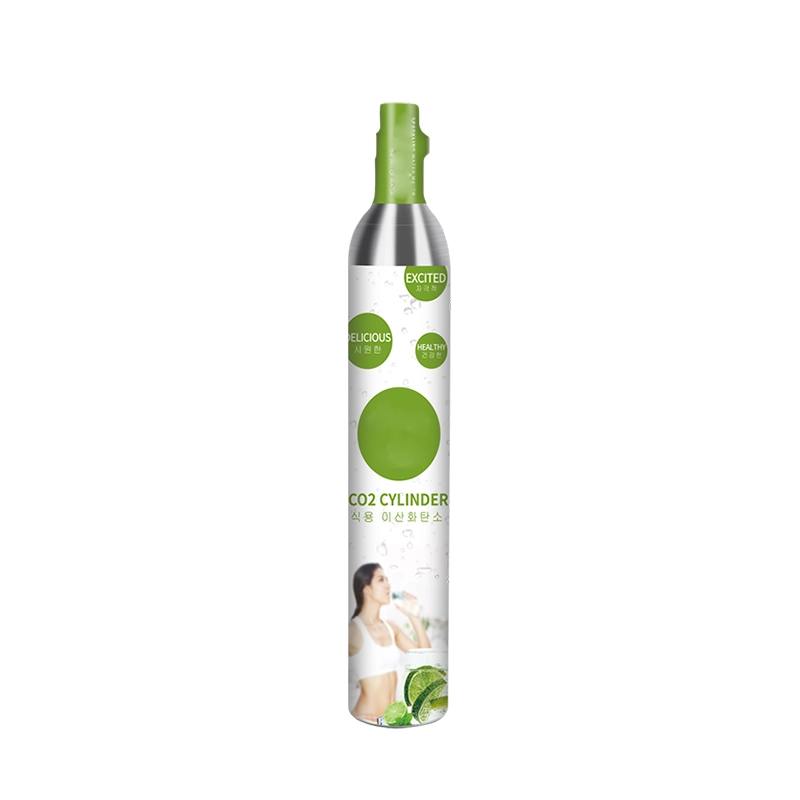
CO2 cylinders.
Standard threaded 425g / 60L cylinders (TR21-4 / M18×1.5) can be supplied with the order, shipped 100% empty for local filling (HS 7613001000). The G9 does not fit Quick Connect cylinders, and no adapter exists.
Stainless bottle option.
A stainless steel bottle exists in the range for programs that want a premium second listing; compatibility is confirmed per project.
Accessory decisions are configuration decisions: they are frozen at sample stage, so the set a buyer approves is the set that ships in every carton.
Detailed Specification Table
Specifications
| Item | Specification |
|---|---|
| Model | G9 Soda Maker |
| Product size | 14 × 25 × 42 cm |
| Body colors | White / black (injection colours) |
| Operation | Manual top-press, no electricity required |
| Display / battery | None — no LED, no battery, no electronic components |
| Button | Painted button (colour customisable) |
| Pressure release | Automatic pressure release |
| Safety | Double safety valves |
| Standard set | Machine with 1,000 ml PET bottle (plastic base and cap, BPA-free) |
| Cylinder interface | Threaded screw-in (TR21-4 / M18×1.5), 425g / 60L class |
Packing and loading
| Item | Data |
|---|---|
| Color box | 27 × 15.5 × 45 cm; GW 1.8 kg / NW 1.45 kg |
| Export carton | 57 × 49 × 48 cm, 6 units per carton; GW 12.3 kg / NW 10.8 kg |
| Container loading | 20GP: 1,056 units / 40GP: 2,208 units / 40HQ: 2,760 units (excl. cylinders) |
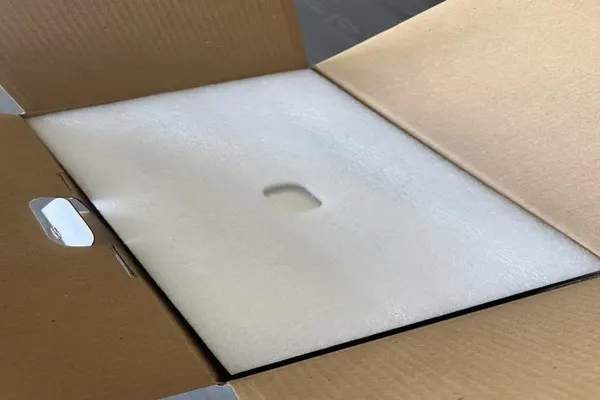
Premium Inner Protection
Precision-engineered foam inserts designed to absorb impact during global transit. We ensure your private label products deliver a flawless unboxing experience, reinforcing brand trust from the first touch.
OEM and Private Label Options for G9
| Customization Item | Details & Scope |
|---|---|
| Logo Placement | Silkscreen or pad printing on main body and bottle |
| Body Color | Custom injection molding colors based on provided Pantone codes |
| Painted Button Color | Specific surface painting for the main operation button |
| Packaging Design | Full color box customization based on buyer's artwork |
| Instruction Manual | Customized content, language, and layout |
| Carton Mark & Barcode | Specific shipping marks and retail barcode labels applied |
| Market Documents | Support for compliance documentation based on target region |
Two rows do the commercial work on this model. The painted button colour is the cheapest strong brand signal in the range — a separate lever from body colour, so a first run can stay on a standard body and still look owned. And because the product contains no electronics, the market-documents row stays short: food-contact and product documentation for a manual appliance, with no battery file to prepare for any market. For the full workflow behind this table, see the private label soda maker program and the OEM manufacturer pillar.
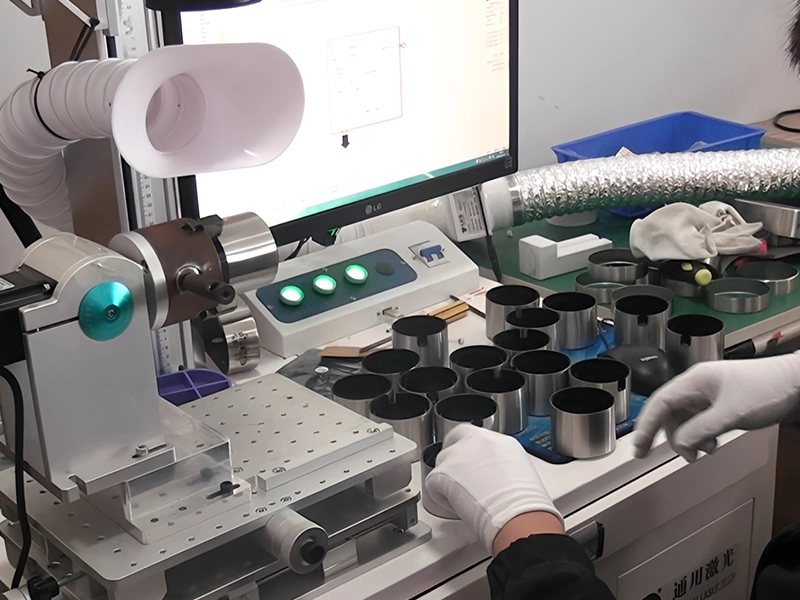
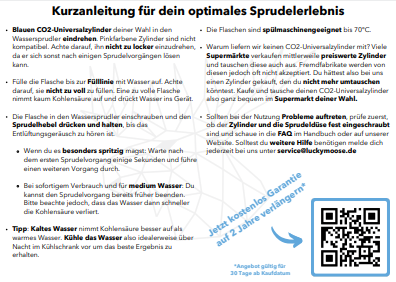
Manual Soda Maker Operation Video
Video: G9 operation video (bottle installation, top-press carbonation, automatic release and bottle removal) — the same one-minute cycle a retail demonstrator performs.
Manufacturing Flow for G9 Orders
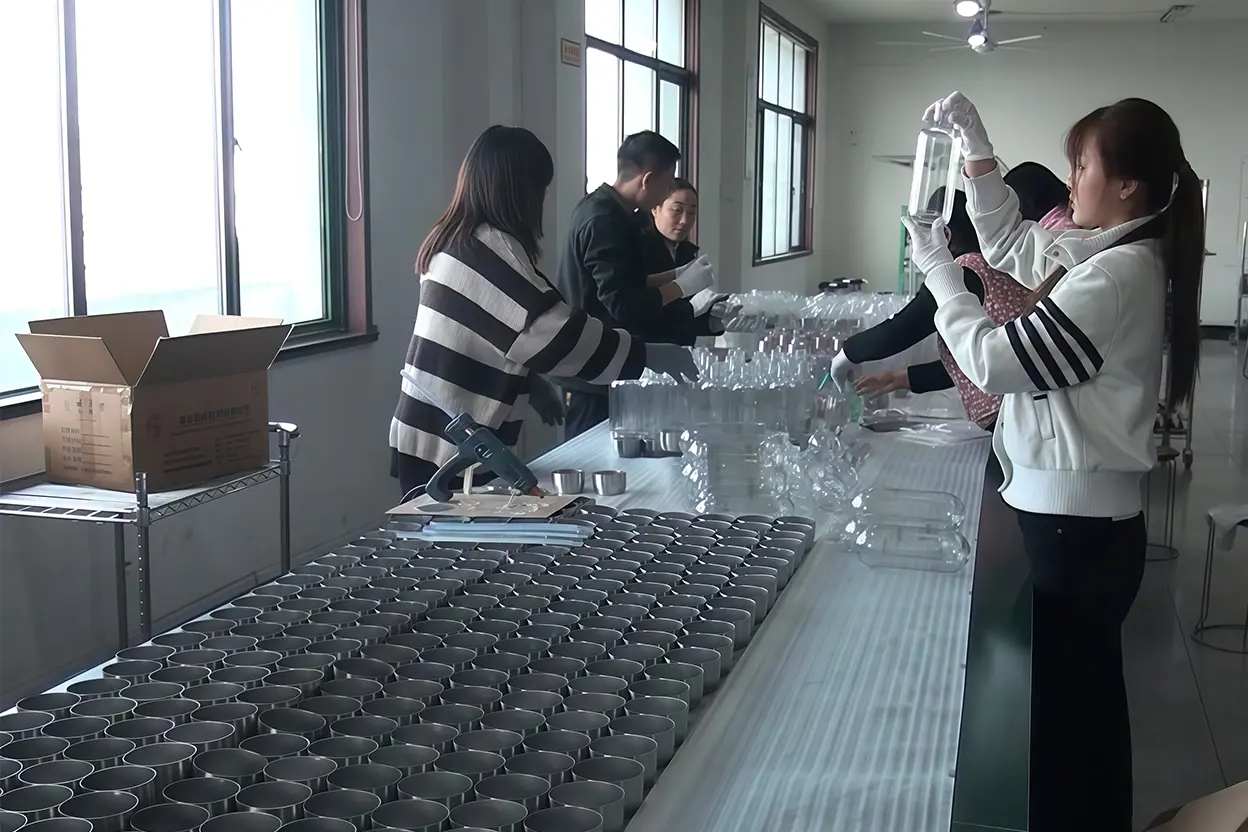
Incoming material check.
Verification of raw materials and OEM components against the order specification before anything enters the line.
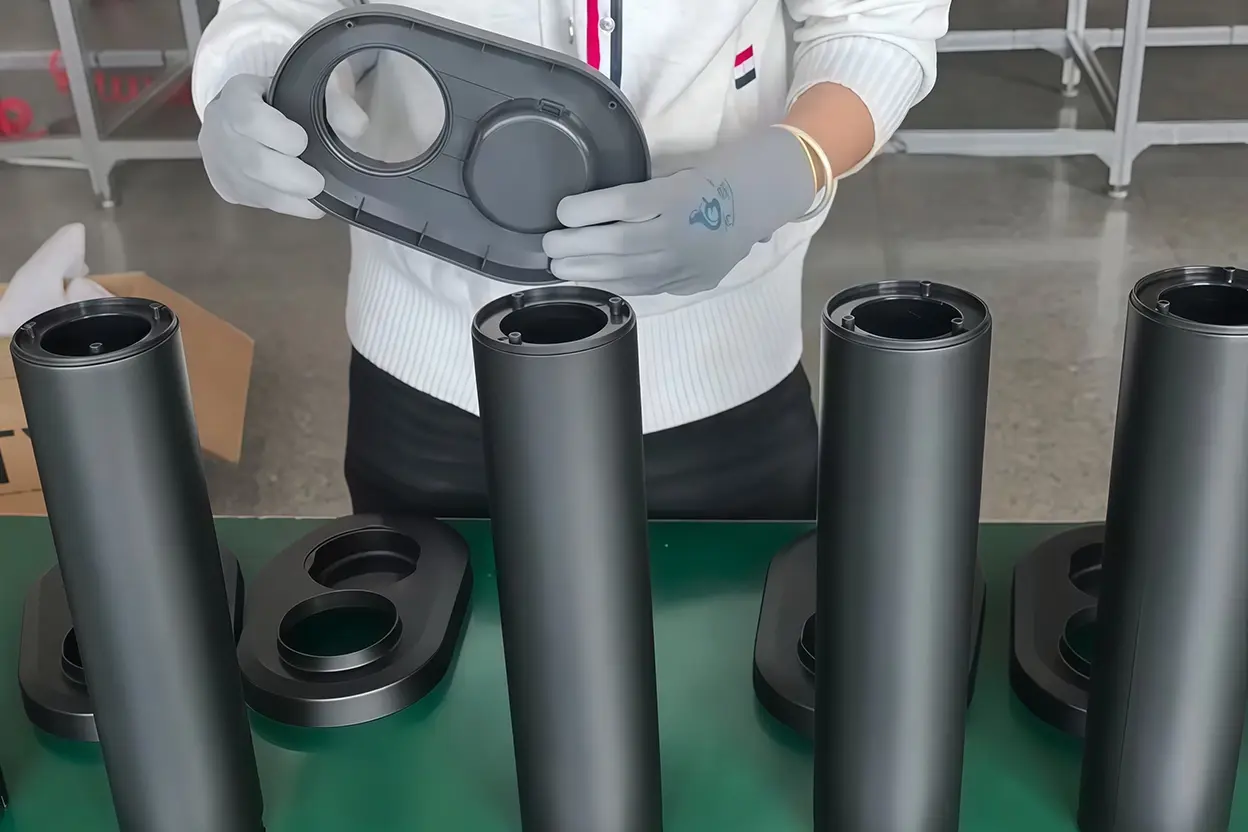
Component preparation.
Sorting painted buttons and main body parts; button colour is checked against the approved sample at this stage, while a correction is still cheap.
Carbonation structure assembly.
Assembling the manual gas transfer core — the cylinder interface, the press mechanism and the gas path.
Valve and safety assembly.
Fitting the double safety valves and the pressure-release path that the cycle depends on.
Leak test.
Pressure testing the safety valve system; this is also where the unit-level wet leak test and high-pressure gas check are applied (Section 13).
Function check.
Verifying the full press–carbonate–release cycle on the finished machine, with the production bottle fitted.
Packaging inspection.
Checking custom color boxes and manuals against the buyer's final artwork files.
Carton packing.
Final staging for export shipment, with carton marks and barcodes applied as specified.
The flow sits inside the factory's four-stage quality framework — incoming materials, in-process checks, integrated inspection, final product inspection — documented on the manufacturing page and in the factory videos. One flow note specific to this model: with no display unit to install and no cell to fit, the G9's line is the shortest in the range — one reason repeat orders hold the 30-day cycle reliably.
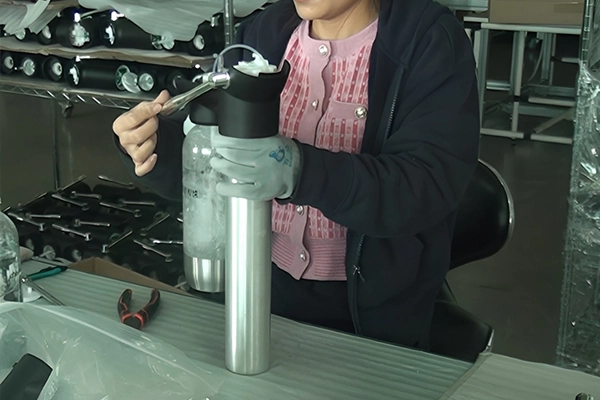
Quality Control Checks
Every OEM order undergoes rigorous quality checks to ensure the final product meets functional and visual standards before export.
- Appearance inspection for painted surfaces (button finish checked against the approved sample)
- Bottle fit and locking mechanism check
- Pressure-related test and water leak test
- Full-cycle function check (press, carbonate, release)
- Pre-shipment photo/video support for buyers
Two range-wide guarantees sit behind this list: every finished unit passes a 100% wet leak test and a high-pressure gas check — full inspection, not sampling — while burst testing is done as batch sampling, with valve assemblies design-tested at three times standard working pressure in the factory's burst-test laboratory (built 2018). A drop test is also performed on the packed product as part of the final inspection routine. The distinction matters when you compare suppliers: the tests that protect the end user run on every unit; the destructive test runs on samples from the batch, which is the only way a burst test can work. The framework is set out on the quality and compliance page.
Compliance & Document Support
We understand that target-market documents depend heavily on the buyer's region and the final G9 configuration. We offer structured support for compliance documentation. FDA / LFGB / CE / RoHS cover all products in the range, including the G9, with whole-machine certificates held at the factory; the plant is ISO 9001 certified.
Material compliance. Support for food-contact material documents as applicable to the materials used in the specific project.
A shorter document file. Because the G9 contains no battery and no electronics, its documentation set is the manual-appliance set only — no cell paperwork for any market, no electrical-product track. Buyers comparing models for certification-sensitive markets should weigh this directly: the G9's file is the shortest in the range.
Label review. Assistance with packaging label and manual review to ensure alignment with buyer's local import requirements. Market-specific paperwork is reviewed at project stage, before production is scheduled.
The review sequence is deliberately early: target market named at quotation, document set confirmed against the frozen configuration at sample stage, and labels and manuals checked against final artwork before printing. On a model with no battery and no electronics, that sequence has no late surprises in it — the file that is reviewed at sample stage is the file that ships with the order, unchanged.
Packaging & Export Preparation
The G9 is prepared for international shipping with robust packaging suitable for distributor and brand orders.
Retail packaging.
Custom color boxes and instruction manuals are packed securely to protect the painted button and body finish.
Logistics preparation.
We apply specific carton marks and barcode labels as requested by the buyer.
Loading support.
Pallet and carton loading support is available to optimize container space.
Final review.
Pre-shipment photo or video review is conducted to confirm packaging integrity before dispatch.
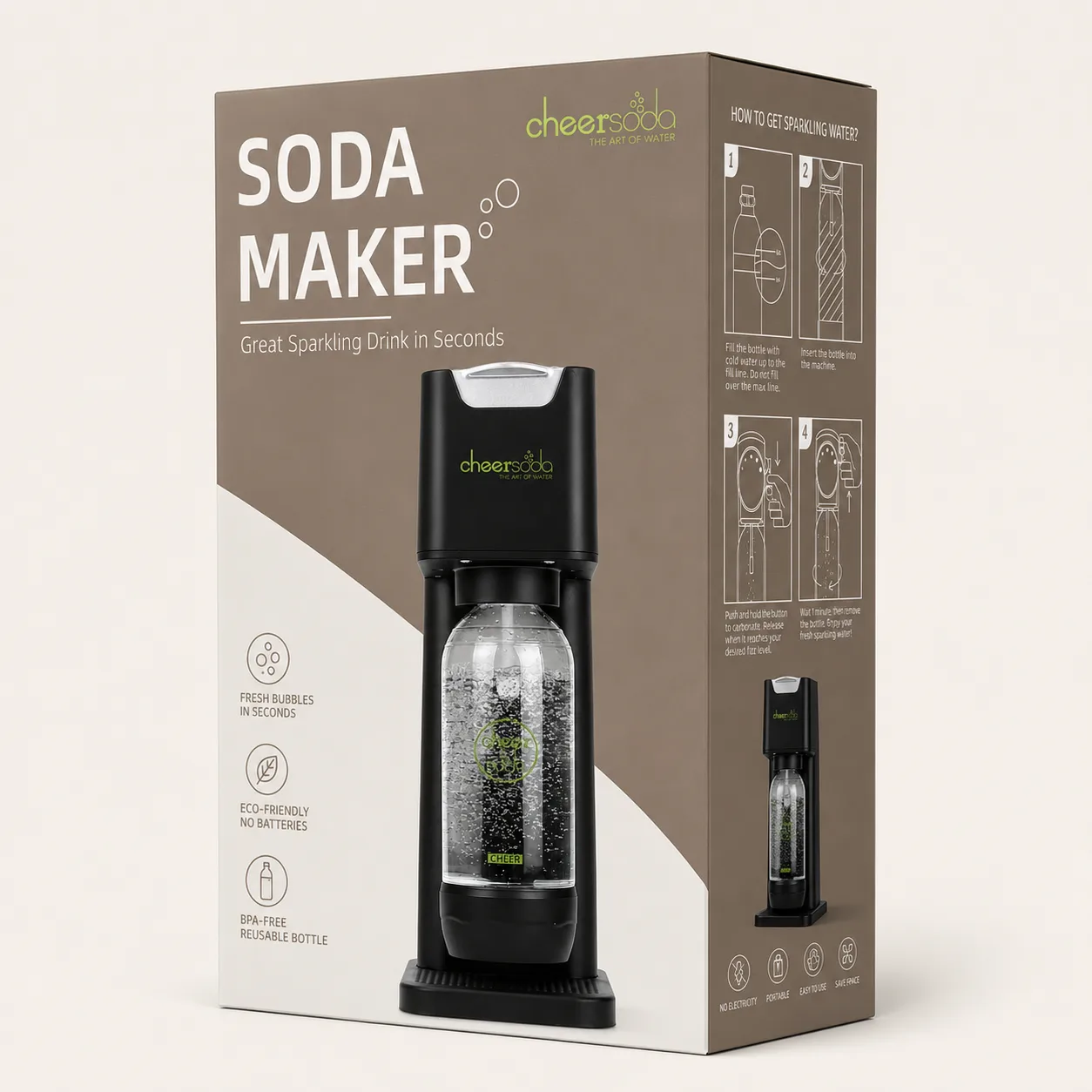
Planning numbers: at 6 units per carton, a 500-unit order is about 84 cartons ≈ 11.3 CBM — a comfortable LCL shipment — and a full 20GP holds 1,056 units. Most G9 programs therefore start with a trial order or a 300-unit MOQ order, read the market, and repeat on the 30-day cycle. Cylinders, where ordered, are quoted separately and shipped 100% empty (HS 7613001000); machines ship under HS 8422309090, bottles under 3923300000. The model sits inside the wider sparkling water maker range planning on the hub page.
One logistics note that follows from the specification: because the machine carton contains no battery, there is no lithium-battery line in the dangerous-goods conversation for the machines at all — the only pressure items in the shipment are the empty cylinders, declared as empty. Freight forwarders price and book the G9 the way they book any manual kitchen appliance, which keeps LCL consolidation simple for mixed orders.
Ideal B2B Use Cases
Entry private-label launch.
Ideal for a first private-label sparkling water maker launch that wants the simplest possible product: a standard body, a brand-colour button, a custom box — and no electronics anywhere in the specification, the shipping file or the user manual.
Distributor volume line.
A strong base model for distributors building a manual carbonation category: one definable SKU, a quiet support profile, and container maths that scale from an 84-carton LCL start to full 20GP repeats.
Certification-sensitive markets.
In markets where a battery or a plug would pull a product into additional documentation tracks, the G9 stays a manual appliance. This is a recurring reason LatAm and other certification-sensitive buyers shortlist the G9 over indicator or electric models — there is no cell documentation to prepare because there is no cell.
E-commerce entry listing.
For online brands, the G9 is the clean first listing of the top-press platform: the same operation story as the G3, a lower-complexity specification, and a natural upgrade path to the indicator model once the channel is proven.
The platform decision — G9 vs G3 vs G720:
| Model | Operation | Indicator | Best for |
|---|---|---|---|
| G9 | Top-press button | None — no battery, no electronics | Entry listings where the simplest specification wins |
| G3 | Top-press button | LED carbonation indicator (cell-powered) | Brands wanting a visible step up and a colour-led identity |
| G720 | Lever handle | None — fully mechanical | Distributors wanting the standard-mold volume platform |
The G9–G3 decision is a one-feature decision: everything else about the two machines — body, button, valves, bottle, packing, container maths — is identical. Choose the G3 when the indicator's shelf step-up is worth a battery in the product; choose the G9 when it is not. The full range is compared on the product range page.
The two-model ladder.
Because the platform, packing and container maths are shared, some programs launch both models together: the G9 as the entry listing and the G3 as the step-up listing above it, in matching body and button colours and one box design language. The pair merchandises as a range rather than two unrelated products, the cartons consolidate in the same shipment, and the buyer's second order can shift the mix toward whichever listing the market rewarded — without re-approving a single component.
The trial route.
Below the 300-unit MOQ sits the trial order, in the full intended configuration — body colour, painted button, color box — shipped as a normal export order. A trial validates the three things a sample cannot: retail sell-through, end-user handling, and your local cylinder logistics, all with sellable stock rather than a lone sample on a shelf. When the trial reads well, the same configuration scales straight into the 300-unit first order with nothing re-approved. The trial pattern is written up in our case studies.
Buyer Sample Approval Checklist
Before a G9 sample is approved for production, buyers typically confirm:
- Button colour — approved on the physical sample under normal lighting (never from a photo).
- Body colour — standard white / black, or the Pantone reference for a custom injection colour.
- Logo placement — position and print method on body and bottle.
- Bottle configuration — 1,000 ml standard, 500 ml option, extra bottles in the set.
- Box and manual — artwork, language and barcode against the final files.
- Carton mark — shipping mark and retail barcode placement confirmed before printing.
- Cylinder plan — threaded cylinders sourced locally, or supplied with the order (shipped empty).
- Set contents — the exact contents of the retail set (machine, bottle count, manual) listed and frozen, so carton packing repeats the approved set without variation.
The sample itself is the anchor of the whole order: one set, prepared in about 7 days, in your intended body and button colours, checked against the sample order guide process — what you approve is what production repeats. Sample sets are charged (the fee is quoted with the courier cost for your address — samples are never described as free).
Helen Ho, OEM Consultant.
Helen reviews every G9 quotation and sample configuration personally.
Expert tip — spend the customisation budget where the shelf sees it.
On an entry model, buyers sometimes spread small amounts across every option and end up with a product that looks standard everywhere. The G9 rewards concentration: a brand-colour painted button, a well-finished colour box and a clean one-page manual outperform five half-funded tweaks — and because the machine carries no electronics, none of that budget is ever diverted into documentation workarounds. Plan the order against the MOQ guide.
Frequently Asked Questions
1. What is the G9 soda maker?
2. What makes G9 different from other manual soda maker models?
3. Does G9 require electricity?
4. What bottle comes with G9?
5. What is automatic pressure release?
6. Does G9 have a safety valve?
7. Can G9 be customized for private-label orders?
8. Can the painted button color be customized?
9. What is the MOQ for G9?
10. What is the sample lead time?
11. What quality checks are used before shipment?
12. Is G9 suitable for sparkling water maker OEM projects?
13. How is the G9 different from the G3?
14. Which CO2 cylinders fit the G9, and how many units fit in a container?
Request a Quote
Provide your project details below to request G9 specs, OEM options, and pricing.
1-Year Warranty
This model is covered by a 1-year warranty. Spare-parts planning is available based on order volume — contact our team for project-specific support.