
X1 Soda Maker for OEM Orders
Cheersoda Stainless Steel Manual Soda Maker — the Compact Metal Model
The X1 is our compact stainless steel soda maker: a full metal body with a chrome button, manual carbonation, automatic pressure release and double safety valves — no electricity, no battery, nothing to plug in. It is built for OEM, distributor and private-label sparkling water projects that want a metal product on the shelf: retail-ready colour options, a standard set with a stainless-base PET bottle, and factory-direct production support from a 300-unit MOQ.
Product Type: Manual Soda Maker · Project Use: OEM / Private Label / Distributor Program · Operation: Manual carbonation · Power: No electricity required · Bottle Setup: 1,000 ml PET bottle with stainless steel base and cap (included as standard) · Branding: Logo, color box, instruction manual, carton mark · MOQ: 300 units
The X1 is a compact manual soda maker model for brands that need a simple countertop sparkling water maker with OEM packaging options, sample review, and factory-direct production support.
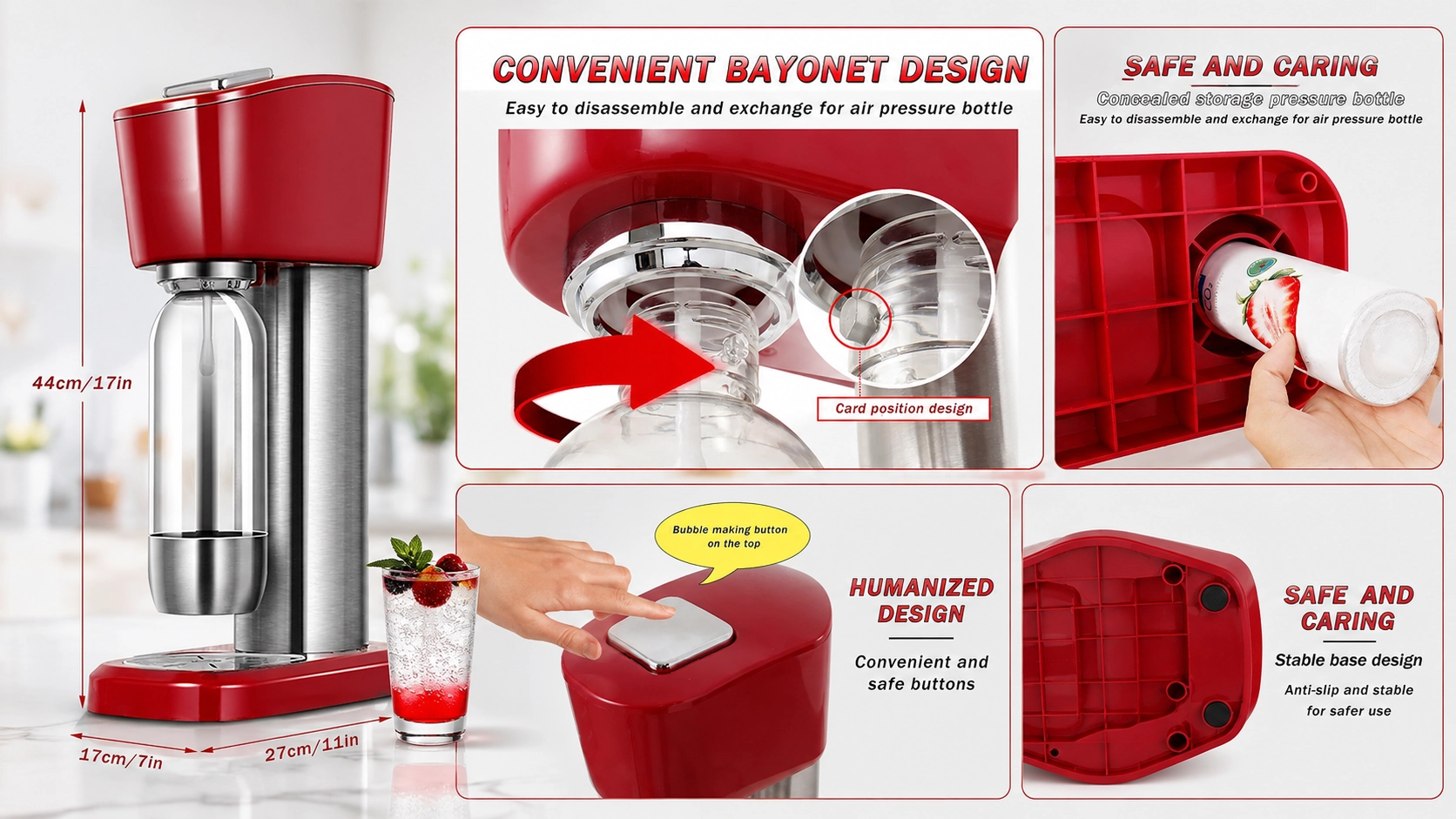
"Compact" is a merchandising property, not just a dimension. A 17 × 27 cm footprint sits comfortably in the small-appliance shelf set and photographs cleanly for e-commerce listings, where the product is judged in a thumbnail before it is judged in a kitchen. The stainless body does the premium signalling in both places: metal reads as durable and giftable in a way a plastic body at the same price point does not, which is why the X1 is so often the first metal SKU a private-label program adds after a plastic entry model.
The program around the product is the standard one: configuration frozen at sample stage, your artwork on the box and manual, and a repeat cycle of about 30 days once the first order has run. Nothing about the X1 needs a special process — and for a first metal listing, that ordinariness is the point.
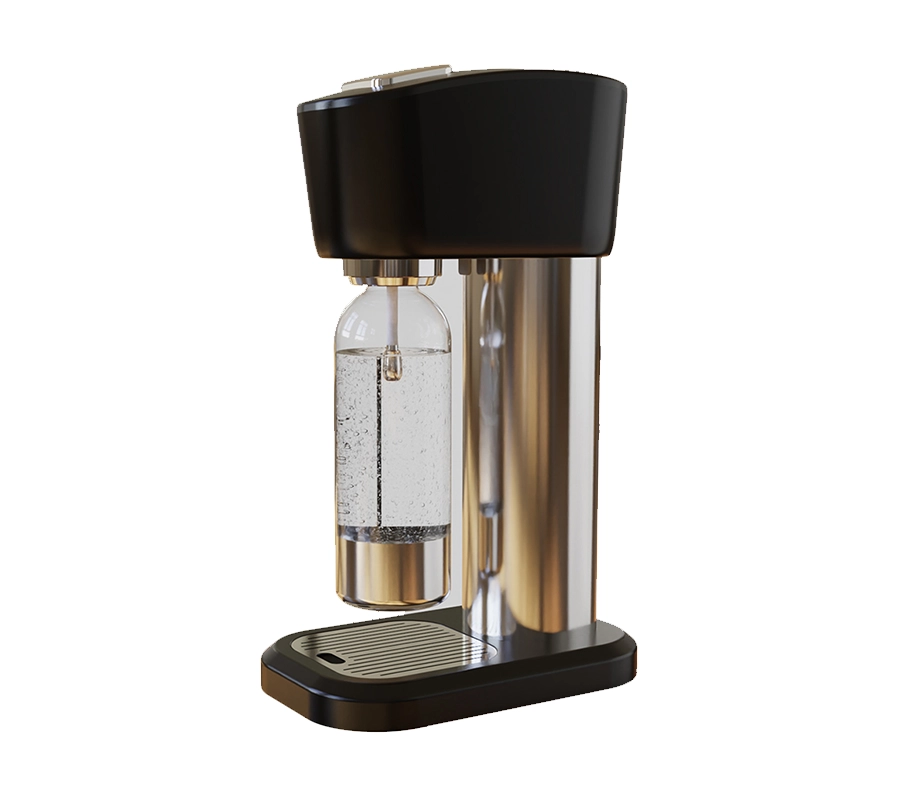
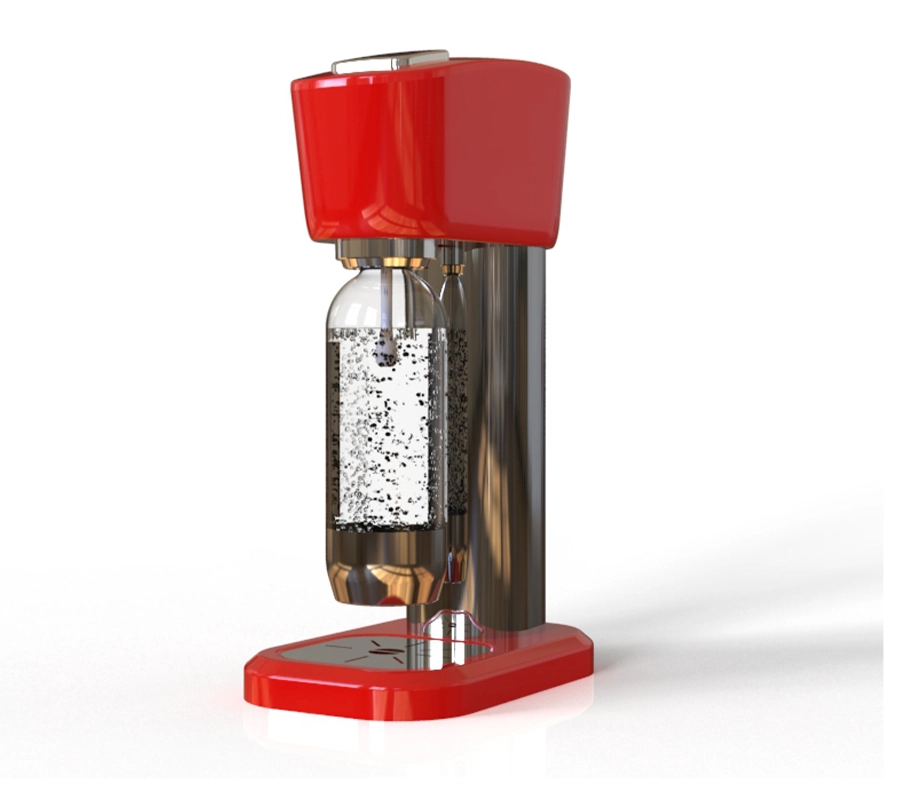
The colour range deserves a line of its own, because on this model colour is a range decision, not a decoration. White, red and black are the standard injection colours; a program can list one colour as the hero SKU and hold the others as variants, or run a single colour hard under one brand. Either way the machine underneath is identical — same body, same button, same bottle set — so colour variants share one sample approval, one document set and one production setup. Variants multiply listings without multiplying any of the work behind them.
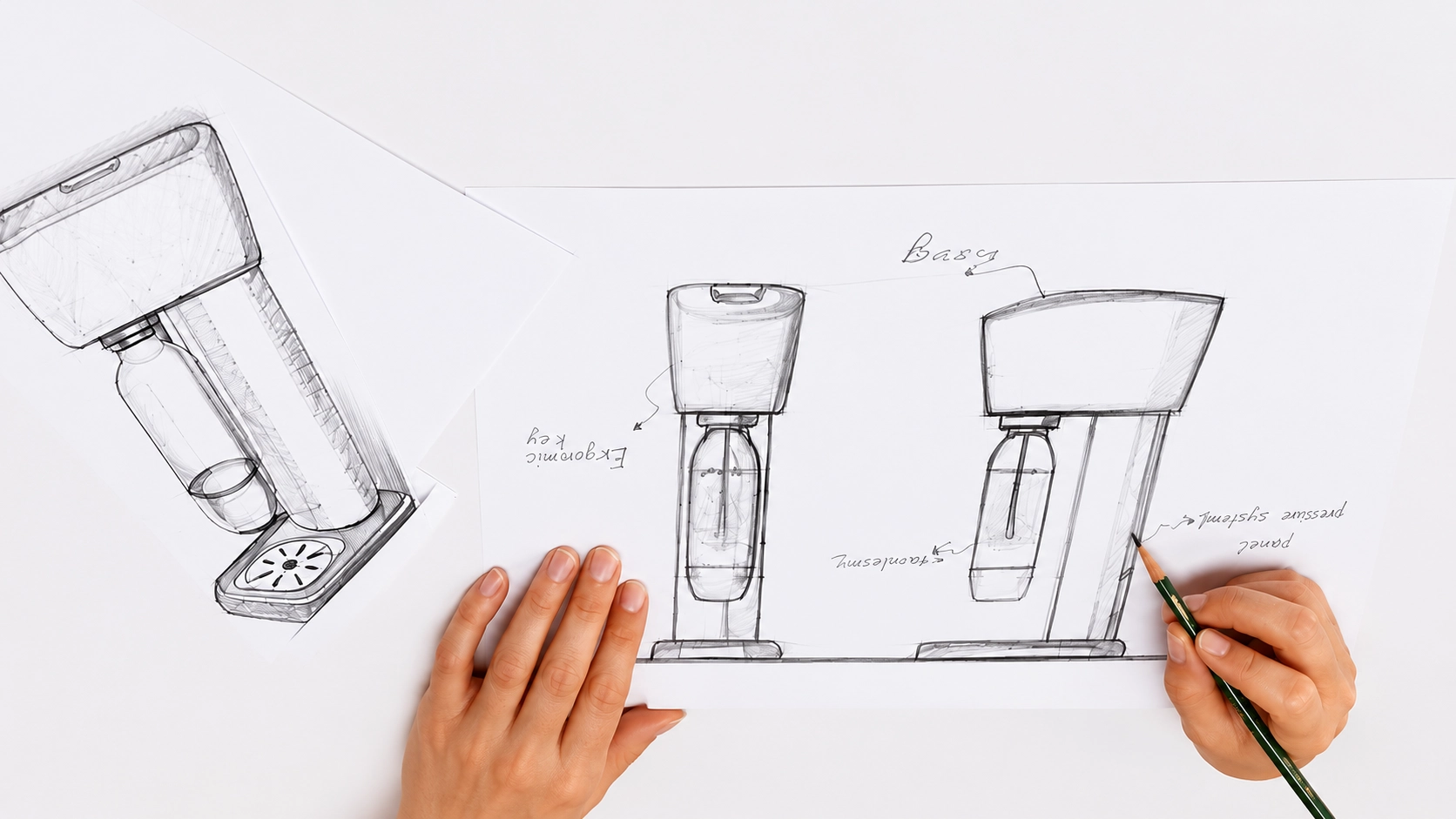
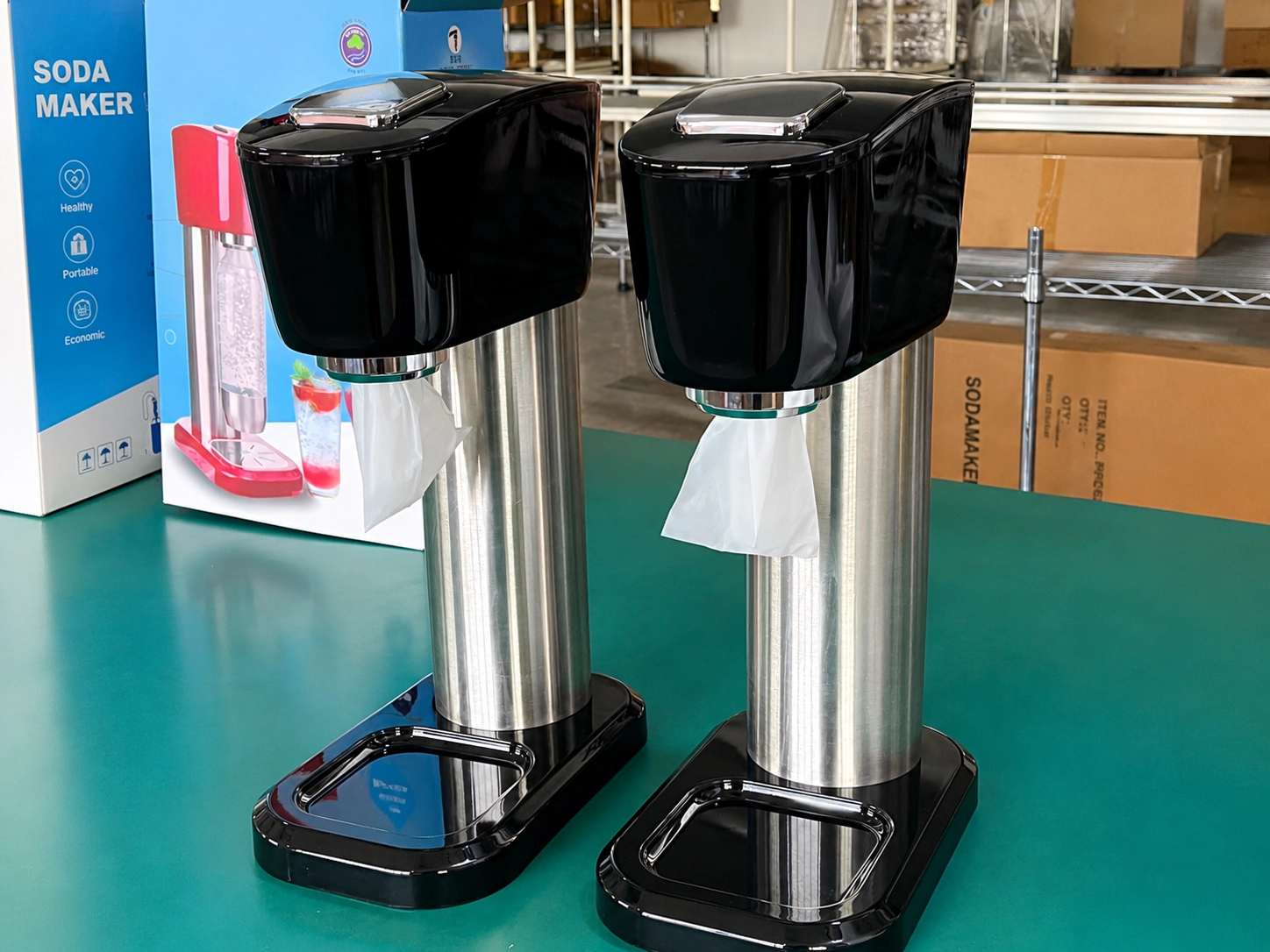
Designed with a space-saving footprint, the X1 model is an ideal choice for brands developing a compact sparkling water maker line.
Its simple structure ensures reliable manual carbonation while remaining easy to configure for retail or e-commerce channels. Whether expanding an existing appliance portfolio or launching a new private-label brand, the X1 provides a straightforward foundation with factory support for custom colors, logos, and packaging requirements.
Position it precisely, because the range gives it a specific job. Below it sit the plastic models — lighter, cheaper, built for volume entry. Above it sits the G15, the full-304 flagship with a CNC brass valve and a lever action, built for premium programs. The X1 is the metal step between them: a stainless body and a metal product story, at a compact size and a simpler specification, for lines that need metal on the shelf before they need a flagship. Programs that later add the G15 keep the X1 as the accessible metal tier — the two models merchandise as a ladder, not as rivals. The full ladder is set out on the stainless steel soda maker range page, and the whole range — plastic and metal together — on the product range page.
There is also a shelf-economics reason the middle tier exists. A plastic model and a metal model at one price point compete with each other; spaced properly, they segment the shelf — the plastic model takes the volume buyer, the X1 takes the buyer trading up for material and finish, and neither discount has to defend the other's price. Retailers understand that ladder instinctively, which is why the X1 is easy to present in a range review: it is the step that makes the line look planned rather than padded.
Key Features of the X1 Model
Stainless Steel Body
Full stainless steel body with a chrome button — the durable metal build is the X1's defining feature for premium private-label lines. The body carries the product's perceived value: weight in the hand, a surface that wipes clean, and a finish that survives retail handling.
Manual Carbonation Operation
Reliable mechanical structure for user-controlled carbonation levels. Simple press-to-carbonate functionality — press the chrome button in short presses; more presses, stronger fizz.
No Electricity Required
Fully mechanical operation requires no cords or batteries, allowing placement anywhere on the countertop or beverage station — and keeping the product a manual appliance in every market's paperwork.
Automatic Pressure Release & Double Safety Valves
The pressure path is managed by the machine, not the manual: excess pressure vents automatically before the bottle comes off, and two independent safety valves guard the cycle — the same safety architecture as the rest of the range.
Simple Bottle Installation
Designed for straightforward bottle attachment and removal, ensuring a smooth user experience during daily operation; the locking area is checked at assembly and again at final inspection.
OEM Color & Logo Options
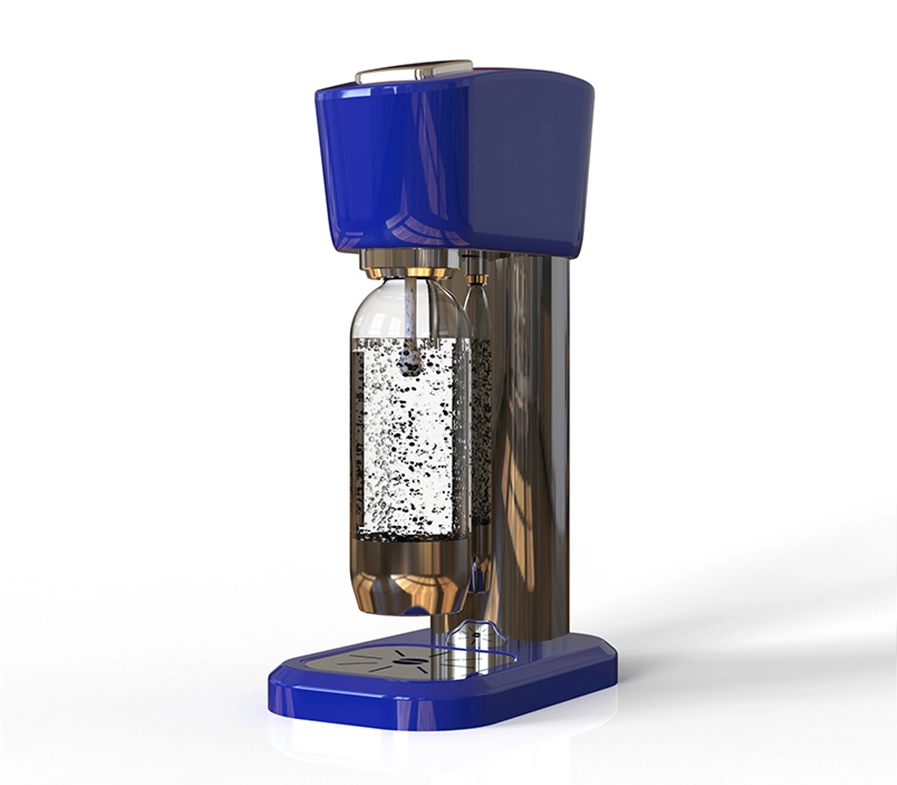
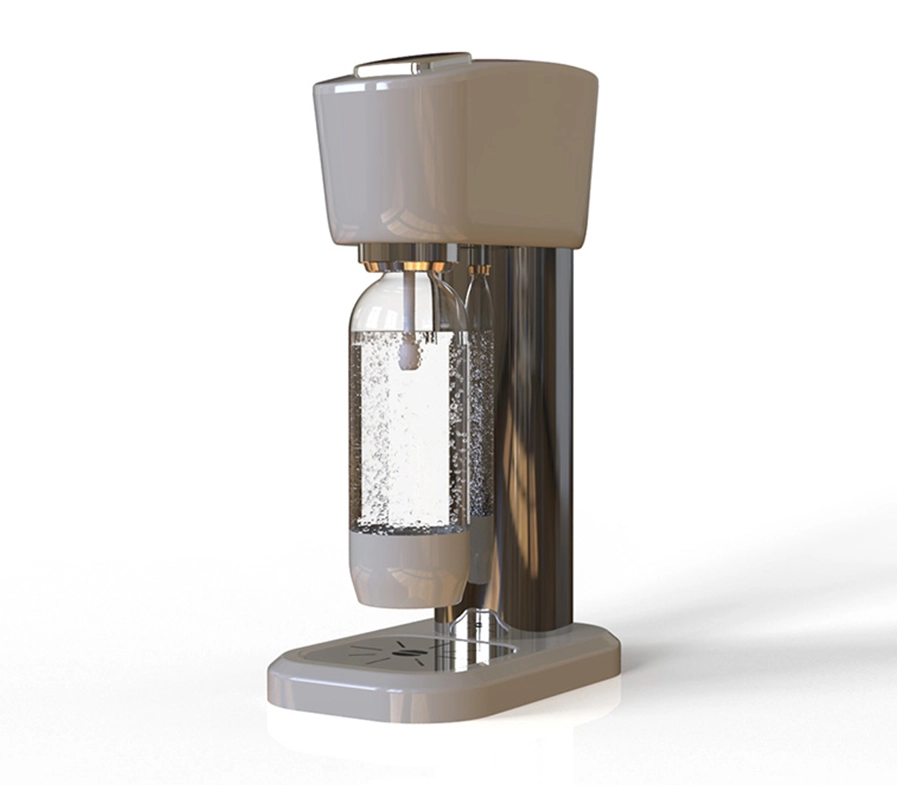
Configurable body colors and logo placements to align with your brand identity and target market preferences — standard colours white, red and black, with further colours produced as project colours.
X1 Product Details
Six detail views carry the model's construction story, and each one answers a question buyers ask at sample stage:
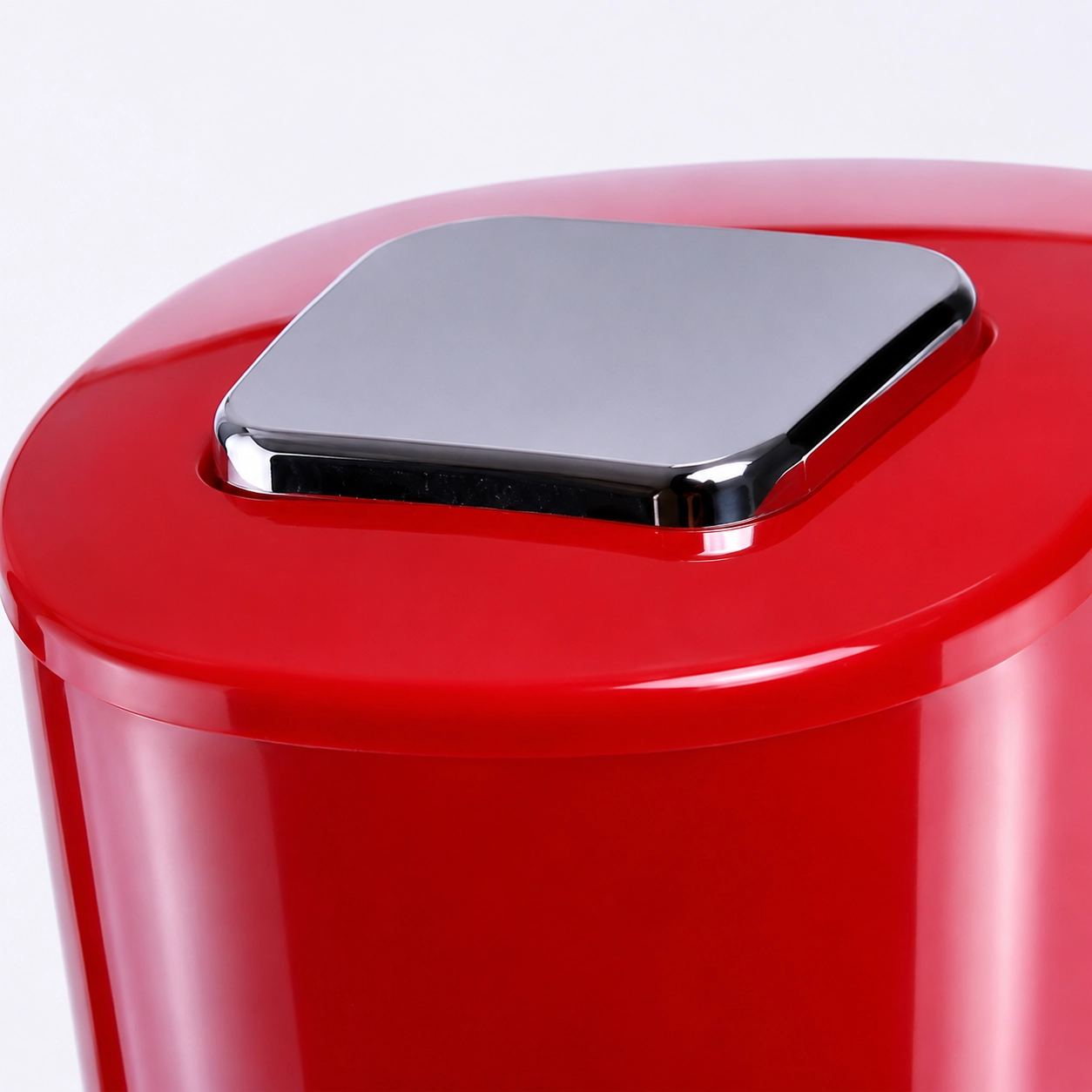
Top View. The chrome button and the head geometry — the user's whole interface in one part.
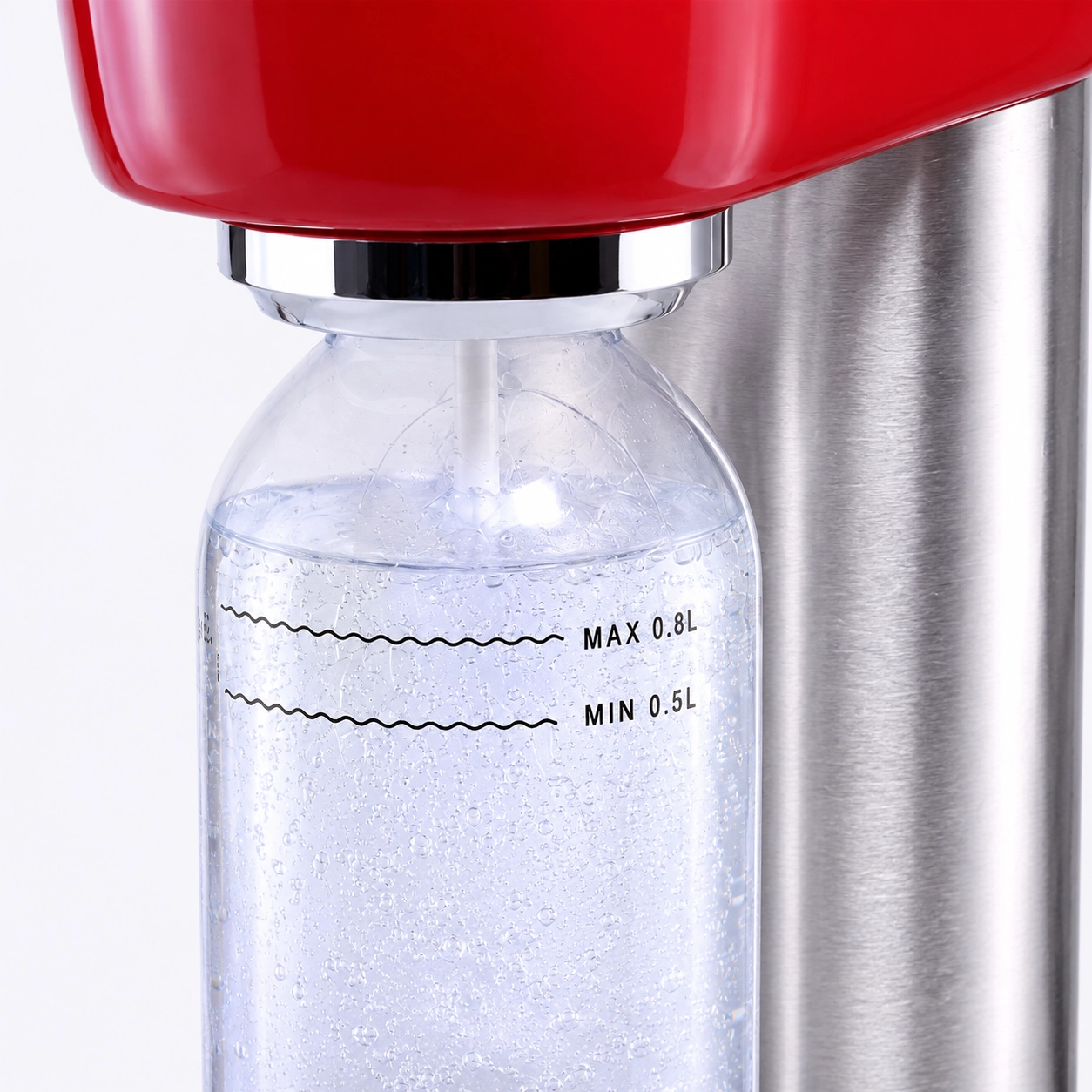
Body View. The stainless body proportions at 17 × 27 × 44 cm, and the colour finish as it will appear on the shelf.
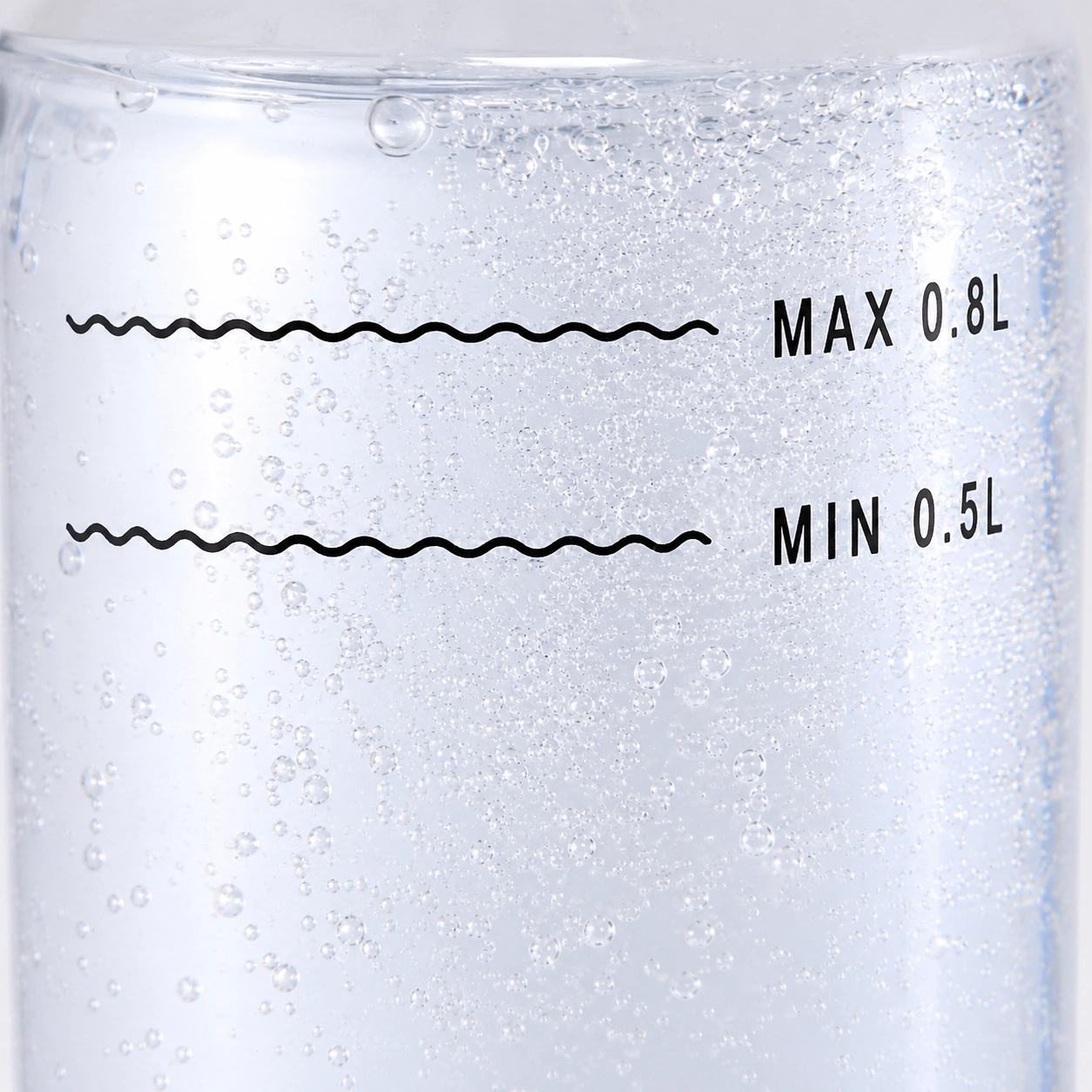
Detailing the Structural Design. How the head, body and base assemble — the structure a service team would work with.
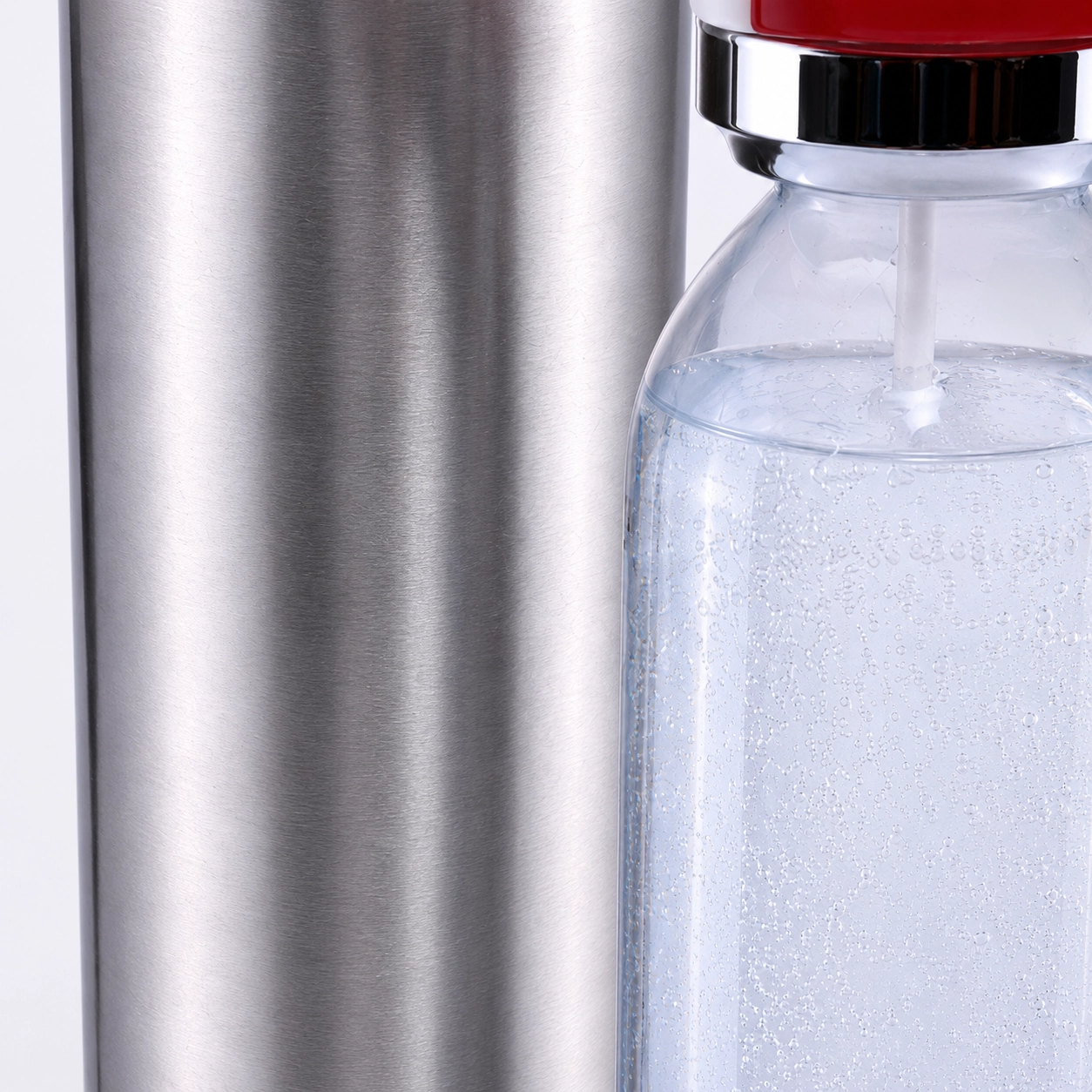
Bottle Locking Area for Carbonation. The locking interface the PET bottle seats into; fit here is a per-unit inspection point.
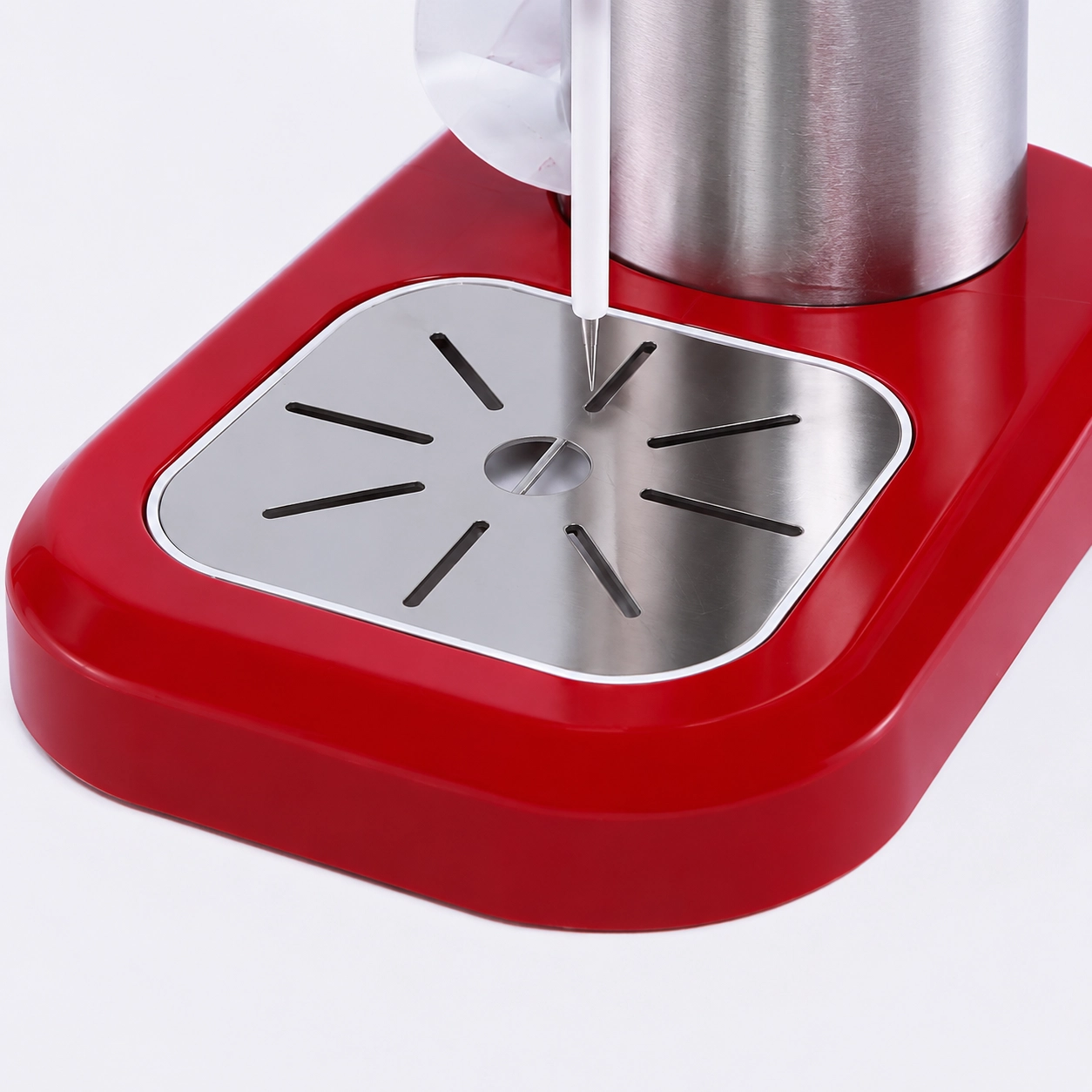
Stainless Steel Texture. The body surface up close — the finish quality a metal product is judged by.
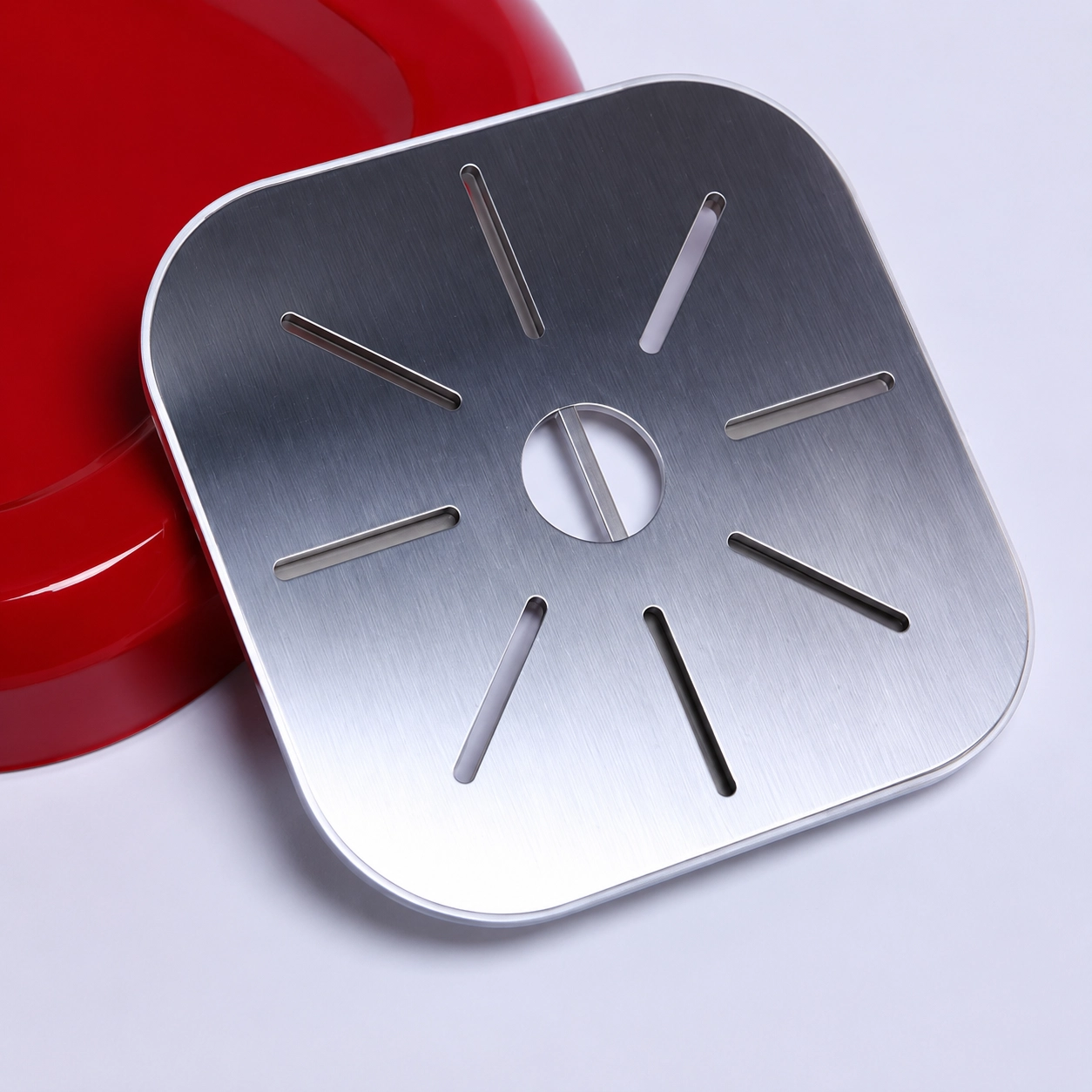
Stable Base Details & Water Tray Texture. The base that keeps a tall, narrow machine steady under pressing, and the drip tray that keeps the counter dry.
X1 Soda Maker Function Demo
Watch the basic operation and structural mechanics of the X1 model: bottle installation, manual carbonation, pressure release, bottle removal — the same four-step cycle your customers will run. For a retail program the demo doubles as listing content: the full cycle takes under a minute on camera, and there is no setting, dial or display to explain.
Video: X1 function demo (bottle installation / manual carbonation / pressure release / bottle removal).
X1 Soda Maker Specifications
| Item | Specification |
|---|---|
| Model | X1 |
| Product Type | Manual soda maker / sparkling water maker |
| Body Material | Stainless steel body with chrome button |
| Product Size | 17 × 27 × 44 cm |
| Pressure Safety | Automatic pressure release with double safety valves |
| Operation | Manual carbonation |
| Power | No electricity required |
| Bottle Compatibility | 1,000 ml PET bottle with stainless steel base and cap (included as standard) |
| CO2 Cylinder | Threaded screw-in (TR21-4 / M18×1.5); empty cylinder only for export, local filling required |
| Body Color | White / red / black |
| Logo | Available by project |
| Packaging | Color box / carton / manual / barcode label |
| Sample | Available before bulk production |
| MOQ | 300 units |
| Certificates | CE model; RoHS and food-contact material test reports available for project review |
Packaging & loading
| Item | Data |
|---|---|
| Color Box | 29 × 19.5 × 46.5 cm |
| Export Carton | 60 × 50 × 50 cm, 5 units per carton; GW 13.8 kg / NW 12.5 kg |
| Container Loading | 20GP: 840 units / 40GP: 1,680 units / 40HQ: 2,100 units |
Read the table the way a buyer does. The per-unit net weight inside the carton maths — 2.5 kg — is the metal body making itself felt in the freight bill: the X1 ships fewer units per container than the plastic models (840 in a 20GP against the G720's 1,000-plus), and in exchange it sells as a metal product. Plan volumes with that trade made consciously: at 5 units per carton, a 300-unit MOQ order is 60 cartons ≈ 9.0 CBM — a straightforward LCL shipment — and a 500-unit order is 100 cartons ≈ 15 CBM.
Two specification details carry more commercial weight than they appear to. The bottle's base and cap are stainless steel, not plastic: on a metal model the bottle is part of the product photograph and part of the unboxing, and steel-on-steel is what makes the set read as one designed object rather than a machine with an accessory. And the chrome button is the model's only moving interface — one part, pressed thousands of times over the product's life, which is why its finish and action are checked on every finished unit's function test (Section 11) rather than sampled.
When to Choose X1 for Your Soda Maker Line
The X1 model is structured to fit specific procurement scenarios for brands building their beverage appliance portfolio.
Compact countertop product line.
A kitchenware brand adding sparkling water to a countertop range needs a product that fits the shelf set it already sells into. The X1's footprint and metal finish sit naturally beside kettles and coffee accessories, and the standard set is complete out of the box.
Entry retail channel program.
A first listing with a retail chain is a conservative buy: a proven manual mechanism, no electronics to certify as an appliance, and a metal body that justifies the shelf price. The X1 is the low-risk way to put a house brand into the carbonation category.
E-commerce starter SKU.
Online, the product is its photographs and its review profile. Stainless photographs premium, the four-step operation films in under a minute, and a fully mechanical product generates few "it stopped working" reviews — there is nothing electrical to stop.
Private-label sparkling water set.
As a giftable set — machine, stainless-base bottle, branded box — the X1 carries the presentation layer well: the box and manual carry your artwork, the body carries your logo, and the metal does the unboxing.
Distributor sample launch project.
Distributors building a new territory often lead with the model that demos best in a meeting room. The X1 is that model in the middle of the range: metal in the hand, one-minute demo, standard program terms behind it. Programs of this kind are documented on our case studies page.
OEM Options for X1 Soda Maker Projects
Factory support for customizing the X1 to your brand requirements.
Product Customization
- Logo placement. Body logo printing at the confirmed position and size, approved on the physical sample.
- Color option review. Standard injection colours white / red / black; further colours — the blue and grey units in the gallery are project colours — reviewed against quantity and schedule.
- Accessory set. The set composition is confirmed as a list and frozen: machine, bottle count, any added bottles.
- Bottle set confirmation. The standard 1,000 ml PET bottle with stainless steel base and cap; additional bottles quoted into the set on request — the wider bottle range is shown on the soda maker bottles page.
Packaging Customization
- Color box artwork. Full custom box from your artwork files, checked against print before production.
- Barcode label. Retail barcodes applied to spec.
- Carton mark. Shipping marks printed to spec.
- Instruction manual. Your manual file — content, language and layout — inside every box.
- Pre-shipment photo records. Photo confirmation of the finished, packed product before dispatch.
The workflow behind these options is the standard one on the private label soda maker program page and the OEM manufacturer pillar: options are selected at quotation, proven on the sample, frozen in writing, and then repeated by production without variation.
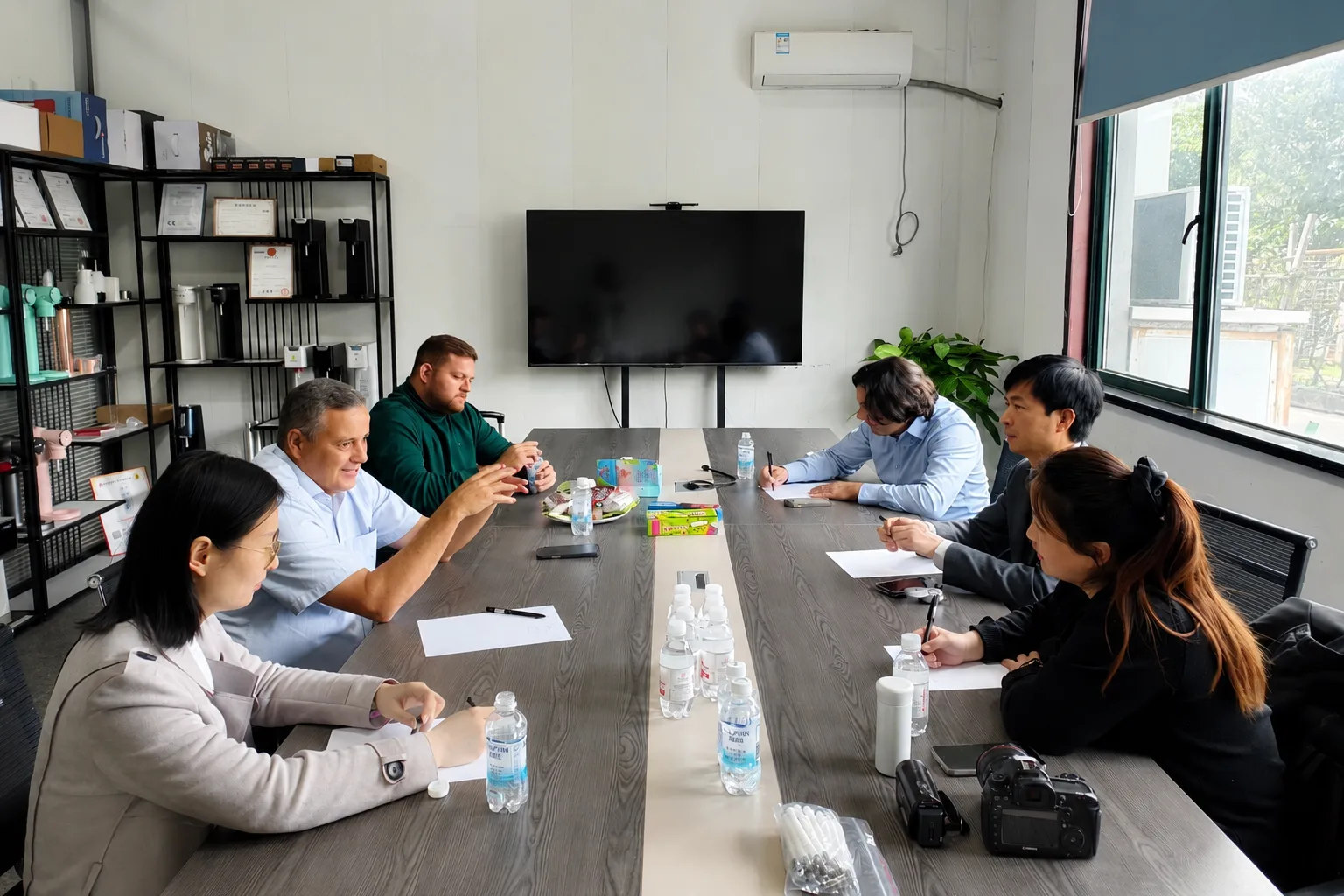
Sample Review Before Bulk Order
Confirm target market and configuration. Market, body colour, bottle set and branding scope fixed in writing.
Prepare X1 sample. The sample set is produced in your intended configuration — colour, logo position, box artwork draft — in about 7 days.
Review product function and color. Run the four-step cycle; approve the colour on the physical unit, in normal light, never from a photo.
Confirm logo and packaging artwork. Final files checked against the printed box proof and the manual layout.
Run production sample confirmation. The approved sample becomes the production reference — the unit mass production repeats.
Start mass production after written approval. First orders run 35–45 days; the repeat cycle is about 30 days.
Samples are charged — the sample and courier cost is quoted for your address; a sample is never described as free. The point of the sequence is that nothing is approved twice: the configuration proven here is the configuration the bulk order, the carton packing and the documents all repeat. The process follows our sample order guide.
What the sample proves, on a metal model specifically, is finish. Photographs flatten stainless; the sample is where the buyer judges the body surface, the chrome button's action, the colour as it reads in their light, and the steel base and cap against the body. That is why the review steps put function and colour on the physical unit before artwork is even discussed — a finish dispute discovered after 300 units are produced is a program problem; the same observation at sample stage is a five-minute decision.
Quality Control Before Shipment
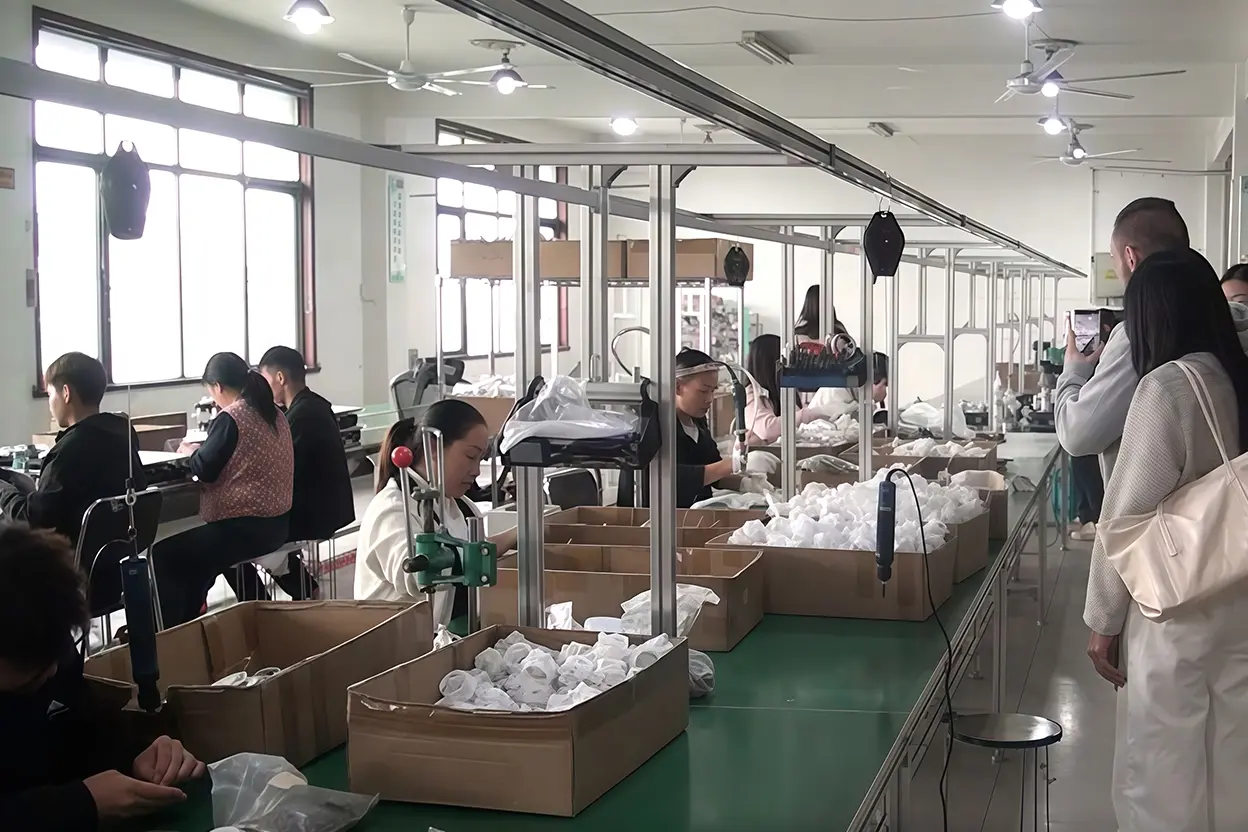
Every X1 batch undergoes strict factory inspection protocols to ensure stability and reliability for your brand.
- Incoming material check. Body, button and bottle components verified against the order specification before the line starts.
- Assembly inspection. Fit and finish of the stainless body and head assembly checked during production.
- Bottle fitting check. The locking area and bottle seat verified on the finished unit.
- Water leak testing. Every finished unit passes the range's 100% wet leak test and high-pressure gas check — full inspection, not sampling.
- Function testing. The full press–carbonate–release cycle run on the finished machine.
- Packaging inspection. Box, manual and labels checked against your final artwork.
- Pre-shipment photo or video record. Available before dispatch, so the packed order is confirmed remotely.
Behind the list sits the factory's four-stage framework — incoming, in-process, comprehensive and final inspection — with burst testing done as batch sampling and valve assemblies design-tested at three times standard working pressure in the burst-test laboratory (built 2018). The distinction is worth stating plainly when you compare suppliers: the tests that protect the end user — leak and function — run on every unit; the destructive test runs on samples from the batch, which is the only way a burst test can work. The framework is documented on the quality and compliance page, the line itself on the manufacturing page and the factory video.
Compliance Support for Target Markets
We can support food-contact and product compliance documents based on final configuration and target market requirements. FDA / LFGB / CE / RoHS cover the full product range (the TÜV RoHS statement of conformity names the X1 explicitly), whole-machine certificates are factory-held, and the factory operates to ISO 9001.
Food-contact support. Material documentation for the parts that touch water and gas, matched to the final configuration.
CE / RoHS. Product-level documentation supported for the X1 as for the range.
EU FCM if applicable. Reviewed where the target market requires it.
Manual and label review. Packaging and manual wording checked against your market's import requirements before printing.
Important note: documents must be confirmed before order confirmation, because requirements vary by material, accessory set, and destination market. Because the X1 is fully mechanical — no battery, no electronics — its document set is the manual-appliance set in every market; there is no electrical-product file to prepare. The broader category context — how a manual carbonator is documented against electric alternatives — is set out on the water carbonator page.
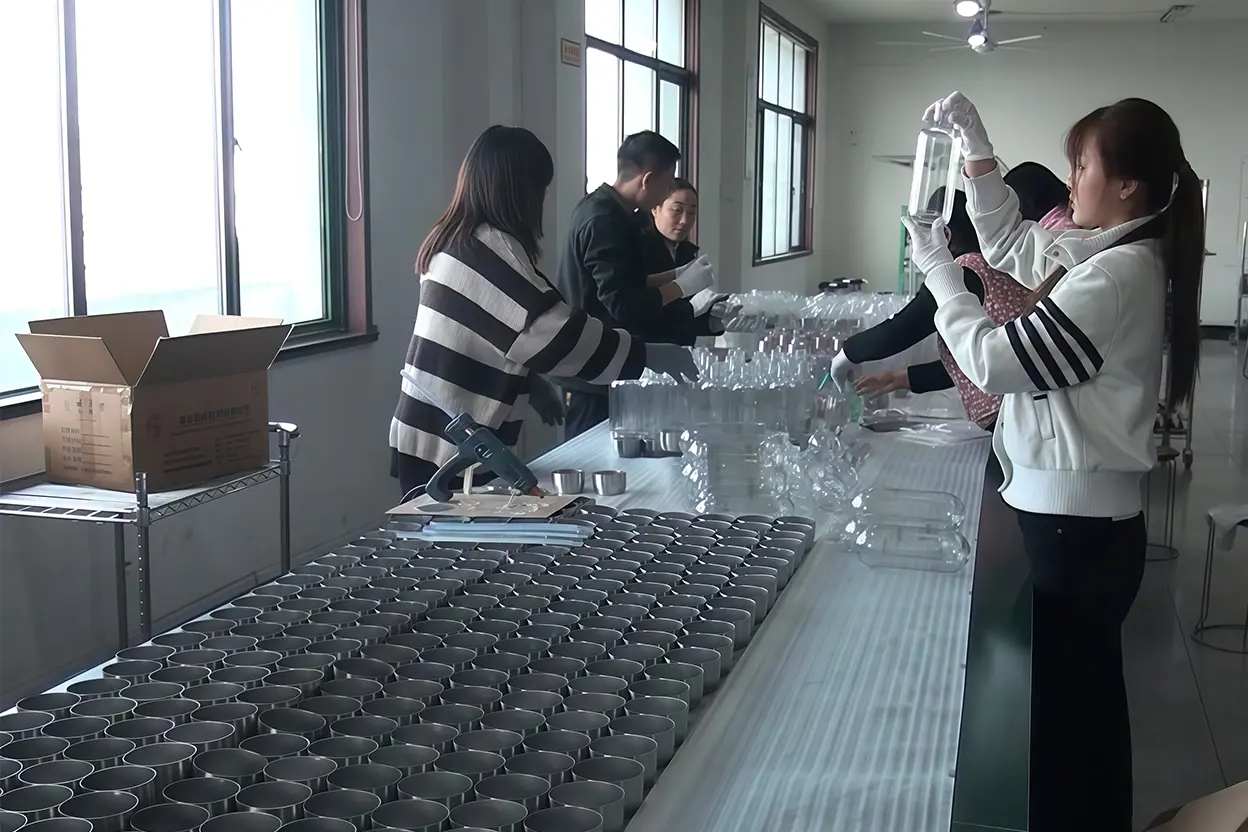
Packaging and Export Preparation
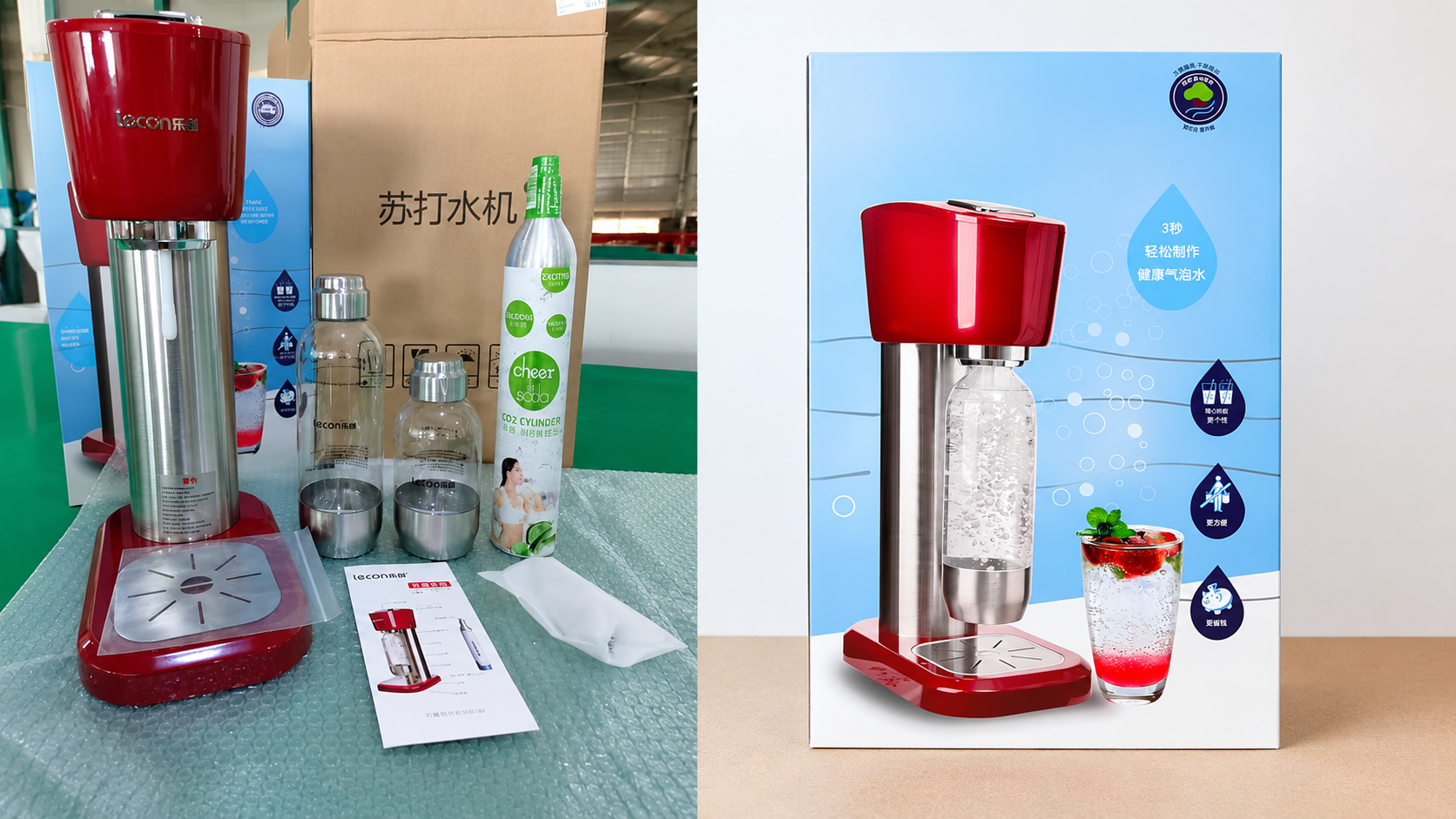
Color box. Custom artwork, printed from your final files.
Instruction manual. Included in package, in your layout and language.
Inner protection. Secure transit protection around the stainless body — the finish is the product, and it is packed like it.
Master carton. Export standard, 5 units per carton (60 × 50 × 50 cm, GW 13.8 kg).
Carton mark. Printed to spec.
Barcode label. Retail ready.
Pallet / container loading support. Loading planned against the container table in Section 7; loading photos available before container release (Section 14).
Pre-shipment photos provided. The finished cartons confirmed before dispatch.
Planning with the numbers: most X1 programs start with a trial order or the 300-unit MOQ order (60 cartons ≈ 9.0 CBM LCL), read the market for a season, and repeat on the 30-day cycle; a full 20GP carries 840 units for programs that have found their volume.
One freight note follows from the metal build: at 13.8 kg per 5-unit carton, X1 cartons are dense, compact freight — they consolidate well in mixed LCL shipments alongside lighter plastic models, and the carton dimensions stack cleanly on a pallet. Buyers combining an X1 launch with a plastic-model reorder often ship them together for exactly this reason; the planning conversation happens at quotation, not at the warehouse door.
Project Review Records
Standard documentation available during the production process:
Sample photos confirmed before mass production
Packaging artwork reviewed before printing
Pre-shipment inspection photos available
Loading photos available before container release
These records are the project's paper trail: what was approved, what was printed, what was packed and what was loaded — each stage confirmed in images before the next one starts, so a buyer on another continent approves the order's progress without being in the building.
What to Prepare Before Requesting an X1 Quote
Nine items, and each one removes a known delay. A quotation built on estimates comes back with conditions attached; a quotation built on this list comes back as a number the program can commit to — because the configuration, the document set and the schedule behind it are already fixed. None of the items needs to be final at first contact; a stated intention ("project colour, to be confirmed at sample") is enough for an accurate first quote.
- Target market — drives the document set and label review.
- Estimated quantity — 300-unit MOQ, or a trial order in the full intended configuration.
- Logo requirement — position and artwork file, if ready.
- Preferred color — white / red / black standard, or a project colour to review.
- Packaging type — custom color box scope and manual language.
- Bottle/accessory setup — standard set, or added bottles.
- Compliance requirement — the documents your market asks for, if known.
- Delivery schedule — first order 35–45 days, repeats about 30 days.
- Sample requirement — sample set in your configuration, ready in about 7 days.
Quantities plan against the MOQ guide.
Helen Ho
OEM Consultant
Helen reviews every X1 quotation and sample configuration personally.
Expert tip — let the metal do the premium work.
On a compact metal model, buyers sometimes spend the customisation budget on small mechanical variations and leave the presentation standard. The X1 rewards the opposite: standard mechanism, your colour, your logo, a box that presents the steel properly. The premium the end customer pays for is the material and the brand — spend where they can see it.
Frequently Asked Questions
1. What is the X1 Soda Maker?
2. Is the X1 suitable for OEM and private-label projects?
3. Does the X1 require electricity or batteries?
4. How does the X1 carbonate?
5. What bottle options are available for the X1?
6. Which CO2 cylinders fit the X1 — and do you ship them filled?
7. What colours is the X1 available in?
8. Can I customize the logo and packaging?
9. What is the MOQ for the X1 Soda Maker?
10. Can I order samples before bulk production?
11. What documents can you support?
12. How many X1 units fit in a container?
13. How is the X1 different from the G15?
14. Is the X1 designed for commercial soda dispensers?
Request X1 Soda Maker Specs for Your OEM Project
Provide your project details below to receive factory-direct information and support.
1-Year Warranty
This model is covered by a 1-year warranty. Spare-parts planning is available based on order volume — contact our team for project-specific support.