
Empty CO2 Cylinders for Home Soda Maker Orders
Source empty CO2 cylinders for soda maker projects and confirm the valve configuration, quantity, export packing and local filling requirements before ordering.
Scope: empty cylinders and project review. Gas filling is arranged locally by the buyer.
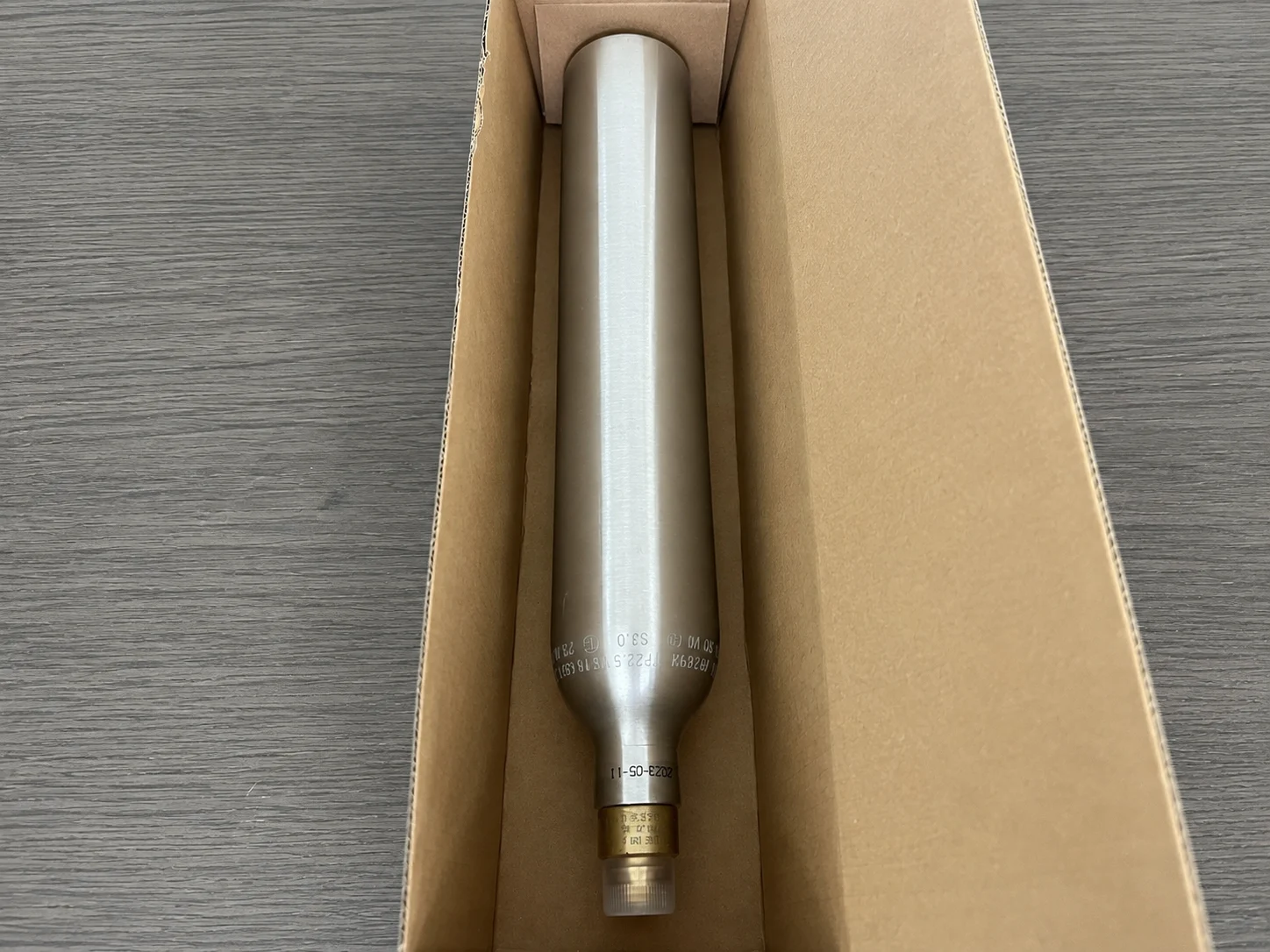
Use the market label as a starting point, then confirm the actual fill specification.
TR21-4 and other formats require drawing, photo or sample confirmation.
Discuss individual boxes, carton marks and bulk packing around your channel.
Your destination filler should approve the cylinder before the order is released.
What Empty CO2 Cylinder Supply Includes
A useful cylinder quote begins with the end use. These four checks keep a soda maker project from mixing an empty-bottle order with a filled-gas or industrial-cylinder requirement.
Empty Cylinder Body or Valve-Fitted Configuration
Tell us whether you need a body supplied for local assembly or an empty cylinder with the agreed valve fitted. The two routes use different review points: a bare body puts the valve decision with your local partner, while a valve-fitted cylinder puts the thread, pin and seal review on the factory side before shipment. Say which route you are on in the first inquiry, because it changes what evidence is needed and who signs off the connection.
Home Soda Maker Fit
Share the machine models, cylinder bay dimensions and target market. A cylinder that looks right on paper still needs a physical fit check: the body must sit in the bay, the valve must meet the machine interface, and the height must clear the housing. If the bay dimensions are not yet measured, a photo of the machine's cylinder bay with a ruler, or the original empty cylinder as a sample, closes that gap faster than a dimension table alone.
Destination Filler Review
Ask your gas supplier which valve, marking and inspection documents they accept before you lock the production specification. The filler is the party that will actually fill or exchange the cylinder, so their acceptance is the real gate: a cylinder the filler will not accept cannot enter the local workflow no matter how well it fits the machine. Get this answer in writing before production, not after the cartons arrive.
Project Review, Not a Gas Sale
This page covers empty cylinders and the review that surrounds them. Gas filling, exchange programs and industrial gas supply sit outside it and stay with a qualified supplier in the destination market. Keeping that boundary clear is what makes the quote practical: the factory confirms the empty cylinder and its configuration, and the buyer confirms the filling route at home.
Empty CO2 Cylinder Supply Options
Availability and final construction depend on the destination market, the selected valve and the local filling route. Three configurations cover most soda maker projects; the difference between them is who owns the valve decision and how the cylinder is packed for its channel.
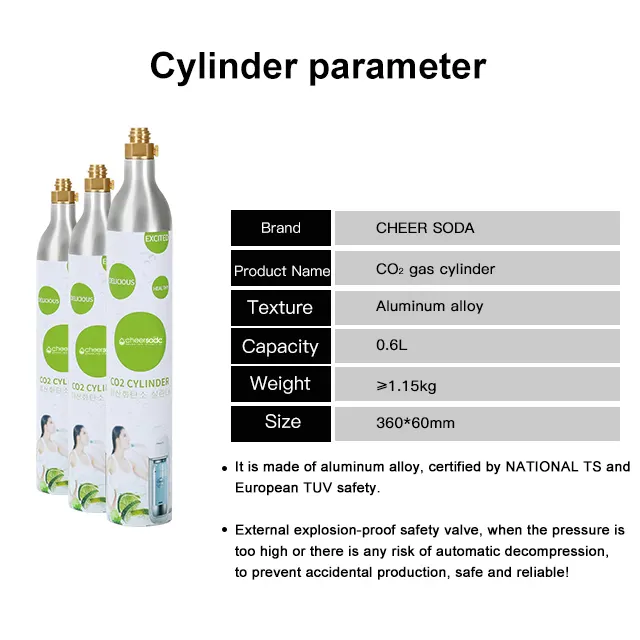
Bare Empty Cylinder Body
For buyers with a local valve or assembly partner. Confirm diameter, height, neck details and the required marking area. This route suits filling partners and assemblers who already hold valves and tooling locally: they take the body, fit their own valve, and control the connection from their side. The factory's review here is on the body itself — dimensions, neck and marking area — and the buyer's local partner owns the valve evidence.
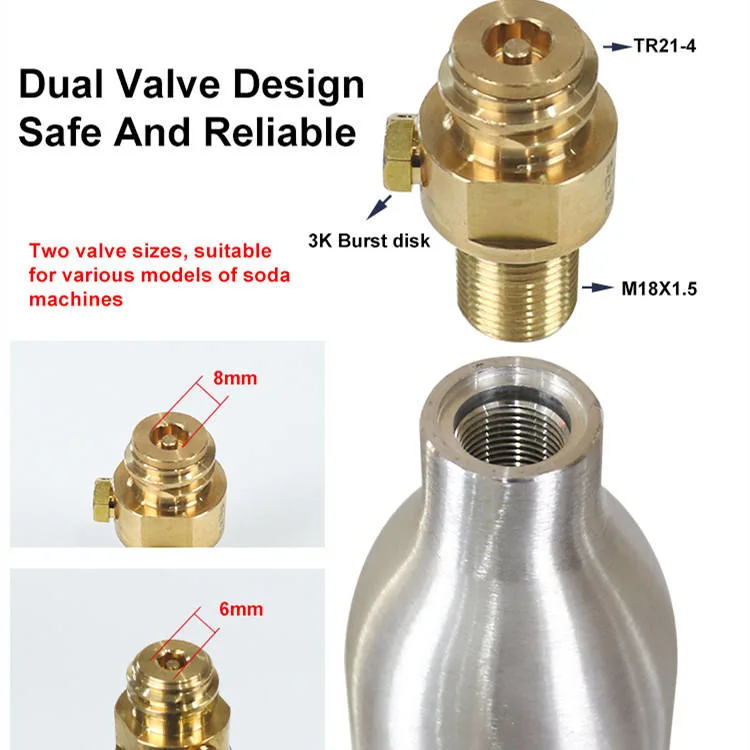
Cylinder with Agreed Valve
For brands that want the valve configuration reviewed before local filling. Confirm thread, pin, seal and adapter requirements from a drawing or sample. This is the route most private-label and retail brands take, because the valve is the part that decides machine fit and filler acceptance at the same time. The review happens before shipment: the thread is matched to the intended machine, the pin and seal are checked against the drawing or sample, and the filler adapter requirement is confirmed while there is still time to change it.
Export-Packed Cylinder Configuration
Discuss cartons, protective inserts, carton marks and retail packaging according to your sales channel and destination handling needs. A cylinder bound for a retail shelf needs an individual box, a barcode area and a label that survives handling; a cylinder bound for a distributor's warehouse needs bulk cartons, clear carton marks and a packing list the forwarder can work from. Packing is agreed in the quotation, not improvised at dispatch, because it affects volume, handling and the buyer's receiving check.
What 425g / 60L Means for an Empty CO2 Cylinder Order
Buyers often use "425g" or "60L" to describe a familiar soda maker cylinder format. Those labels do not replace the engineering details needed for an empty-cylinder order, and treating them as a specification is the most common cause of a cylinder that arrives but does not fit.
- 425g usually points to the nominal CO2 fill mass expected by the local filling route. It describes how much gas the filler will put in, not the empty body's dimensions, weight or valve.
- 60L is commonly used as an approximate beverage yield reference; actual yield varies with carbonation level and machine use. A household that carbonates lightly will get more litres from the same fill than one that carbonates strongly, so the number is a market shorthand, not a measurement.
Before quoting, confirm the empty body dimensions, tare information, valve, marking and the filler's accepted specification. The tare information matters because the filler weighs the cylinder to verify the fill; an unconfirmed tare leaves the filler guessing, and a guessed tare is a rejected cylinder. Confirm the empty cylinder weight and tare information before the local filling step, and put it on the agreed specification alongside the valve thread and the marking layout.
A note on labels: a market name that works in one country can mean a different connection in another. "425g / 60L" is a starting point for the conversation, and the drawing, photo or sample is what turns it into an orderable specification.
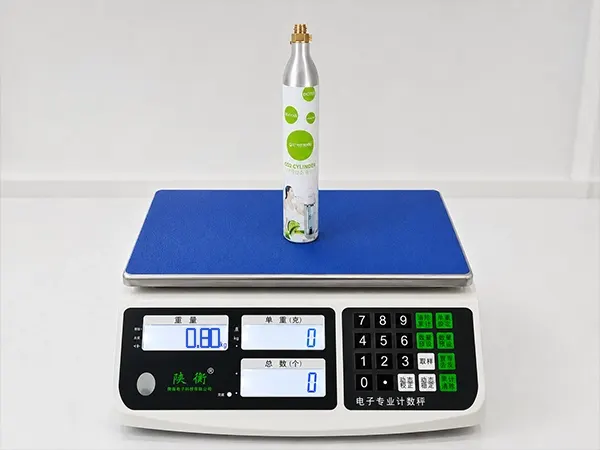
Confirm the CO2 Cylinder Valve Before Ordering
TR21-4 is one common reference, but thread and pin variations can affect the machine connection and the filling adapter. Send whichever evidence you have:
- A clear photo of the valve and cylinder neck.
- A technical drawing with thread and pin dimensions.
- The soda maker model or the original cylinder sample.
- The local filler's adapter and document requirements.
Compatibility is confirmed against the intended machine and filler. The page does not promise universal fit across soda maker brands, and no honest cylinder supplier can: the same thread name can hide different pin positions, and a pin that does not meet the machine interface is a cylinder that cannot be used. That is why the review asks for evidence rather than accepting a thread name at face value. If the evidence shows a mismatch, it is better found at the drawing stage than at the filler, where the cost is a returned shipment instead of a revised drawing.
Threaded or Quick Connect: Confirm Before You Quote
This is the one distinction that decides whether a cylinder project can proceed at all, so confirm it before anything else. All Cheersoda soda maker models use a threaded cylinder interface. They are compatible with SodaStream threaded cylinders — the TR21-4 valve, M18x1.5 thread, 425g / 60L threaded bottle. They are not compatible with SodaStream Quick Connect cylinders. There is no Quick Connect machine in the range, and there is no adapter that converts a Quick Connect cylinder to a threaded machine.
The two SodaStream standards must never be blurred into a blanket "compatible with SodaStream" claim, because the blanket claim is exactly how a wrong cylinder gets ordered. If your machine takes a Quick Connect cylinder, a threaded cylinder will not fit it, and no adapter on this page changes that. If your machine takes a threaded cylinder, confirm the thread against the drawing or sample as above, and confirm the destination filler accepts that thread as well. When the machine side and the filler side agree on the same threaded connection, the project can move to sample review; when they disagree, the disagreement has to be resolved before production, not discovered at filling.
Empty CO2 Cylinder Specification Checklist
Send the information below with your inquiry. If a field is not decided yet, mark it as open and we can tell you what needs to be confirmed first. An open field is not a failed inquiry — it is the normal starting point, and the reply will say which evidence closes it.
| Item | What to provide | Why it changes the order |
|---|---|---|
| Destination market | Country or region and sales channel | Labels, documents and local handling requirements vary by market. |
| Empty cylinder format | 425g / 60L reference plus body dimensions or sample | The market name alone is not enough to confirm physical fit. |
| Valve / thread | TR21-4, CGA320, G1/4 or a supplied drawing / photo | The connection affects the machine, filler adapter and assembly review. |
| Marking and label | Language, artwork, batch or importer information | Artwork placement and mandatory information must be checked before print. |
| Packing | Bulk carton, individual box, inserts and carton marks | It affects handling, volume and the buyer's retail or distribution workflow. |
| Quantity and sample | Sample quantity, first order estimate and later plan | It lets the team separate sample review from production planning. |
Two fields deserve a note. First, the marking field is where retail projects most often stall: the label language, the importer information and the barcode area all have to be agreed before print, because a printed label cannot be reworded after the cylinders are packed. Second, the quantity field is a plan, not a commitment: a sample review, a first order estimate and a later plan are three different numbers, and separating them keeps the sample decision from being mistaken for a production commitment.
Empty Cylinder to Local CO2 Filling: 3 Steps
The cleanest projects move through a short sequence. Each step gives the next party enough information to make a decision, and skipping a step is how a project ends up with cylinders that fit the machine but not the filler, or the filler but not the machine.
1. Send the Cylinder Brief
Share target market, machine, format, valve, dimensions, quantity and packing preference. The brief does not need to be complete — open fields are marked open — but it needs to name the machine and the market, because those two facts decide which valve evidence and which documents matter.
2. Review a Physical Sample
Check physical fit, valve details, marking position and the way the cylinder is packed for transit. The sample is where the paper specification meets the real object: it sits in the machine bay, its valve meets the interface, its label sits where the artwork said it would, and its carton survives the packing it will actually travel in. Approve the sample, or revise it, before the production specification is locked.
3. Confirm the Local Filler
Have the destination gas supplier confirm the selected valve and the documents needed for local filling. This confirmation is the last gate before production, and it should be in writing: the valve thread, the marking and the inspection documents the filler accepts. A verbal "should be fine" is not a confirmation; a written acceptance is.
Export Packing and Receiving Checks for Empty CO2 Cylinders
The confirmed carton packing reference in this section is a starting point for the conversation about protective inserts, carton marks and the number of cylinders per carton. Final packing should follow the agreed order specification and destination handling requirements, because the same cylinder ships differently to a retail shelf and to a distributor's warehouse.
- Confirm whether cylinders ship in bulk cartons or individual retail boxes.
- Confirm the label language, carton mark and importer information.
- Ask for the packing list format required by your forwarder.
Three more packing decisions belong in the quotation. First, valve protection: the valve is the most damage-prone part of an empty cylinder in transit, so the insert and the carton layout must protect it specifically, not just the body. Second, carton quantity: the number of cylinders per carton drives the carton dimensions, the pallet plan and the forwarder's volume calculation, so it is agreed up front rather than discovered at loading. Third, the receiving check at the other end: the buyer counts cartons against the packing list, checks outer marks, and photographs any difference before opening every carton, so a transit problem is documented while the evidence is still in the carton.
Use the video as product-use context. Cylinder compatibility still requires a separate valve and sample review.
Empty CO2 Cylinder Sourcing by Buyer Type
A retail brand, a distributor and a gas-filling partner usually care about different details. Stating your role in the first inquiry helps keep the quotation practical, because the same cylinder is quoted differently for a shelf, a warehouse and a filling station.
Retail and Private-Label Brands
Start with the soda maker models, the cylinder bay, brand artwork, retail pack and launch market. Request a sample before approving artwork so the label area and product presentation are checked together.
- Machine and cylinder fit
- Label language and barcode area
- Individual box or bundle plan
The retail buyer's critical path runs through artwork: the label language, the importer information and the barcode area all have to be settled before print, and the sample is the moment to check them against the real cylinder rather than the artwork file.
Importers and Distributors
Focus on carton quantity, pallet handling, destination port, replacement or exchange workflow and the documents your logistics team needs for an empty-cylinder shipment.
- Carton dimensions and marks
- Forecast quantity by season
- Receiving and storage plan
The distributor's critical path runs through logistics: the carton plan, the pallet plan and the packing list format the forwarder requires, plus a receiving and storage plan that keeps cylinders identifiable from arrival to dispatch. Seasonal forecasting matters here because a cylinder program that peaks with the beverage season needs its cartons and documents ready before the peak, not during it.
Local CO2 Filling Partners
Confirm the valve, adapter, marking and inspection information before the buyer places a larger order. Your feedback can prevent a cylinder arriving that cannot enter the local filling workflow.
- Accepted valve and adapter
- Required cylinder data
- Return or exchange process
The filling partner's critical path runs through acceptance: the valve and adapter the filling line actually uses, the cylinder data the filler records, and the return or exchange process for a cylinder that fails inspection. A filling partner who confirms these three points before the larger order saves the buyer a shipment that cannot be filled.
Compare TR21-4, CGA320 and Other Valve References
A thread name is only a starting point. The useful comparison is the full connection: cylinder neck, valve, machine interface, filling adapter and the way the end user installs or exchanges the cylinder.
| Reference | Use it as | Confirm before order |
|---|---|---|
| TR21-4 | A common soda maker cylinder reference | Thread detail, pin position, machine fit and local filler adapter |
| CGA320 | A regional or equipment-led connection reference | Whether the target machine and filler actually use this connection |
| G1/4 or M18x1.5 | A drawing or component thread reference | Whether the thread is for the cylinder valve, an adapter or another assembly point |
| SodaStream Quick Connect | A different SodaStream standard, not a threaded connection | Whether the target machine takes Quick Connect at all — Cheersoda machines do not, and no adapter converts Quick Connect to a threaded machine |
The fourth row is a boundary, not an option. It is on the table because buyers arrive with a Quick Connect cylinder in hand and ask whether it can be adapted; the honest answer is that it cannot be adapted to a threaded machine, and the project needs a threaded cylinder instead. The third row carries a similar caution in miniature: a thread reference on a drawing can belong to the valve, to an adapter or to another assembly point entirely, and the drawing has to say which before the thread can be quoted.
Evidence That Closes Each Open Question
Buyers do not need a finished technical file to start, but every open question has a piece of evidence that closes it. This table maps the question to the evidence so the first inquiry can be assembled in one pass.
| Open question | Evidence that closes it | Who confirms it |
|---|---|---|
| Does the cylinder fit the machine? | Machine model plus bay dimensions, or the original cylinder as a sample | Factory, against the machine interface |
| Does the filler accept the cylinder? | The filler's written valve, marking and document requirements | Destination filler, in writing |
| Is the thread really TR21-4? | Valve photo with a ruler, or a drawing with thread and pin dimensions | Factory, against the drawing or sample |
| Is the label ready to print? | Artwork file with language, importer information and barcode area marked | Buyer and factory, before print |
| Is the shipment complete and undamaged? | Packing list matched against carton count and outer marks, with photographs of any difference | Buyer, at receiving |
| Can the cylinder be classified for export? | Destination market and retail-packaging scope, classified under HS 7613001000 for retail-packaged cylinder shipments | Factory documents with the buyer's forwarder |
The last row is worth stating plainly: empty CO2 cylinders for retail-packaged soda maker shipments are classified under HS 7613001000. The exact documents still depend on the destination market and the buyer's filling partner, and they should be agreed in writing during quotation instead of assumed from a generic cylinder name — but the classification starting point is settled, not something to rediscover per order.
Evidence to Confirm an Empty CO2 Cylinder Specification
Buyers do not need a finished technical file to start. A clear photo with a ruler, an original empty cylinder, a valve drawing or the local filler's written requirement is enough to identify the next review step.
- Show the valve top, side profile and cylinder neck in separate photos.
- Include the soda maker model and the market where it will be sold.
- Mark any dimensions that must stay inside the machine's cylinder bay.
- Tell us whether the valve is installed by the factory or by a local partner.
Why this matters: ordering against a familiar label such as "425g cylinder" can still leave the thread, height or filler adapter unresolved. The evidence list above is short on purpose — four items, each cheap to produce, each closing a specific failure mode. A photo with a ruler closes the dimension question; a side profile closes the pin question; the market closes the document question; the valve-installation answer closes the responsibility question. Send what you have; the reply will say what is still missing and why.
Documents and Receiving Checks Before Local Filling
The receiving check should match the agreed purchase specification. It is a simple way to catch packing or identification issues before the cylinders move to a local filling partner.
Before Dispatch
Approve the sample or reference drawing used for the production order. Confirm the label artwork, language, carton mark and quantity per carton. Check that the packing list and carton information match the agreed shipment. Ask which inspection or material records are available for this specific order. The packing list itself should carry the carton count, the quantity per carton, the carton marks and the classification reference, so the forwarder and the buyer are working from the same document.
At Receiving
Count cartons and compare outer marks with the packing list. Check visible damage, valve protection and label position before opening every carton. Measure a sample against the approved dimensions and photograph any difference. Let the local filler review the valve and marking before filling or exchange use. The measurement step is the one most often skipped and the one that matters most: a sample measured against the approved dimensions catches a production drift while the shipment is still intact and the claim is still documentable.
The exact documents depend on the destination market and the buyer's filling partner. They should be agreed in writing during quotation instead of assumed from a generic cylinder name. That written agreement is also what lets the filler accept the cylinders without a second round of questions: when the valve, marking and documents were confirmed before production, the filler is reviewing a known specification, not meeting a new one.
Samples, Lead Times and Payment Terms
Samples are charged; copy states lead time only, never an amount.
A sample review checks fit, valve details, marking position and packing before the production specification is finalized, and the sample stage is a separate stage before the first order. The sample is built to the agreed model, finish and specification where applicable, and it is the stage where the buyer approves or revises before bulk production. State the sample lead time at inquiry; do not state a sample fee in page copy.
Lead times follow the project rhythm.
The machine program's settled rhythm — a sample stage, a first order of 35–45 days, and a repeat order of 30 days once the specification carries over — is the rhythm a combined machine-and-cylinder program follows, because the cylinder specification is confirmed through the same sample and approval sequence. A cylinder-only program follows the same sequence of brief, sample review, filler confirmation and production; its calendar is confirmed at quotation once the valve evidence and packing are settled, because an open valve question moves the calendar more than production itself does.
Payment is by T/T only, with a 30% deposit and the balance before shipment.
That is the factory's settled term across the range, and it applies to cylinder programs the same way it applies to machine programs. No other payment route is offered in page copy, and the balance-before-shipment point is what lets the production specification, packing and documents be finalized before the cylinders leave.
Quantity is a plan in three parts. The inquiry form's quantity tiers — sample review, under 1,000 pcs, 1,000–5,000 pcs, over 5,000 pcs — are the planning bands for a cylinder program: a sample review first, a first order estimate second, a later plan third. No cylinder MOQ number is stated on this page, because none is on record for cylinders; the bands describe the program's shape, and the quotation confirms the quantities once the specification is settled.
Related CO2 Cylinder Resources
These links support the buying decision without turning this page into a general CO2 compatibility or refill-machine page.
For the certification side of the same decision, see our DOT & TPED certification guide for CO2 cylinders, which explains which stamp your destination market requires before the cylinders ship.
Accessories and spare parts support the service plan after cylinder delivery: valves, connectors and spare parts are supplied separately for after-sales, and the accessories page carries the valve-thread detail for programs that need it.
Frequently asked questions
Do you supply filled CO2 cylinders?
This page is for empty cylinder sourcing. Gas filling or an exchange program should be arranged with a qualified supplier in the destination market.
Can I request a sample?
Yes. A sample review can check fit, valve details, marking position and packing before the production specification is finalized. Samples are charged; the lead time is confirmed at inquiry.
What if I do not know the valve thread?
Send a clear photo, drawing or original cylinder sample. The valve should be matched to the intended soda maker and local filling adapter.
What should I include in the first inquiry?
Include your market, quantity, format, valve, dimensions, artwork or marking needs, packing preference and local filler requirements.
Can you quote a cylinder from the words "425g / 60L" alone?
Those terms help identify a market format, but they do not confirm the body dimensions, valve or marking. A drawing, photo or sample lets the team quote the right configuration.
Who is responsible for local CO2 filling?
The buyer arranges filling or exchange with a suitable supplier in the destination market. That supplier should approve the selected cylinder and valve before production.
Can packing be customized for retail?
Retail boxes, protective inserts, carton marks and bundled accessories can be discussed against your artwork and destination handling needs. Final scope is confirmed in the quotation.
What happens if our specification is not complete?
We can list the open points and recommend the next evidence to send, such as a machine photo, valve drawing or local filler requirement. It is better to close those points before quantity and packing are finalized.
Are these cylinders compatible with SodaStream Quick Connect machines?
No. Cheersoda machines use a threaded interface, compatible with SodaStream threaded cylinders (TR21-4 / M18x1.5, 425g / 60L). There is no Quick Connect machine in the range and no adapter that converts a Quick Connect cylinder to a threaded machine.
What HS code applies to empty cylinder shipments?
Empty CO2 cylinders for retail-packaged soda maker shipments are classified under HS 7613001000. The full document set still depends on the destination market and the buyer's filling partner and is agreed in writing during quotation.
What payment terms apply?
Payment is by T/T only, with a 30% deposit and the balance before shipment.
Can valves and connectors be supplied separately?
Yes. Valves, connectors and spare parts support the service plan after cylinder delivery; the valve and connector supplier page carries the detail for programs that need it.
What if my machine takes a different thread than TR21-4?
Send the drawing, photo or original cylinder. CGA320, G1/4 and other references are reviewed against the target machine and filler; the thread name alone is not enough to quote, and the review will say which evidence closes it.
Request an Empty CO2 Cylinder Quote
A short, specific brief helps us identify the open points before a quote is prepared. Add a drawing or sample description if you already have one.
Direct factory contact: sales@customsodamaker.com | +86 15005520056