
B2B Customs & Material Guide · Landed Cost & Eco-Compliance
When you import soda makers from China for a retail or private-label programme, two things determine your landed margin and your shelf longevity: getting the customs classification right on the commercial invoice, and aligning your machine materials and packaging with 2026 sustainability rules. Misclassifying a water carbonator delays customs clearance, while misunderstanding plastic rules leads buyers to ask for recycled materials where pressure safety forbids them. This guide sets out the exact HS codes we declare on export customs bills, how to verify US and EU tariffs, and where plastic reduction actually works in a pressurized appliance.
See the HS code matrix ↓ · Explore the G15 stainless model →
Key Takeaways for B2B Importers (2026 Summary)
- Export HS code is 8422309090 (6-digit international subheading 8422.30). In China export customs declarations, a complete sparkling water maker is classified under 8422309090 (falling under Heading 8422.30 for machinery for aerating beverages and filling/closing containers). Always have your local customs broker confirm the final 4 national statistical digits in your destination country.
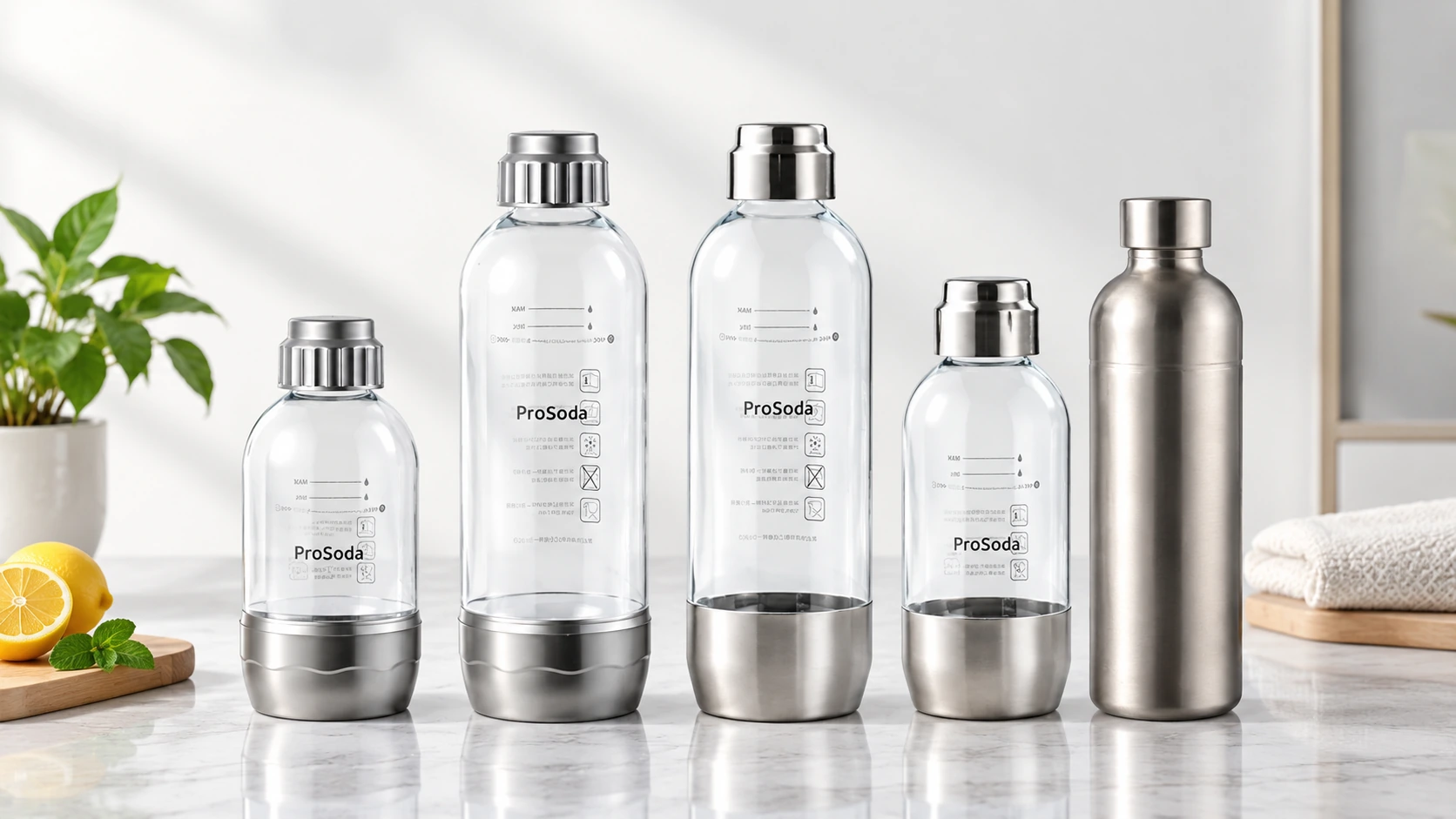
- Separate HS codes apply to spare cylinders and spare bottles. While a machine shipped with its standard bottle clears under 8422.30, standalone empty aluminum CO2 cylinders fall under 7613.00 and standalone spare PET carbonating bottles fall under 3923.30.
- Never use recycled PET (rPET) for pressurized carbonating bottles. Because carbonation runs at high pressure, carbonating bottles must be 100% virgin bottle-grade PET or 304 stainless steel — never post-consumer rPET.
- Real sustainability sits in 304 stainless hardware and corrugated packaging. Brands reducing plastic in 2026 specify a full 304 stainless steel machine and bottle (like our G15 platform) and use recyclable corrugated cardboard inserts (liners) inside the retail color box instead of foam.
1. HS & HTS Classification: Machine, Empty Cylinders & Spare Bottles
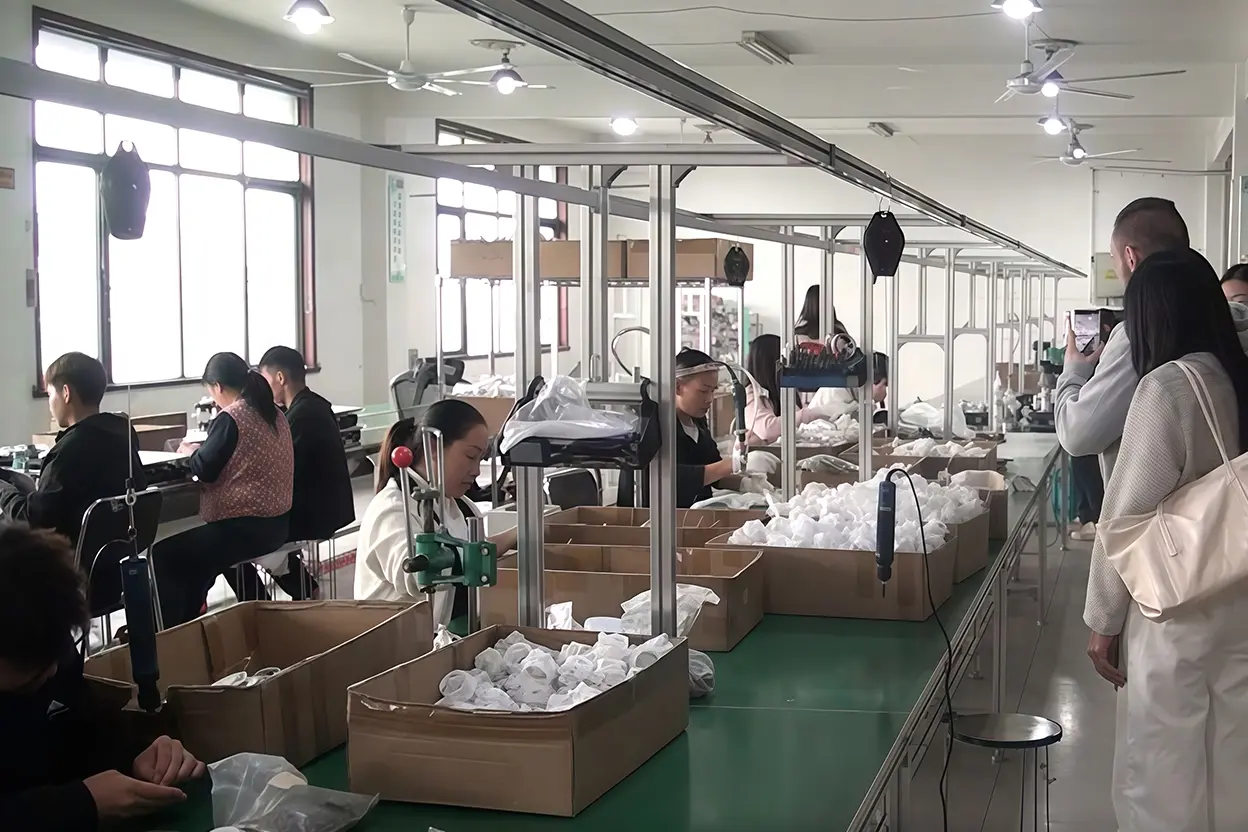
One of the most frequent bottlenecks in first-time OEM shipments is a mismatch between the HS code on the Chinese supplier’s export declaration and the import entry filed by the buyer’s customs broker. Guessing a generic kitchenware or valve code triggers customs holds and reclassification inspections.
Under the World Customs Organization (WCO) Harmonized System, the first 6 digits are universal across member countries, while digits 7 to 10 are set by each national customs authority (such as the US HTSUS or the EU Combined Nomenclature / TARIC).
How Our Factory Declares Soda Makers on Export Bills (8422309090)
On our actual China Customs export declarations for complete sparkling water makers, the 10-digit commodity code used is 8422309090 (“Soda maker / Sparkling water maker”).
Why Heading 8422.30? Heading 8422 covers “Machinery for cleaning or drying bottles or other containers; machinery for filling, closing, sealing, or labeling bottles, cans, boxes, bags or other containers; machinery for aerating beverages.” Subheading 8422.30 specifically captures machinery for aerating beverages and filling/closing containers.
What it is NOT: A complete soda maker is not classified under bare valves (8481.80), hand-operated mechanical kitchen food grinders (8210.00), or simple household plastic tableware (3924.10).
Broker verification rule: While 8422.30 is the international 6-digit anchor and 8422309090 is the verified China export code, importers in the United States, the European Union, the UK, and Latin America must always submit the product specification sheet to their licensed local customs broker before shipment so the broker can confirm the exact 8-digit or 10-digit national import code for that customs territory.
HS Classification Matrix by Shipment Item
When you order a private label soda maker programme, your commercial invoice may include complete machines, spare carbonating bottles, or empty gas cylinders. They do not share the same code when shipped as standalone items:
| Exported Item | International 6-Digit HS Subheading | China Export 10-Digit Code | Classification Logic & Broker Notes |
|---|---|---|---|
| Complete Soda Maker Machine (with standard bottle in retail box) | 8422.30 | 8422309090 | Classified under machinery for aerating beverages. Confirm the final 4 national digits (HTSUS / TARIC) with your destination customs broker. |
| Empty Aluminum CO2 Cylinder (0.6L seamless aluminum, with valve) | 7613.00 | Confirm per batch (under 7613.00) | Aluminum containers for compressed or liquefied gas. Shipped empty as Non-DG general cargo (see our DOT & TPED cylinder import guide). |
| Pre-Filled CO2 Cylinder (containing food-grade liquid CO2) | 7613.00 / 2811.21 | DG Declaration required | Regulated as UN 1013, Class 2.2 dangerous goods. Many brokers classify the aluminum vessel and the carbon dioxide gas separately per local tariff rulings. |
| Spare PET Carbonating Bottles (shipped separately in bulk/2-packs) | 3923.30 | Confirm per batch (under 3923.30) | Carboys, bottles, flasks and similar articles of plastics. Applies when spare PET bottles are invoiced separately from the machine. |
| Spare 304 Stainless Bottles (shipped separately from machine) | 7323.93 | Confirm per batch (under 7323.93) | Table, kitchen or other household articles of stainless steel. Confirm with your broker whether declared as household stainless articles or machine parts. |
Buyer check: before your vessel sails, send your customs broker the commercial invoice draft showing 8422.30 (8422309090 on our China export side) for the machines, and confirm how your broker wants spare bottles or empty cylinders itemised on the packing list.
2. Checking US & EU Tariff Rules in 2026 (Without Guessing Rates)
Tariff schedules and trade remedies shift periodically, and any article that prints a fixed “all-in duty percentage” without knowing your exact port of entry and importer status is guessing. Instead of relying on static blog numbers, B2B buyers should run a two-step verification before locking in retail pricing or choosing between FOB, CIF and DDP terms.
United States: HTSUS Lookup & Additional Duty Checks
For shipments entering the United States:
- Check the base MFN (Column 1 General) rate under HTSUS Heading 8422.30: Ask your US customs broker to confirm the exact 10-digit HTSUS statistical suffix under 8422.30 for household beverage aerating machinery (or 7613.00 for empty aluminum cylinders and 3923.30 for spare PET bottles).
- Verify applicable Section 301 or trade-remedy tariffs by subheading: Because US additional tariffs on Chinese-origin manufactured goods depend on the exact 8-digit/10-digit HTSUS classification and any active exclusion lists in force on the date of entry, have your broker run a live entry calculation against the current USITC tariff database before you finalize your landed cost sheet.
European Union & UK: TARIC, UK Global Tariff & VAT
For shipments entering the European Union or Great Britain:
- Query the EU TARIC database under CN Code 8422 30: The EU TARIC system shows the third-country erga omnes customs duty rate for beverage aerating machinery originating in China, alongside any commercial policy requirements.
- Separate import duty from import VAT: Remember that customs duty is a genuine landed cost, whereas import VAT (Value Added Tax / Einfuhrumsatzsteuer in Germany) paid at customs clearance is normally reclaimable as input tax by VAT-registered B2B importers.
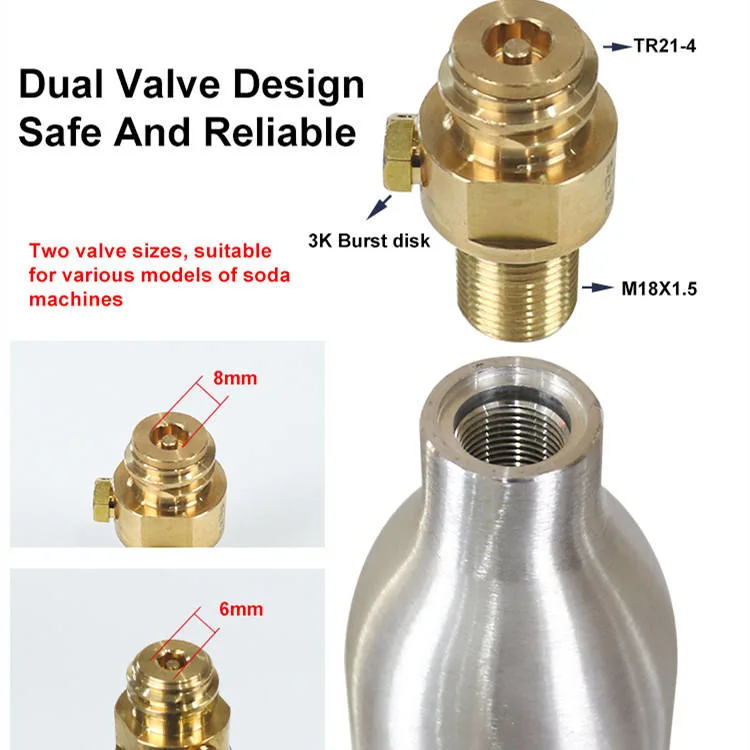
- Keep machine and cylinder paperwork distinct: Customs officers in EU ports check the commercial invoice HS codes against your compliance documents. If your shipment includes our LW60-V-1 cylinders, the cylinder’s TPED type approval (Certificate 01 230 172/B-25 2157.00, TUV Rheinland NB 0035, valid to June 2035) accompanies the cylinder line item, while FDA, EU 10/2011 and LFGB food-contact test reports accompany the machine and bottles.
Buyer check: always ask your forwarder or customs broker for a written tariff classification confirmation using the 6-digit subheading 8422.30 (and our export code 8422309090) before you sign your freight booking.
3. The 2026 Retail Material Shift: Virgin ABS vs Full 304 Stainless Steel
Across North American and European kitchenware aisles, retail buyers are splitting sparkling water makers into two clear product tiers: entry-to-mid-level ABS platforms for volume promotions, and all-metal 304 stainless steel platforms for plastic-conscious consumers who want countertop durability and zero plastic contact with their drinking water.
Understanding how these two platforms differ in manufacturing helps you brief your OEM soda maker manufacturer accurately:
| Platform Dimension | Virgin ABS Housing Platform (e.g. G720) | Full 304 Stainless Steel Platform (e.g. G15) |
|---|---|---|
| Outer Housing Material | Virgin injection-moulded ABS | Full 304 stainless steel body (brushed stainless or spray finishes such as white or black) |
| Carbonating Bottle Options | Virgin bottle-grade PET (500 ml / 1000 ml) | Virgin PET OR food-contact 304 stainless steel bottle (separate material configurations; fit confirmed per model on sample) |
| Gas Nozzle & Valve Block | Food-contact nozzle + high-pressure internal valve assembly | Detachable 304 stainless steel nozzle + CNC brass valve |
| Pressure Relief & Actuation | Automatic pressure relief; top-press button actuation | Automatic pressure relief with pressure sound control; front lever or top actuation by series |
| Cylinder Interface | Threaded TR21-4 interface (M18x1.5) | Threaded TR21-4 interface (M18x1.5) |
| Retail Positioning | Supermarket volume programmes, starter bundles, e-commerce entry lines | Premium kitchenware brands, plastic-free retail concepts, design-led gifts |
One technical detail to note when selecting between PET and 304 stainless steel bottles: both carbonate directly in the machine, and both act as pressure vessels during carbonation. Choosing between a virgin PET bottle and a 304 stainless steel bottle on the G15 stainless steel soda maker is a material configuration choice for your target audience — transparent convenience versus zero-plastic contact — and exact bottle fit is always confirmed per model on your pre-production sample.
Buyer check: if your brand story promises “zero plastic contact with water”, pair a stainless-nozzle machine like the G15 with the 304 stainless steel carbonating bottle option, and verify on the sample that every wet-contact part matches that claim.
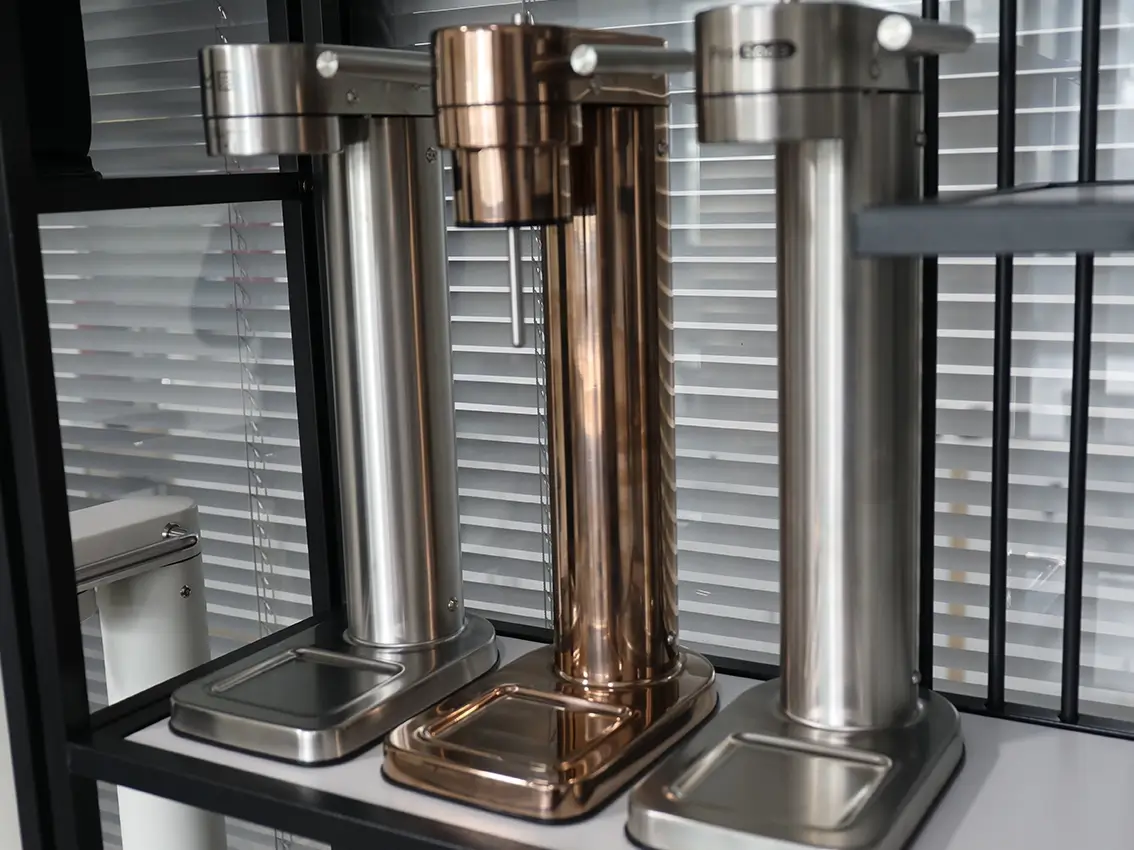
Factory inspection: assembly and appearance check on a black G15 order.
4. Why Pressurized Bottles Cannot Use rPET (And Where Eco-Packaging Works)
As the European Union rolls out stricter packaging sustainability rules under the Packaging and Packaging Waste Regulation (PPWR) and North American retailers set recycled-content goals, private-label buyers frequently ask a dangerous question: “Can we make the carbonating bottle out of 50% or 100% recycled PET (rPET)?”
The engineering answer is a strict no. Here is why, and where your brand should focus its sustainability specs instead:
1. Why Post-Consumer rPET Is Unsafe for Carbonating Bottles
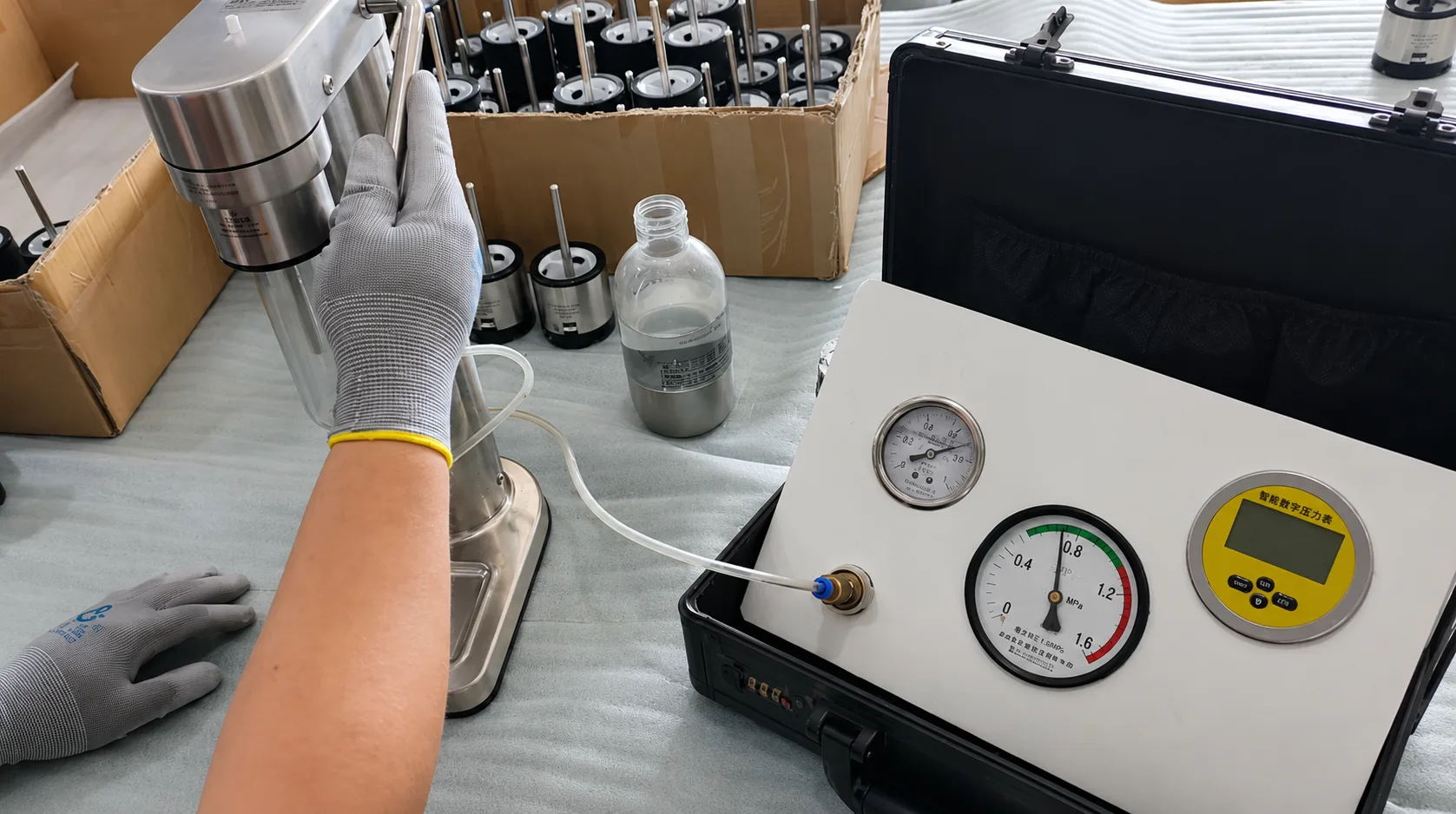
A standard single-use water bottle holds still water at atmospheric pressure. A soda maker carbonating bottle is a reusable pressure vessel subjected to repeated pressurisation during every carbonation cycle.
Post-consumer recycled PET (rPET) undergoes thermal degradation during reprocessing, resulting in shorter polymer chains, lower intrinsic viscosity, and microscopic contaminants that act as stress-concentration points under pressure. Using rPET in a pressurized carbonating bottle introduces an unacceptable risk of micro-cracking and sudden bottle failure during use.
For that reason, plastic carbonating bottles must always be manufactured from 100% virgin bottle-grade PET (and replaced according to the expiry date printed on the bottle body). If your retail buyer wants to eliminate virgin plastic from the beverage container, the safe engineering route is not rPET — it is switching the container to a food-contact 304 stainless steel bottle on a stainless steel soda maker platform.
2. Corrugated Cardboard Inserts: Real Packaging Sustainability
Where sustainability rules do apply directly is your retail soda maker packaging. European retailers and eco-conscious consumers actively reject expanded polystyrene (EPS / styrofoam) blocks inside retail gift boxes because foam is difficult to recycle in household waste streams.
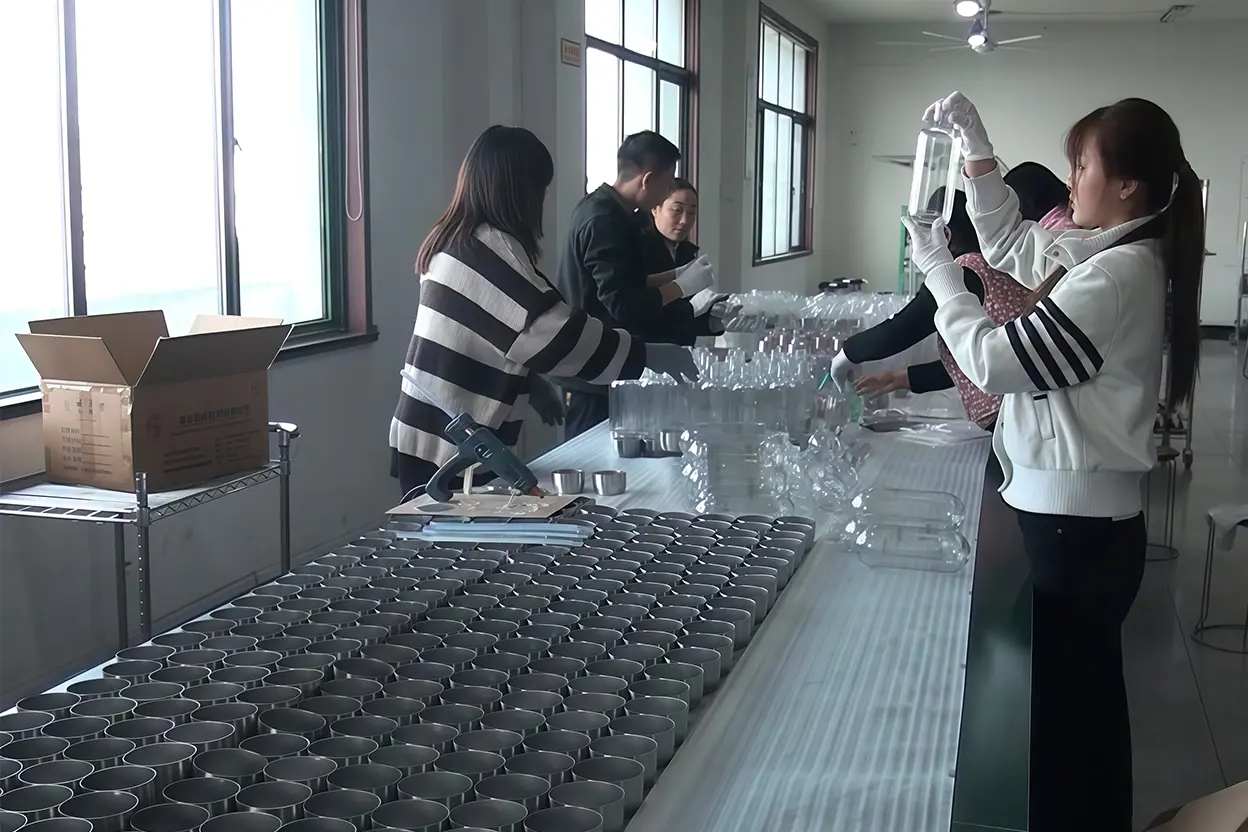
In our standard mass-production packaging (including our G15, G15 Pro and G720 lines), the retail color box uses a die-cut corrugated cardboard insert (corrugated liner) engineered to lock the machine body and the carbonating bottle securely in place during drop and vibration transit tests:
- 100% curbside recyclable paperboard: Both the outer printed color box and the internal corrugated cardboard insert enter the same household paper recycling stream in the EU, UK, and US.
- Structural protection without foam: Folded corrugated ribs absorb corner and edge impacts inside the master carton without shedding foam beads onto the machine finish.
- Clear recycling & warning markings: Your artwork dieline can print destination-specific recycling symbols (such as European sorting icons) alongside mandatory multi-language safety warnings directly on the color box and user manual.
Buyer check: when briefing your packaging designer, confirm that the internal buffer is our standard corrugated cardboard insert (liner) rather than styrofoam, and never allow a marketing team to promise “rPET carbonating bottles” on the box.
5. Pre-Shipment Customs & Packaging Audit Checklist
Before you approve mass-production packing and release the balance payment, run this four-point customs and packaging audit with your supplier:
- Match the HS code across all shipping documents. Confirm that the commercial invoice, packing list, and export declaration use consistent classification — 8422309090 (6-digit 8422.30) on the China export side for complete soda makers, and the exact national 8- or 10-digit code confirmed by your destination customs broker on the import entry. If spare soda maker bottle materials (3923.30 for PET) or empty cylinders (7613.00) are shipped as separate line items, list their weights and carton counts separately.
- Verify country-of-origin markings. US Customs and Border Protection (19 CFR Part 134) strictly requires every imported retail unit and outer master carton to carry a permanent, legible “Made in China” country-of-origin marking. Missing origin markings result in customs marking notices and port rework fees.
- Confirm corrugated insert fit and drop protection. Check on the pre-production packaging sample that the corrugated cardboard insert holds both the machine and the bottle firmly without rubbing the surface finish (especially on brushed stainless or spray-painted G15 bodies).
- Pair customs documents with the right test reports. Keep your customs compliance folder organized by product: FDA 21 CFR / EU 10/2011 (Simulant B — 3% acetic acid) / German LFGB test reports for the machine’s wet-contact components, and the separate TPED certificate (01 230 172/B-25 2157.00 for our LW60-V-1 cylinder) or DOT-3AL documentation if cylinders are included.
Buyer check: ask your supplier for photos of the packed retail color box (showing the internal corrugated liner, the bottle’s printed expiry date, and the outer carton shipping marks) before container loading begins.
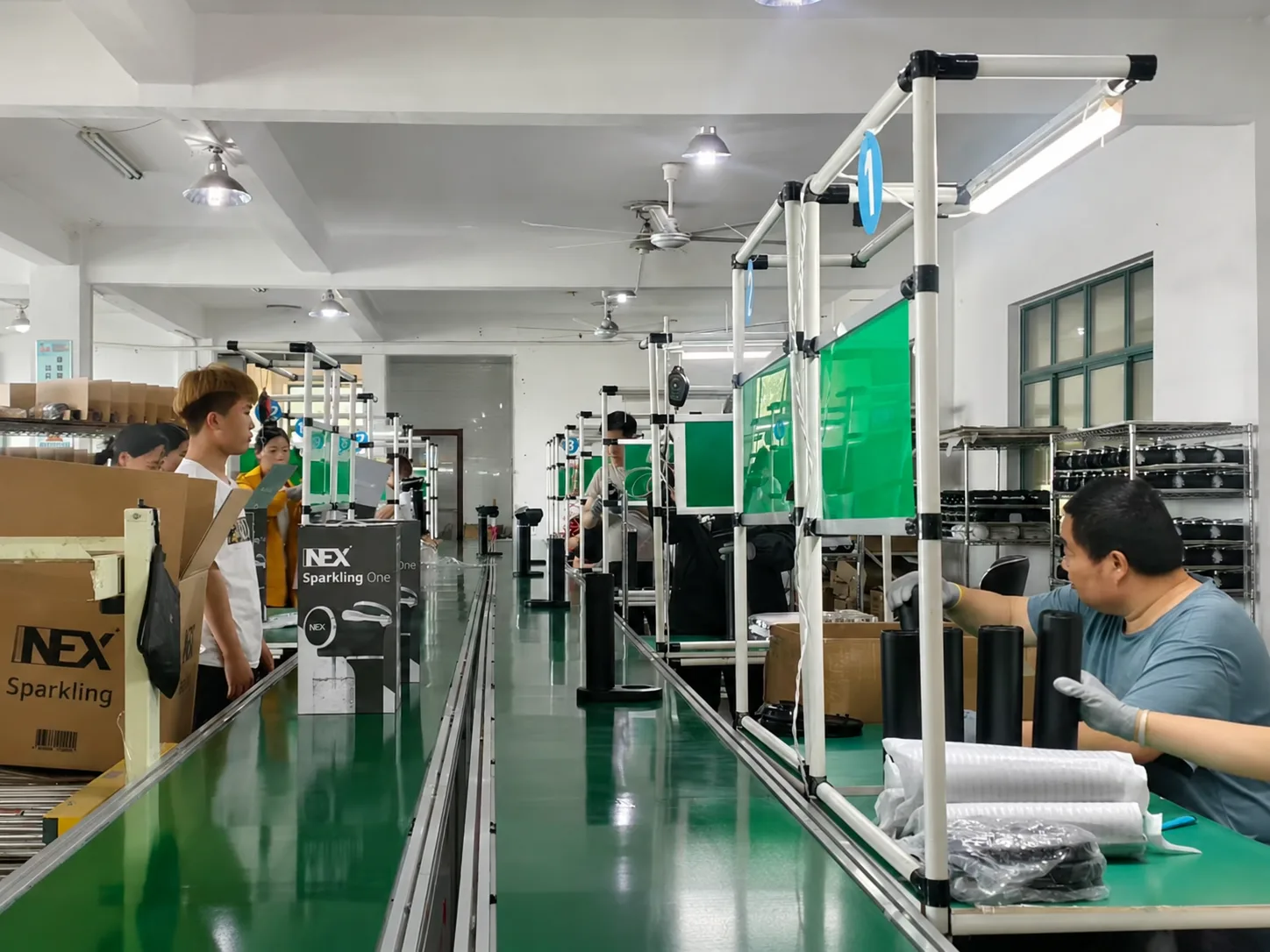
Factory footage: G720 mass production and assembly for OEM orders.
Featured Model: G15 Stainless Steel Soda Maker
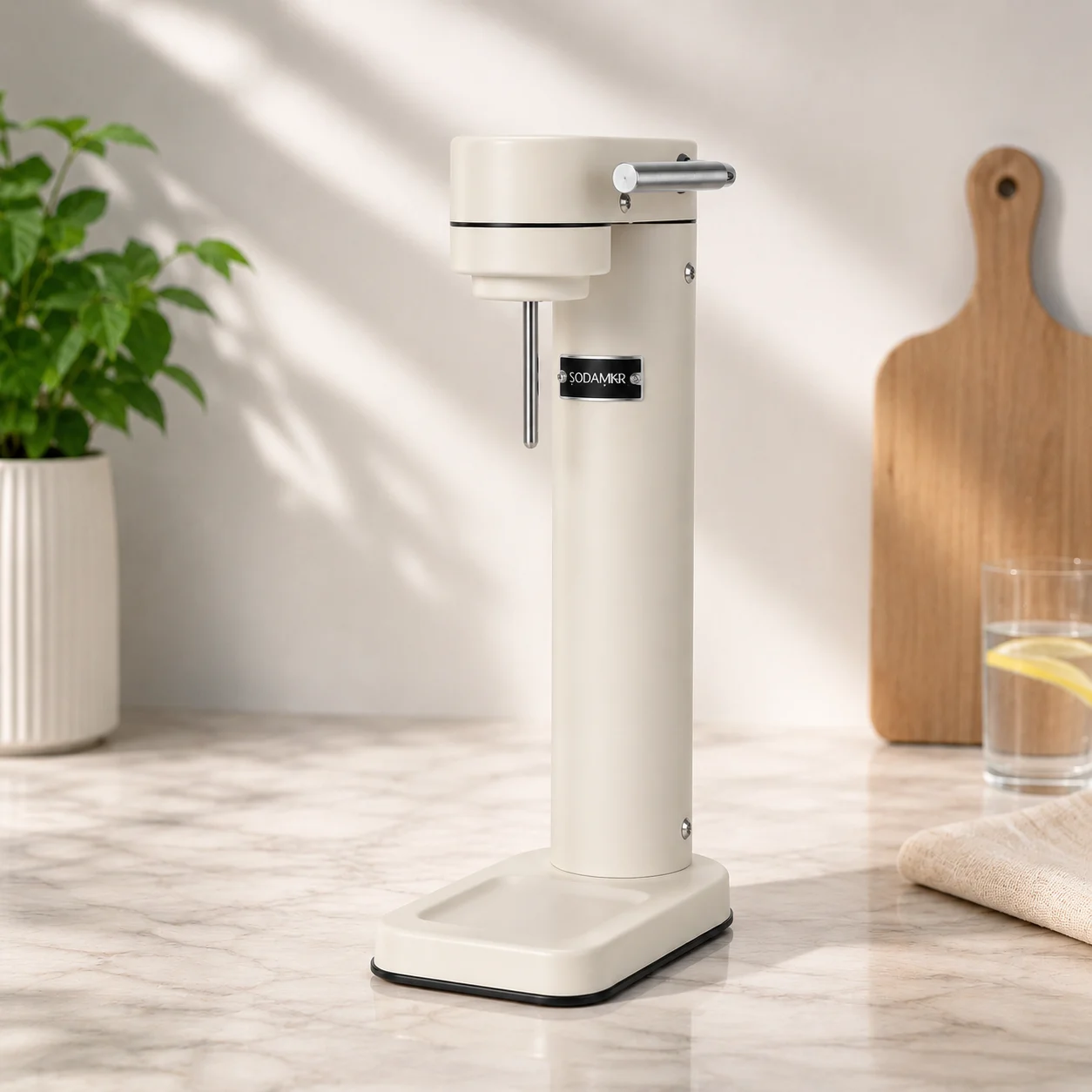
G15 — built for 2026 plastic-reduction retail programmes. Full 304 stainless steel body, CNC brass valve, detachable 304 stainless nozzle, automatic pressure relief with pressure sound control, and a 304 stainless steel bottle option that carbonates directly in the machine (PET and stainless are separate material configurations; fit is confirmed per model on the sample). Packed in retail color boxes with recyclable corrugated cardboard inserts, exported under verified HS code 8422309090. Private label from 300 units, samples in 7 days, 1-year warranty.
See the G15 → · Browse all models · Stainless steel soda makers →
Related Reading
- How to Import Soda Makers from China — the complete step-by-step sourcing, shipping and customs clearance workflow.
- Soda Maker Packaging Guide — retail color boxes, corrugated cardboard inserts, and master carton loading specs.
- Soda Maker FOB, CIF & DDP Guide — choosing the right Incoterms when calculating duties and ocean freight.
- 2026 Soda Maker Safety Standards: FDA & LFGB Guide — component-by-component food-contact rules and 3% acetic acid migration testing.
- DOT & TPED Certification Guide: Importing Soda Maker CO2 Cylinders in 2026 — cylinder certifications, shoulder stamps, and empty vs filled shipping rules.
- Soda Maker PET Bottle Manufacturer — virgin PET vs 304 stainless steel bottles and pressure-vessel rules.
- Empty CO2 Cylinder Supplier for Soda Makers — sourcing empty cylinders (HS 7613.00) as non-hazardous cargo.
Frequently Asked Questions (FAQ)
What is the HS code for importing a household soda maker from China?
On China export customs declarations, a complete household soda maker (sparkling water maker) is declared under the 10-digit HS code 8422309090. The international universal 6-digit subheading is 8422.30, which covers machinery for aerating beverages and filling or closing containers. Before shipping, always have your local customs broker confirm the final 4 national statistical digits for your destination market (such as the US HTSUS or EU TARIC).
Do spare carbonating bottles and empty CO2 cylinders use the same HS code as the machine?
No. When a standard bottle is packed inside the retail box with the machine, it clears together under 8422.30 (8422309090). However, when shipped as standalone items, empty seamless aluminum CO2 cylinders are classified under HS subheading 7613.00, standalone spare PET carbonating bottles fall under 3923.30, and standalone stainless steel bottles generally fall under 7323.93. Itemise them separately on your commercial invoice.
Can soda maker carbonating bottles be made from recycled PET (rPET) to meet sustainability goals?
No. A soda maker bottle is a reusable pressure vessel that is repeatedly pressurised during carbonation. Post-consumer recycled PET (rPET) has lower intrinsic viscosity and microscopic impurities that increase the risk of cracking or bursting under pressure. Plastic carbonating bottles must be 100% virgin bottle-grade PET. Brands seeking a plastic-free alternative should choose a food-contact 304 stainless steel carbonating bottle, such as the stainless bottle option on our G15 model.
What inner packaging material do you use inside the retail color box instead of styrofoam?
Our standard mass-production retail color boxes use a die-cut corrugated cardboard insert (corrugated liner) to hold the soda maker and bottle securely in place. Because both the outer gift box and the internal corrugated liner are made of paperboard, the entire box structure can be recycled in standard household paper streams without using expanded polystyrene (EPS) foam.
Verified HS code 8422309090, corrugated retail packaging, and private label from 300 units.
Calculating landed cost for a 2026 retail launch?
Send your target destination port, preferred model (ABS or 304 stainless steel), and estimated order quantity — we will provide exact carton dimensions, container loading figures, and sample lead times.
By Helen Ho · OEM Consultant