
To make carbonated water at home, chill drinking water first, fill a pressure-rated bottle to its marked line, lock it into a soda maker, and inject food-grade CO2 in short pulses until the fizz reaches your taste — carbonating one litre uses about 10 g of CO2. Vent the pressure, remove the bottle, and keep it sealed and refrigerated. Cold water, a correct fill level and a tight seal decide the result far more than pressing harder or longer. The full method, the variables behind the fizz, and the fixes for flat water follow below.
What do you need to make carbonated water?
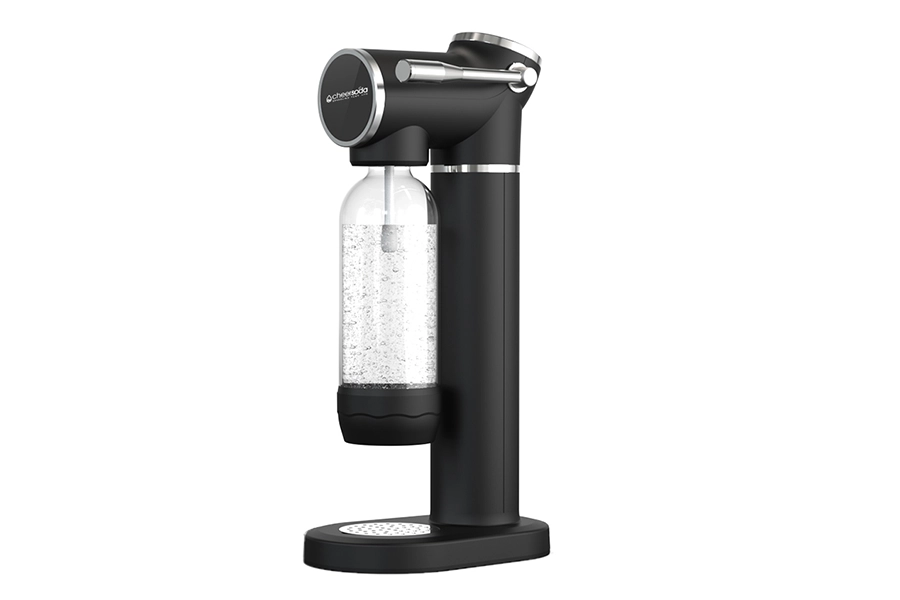
You need four things: cold drinking water, a countertop soda maker, a refillable food-grade CO2 cylinder screwed into the machine, and the pressure-rated bottle matched to that machine. Nothing else is required — a manual soda maker needs no mains electricity, because the energy for carbonation comes from the compressed gas in the cylinder. Even the LED carbonation-level indicator on our G3 runs on a small CR2032 button battery, not on mains power, so the machine itself stays fully mechanical.
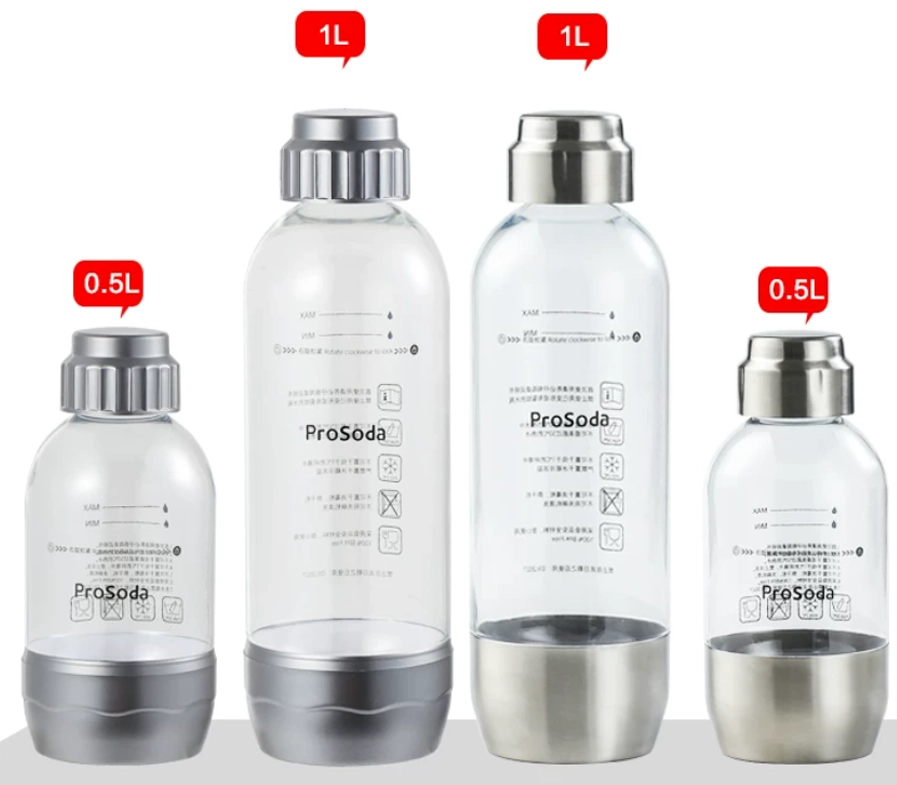
Two preparation details matter before you start. First, chill the water: cold water dissolves and holds CO2 far better than room-temperature water, so an hour in the refrigerator is worth more than extra gas pulses. Second, check the cylinder standard before the first use. Our machines use the threaded cylinder standard (TR21-4 valve, M18×1.5 thread — the 425 g / 60 L screw-in type); they do not fit SodaStream Quick Connect cylinders, and no adapter exists. The CO2 cylinder compatibility guide lists the standards side by side. Bottles are part of the pressure system, not an accessory: use the bottle the machine was supplied with — ours are BPA-free PET in 500 ml and 1000 ml sizes, with the 1000 ml bottle as the standard set — as covered on the soda maker bottles page.
How do you make carbonated water, step by step?
Follow the same sequence every time and the result stays consistent: fill, chill, seal, inject in pulses, rest, vent, then store sealed and cold. Skipping the chill or the rest is where most flat results come from.
- Fill to the line. Fill the bottle with drinking water up to the marked fill line — no higher. The space above the line is headspace the gas needs; an overfilled bottle carbonates weakly and vents messily.
- Chill the water. Refrigerate the filled bottle until the water is properly cold. This single step does more for bubble quality than any other.
- Fit the cylinder and lock the bottle in. Make sure the CO2 cylinder is screwed in hand-tight, then lock the bottle into the carbonation head until it seats and seals.
- Inject in short pulses. Press the top button or work the lever in short, firm pulses. Each pulse opens the CNC brass valve and sends a burst of CO2 through the nozzle as a fine bubble stream below the water surface. On top-press models such as the G3 and on lever models such as the G720 and the G830 the rhythm is the same: pulse, pause, listen.
- Stop at your target fizz. Light fizz takes fewer pulses; a sharp fizz takes more. On the G15 stainless steel model, a magnetic sound signals that the target pressure is reached — pausing about a second there gives a noticeably better texture.
- Rest, then vent. Let the sealed bottle rest briefly so the gas finishes dissolving, then use the pressure-release mechanism to vent the headspace before unclipping the bottle. Never force a pressurised bottle out of the head.
- Serve and store sealed. Pour what you need, reseal the bottle at once and put it back in the refrigerator. Every opening lets gas escape, so the last glass from an opened bottle is always softer than the first.
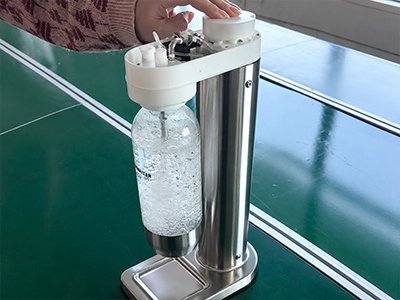
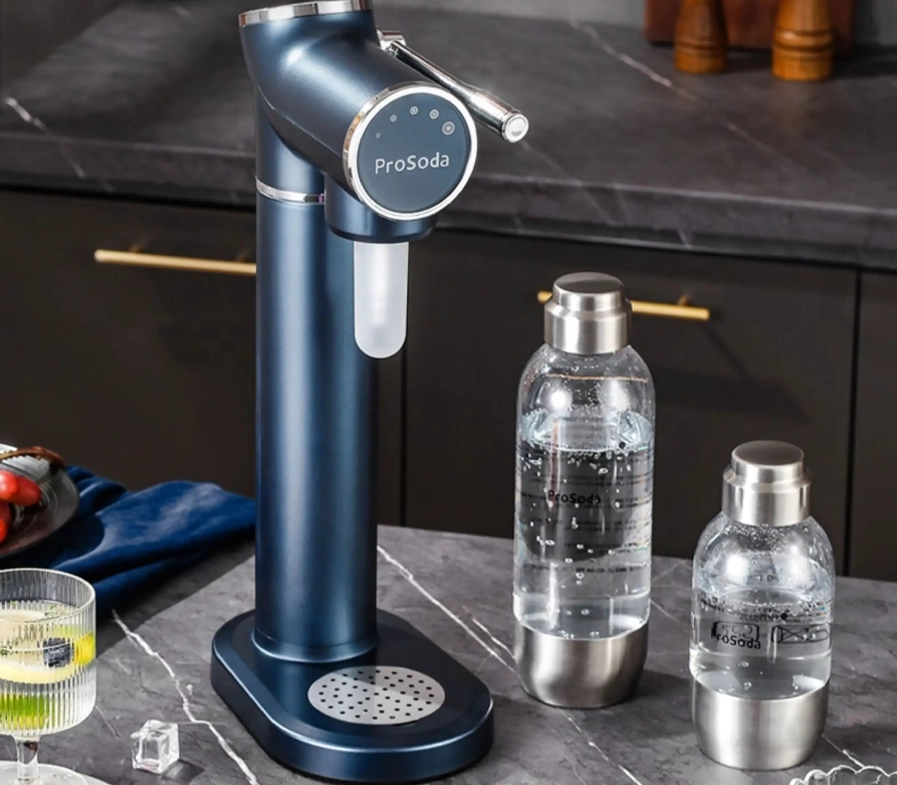
Lever carbonation, no electricity — the G720 for high-volume private-label programmes.
Which way of making carbonated water is right for you?
A countertop soda maker is one of four common routes to carbonated water, and they differ mainly in control, consumables and waste. The comparison below is the short version we give buyers who are deciding what their market actually needs; the mechanism itself is explained in how does a soda machine work.
| Method | How it carbonates | Power needed | Consumables | Fizz control |
|---|---|---|---|---|
| Manual countertop soda maker | CO2 cylinder + mechanical valve, pulse injection | None | Refillable CO2 cylinder | High — pulse by pulse |
| Electric countertop carbonator | CO2 cylinder + motorised pump | Mains electricity | Refillable CO2 cylinder | High — preset levels |
| Soda siphon | Small single-use CO2 chargers in a siphon bottle | None | Single-use chargers, one per bottle | Low — fixed by charger |
| Buying bottled sparkling water | Carbonated at the bottling plant | None at home | A new bottle every time | None — fixed by brand |
For households and offices that carbonate daily, the refillable-cylinder machine is the practical default: one cylinder covers many bottles, the fizz is adjustable at each fill, and there is no stream of single-use chargers or empty bottles. What the finished drink is called on the shelf — soda water, sparkling water or seltzer — is a naming question, not a production one; soda water vs sparkling water covers that side.
Soda Maker, Soda Siphon, or Store-Bought?
Three routes make fizzy water at home, and they suit different habits. A soda maker gives the most control; a siphon is simpler but fixed; store-bought sparkling water needs no equipment at all.
| Route | Fizz control | Cost over time | Waste | Best for |
|---|---|---|---|---|
| Soda maker | Pulses you choose, from gentle to sharp | Higher up front, lower per litre over time | Refillable cylinder, reusable bottle | Daily home use |
| Soda siphon | Fixed by the charger | Low up front, chargers add up | Single-use chargers | Occasional use or travel |
| Store-bought | Fixed by the brand | No equipment, highest per litre | Single-use bottles | Trying flavours before committing |
For a brand or importer, only the maker route supports a private-label programme — the other two are consumption choices, not product platforms.
Why is my carbonated water not fizzy enough?
Flat results almost always trace back to one of five causes: warm water, a wrong fill level, too few pulses, a tired seal, or an empty cylinder. Work through them in that order before blaming the machine — in our support experience the first two explain most cases.
- The water was not cold enough. Warm water physically holds less CO2. Chill the filled bottle, not just the room.
- The bottle was overfilled. Past the fill line there is too little headspace for gas to build pressure and dissolve. Pour out to the line and carbonate again.
- Too few pulses, or pulses too gentle. Add pulses one at a time, pausing between them, until the fizz matches your taste.
- The seal or nozzle needs attention. A bottle that is not fully locked in leaks gas at the head. On models with a removable nozzle, a blocked nozzle also weakens the bubble stream — the 304 stainless nozzle on our metal models unscrews for rinsing.
- The cylinder is empty or nearly empty. A cylinder at the end of its charge gives weak, fading pulses. Refill or swap it — and when you swap, confirm the threaded standard matches, as set out in the CO2 cylinder compatibility guide.
How long does homemade carbonated water stay fizzy?
Sealed and refrigerated, a full bottle keeps a firm fizz for days; once opened, it softens with every pour. The gas is not leaking through the bottle — it escapes at each opening, when the headspace pressure vents and dissolved CO2 comes out of the water to refill it. Three habits slow the loss: keep the bottle as full as practical (less headspace, less gas lost per opening), reseal immediately after pouring, and keep it cold, because warm water releases its gas faster. Carbonate in the 1000 ml bottle for a household that drinks it the same day, and in the 500 ml bottle when only one or two glasses are needed — smaller batches opened less often stay closer to the first-pour fizz. Bottle sizes and care are covered on the soda maker bottles page.
Can you carbonate juice, tea or other drinks?
With a standard home soda maker, carbonate water only — then add flavour after carbonating. Sugary or pulpy liquids foam aggressively under gas injection, carbonate unevenly and leave residue inside a standard nozzle and head, which is why standard machines are specified for water. If you want the flavour inside the drink rather than added afterwards, mix syrup or juice into the finished carbonated water in the glass; the fizz survives a gentle stir.
Purpose-built heads are the exception. Our G15Pro has a detachable carbonation head with a juice / pure-water mode switch, designed so the head can be removed and washed after carbonating juice-based drinks — the model exists for beverage projects where plain water is not the only target. Any drink other than water should still be confirmed through sample testing before a project is specified around it, because foaming behaviour varies a lot by recipe.
Add Flavour After Carbonation, Not Before
If you want flavoured sparkling water, carbonate plain chilled water first and add syrup, juice, or flavouring afterwards, stirring gently. Sugary or pulpy liquids foam heavily inside a standard carbonation head, leave residue in the nozzle, and make the fizz uneven.
The exception is a purpose-built beverage head: the G15Pro’s detachable head with its juice / pure-water mode switch is made for that use, and any juice recipe should still be confirmed by sample testing first. For standard models, flavouring after carbonation keeps the head clean and the fizz predictable. If a seal or nozzle ever needs attention, replacements are in the spare-parts range.
Is it safe to make carbonated water at home?
Yes — a carbonation bottle is a small pressure vessel, and a properly engineered machine treats it that way, with pressure discipline built into the design, the production line and the safeguards you use at home. Every Cheersoda model carries double safety valves that vent the bottle if pressure ever exceeds the safe range, together with a controlled pressure-release mechanism that returns the bottle to ambient pressure before you remove it. Valve assemblies are pressure-tested in the factory’s in-house burst-test laboratory (established 2018) before a design enters production. On the line, every finished machine — not a sample — passes a 100% wet leak test and a high-pressure gas check, and finished batches additionally undergo burst testing on a sampling basis. Our quality and compliance page sets out how these records are kept. The user’s part is simple: respect the fill line, never carbonate in a damaged bottle, and vent before unclipping.
A short note for brands and importers
Everything in this guide is also the training content your retail channel will need: the fill line, the cold-water rule and the cylinder standard are the three points end users get wrong, and the brands that print them clearly on the carton and in the manual see fewer support questions. The hardware behind the method is one platform across markets — the sparkling water maker OEM range covers plastic top-press and lever models through to full stainless steel — and only the packaging, manual language and naming change per destination. Programmes are set up through our private label soda maker route, where the manual and carton artwork are localised with the model.
FAQ
How do you make carbonated water at home?
Chill drinking water, fill a pressure-rated bottle to its marked line, lock it into a soda maker fitted with a food-grade CO2 cylinder, and inject the gas in short pulses until the fizz reaches your taste. Vent the pressure before removing the bottle, then keep the water sealed and refrigerated. Carbonating one litre uses about 10 g of CO2.
Do you need a machine to make carbonated water?
A machine is the practical route at home, because carbonation needs CO2 held under pressure in a sealed, pressure-rated bottle. Soda siphons do the same job with single-use chargers and less control; without any pressure equipment there is no reliable way to dissolve enough CO2 for a real fizz.
Why does the water need to be cold?
Cold water dissolves and holds much more CO2 than warm water. Carbonating chilled water gives finer, longer-lasting bubbles with fewer gas pulses — it is the single biggest factor in the result.
How many pulses does it take to carbonate a bottle?
It depends on taste, water temperature and fill level. Work in short pulses, pausing between them, and stop when the fizz matches what you want — lighter for a gentle sparkle, more pulses for a sharp fizz. Consistent cold water and a correct fill level matter more than the exact count.
Can I use any CO2 cylinder in a home soda maker?
No — the cylinder standard must match the machine. Cheersoda machines use the threaded standard (TR21-4 valve, M18×1.5 thread; 425 g / 60 L screw-in cylinders). They do not fit SodaStream Quick Connect cylinders, and there is no adapter. Check the standard before buying refills.
Can a soda maker carbonate juice instead of water?
Standard models are specified for water only; juice foams heavily and leaves residue in a standard head. The G15Pro is the exception, with a detachable, washable head and a juice / pure-water mode switch — and any juice recipe should still be confirmed by sample testing first.
Should I add syrup before or after carbonating?
After. Carbonate plain chilled water first, then add syrup or flavouring and stir gently. Sugary liquids foam heavily inside a standard carbonation head and leave residue; the G15Pro’s detachable head with its juice mode is the exception, and any juice recipe should still be confirmed by sample testing first.
Can I carbonate water twice for extra fizz?
Yes — if the first round was too soft, run a second round of pulses on the same chilled bottle. Keep the bottle sealed and cold between rounds, and stay within the fill line.
Sourcing a soda maker platform for your brand or market?
Send your target market, model direction and estimated volume — we will confirm specifications, packaging and documentation for that market.
The mechanism behind the pulses is explained in our guide to how does a soda machine work.
Bottle sizes, materials and care are covered on our soda maker bottles page.