
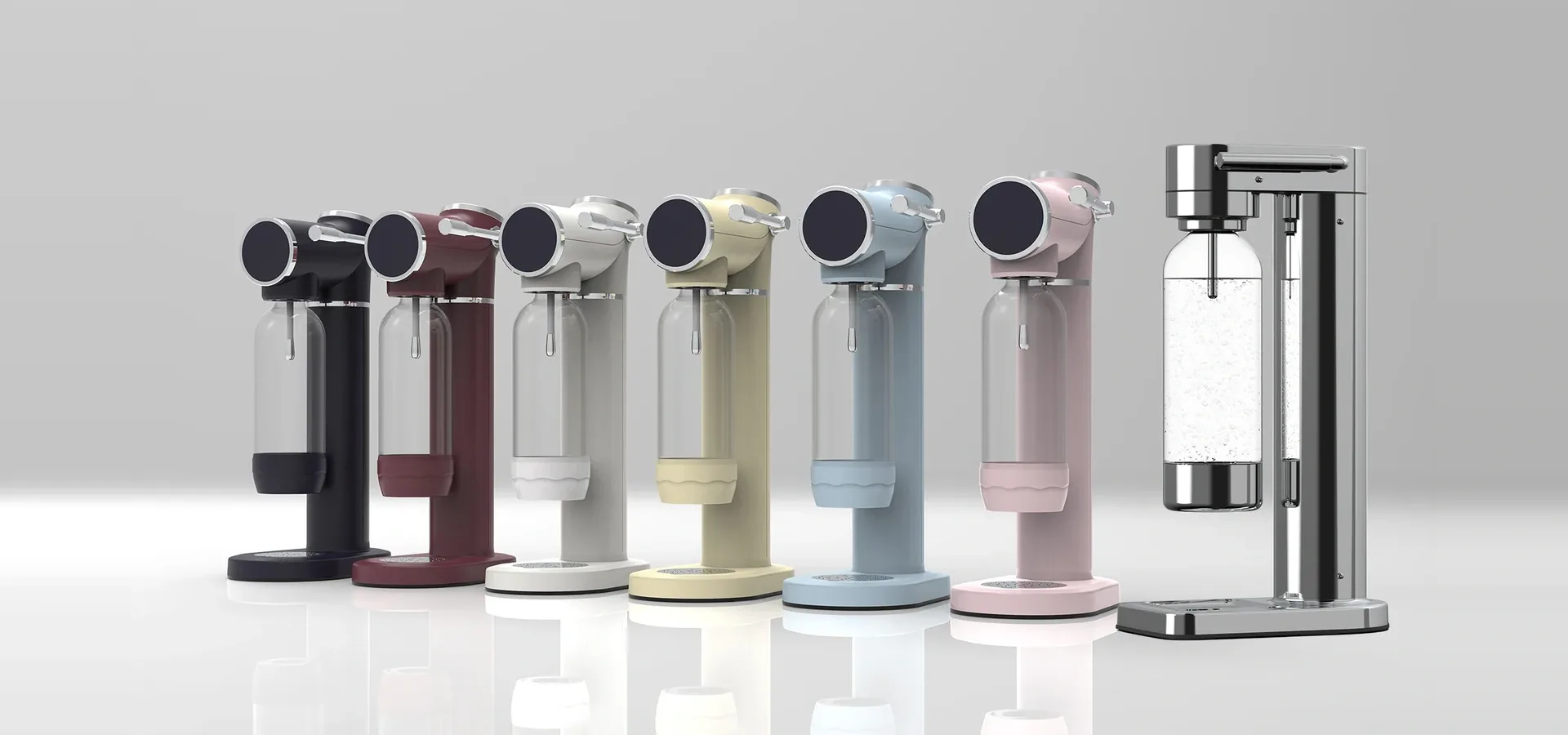
A home soda machine carbonates water by forcing food-grade CO2 from a refillable cylinder into a sealed, pressure-rated bottle of cold water. Under pressure the gas dissolves into the water and forms carbonic acid — that is the fizz. Press a lever or button a few times to inject gas in pulses, let the excess pressure vent through the release mechanism, and the bottle holds sparkling water that stays carbonated while it remains sealed and chilled. No electricity is needed on a manual machine: the energy comes from the compressed gas in the cylinder.
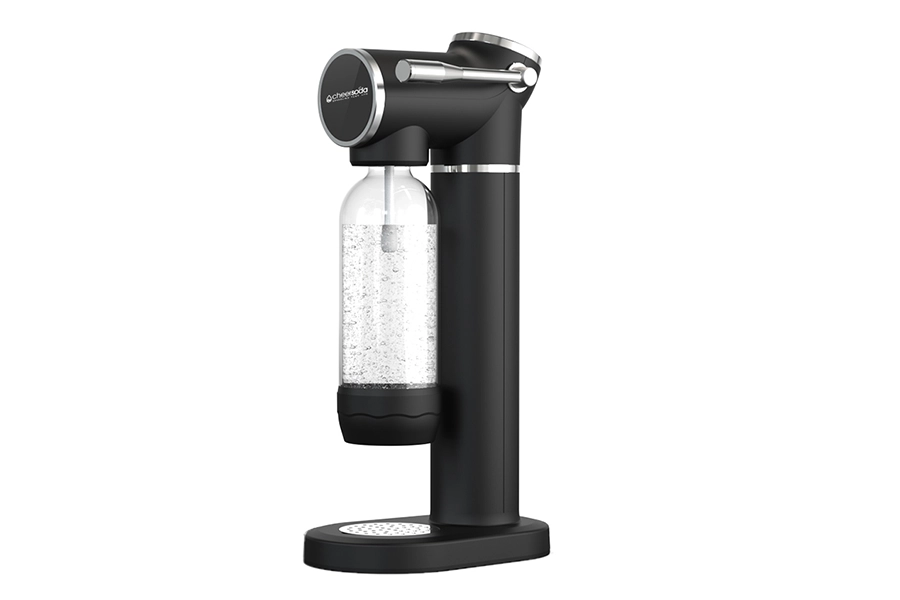
The Carbonation Cycle, Step by Step
- Fill. The bottle is filled with drinking water to its marked fill line. Headspace matters — overfilling leaves too little room for gas and weakens carbonation.
- Chill. Cold water absorbs CO2 far better than room-temperature water, so the bottle is chilled before carbonating.
- Seal. The bottle locks into the carbonation head. The seal and the carbonation nozzle sit below the water line.
- Inject. Each lever press or button push opens the valve and sends a pulse of CO2 through the nozzle into the water as fine bubbles.
- Dissolve. Under bottle pressure the CO2 dissolves and forms carbonic acid. Three to five pulses give a medium fizz; more pulses, a sharper one — a full litre typically uses about 10 g of CO2.
- Release. When the bottle is removed, the pressure-release mechanism vents the headspace gas in a controlled way instead of letting it escape explosively at the cap.
- Pour and store. Sealed and refrigerated, the water holds its carbonation; every opening lets a little gas escape, which is why the last glass is always softer than the first.
The Parts Doing the Work
- CO2 cylinder — stores food-grade CO2 under high pressure; refillable and shared across fills (see the CO2 cylinder compatibility guide for thread standards).
- Pressure valve (carbonation head) — meters each gas pulse into the bottle. On Cheersoda machines the valve core is CNC-machined brass, chosen for wear resistance over tens of thousands of cycles.
- Carbonation nozzle / tube — delivers the gas below the water surface as a fine bubble stream, which dissolves faster than large bubbles.
- Pressure-rated bottle — PET or stainless bottle engineered for repeated pressurisation, with a marked fill line; the bottle range covers 500 ml and 1000 ml sizes.
- Safety valves — every Cheersoda model carries double safety valves that vent the bottle if pressure ever exceeds the safe range.
- Pressure-release mechanism — automatic or manual venting that brings the bottle back to ambient pressure before it is unclipped.
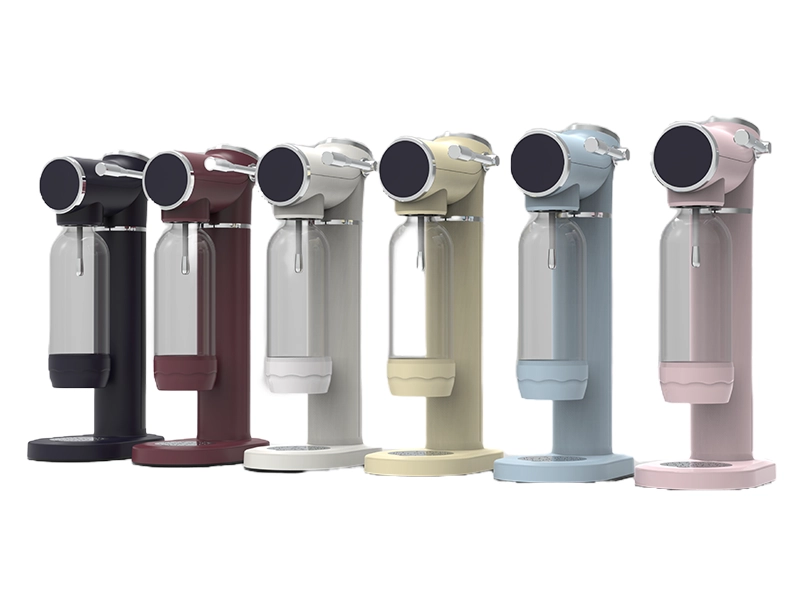
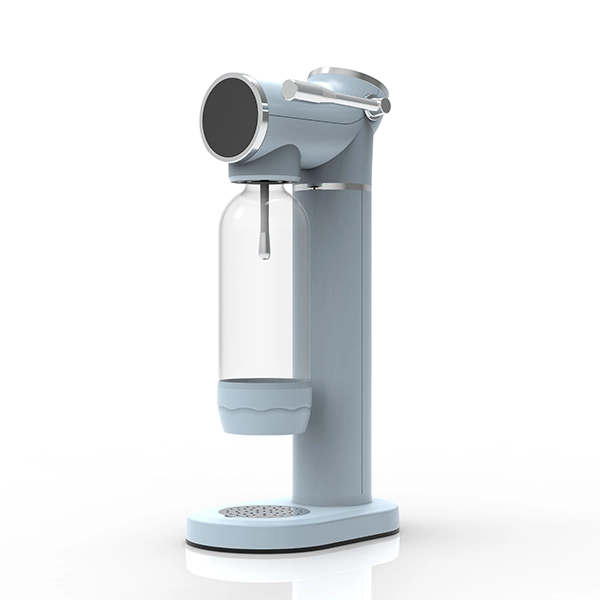
G720 — lever-action soda maker with double safety valves, built for high-volume private-label programmes. MOQ 300 units.
See the G720 →The Safety Engineering Behind It
A carbonation bottle is a small pressure vessel, so the engineering is mostly about pressure discipline. Three layers matter. First, the valve design itself: valve assemblies are pressure-tested in the factory’s in-house burst-test laboratory (established 2018) before a design enters production. Second, production testing: every finished machine — not a sample — passes a 100% wet leak test and a high-pressure gas check on the line, and finished batches additionally undergo burst testing on a sampling basis. Third, the in-use safeguards: double safety valves and controlled pressure release protect the user if a bottle is overfilled or over-carbonated. Buyers reviewing a supplier should ask how each of these three layers is documented — our quality and compliance page sets out the records we keep.What Changes the Fizz
Water temperature is the biggest lever: near-freezing water can hold markedly more CO2 than room-temperature water. After that come the number of injection pulses, the fill level (follow the line), and how long the sealed bottle rests before opening. The gas itself also leaves over time: every opening vents the headspace, the drink warms up as the bottle sits on the table, and both effects let dissolved CO2 escape — which is why a bottle carbonated in the morning pours softer by the evening, and why re-chilling a sealed bottle keeps it lively longer. Sweet or pulpy liquids carbonate unevenly and foam aggressively, which is why most home machines are specified for water — beverage carbonation projects use purpose-built heads (our G15Pro‘s detachable, washable carbonation head exists for exactly that scenario).Manual or Electric?
Electric machines pump with a motor and need mains power; manual machines use the cylinder’s own pressure and a mechanical valve, so they work anywhere and have fewer failure modes. Every Cheersoda model is manual — lever or press operation, no mains electricity — which is also why they ship without electrical certification hurdles in most markets.| Factor | Manual soda maker | Electric soda maker |
|---|---|---|
| Power source | The compressed CO2 in the cylinder | Mains electricity, motor and pump |
| Carbonation control | Number of lever/button pulses | Preset buttons or programmes |
| Where it works | Anywhere — no socket needed | Where a compatible socket is available |
| Failure modes | Valve and seal wear over years of cycles | Motor, pump and electronics, plus valve wear |
| Import certification | No electrical certification in most markets | Electrical safety certification per market |
What Buyers Should Check
If you are evaluating machines for a private-label programme, the mechanism points translate into four supplier questions. Ask how the valve assembly is tested before a design is approved, and whether finished units are leak-tested one by one or only sampled. Ask which cylinder thread the platform uses, and whether that standard is refillable in your market — the cylinder compatibility guide walks through the threaded and quick-connect standards. Ask what the replacement bottle programme looks like, because bottles are the repeat-purchase part of the system. And run the visit or sample review against a written supplier audit checklist rather than a showroom impression. Our OEM programme and guide to choosing a manufacturer cover the commercial side of the same questions. See the mechanism in two form factors: the G720 (plastic body, lever operation) and the G15 (full stainless body, CNC brass valve), or browse the full model range. For what the finished drink is called in each market, read soda water vs sparkling water.Weak Fizz? Check These Four Things First
Most weak-fizz complaints trace back to four checks, in this order. First, the cylinder: a nearly empty cylinder gives weak pulses even when the machine is fine. Second, the seal: gas escaping at a poorly locked bottle or a worn seal never reaches the water — replacement seals are part of the spare-parts range for exactly this reason. Third, the water temperature: warm water holds far less CO2 than chilled water, so a bottle carbonated warm will always taste softer. Fourth, the fill level: overfilling leaves too little headspace for gas, and underfilling changes the pulse balance. Work through the four before assuming the machine is at fault.
The Bottle Is Part of the Pressure System
It is easy to treat the bottle as packaging. It is not — it is the pressure vessel the whole cycle depends on. The bottle must hold pressure repeatedly, keep its seal across many fills, and carry a fill line that leaves the headspace the gas needs. A scratched, deformed, or poorly sealing bottle should be retired rather than carbonated again, because the bottle is where pressure lives. That is also why the bottle programme matters to buyers: the machine is bought once, but bottles are the repeat-purchase part of the system, and a sample should always be tested with the exact bottle the bulk order will ship with — see the sample order guide for how that check runs.
FAQ
How does a soda machine carbonate water?
It injects food-grade CO2 from a refillable cylinder into a sealed bottle of cold water. Under pressure the gas dissolves into the water and forms carbonic acid, which is the fizz. A litre of water typically takes about 10 g of CO2.Why does the water need to be cold?
Cold water dissolves and holds much more CO2 than warm water. Carbonating chilled water gives finer, longer-lasting bubbles with fewer gas pulses.How many presses does it take to carbonate a bottle?
Most users land at three to five pulses for a medium fizz. More pulses give a sharper carbonation; the fill line and water temperature matter as much as the count.Is a soda machine safe? The bottle is under pressure.
Yes, when the pressure system is engineered and tested properly: double safety valves vent excess pressure, a release mechanism vents the headspace before the bottle is removed, and at our factory every unit passes a wet leak test and a high-pressure gas check before packing.Does a soda machine need electricity?
Manual models do not — the energy comes from the compressed CO2 in the cylinder. All Cheersoda models are manual (lever or press operation) and need no mains power.Can a soda machine carbonate juice or other drinks?
Standard home machines are specified for water; sugary or pulpy liquids foam and leave residue in standard nozzles. Beverage carbonation is possible on purpose-built models with detachable, washable heads, confirmed through sample testing.Why is my soda flat after a few hours?
An opened bottle loses gas every time it is opened, and warm water holds less CO2. Keep the bottle sealed and chilled; the last glass is always softer than the first.Can I re-carbonate a bottle that has gone flat?
Yes — a flat bottle can be carbonated again as long as it is undamaged and filled to its fill line. Chill it first; cold water takes up gas better than warm.Evaluating a Soda Maker Platform for Your Brand?
Send the target market, model direction and estimated volume — we will confirm specifications, safety documentation and packaging options.The testing records behind the safety section are set out on our quality and compliance page.
The bottle is half of the system: our guide to soda maker bottle materials compares PET and stainless steel for pressure duty, taste and branding.
G3 soda maker is another option for buyers comparing form factors. how to make carbonated water is explained in our step-by-step home guide.