
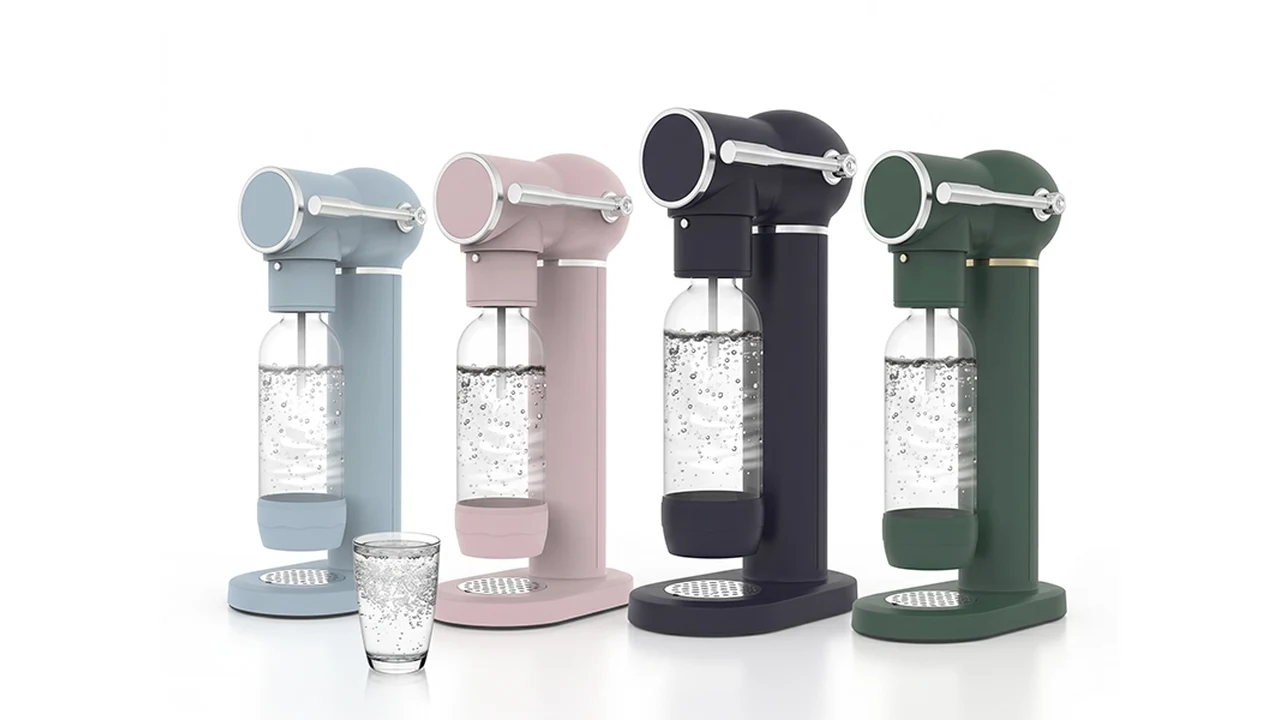
Soda water and sparkling water are both plain water carbonated with CO2. In most markets the two names describe the same drink, and the difference is naming habit, not the product: “soda water” is the everyday term in the UK, Australia and much of Asia, while “sparkling water” is the standard retail term in the US and most of the EU. Where the terms genuinely diverge is against their neighbours — seltzer is carbonated water with nothing added, and club soda is carbonated water with added mineral salts, which changes the taste. For a beverage brand, the name on the carton is a market decision, not a recipe decision.
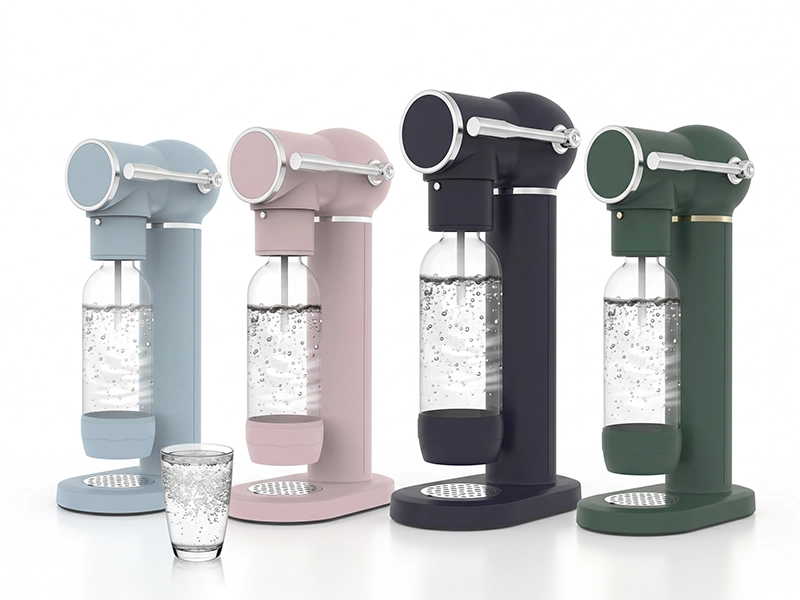
Factory note: Nothing in the machine changes between these names. Carbonation hardware, bottles and CO2 supply are identical — only the carton print, the manual and the listing copy are localised per market.
The Four Terms Side by Side
| Term | What it is | Added minerals / salts | Typical naming markets |
|---|---|---|---|
| Sparkling water | Water + CO2 | None required (may be naturally mineralised at source) | US, EU retail |
| Soda water | Water + CO2 | None in modern retail use | UK, AU, Asia, HoReCa |
| Seltzer | Water + CO2 | None, by definition | US |
| Club soda | Water + CO2 + mineral salts (e.g. sodium bicarbonate, potassium salts) | Yes — added for taste | US, bar / HoReCa channel |
Where the Confusion Comes From
Three sources. First, history: “soda water” originally referred to water dosed with sodium bicarbonate in 18th–19th century soda fountains, and the name survived long after the recipe became plain carbonation. Second, regulation: in the EU, “sparkling mineral water” language is tied to source-protected mineral water categories, so brands selling carbonated tap or filtered water usually label it “sparkling water” or “carbonated water” rather than anything with “mineral” in the name. Third, the bar channel: club soda’s added salts give it a slightly savoury taste that mixers expect, so “soda” on a bar gun usually means club soda, not plain sparkling water. None of these change what a soda maker produces — they change what the finished product is called.
| Term | What it is | Anything added? | Where you will see it |
|---|---|---|---|
| Soda water | Water carbonated with CO2 | Nothing in the modern version (the name survives from the soda-siphon era) | Bar and cocktail mixers; small bottles and cans in the US and UK |
| Sparkling water | Carbonated water sold as a drinking water | Nothing added when it is carbonated at home or in the factory; naturally carbonated mineral versions also exist | The bottled-water aisle; premium positioning in the UK and Europe |
| Seltzer | Plain carbonated water, traditionally with a hard fizz | Nothing — no minerals are added for taste | US home carbonation, especially the Northeast |
| Club soda | Carbonated water with mineral salts for a rounder, slightly salty taste | Yes — mineral salts such as sodium bicarbonate or potassium salts | US mixers |
| Tonic water | A sweetened soft drink flavoured with quinine — not a plain water at all | Yes — quinine and sugar or sweetener | Bought ready-made as a mixer, e.g. for gin and tonic |
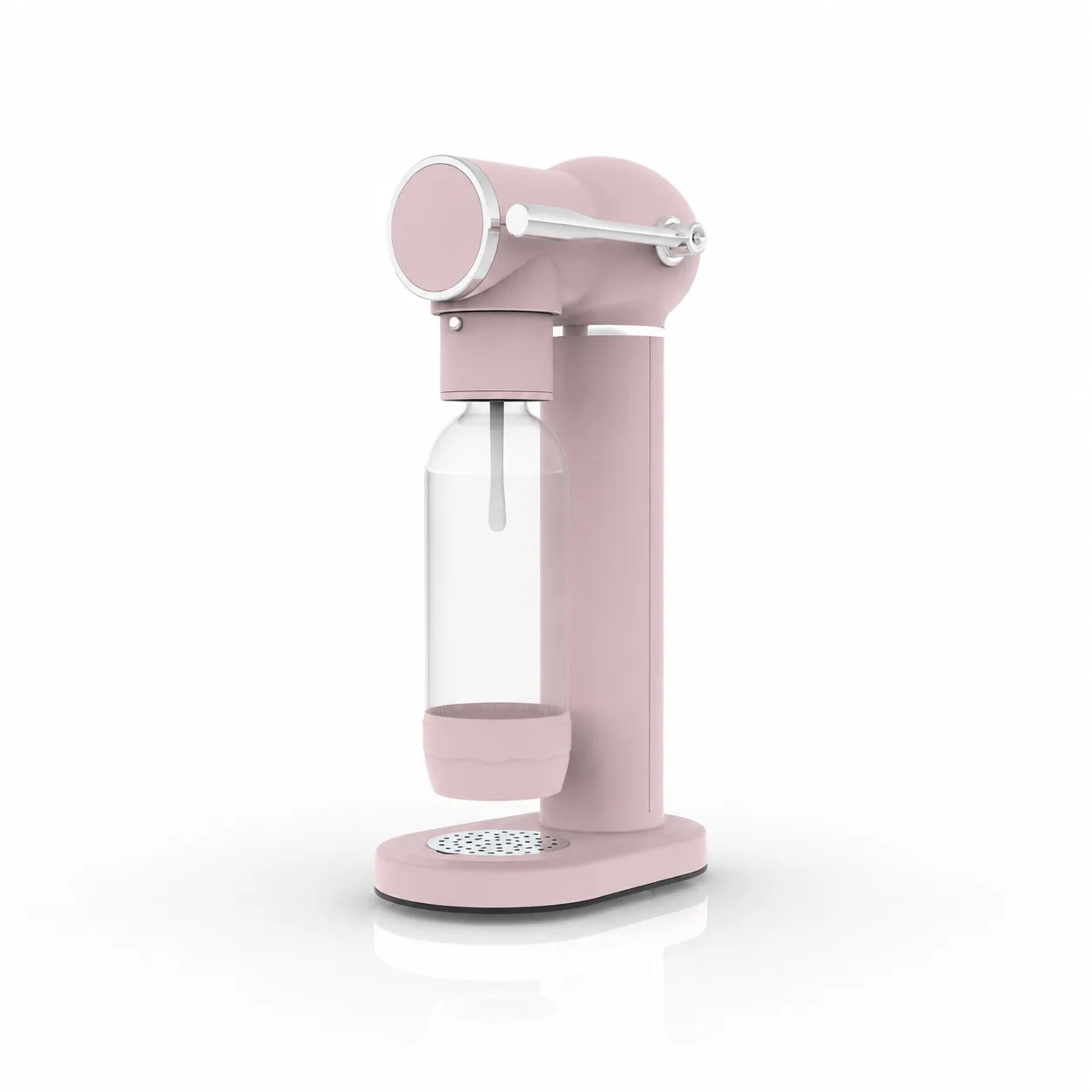
G830 — lever-action carbonator with a removable, washable carbonation component. MOQ 300 units.
The Same Drink, Market by Market
The water in the bottle does not change at the border — the word on the label does. A private-label range sold in several markets usually needs more than one name, even when the machine, the bottle and the fizz are identical.
| Market | What shoppers call home-carbonated water | What the printed term signals |
|---|---|---|
| United States | Seltzer in the Northeast, soda water almost everywhere as a mixer | “Seltzer” reads home-made and unsweetened; “sparkling” reads bottled and premium |
| United Kingdom | Soda water for the mixer bottle; sparkling water for drinking water | “Sparkling” belongs to the bottled-water shelf; “soda” belongs behind the bar |
| Germany and much of the EU | Sparkling water (Sprudelwasser in Germany) usually means carbonated mineral water | “Sparkling” carries a mineral-water expectation, so plain carbonated tap water is often described as home-carbonated instead |
| Australia and New Zealand | Soda water for the small mixer bottle; sparkling for bottled water | Close to UK usage |
The practical point: choose the term per market first, then brief the machine. The name sets the expectation — a US buyer printing “seltzer” is promising a hard, unsweetened fizz, and the carbonation level of the machine has to match it.
How a Soda Maker Produces It
A countertop soda maker injects food-grade CO2 from a refillable cylinder into chilled drinking water inside a pressure-rated bottle. Carbonating one litre of water uses roughly 10 g of CO2. The carbonation level is set by the machine’s valve and the number of carbonation cycles: more dissolved CO2 means finer, longer-lasting bubbles and a sharper taste. Because the drink is made from the buyer’s local water supply, the same machine produces “soda water” in London, “sparkling water” in Los Angeles and “seltzer” in New York — the machine makes carbonated water; the market names it.
Two things decide how the result tastes. The first is the water itself: cold water holds more CO2, so water carbonated straight from the fridge comes out noticeably fizzier than the same water at room temperature. The second is how much gas you put in — a light press gives a gentle sparkle for drinking, while repeated presses build the harder fizz that mixers and US seltzer drinkers expect. Minerals change flavour, not fizz: that is the whole difference between seltzer and club soda, and it is decided by the recipe, not by the machine.
What This Means for Brands and Importers
- Name the product for the shelf, not the factory. Choose the term your retail channel already uses in that country; buyers search and compare using the local term, and your packaging, manual and listings should match it.
- Check the label category before artwork. “Mineral water” is a protected designation in several markets. If your project carbonates filtered municipal water, plan the artwork around “sparkling water” / “soda water” wording and confirm the exact rules with your local compliance contact before printing.
- Taste expectations follow the name. Markets that read “soda” as club soda expect a mineral note; markets that read it as sparkling water expect a clean taste. Flag this in product training material so retailers position the machine correctly.
- One platform covers all four terms. Because the difference is naming and water source — not hardware — a single OEM soda maker platform can serve soda water, sparkling water and seltzer positioning across markets; only packaging and documentation change.
For the production side, see our sparkling water maker OEM platform, the G720 for high-volume plastic-body projects and the G15 stainless steel model for premium retail positioning. Cylinder thread and refill standards by market are covered in the CO2 cylinder compatibility guide.
Before artwork is printed, run through four checks:
- Pick one term per market, and use the same term on the carton, the manual and your web copy — mixed naming is the most common private-label mistake in this category.
- Match the term to the channel: “sparkling” for a bottled-water shelf, “seltzer” for home carbonation in the US, “soda” where the product will sit with mixers.
- Ask your importer to confirm the local food-name rules before printing; what a carbonated water may be called is regulated differently across markets.
- Write the expected fizz level into the product brief, so the machine setting and the printed promise agree.
FAQ
Is soda water the same as sparkling water?
For plain carbonated water, yes — in modern retail use the two names describe the same drink. The preferred term depends on the market: soda water in the UK, Australia and much of Asia; sparkling water in the US and most of the EU.
What is the difference between soda water and club soda?
Club soda has mineral salts added after carbonation, which gives it a slightly savoury taste. Soda water has nothing added — it is water and CO2 only.
Is seltzer different from sparkling water?
Seltzer is sparkling water with no added minerals, traditionally made from filtered water rather than mineral spring water. In practice the finished drinks are the same; the term is mainly used in the US.
Does a soda maker make soda water or sparkling water?
Both — they are the same output. A soda maker carbonates drinking water with food-grade CO2 (about 10 g of CO2 per litre). What the result is called depends on the market the product is sold in, not on the machine.
Which name should a private-label brand print on the box?
The term your target channel already uses: sparkling water for US/EU retail, soda water for UK/AU and HoReCa channels. Confirm local labelling rules — especially around the protected term “mineral water” — before artwork is printed.
Can one OEM model serve markets that use different names?
Yes. The hardware is identical; only the carton, manual and listing copy change. Brands running multi-market programmes typically keep one platform and localise the packaging set per destination.
Is tonic water the same as soda water?
No. Tonic water is a sweetened soft drink flavoured with quinine, bought ready-made as a mixer. Soda water is unsweetened carbonated water — that is what a home soda maker produces, under whichever name your market uses for it.
Planning a Private-Label Carbonated Water Line?
Send your target market, naming direction and estimated volume — we will confirm the model, bottle set and packaging options for that market.
Whichever name goes on the label, the water is carbonated the same way — and the machine behind it should carry documented food-contact testing, as set out on our quality and compliance page.
The bottle you serve it in matters too: our guide to soda maker bottle materials compares PET and stainless steel for taste, durability and branding.