B2B SOURCING GUIDE
Choosing a soda maker supplier is not only a matter of comparing two unit prices. An importer also needs to know who is responsible for the product, whether the sample can be traced into mass production, how the bottle and valve are checked, and what evidence will be available before shipment.
This soda maker supplier audit checklist is designed for importers, distributors, appliance brands, and private-label buyers reviewing a factory for home carbonation systems. It can be used before a quotation, during a remote factory review, or as a checklist before approving a trial order.
Why a soda maker supplier audit matters
A product page can show a finished machine, but it cannot answer every purchasing question. A serious audit looks behind the product photograph. It checks whether the supplier can repeat the same construction, finish, bottle fit, packaging and test standard across a production batch.
For a private-label soda maker project, the risk is usually not limited to one defective unit. A mismatch between the approved sample and the delivered batch can affect retail reviews, distributor confidence, customs documents and the cost of replacement stock. An audit does not remove every risk, but it makes the important risks visible before money and production time are committed.
Verify the factory identity and project responsibility
Start with the legal entity named on the quotation, proforma invoice and export documents. Ask whether the company is the manufacturer, a trading company, or a factory-side sales organization working with a production partner. There is no automatic problem with using a trading company, but the buyer should know who controls engineering changes, inspection and shipment preparation.
Request the factory name, address, business contact, responsible sales person and the department that will approve product changes. The same identity should appear consistently in the quotation, sample records, packing documents and compliance files. Inconsistent names are not proof of fraud, but they are a reason to pause and ask for clarification.
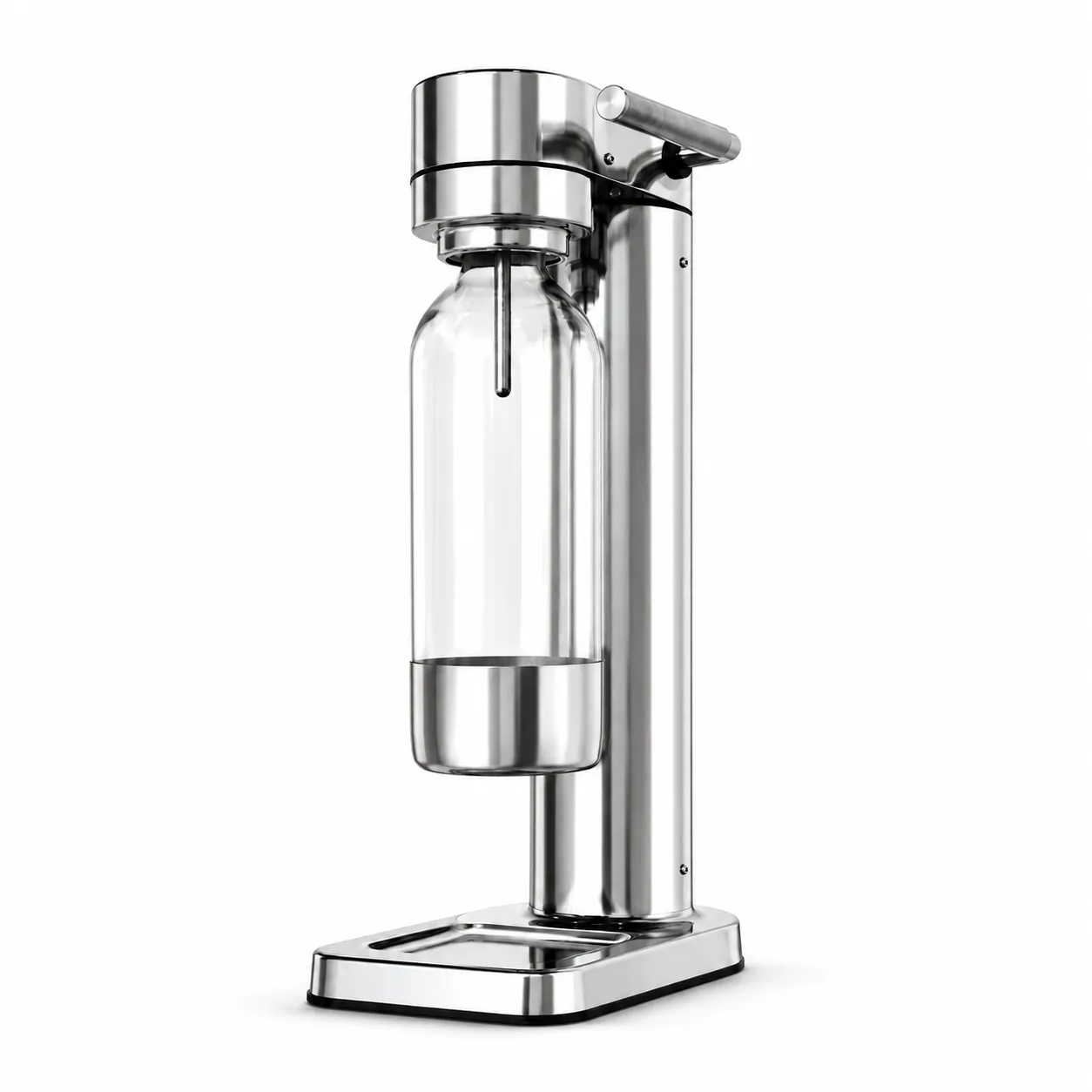
G15 — full 304 stainless steel body, CNC brass valve, double safety valve. MOQ 300 units.
See the G15 →Match the supplier’s claims with production reality
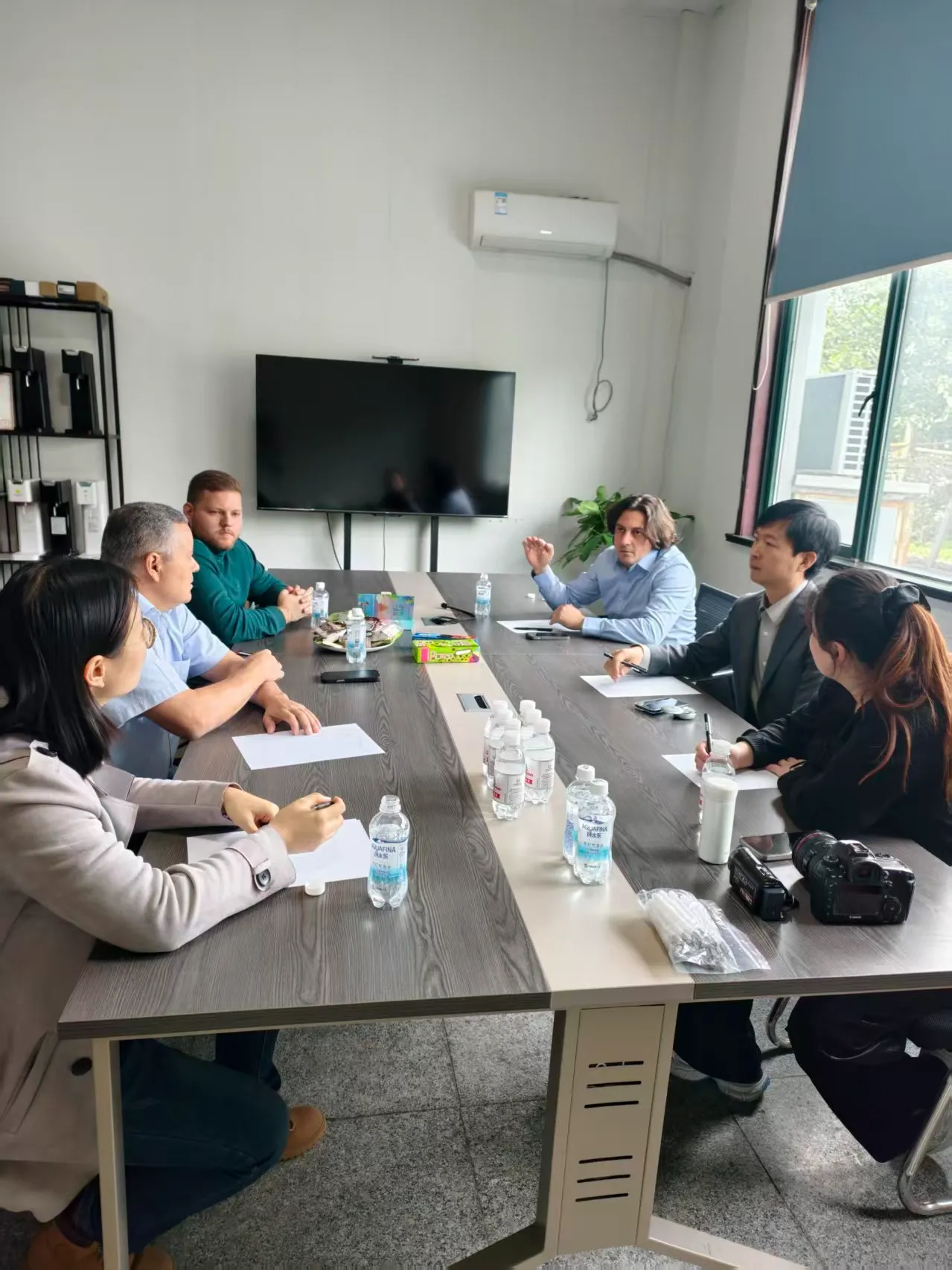
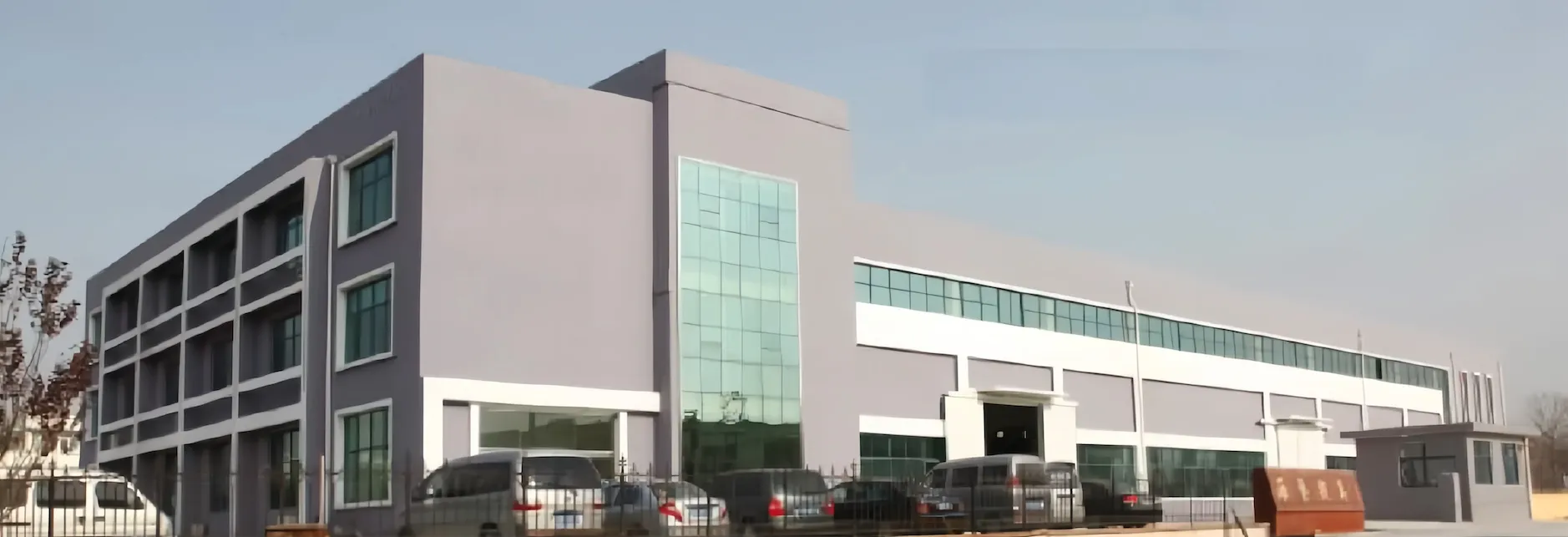
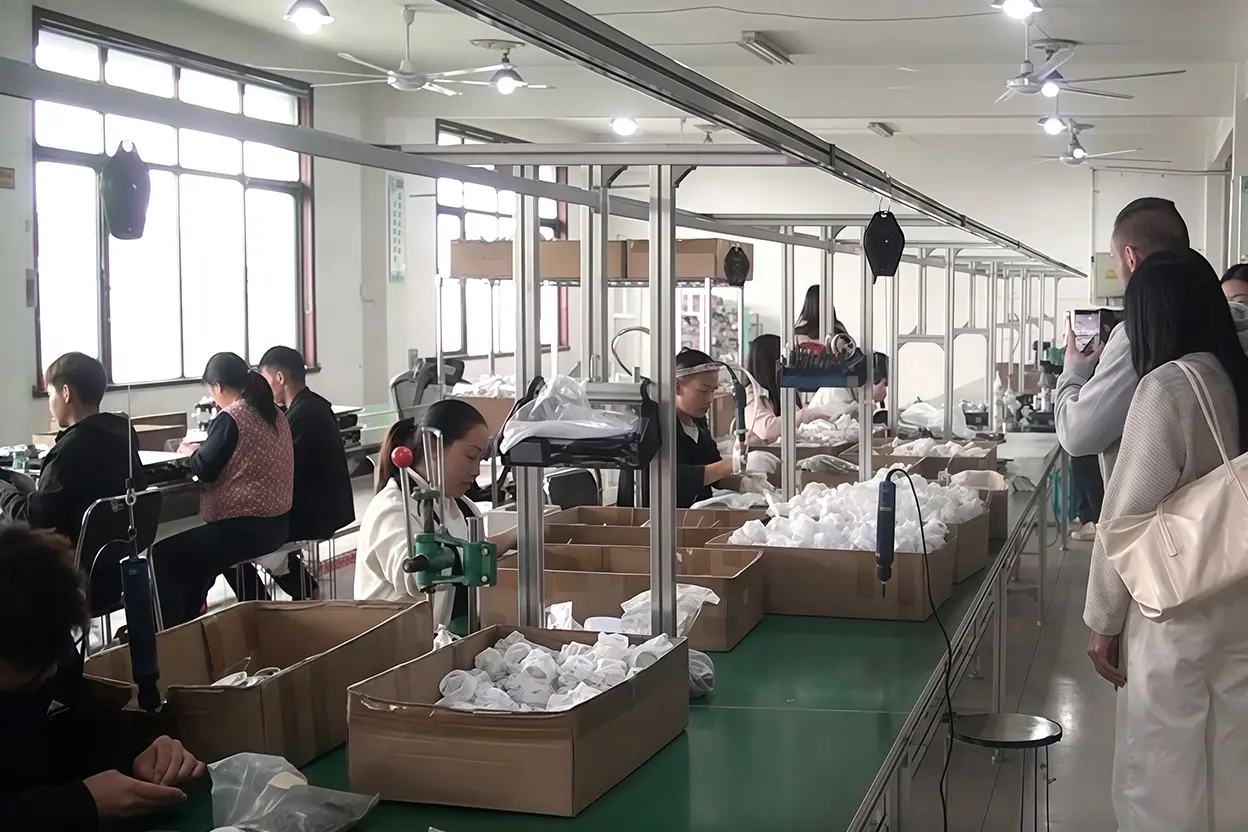
A remote audit can begin with a live video call or a current factory video. Ask the supplier to show the assembly area, component storage, sample area, inspection stations and packing area. A useful video should show the order process rather than only a polished showroom.
Look for details that are difficult to fake with old marketing photographs: current work-in-progress units, the same model discussed in the quotation, operators checking components, test equipment in use, and cartons prepared for shipment. Ask when the video was recorded and whether the displayed model is still available for a new project.
Review the exact model and component structure
“Soda maker” can describe several different structures. Before comparing suppliers, record the exact model, body material, operating method, bottle type, bottle capacity, valve connection, accessory set and packaging format. A plastic manual soda maker, a stainless steel model and an any-beverage carbonator should not be compared as if they were the same product.
Ask for a product specification sheet and a clear list of included components. The list should identify the machine body, carbonating head, valve, bottle, cap, base, user manual and any spare parts. If the project uses a public mold, confirm what can be changed without new tooling. If a private tooling or mold modification is discussed, ask which parts are affected and how the approved sample will be controlled.
| Audit question | Evidence to request | Why it matters |
|---|---|---|
| Which model will be quoted? | Model code, specification sheet and clear product photos | Prevents a lower-cost or different structure from being substituted. |
| What is included in the set? | Component list and packing configuration | Clarifies whether the bottle, cap and accessories are included. |
| Can the supplier repeat the approved sample? | Sample record, BOM or production specification | Creates a reference for bulk production and inspection. |
| What changes are possible? | OEM options matrix and tooling notes | Separates standard branding from engineering work. |
Check sample traceability before bulk production
A sample is useful only when the bulk order can be made to the same approved standard. Ask the supplier to record the model code, color, bottle type, logo position, packaging version and test requirements for the approved sample. Keep the approved photos and documents with the purchase order.
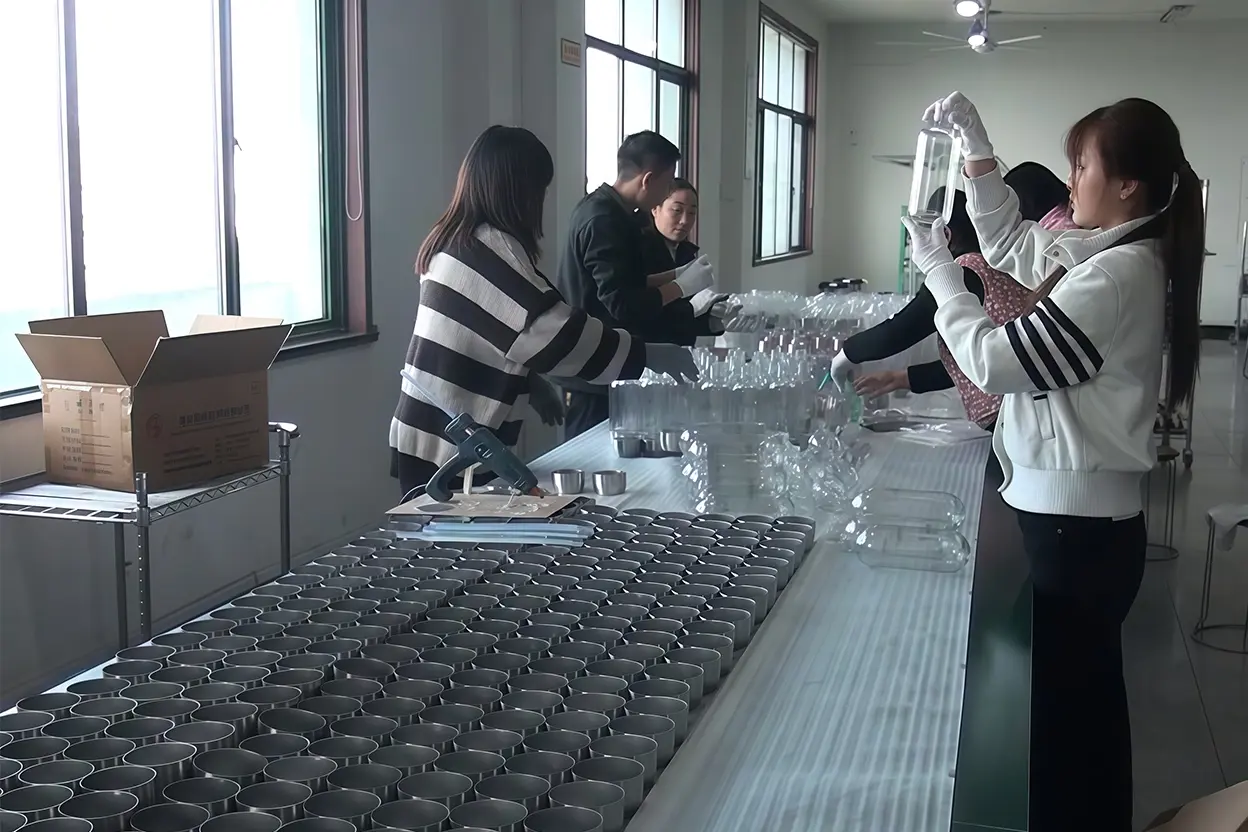
During sample review, check the bottle connection, cap fit, operating feel, carbonation function, body finish and label position. For a stainless steel soda maker, inspect scratches, fingerprints, color consistency and surface protection. For a PET bottle set, confirm the actual 500 ml or 1000 ml capacity required for the project rather than assuming all bottles are interchangeable.
Review food-contact and product documents
Ask which documents apply to the selected model and the destination market. Depending on the configuration, the document package may include material declarations, food-contact test reports, electrical or product safety documents, packaging information and inspection records. The buyer should confirm the actual scope rather than accepting a general statement that every model carries every certificate.
For bottles and water-contact parts, ask what material is used and which test report covers it. For a manual soda maker, review the bottle, cap, valve and contact surfaces together. If the target market is the European Union or the United Kingdom, ask the supplier to explain which CE, RoHS, LFGB or other documents are available for the specific configuration. The documents should match the model and material being purchased.
Review pressure and wet leak testing
Carbonation equipment must be reviewed as a pressure-related product. Ask the factory to explain the test purpose, the test stage, the equipment used and how failed units are handled. “Tested” is not enough information unless the supplier can describe what is tested and when.
Useful questions include: Is the bottle connection checked? Is the valve checked for gas leakage? Is the water path checked for wet leakage? Are pressure-related components inspected before assembly and again after assembly? Are test results recorded by batch or work order?
FACTORY EVIDENCE
Pressure testing before shipment
This video can be used during a supplier review to discuss the purpose of pressure testing, the visible test setup and the type of evidence a buyer can request for a specific order.
Watch on YouTube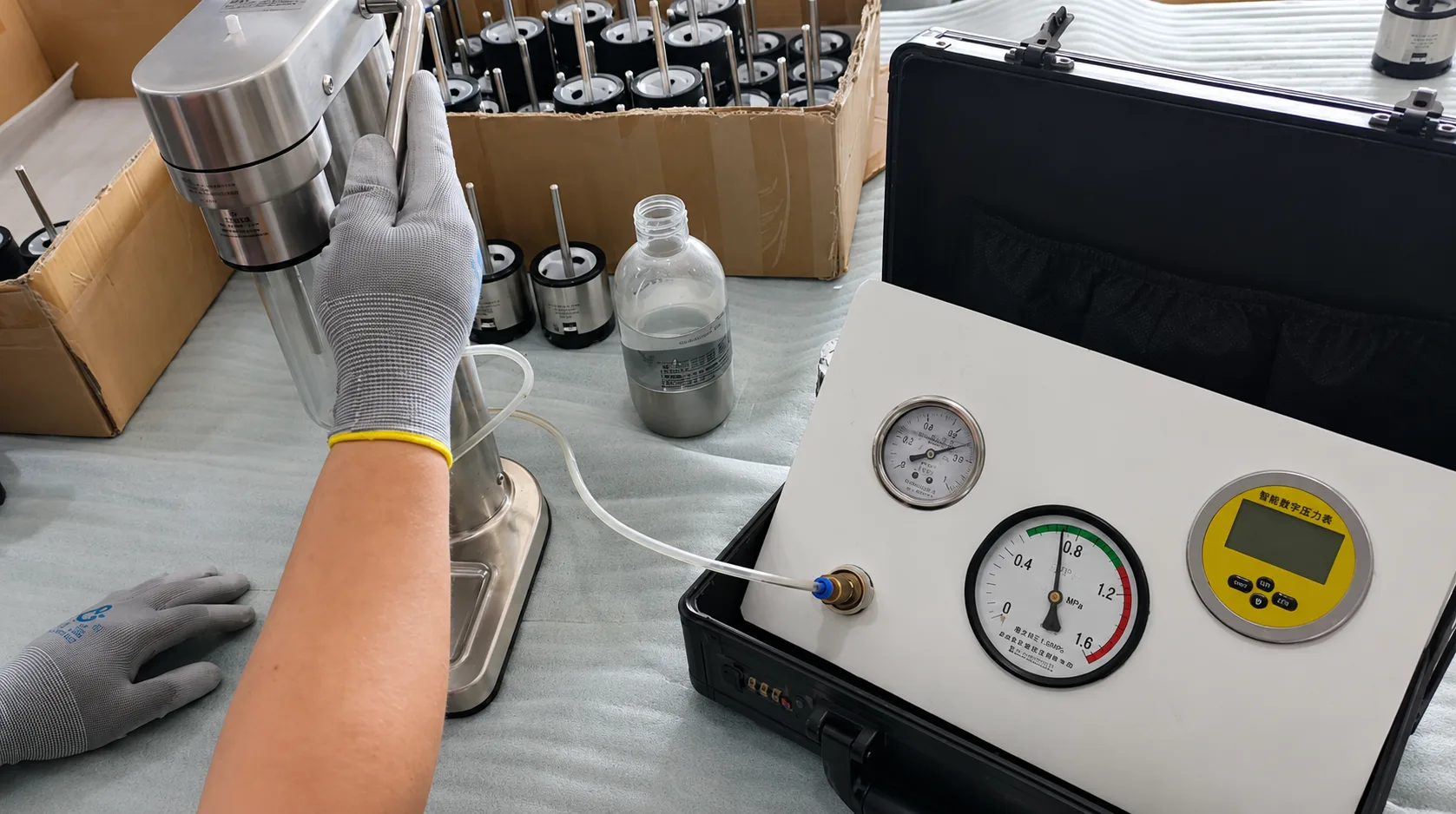
Assess appearance and functional inspection
Appearance inspection is not cosmetic paperwork. Scratches, color differences, poor logo placement, loose parts and uneven gaps can lead to rejected retail stock. Ask for the factory’s inspection points and agree which defects are unacceptable, repairable or acceptable within the approved sample standard.
Functional inspection should cover bottle insertion, bottle locking, button or lever feel, gas release, carbonation operation and cleaning-related parts. Ask whether inspection is performed on every unit, by sampling, or at defined production stations. The answer should be clear enough to include in the purchase and inspection discussion.
Check packaging and export readiness
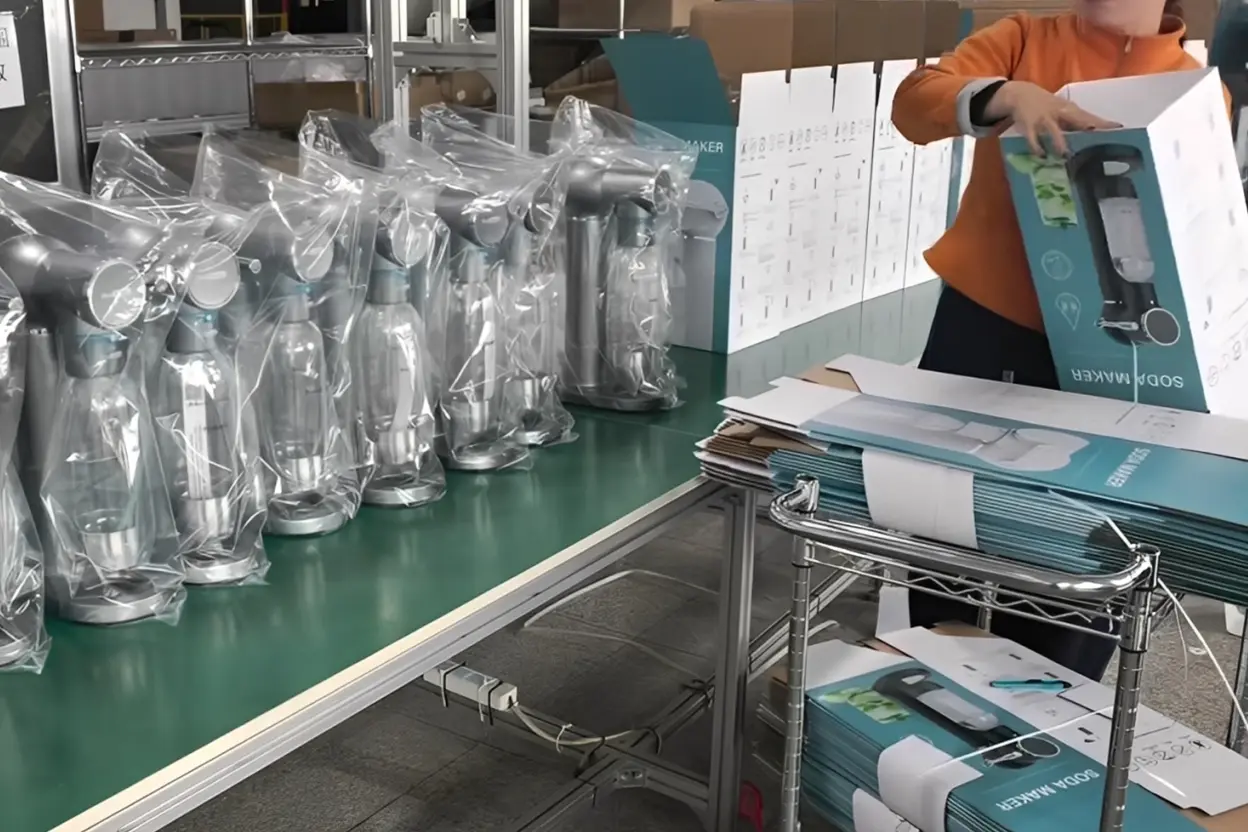
Packaging is part of the product project. A soda maker may pass the factory test and still arrive with scratched metal, crushed retail boxes or missing carton marks. Review the retail box, internal protection, master carton, barcode label, warning text, manual, carton mark and pallet or container loading method.
Ask for carton dimensions, gross weight, net weight, units per carton and loading photos when the order is prepared. These details help the importer estimate freight, warehouse space and delivery risk before placing a bulk order.
Review private-label execution ability
Private label is more than printing a logo on a machine. Confirm the logo method, logo location, color reference, bottle branding, retail box, instruction manual, barcode, carton mark and approval process. Ask which artwork files are needed and who signs off before printing.
For a first order, keep the scope controlled. A standard model with a clear brand treatment, approved packaging and a confirmed bottle set is often easier to manage than changing the structure, color, accessories and packaging at the same time. More customization can be discussed after the supplier demonstrates that the basic project is under control.
Confirm MOQ, payment, lead time and shipment terms
MOQ should be confirmed for the exact model and customization scope. A standard black machine, a special color, a private label box and a modified mold may all have different commercial conditions. Ask whether the MOQ applies per model, per color or per total order.
Confirm the sample price, sample lead time, mass-production lead time, payment schedule, trade term and responsibility for freight. For EXW orders, the buyer normally arranges pickup and export logistics through a forwarder. For FOB or another term, confirm exactly what the supplier includes. Put every agreed point into the quotation or proforma invoice rather than relying on chat messages.
Use a simple 100-point supplier scorecard
| Area | Suggested points | What earns a strong score |
|---|---|---|
| Factory identity and communication | 10 | Consistent legal details, clear responsibility and prompt technical answers. |
| Product and sample control | 15 | Exact model records, component list and a repeatable approval process. |
| Testing and inspection | 20 | Visible pressure, wet leak, appearance and functional checks with defined handling of failures. |
| Materials and compliance | 15 | Documents are matched to the model, bottle and destination market. |
| OEM and packaging execution | 15 | Clear artwork approval, packaging protection and carton information. |
| Production and shipment planning | 15 | Realistic MOQ, lead time, packing data and shipment preparation. |
| Commercial transparency | 10 | Quotation, payment terms and included items are written clearly. |
The score is a discussion tool, not a substitute for an inspection. A supplier with a lower price should not automatically win if it cannot provide the evidence needed to protect the order.
Common red flags during a supplier audit
- The model in the video does not match the model in the quotation.
- The supplier cannot explain who owns the mold or who approves engineering changes.
- Testing is described with broad words but no test stage, object or record.
- The bottle is described as universal without checking the machine connection.
- Certificates are sent without the model, material or market scope being confirmed.
- Packaging is discussed only after production has started.
- The supplier refuses to record the approved sample and artwork version.
- Prices change because the quotation did not state what the set includes.
What to send when requesting a soda maker supplier review
A useful inquiry does not need to be long. Send the target market, estimated quantity, preferred model or use case, bottle capacity, branding requirements, packaging needs, required documents and expected launch date. If you are comparing several models, list them in one message so the supplier can explain the differences without guessing.
Cheersoda’s factory-side team can review model options, sample requirements, bottles, packaging, testing documents and shipment preparation for B2B soda maker projects. Buyers can also review the quality and compliance information, manufacturing capability, OEM case studies and product models before sending a project brief.
SUPPLIER AUDIT FAQ
Soda Maker Supplier Audit Questions
What should I check first when auditing a soda maker supplier?
Start with the exact model, the supplier’s legal and factory identity, and the person responsible for your project. Then confirm the machine structure, bottle set, packaging scope and destination market before comparing prices.
Can I audit a soda maker factory remotely?
Yes. A remote review can include a live factory video call, current production photos, sample records, testing videos, packaging photos and a discussion with the person responsible for quality and shipment preparation. A remote audit does not replace every on-site inspection, but it is useful for screening suppliers.
What documents should I request from a soda maker manufacturer?
Request the specification sheet, component or packing list, model-specific material and food-contact documents where applicable, available safety or compliance files, inspection records and shipment information. The documents should match the selected model and destination market.
How can I make sure the approved sample matches mass production?
Record the model code, body color, logo position, bottle capacity, accessory set, packaging version and inspection requirements in the sample approval record. Keep the approved photos and documents with the purchase order and pre-shipment inspection instructions.
Which tests are important for a home soda maker OEM project?
Common review points include bottle fit, cap and seal condition, wet leak testing, pressure-related checks, carbonation operation, bottle locking, appearance inspection and packing inspection. The exact scope depends on the selected model and project requirements.
Do low MOQ orders need a supplier audit?
Yes, but the audit can be scaled to the order size. For a small market test, focus on model identity, sample traceability, bottle compatibility, packaging, documents, payment terms and the inspection plan. A small order still needs clear evidence because the buyer is testing the supplier as well as the product.
What information should I send before requesting an audit or quotation?
Send your target country, estimated quantity, preferred model, bottle capacity, logo and packaging requirements, required compliance documents, expected launch date and trade term. This allows the supplier to prepare a project-specific review instead of sending a generic catalog.
READY FOR A FACTORY REVIEW?
Send the model, market and quantity you are considering.
We can organize the next discussion around sample approval, testing evidence, packaging and the documents required for your destination market.
Related guides: our Qingdao factory and how to choose a soda maker manufacturer.