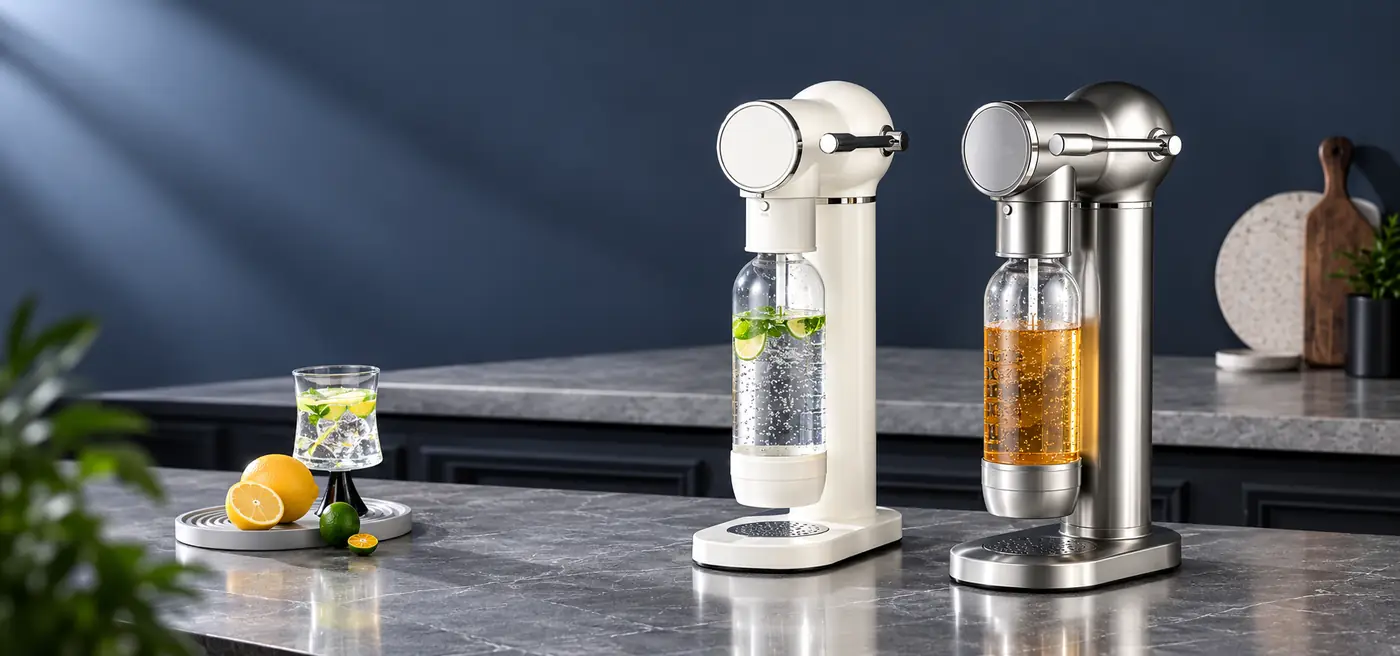
When sourcing soda makers from a manufacturer, one of the first decisions you’ll face is whether to go OEM or ODM. The choice affects everything downstream: your development timeline, unit cost, minimum order quantity, and who owns the product design. Get it wrong, and you either overpay for customization you don’t need — or end up with a product that looks exactly like your competitor’s.
This guide breaks down both models in the context of soda maker manufacturing, with real numbers from factory practice, so you can choose with confidence.
What Is OEM in Soda Maker Manufacturing?
OEM (Original Equipment Manufacturing) means you bring the design — or at least the detailed specifications — and the factory manufactures to your blueprint.
In practice, OEM for soda makers typically looks like this:
- You define the housing shape, dimensions, color scheme, lever or button mechanism, bottle capacity, and branding placement.
- You supply 3D files, technical drawings, or a reference sample with a modification list.
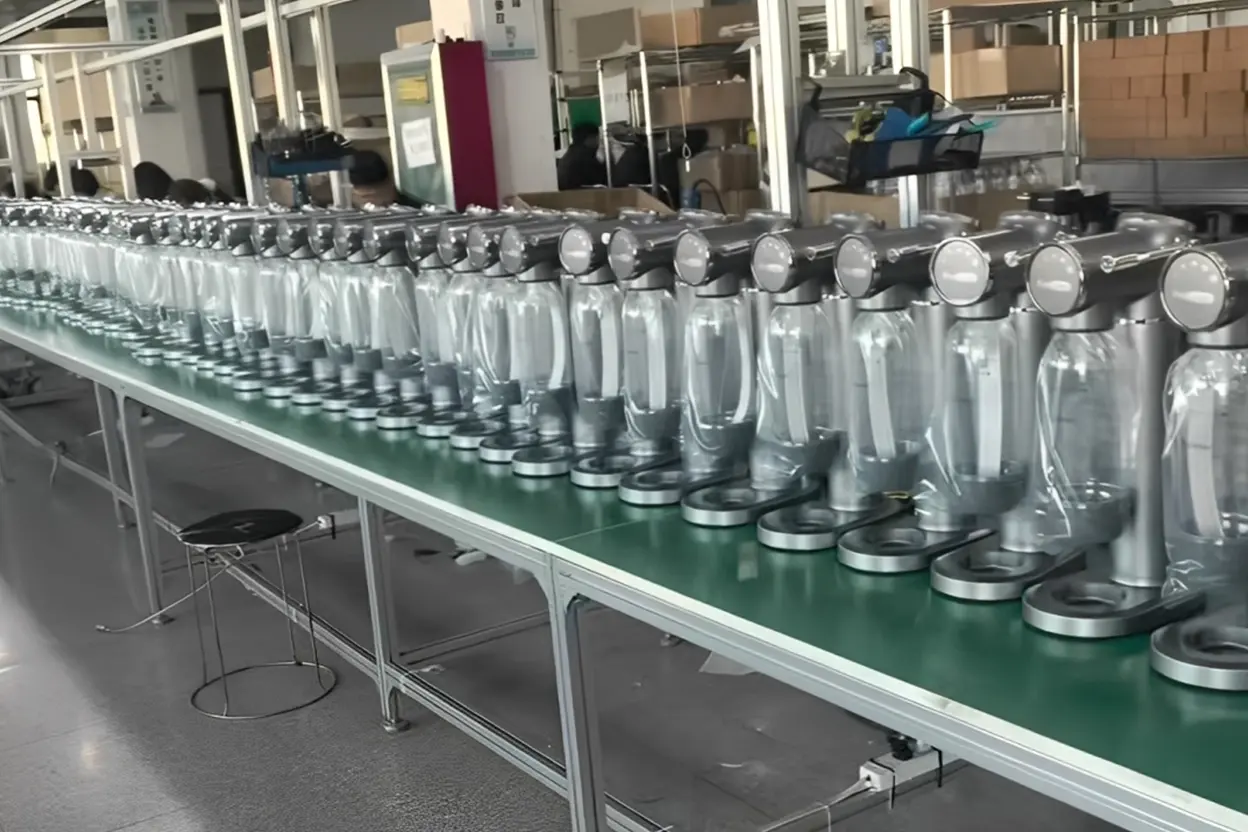
- The factory handles tooling (injection molds, metal stamping dies), sources components to your spec, assembles, tests, and packs under your brand.
OEM is the right call when you have a differentiated product concept — for example, a soda maker with a proprietary pressure-release mechanism, a unique industrial design that sets your Amazon listing apart, or dimensions tailored to a specific retailer’s shelf requirements.
The trade-off: OEM requires tooling investment and longer development. New molds for a soda maker housing typically take 30–45 days to cut and validate before mass production begins. That’s on top of the standard production lead time.
What Is ODM in Soda Maker Manufacturing?
ODM (Original Design Manufacturing) means the factory provides a proven, existing design — and you customize it with your branding, colors, packaging, and selected modifications.
In practice, ODM for soda makers typically looks like this:
- The factory offers a catalog of tested models (for example, a lever-operated carbonator, a stainless-steel premium variant, a compact countertop unit).
- You choose a base model, then specify your logo placement, custom colors, private-label packaging, and minor tweaks (e.g., bottle shape, language on the manual).
- The factory produces the customized version — no new tooling required for the core product.
ODM is the right call when speed to market matters more than design exclusivity. The product has already passed wet-leak testing, pressure validation, and compliance checks. You’re essentially private-labeling a proven platform.
The trade-off: other buyers may source the same base model. Your differentiation comes from branding, bundle strategy, channel execution, and service — not from the product’s core design.
Browse our current soda maker models to see what an ODM starting point looks like.
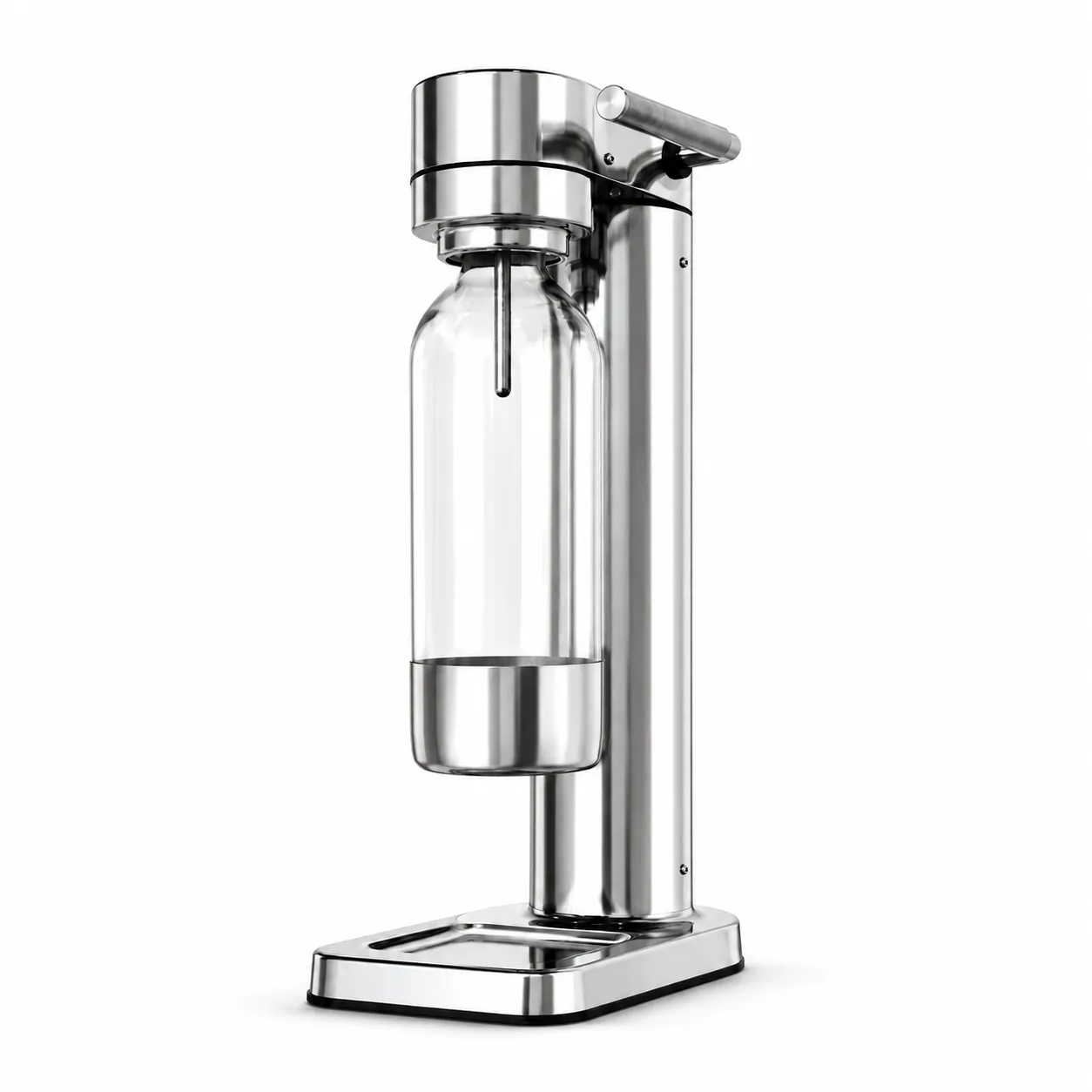
G15 — full 304 stainless steel body, CNC brass valve, double safety valve. MOQ 300 units.
OEM vs ODM: Key Differences at a Glance
| Factor | OEM | ODM |
|---|---|---|
| Design ownership | Buyer — you own the design and tooling | Factory — you license the design for your brand |
| Tooling investment | Required (new molds/dies); cost varies by complexity | None for the base model |
| Development timeline | Longer — tooling (30–45 days) + sampling + production | Shorter — sampling in ~7 days, then straight to production |
| Typical MOQ | Often higher, driven by tooling amortization (300+ units) | Standard MOQ applies (300 units) |
| Unit cost | Higher at low volumes; drops as tooling cost spreads | Lower entry cost; economies of scale from shared platform |
| Customization depth | Full — shape, mechanism, materials, features | Surface-level — colors, logo, packaging, minor tweaks |
| Product exclusivity | High — your design, your tooling | Shared platform — differentiation via brand and channel |
| IP protection | Stronger — design registered to you; NDA + tooling ownership | Weaker — base design remains factory’s; protect your branding |
| Best for | Brands with a differentiated concept and volume to justify tooling | Brands prioritizing speed, lower upfront cost, and proven reliability |
The Reality: Most Projects Live in Between
Here’s something most guides won’t tell you: pure OEM is rare in the soda maker industry, and pure ODM is more common than most buyers admit.
Pure OEM — where you design a product from scratch, pay for the complete tooling set, and own 100% of the IP — has a high barrier. A full mold set for a soda maker is a serious investment, and the design work requires real engineering capability on your side. Most buyers, even experienced ones, don’t go this route for their first product.
Pure ODM — picking a catalog model, putting your logo on it, changing nothing else — is the most common starting point. If you didn’t pay any mold fees, you’re almost certainly in ODM territory, even if the paperwork says “OEM.”
The middle ground is where most real projects live. A buyer takes an existing model and requests modifications: a custom color, a tweaked button shape, a repositioned logo, a different bottle. The factory cuts a new mold (or modifies an existing one) for the changed part, and the buyer pays for that mold work.
Here’s the part that matters: in these hybrid projects, IP ownership is split. The customer owns the rights to the specific modification they paid for — but the core design, the underlying platform, still belongs to the factory. Paying for a modified front panel doesn’t give you ownership of the entire machine.
This isn’t a trick — it’s just how the economics work. A full custom design costs an order of magnitude more than a targeted modification. Most buyers are making a rational trade: pay for the visible differentiation that matters in their market, and let the factory’s proven platform handle everything else.
What this means for you as a buyer:
- Be honest about what you’re actually buying. If you haven’t paid for full tooling, don’t assume you own the design. Ask the factory directly: “Which parts of this product’s IP belong to me?”
- Get the split in writing. For hybrid projects, your manufacturing agreement should specify exactly which molds and design elements are customer-owned versus factory-owned. This avoids disputes if you ever switch factories.
- The middle ground is not a compromise — it’s often the smartest play. You get meaningful differentiation (your color, your branding, your tweaks) without the full cost and risk of ground-up development. Many of our most successful long-term customers started exactly this way.
The textbook definitions of OEM and ODM are useful starting points. But the factory-floor reality is messier, more practical — and, once you understand it, more favorable to smart buyers than the textbooks suggest.
Which Model Fits Your Situation?
Choose OEM if you are…
- An established brand with a clear product vision — e.g., a beverage company launching a co-branded soda maker with unique ergonomics for the hospitality channel.
- A retailer with private-label ambitions — you need dimensions, colors, or features that match your store brand’s design language and can’t be achieved with a catalog model.
- Planning significant volume — at 5,000+ units per order, tooling cost per unit becomes negligible, and design exclusivity protects your margin.
Choose ODM if you are…
- An Amazon seller testing the category — you need a reliable, compliant product fast. ODM gets you to market in weeks, not months, with a proven design with existing food-contact test reports (FDA, LFGB, RoHS).
- A distributor or importer — your edge is logistics, relationships, and local service. A proven ODM platform with your branding is the fastest path to revenue.
- A startup brand — keep upfront investment low, validate demand with 300 units, then consider OEM for your second-generation product once you have sales data.
The hybrid path most buyers actually take
In practice, many successful buyers start with ODM for speed, then move to OEM for differentiation once the product line proves itself. There’s no rule that says you must pick one forever. A common sequence: launch with an ODM model (300-unit MOQ, 7-day samples) → gather market feedback → invest in OEM tooling for a Gen-2 product with custom features.
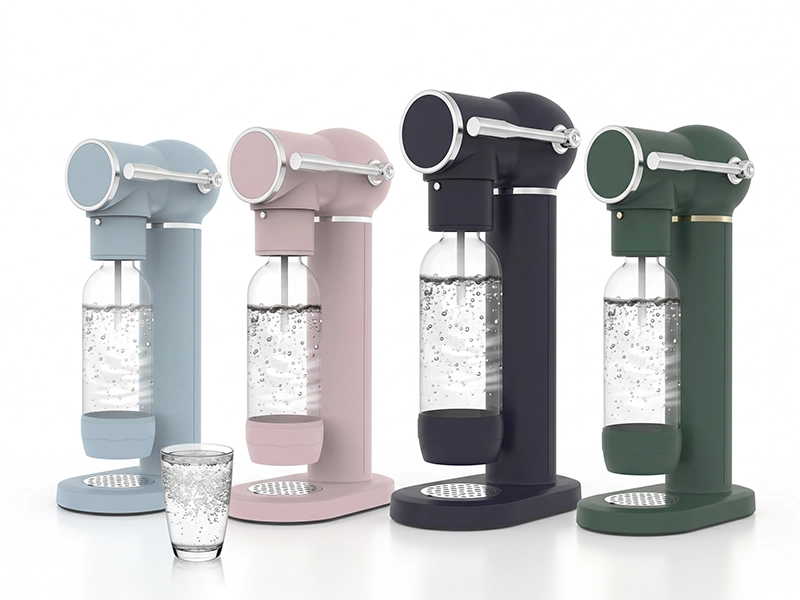
What Cheersoda Offers: Both OEM and ODM
We support both models from our Qingdao factory (15,500 m², ISO 9001). Here’s what that means in concrete terms:
- ODM: Choose from our proven model lineup — including the lever-operated G720, stainless-steel G15, and washable-head G830. Customize colors, logo, packaging, and manuals. MOQ 300 units. Samples in ~7 days. First order in 35–45 days, reorders in 30 days.
- OEM: Bring your design files or a detailed spec sheet. We handle tooling, component sourcing, assembly, and testing. Same quality system applies: 100% wet-leak testing on every unit, batch burst testing, and food-contact material test reports (FDA, LFGB, RoHS) available for project review.
- Commercial terms (both models): T/T with 30% deposit, 1-year warranty, spare parts supply (valves, PET bottles, seals).
Not sure which path fits? Our OEM/ODM manufacturing page walks through the process step by step, or contact our team with your project specs for a recommendation.
Decision Checklist: OEM or ODM?
Run through these five questions before you commit:
- Do I have a design that doesn’t exist in any factory catalog? Yes → lean OEM. No → ODM is faster and cheaper.
- Can I justify tooling cost? Divide the estimated tooling investment by your first-year volume. If the per-unit adder is acceptable within your margin, OEM is viable.
- How fast must I launch? Under 60 days → ODM. You can be selling while an OEM design is still in tooling.
- How important is design exclusivity in my channel? Amazon (high copycat risk) → OEM gives you a defensible listing. Distributor/retail with strong relationships → ODM is often enough.
- What does my compliance burden look like? ODM models ship with existing test reports and certificates. OEM designs need fresh compliance validation — budget time and cost for it.
If you answered “ODM” to most of the above, start there. You can always evolve to OEM once volume justifies it.
On both routes, the compliance file should be agreed before tooling or branding starts; our quality and compliance page shows which reports can be put on the table.
Frequently Asked Questions
Can I switch from ODM to OEM later with the same factory?
Yes — and it’s the most common progression we see. Start with an ODM model to validate demand at 300 units, then invest in OEM tooling for a differentiated Gen-2 product. Staying with one factory preserves your quality history, compliance records, and commercial relationship.
Does ODM mean my competitors can buy the exact same soda maker?
They can buy the same base platform, but not your branded version. Your logo, colors, packaging, bundle (e.g., extra CO₂ cylinder, custom bottle), and channel strategy are yours. In practice, execution differentiates more than the base housing — especially in B2B channels.
Who owns the molds in an OEM project?
You do — provided that’s agreed in writing before tooling begins. At Cheersoda, tooling ownership follows the tooling scope: if you pay the full mold fee for a model, that mold is yours exclusively; if your project modifies one of our public molds, the modified parts belong to you and the unchanged parts remain ours. We maintain and store the tooling for your production runs. Make sure tooling ownership, maintenance responsibility, and what happens to molds if the relationship ends are all in your manufacturing agreement.
How do compliance certificates work for ODM vs OEM?
ODM models come with existing food-contact material test reports (FDA, LFGB, RoHS) covering the base design — your branding change doesn’t invalidate them. OEM designs with structural or material changes need fresh testing for the modified aspects. We share the available reports for project review either way; the difference is timeline, not availability.
What if I only need 300 units — is OEM still possible?
Technically yes, but the economics rarely work. Tooling cost spread over 300 units makes the per-unit price hard to justify. At 300 units, ODM is almost always the smarter choice. Consider OEM once you’re planning 2,000+ units per order or have a multi-year volume commitment.
Ready to Start Your OEM/ODM Project?
Tell us about your soda maker project — target model, quantity, and timeline. We’ll reply with a tailored OEM/ODM recommendation and factory pricing within 24 hours.
Related guides: OEM lead time guide.