
OEM Buyer Guide · Soda Maker Bottles
Choosing the right bottle material affects carbonation safety, shelf appeal, shipping cost and repeat-order service. This guide helps importers, distributors and private-label brands compare the practical options before approving a sample.
Which soda maker bottle material is best?
For most home carbonation programs, PET is the practical starting point because it is light, economical and efficient to pack. 304 stainless steel supports a heavier, durable premium position when the machine interface and pressure-use design are confirmed. Glass and Tritan or other copolyesters are useful comparison materials, but they are not part of Cheersoda’s standard confirmed bottle supply range.
PET, 304 stainless steel, glass and Tritan bottle comparison
PET bottles
PET is lightweight, cost-efficient and familiar to consumers. It suits starter bundles, distributor replacement stock and private-label programs that need efficient export packing.
- Low weight and efficient carton planning
- Suitable for labels, printing and color discussion
- Confirm resin documents and intended pressure use
- Define cleaning, temperature and replacement guidance
304 stainless steel bottles
304 stainless steel supports a durable premium position. The specification must cover the complete structure, internal contact surface, neck assembly, finish and cleaning method.
- Durable premium appearance
- Higher unit and freight weight than PET
- Confirm grade, construction and material records
- Protect the finish with suitable packing inserts
Glass bottles
Glass can provide a rigid premium presentation, but it adds breakage risk, weight and stricter transport protection. Cheersoda does not treat glass as a standard bottle supply option.
- High visual clarity and rigid feel
- Greater breakage and handling risk
- Requires a machine designed for the bottle
- Needs dedicated carton and transport evaluation
Tritan or copolyester bottles
Tritan and other copolyesters can offer a clear premium look, but the exact resin, pressure-use evidence, cleaning limits and cost must be evaluated separately. They are not standard Cheersoda supply options.
- Clear premium presentation
- Separate resin and food-contact documentation
- Not a drop-in substitute for PET
- Requires its own sample and test approval
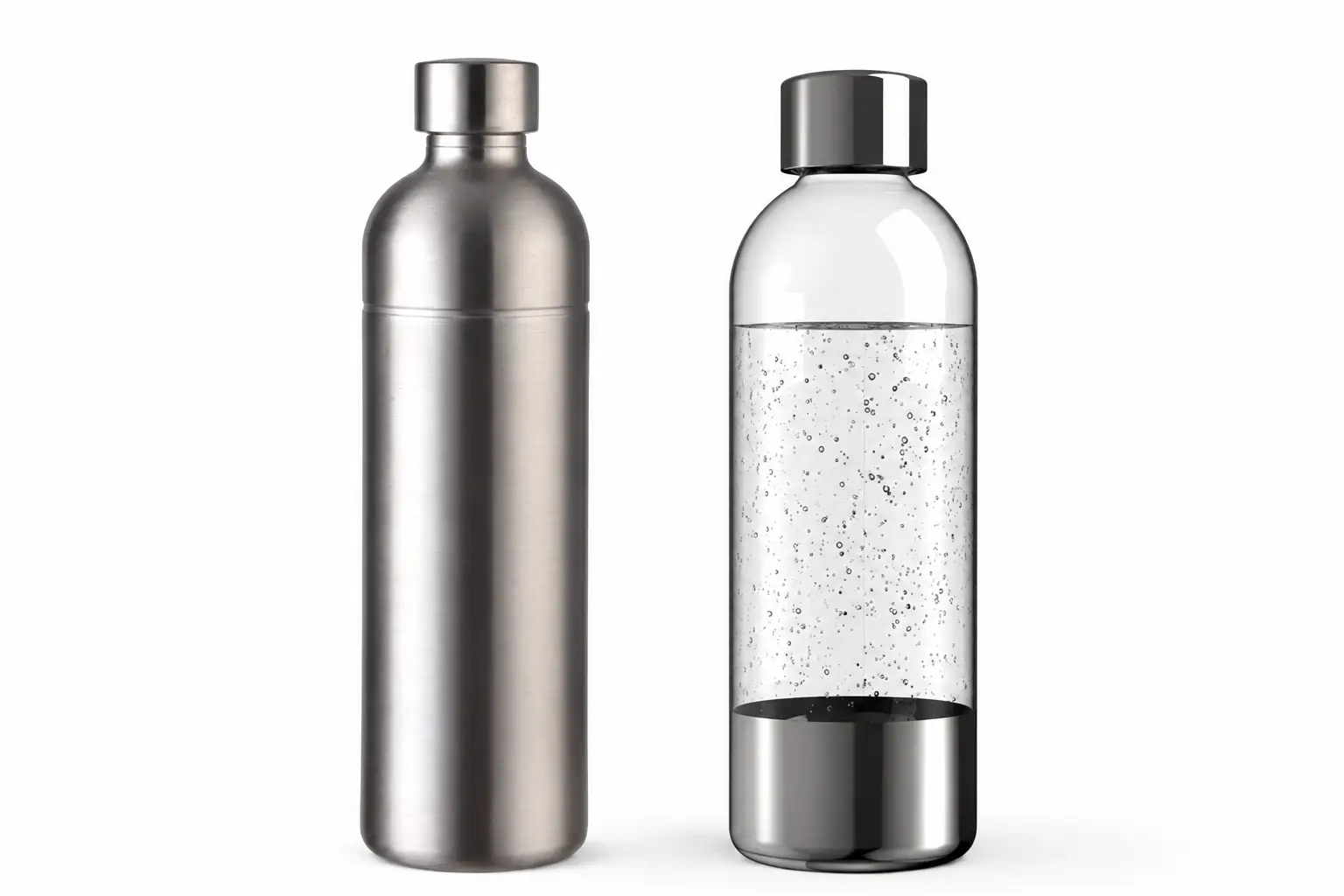
PET and stainless steel bottles in 500 ml and 1 L — BPA-free PET with food-contact test reports available.
See the Bottles →What changes when the bottle material changes?
| Decision factor | PET | 304 stainless steel | Glass | Tritan / copolyester |
|---|---|---|---|---|
| Role on this site | Standard supply focus | Standard premium option | Comparison only | Comparison only |
| Typical positioning | Value, volume and replacement stock | Durable premium reuse | Premium rigid presentation | Clear premium presentation |
| Shipping impact | Lowest weight | Higher weight | Highest breakage concern | Depends on design and pack |
| Packaging focus | Deformation and surface protection | Finish and dent protection | Breakage isolation | Scratch and deformation protection |
| Buyer must confirm | Resin, interface, test plan and service guidance | Grade, construction, interface and test plan | Machine design and transport protection | Resin documents, interface and pressure evidence |
How to choose a bottle for your market
- Define the use case. Decide whether the bottle is for daily home use, a starter kit, distributor replacement stock or a premium gift bundle.
- Match the soda maker. Confirm bottle thread, neck dimensions, fill level, carbonation pressure and safe pressure-release instructions.
- Set the service expectation. Decide how customers will clean, store and replace the bottle, then reflect that in the manual and packaging.
- Test the packed unit. Review drop protection, carton strength, bottle movement and label or print durability before mass production.
- Record the approved version. Save material, supplier, cap, thread, artwork, carton and inspection details for repeat orders.
OEM bottle specification checklist
Send these details
- Target soda maker model and bottle quantity
- Preferred PET or 304 stainless steel option; note any comparison request separately
- Neck, thread and cap requirements
- Target market and compliance documents
Request these proofs
- Material declaration and food-contact documents
- Pressure and leak test method
- Sample photos with dimensions
- Packing test and carton configuration
For a model-specific recommendation, compare this guide with the soda maker bottles and accessories page, the quality and compliance guide, and the private-label packaging guide.
Factory sourcing note
Approve the bottle before you approve the carton
A bottle that looks right in a photo can still fail at the thread, pressure, cap or packed-drop stage. Ask for a matched sample set and keep the approved specification with your purchase order.
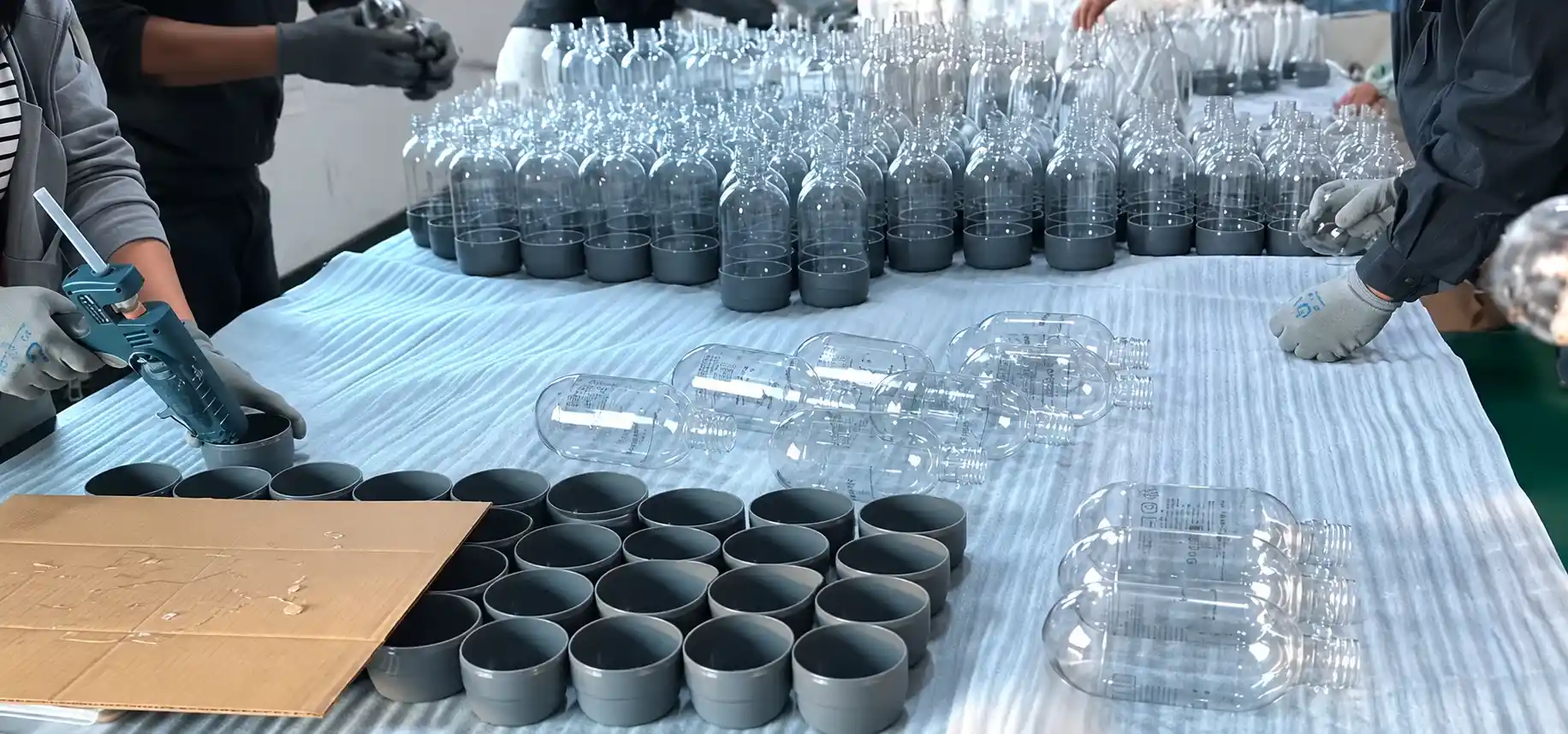
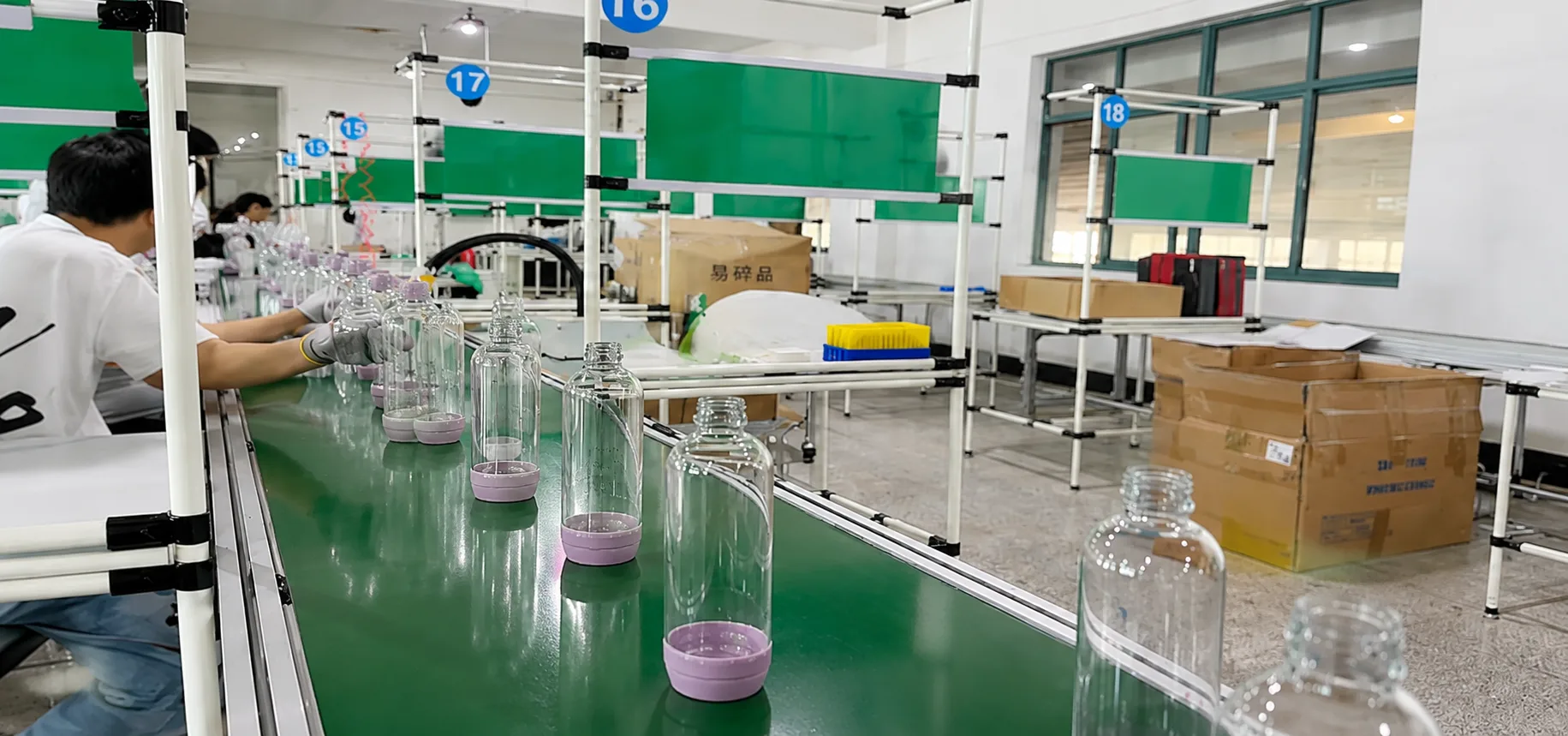
PET Bottle Base UV Glue Assembly
This factory video shows the bottle-base UV glue assembly process, including bonding consistency, base alignment and production-side quality control.
For an OEM order, confirm the adhesive system, curing process, base alignment tolerance and inspection standard before mass production.
Threaded and quick-connect bottle necks: what changes in a real project?
The installation interface determines whether a bottle can be used safely with a machine. A threaded neck relies on matching thread geometry and controlled screw-in depth. A quick-connect or claw-lock neck relies on collar shape, insertion depth and the machine locking mechanism. These systems are not interchangeable simply because the bottle capacity looks similar.
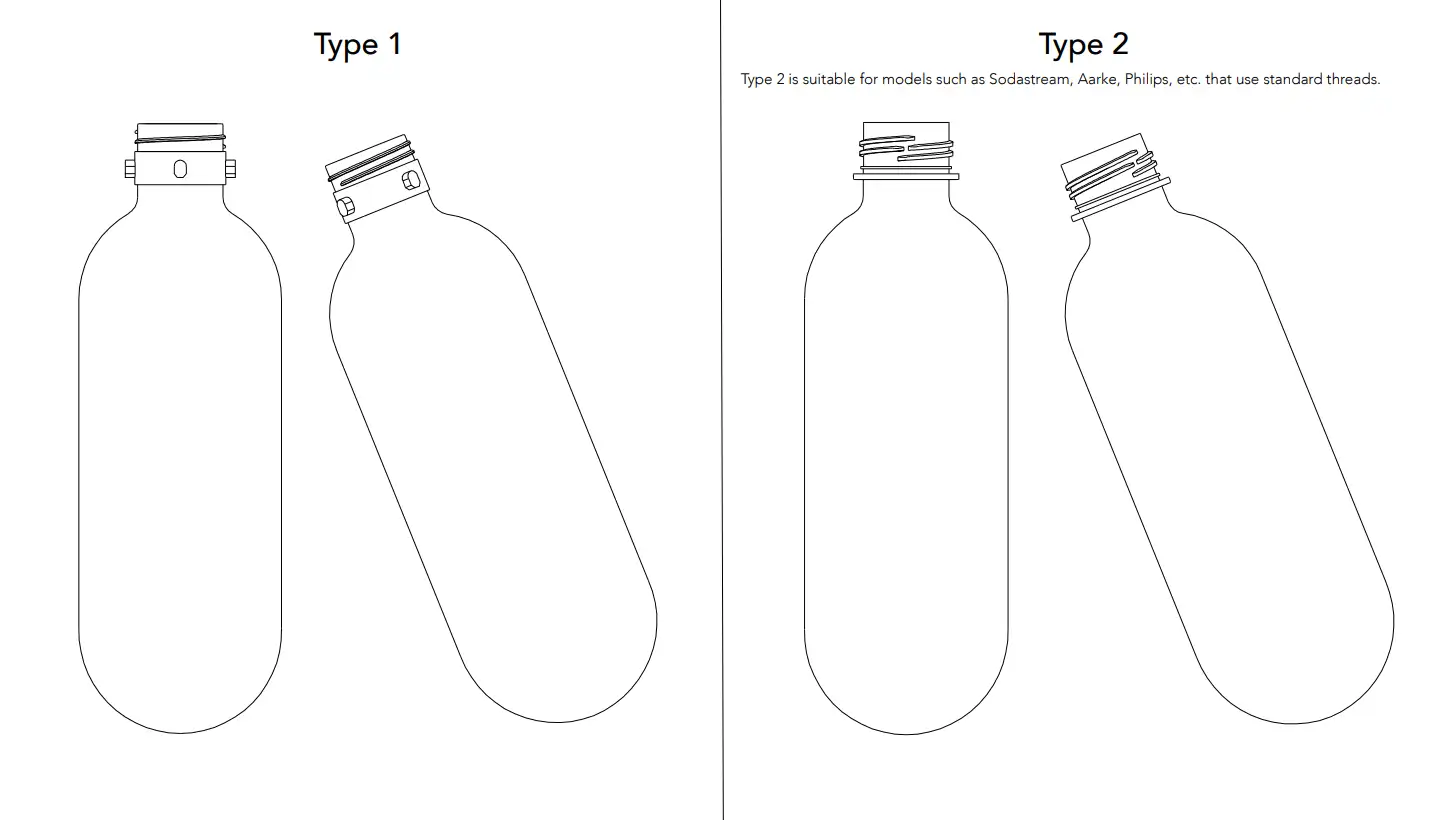
Threaded neck
- Confirm thread profile, pitch and start position.
- Check gasket compression and sealing surface.
- Record the stop position and removal direction.
- Verify repeated installation does not damage the neck.
Quick-connect or claw-lock neck
- Confirm collar diameter and claw engagement.
- Check insertion depth and locking rotation.
- Verify the release action before bottle removal.
- Test the interface after repeated cycles.
Where glass and Tritan fit in the comparison
Glass can offer a premium visual impression, but it introduces breakage risk, higher package weight and stricter transport protection. It should be considered only when the machine, carton and market handling conditions are designed for it.
Tritan or other copolyester bottles can provide a clear premium look, but they require their own resin documentation, pressure-use evidence, cleaning instructions and cost review. They should not be treated as a drop-in replacement for PET.
| Material | Potential advantage | Main project concern |
|---|---|---|
| PET | Lightweight, economical and efficient to ship | Confirm pressure use, service life and cleaning limits |
| 304 stainless steel | Durable, premium and reusable | Higher weight, finish protection and packaging cost |
| Glass | Premium appearance and rigid feel | Breakage, weight and transport protection |
| Tritan or copolyester | Clear premium appearance | Resin documentation, pressure evidence and cost |
If you are still deciding between the two materials at machine level, our stainless steel vs plastic soda maker comparison weighs the same trade-offs for the machine body.
For the machine side of the stainless story, our stainless steel soda maker page collects the metal models that pair with these bottles.
Frequently Asked Questions About Soda Maker Bottles
Which bottle materials do you supply?
Our main supply options are food-contact PET and 304 stainless steel. Glass, Tritan and other materials can be discussed for comparison, but they are not part of the standard confirmed bottle supply range.
What is the difference between a threaded and a quick-connect bottle?
A threaded bottle screws into the machine through a matched neck thread. A quick-connect or claw-lock bottle uses a collar and locking structure. The neck geometry, installation motion and removal procedure are different.
Can one bottle fit several major soda maker brands?
Only when the exact models share a compatible interface and the bottle passes fit, sealing and pressure checks. Brand names alone are not enough to confirm compatibility.
Is PET suitable for private-label soda maker projects?
Yes. PET is often selected for lightweight retail bundles, distributor stock and cost-controlled shipping. The final bottle must still be approved for the machine and intended carbonation use.
When should I choose 304 stainless steel?
304 stainless steel is suitable when the brand needs a durable, premium reusable bottle position and can accept higher weight, stronger packaging and a different freight calculation.
Do you supply glass soda maker bottles?
Glass is not part of the standard supply focus. It adds breakage and transport risk, so it requires a separate engineering, packaging and market-handling review.
Do you supply Tritan bottles?
Tritan or other copolyester bottles are discussed as alternative materials, but they require separate resin documentation, pressure-use evidence and cost confirmation. They are not treated as a direct PET replacement.
What should be checked on a PET bottle base?
Check base alignment, bonding consistency, curing condition, dimensional stability, surface finish and the connection between the bottle body and base component.
What evidence should an importer request before mass production?
Request a matched sample, technical drawing, material documents, installation instructions, leak and pressure test records, packaging details and the approved revision record.
Can you add private-label branding to the bottle?
Logo printing, labels, color details and packaging can be reviewed after the bottle material, machine interface and sample configuration are confirmed.
What information is needed for a compatibility review?
Send the target machine brand and model, bottle photos, neck or claw dimensions, installation video or drawing, target market, quantity and preferred PET or 304 stainless steel option.
How should replacement bottles be recorded for repeat orders?
Keep the approved material, bottle capacity, interface type, cap, seal, artwork, carton, test method and revision number with the purchase order so replacement batches follow the same specification.