Brazil distributor meeting for a private label soda maker OEM project
Brazil OEM Project Case Study

Brazil Private Label Soda Maker Case Study: 1,000-Unit Distributor Project

How a Brazilian distributor moved from factory evaluation to a 1,000-unit private label order with two established soda maker lines, retail packaging, and documented factory checks.

Market Brazil & South America
Project Type Private Label Distributor Order
Order Quantity 1,000 Units
Production Window Approx. 25-30 Days

Verified Project Facts

The details below describe the order shown in the production and packing photographs on this page. Shipment status is stated as of this case update and will be revised after dispatch evidence is available.

Buyer profileBrazilian distributor with previous experience in hardware and mechanical equipment.
Destination marketBrazil, with a South American distribution focus.
Current batch1,000 private label soda makers.
Product lines shownG720 and G15 Pro standard-model production.
Customization scopeCustomer branding, retail packaging, Portuguese product documents and barcode preparation.
Factory evidenceAssembly, appearance inspection, base and indicator checks, cleaning and retail packing.
Production windowApproximately 25-30 days after model, artwork, packaging and production release were confirmed.
Current statusProduction and retail packing completed; shipment preparation is in progress.

From a Canton Fair Meeting to a Brazilian Production Order

The client, a local distributor in Brazil, initially connected with the Cheersoda team during the Canton Fair. Rather than simply looking for the lowest price in a catalog, they were actively evaluating whether a new beverage appliance category was a viable investment for their established distribution network.

Having a strong background in hardware and mechanical equipment distribution, the client understood the realities of supply chains, packaging requirements, lead times, and product stability. When discussing a potential private label soda maker project, their primary concerns were highly practical:

  • Could the product be mass-produced stably?
  • Could the factory meet the expected delivery schedule?
  • Were the packaging and documents suitable for the Brazilian market?
  • How could the initial investment be controlled for a first-time market test?
  • Would subsequent replenishment orders be smooth?
  • Was the factory committed to supporting a long-term local distributor?

Following the initial discussions, the client visited the Qingdao factory. The visit provided direct visibility into product structures, assembly processes, production lines and pre-shipment workflows. Both parties then defined a practical first-order route based on established models rather than an untested new structure. More factory-backed projects are available in our soda maker case studies.

The Challenge: Launch Before the Selling Season Without New Tooling

Market Timing

The distributor wanted stock ready before the local selling season rather than entering the market after the main sales window.

Controlled First Investment

The first order needed to test market demand without adding the financial burden of a new structural mold.

Local Market Documentation

The product required a Portuguese instruction manual and market-ready barcode information for retail compliance.

Repeatable Supply

The distributor needed a reliable factory route that could efficiently support future orders after the first shipment.

While developing a new structural mold is always an option, it is not always the best fit for a first-stage market entry. Custom tooling involves design confirmation, engineering reviews, mold development, trials, and pre-production approvals. For a distributor entering a new category, a standard model soda maker significantly lowers project initiation risks.

Why a Mature Standard Model Was the Right Starting Point

To meet the time-to-market and budget requirements, the client opted for an existing, proven product architecture. This approach provided several immediate advantages:

  • Existing production route with proven stability
  • Familiar assembly process for the factory team
  • Faster sample approval and reduced lead times
  • Lower first-stage tooling exposure and financial risk
  • Easier spare part and packaging planning
  • Better suited to rapid market testing and validation
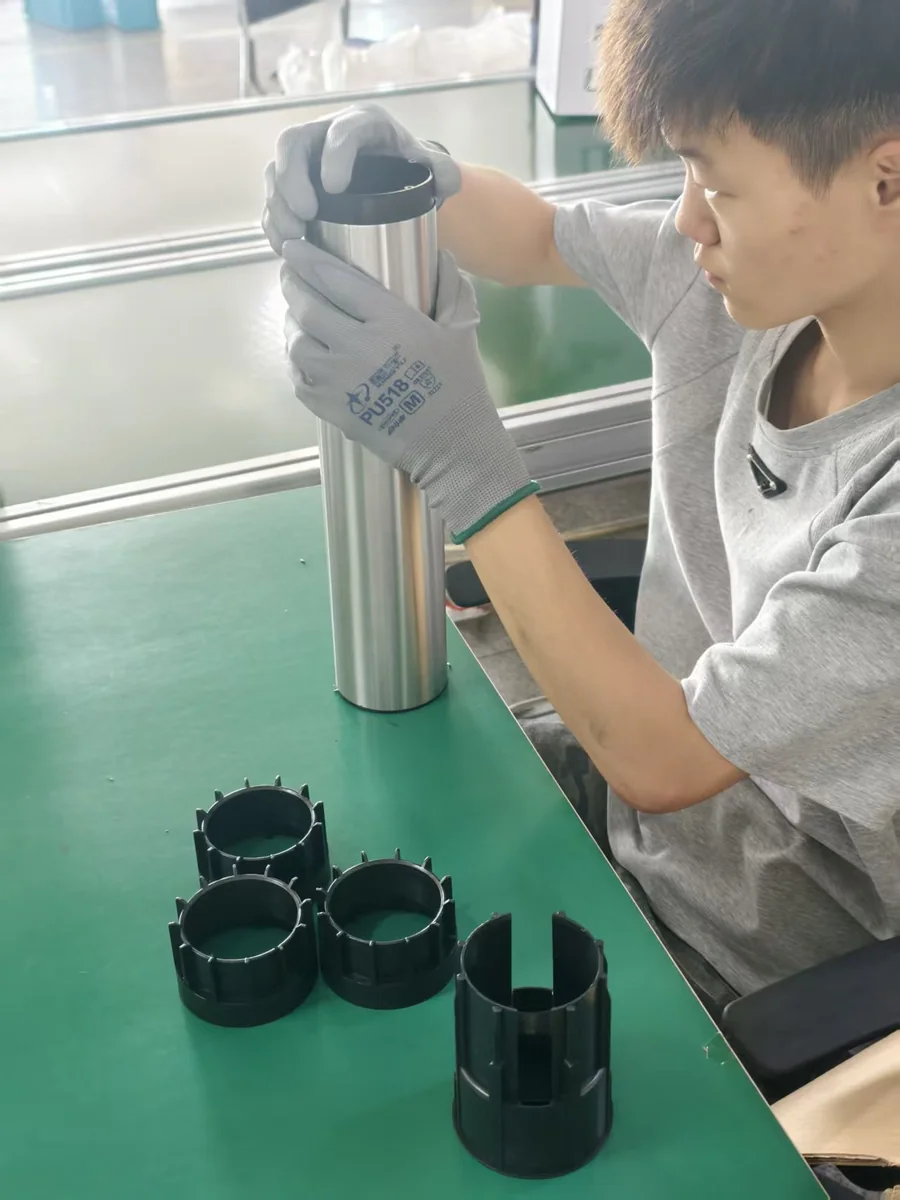
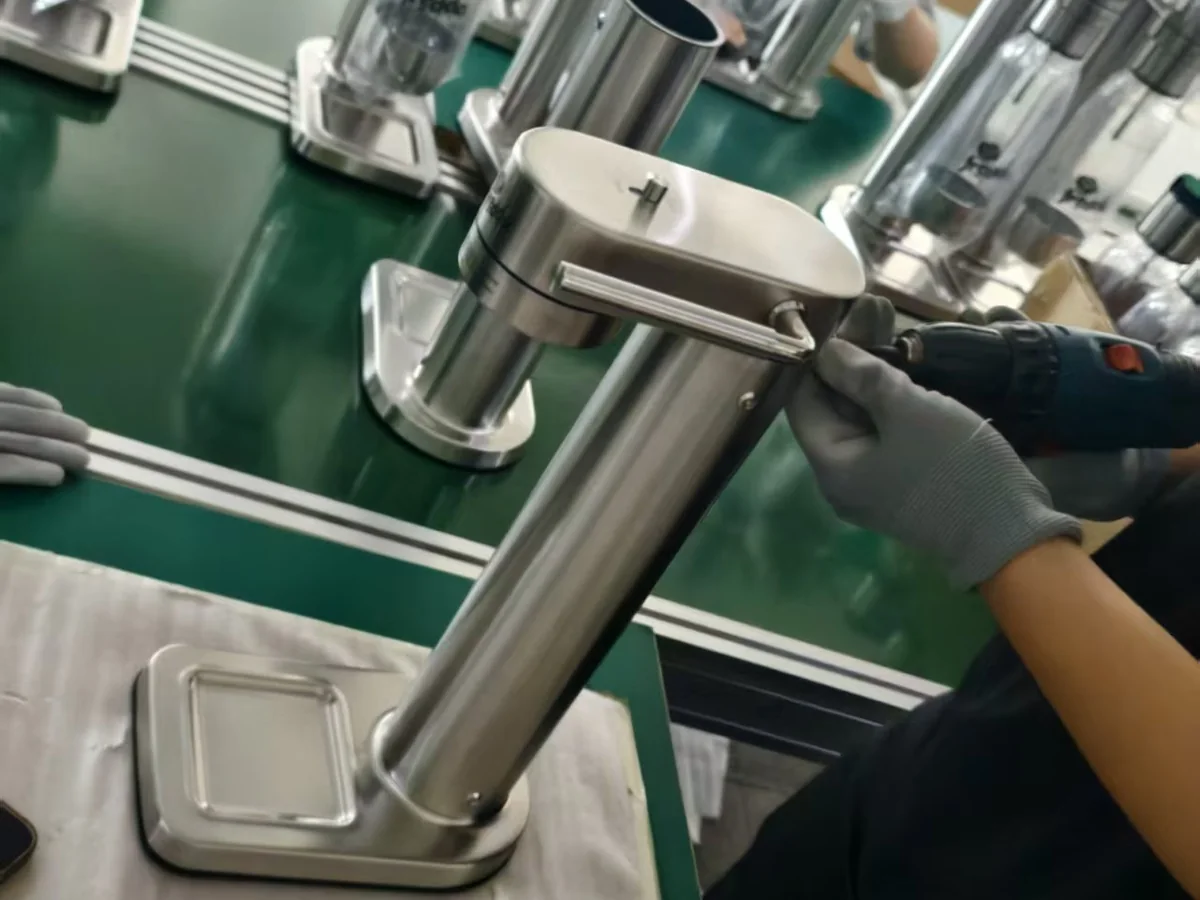
Metal body installation during G15 Pro production for the Brazilian order

An established assembly route reduced the engineering work required for the first production batch.

Two Product Lines Prepared for the Brazilian Distributor

The project used established product platforms so the buyer could build a broader local assortment without paying for a new structural mold at the first stage.

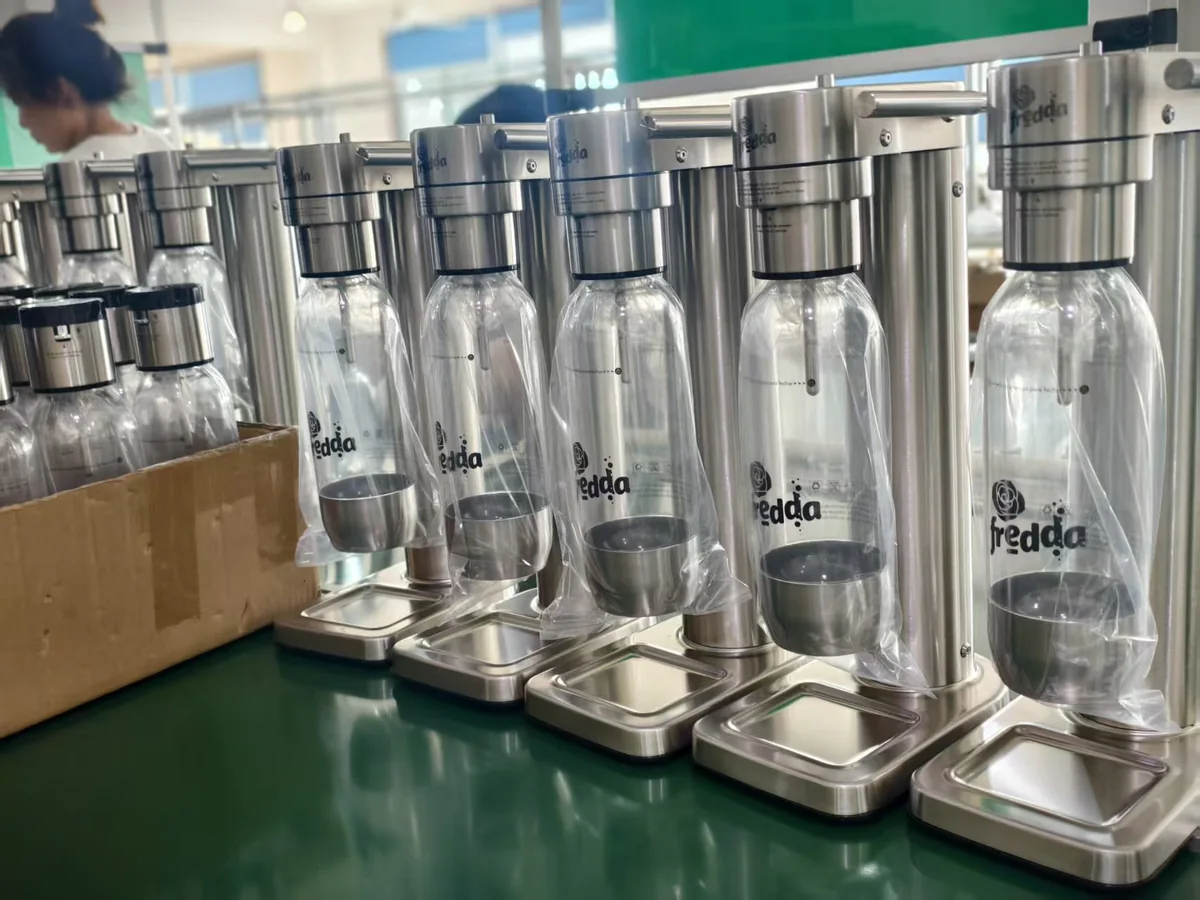
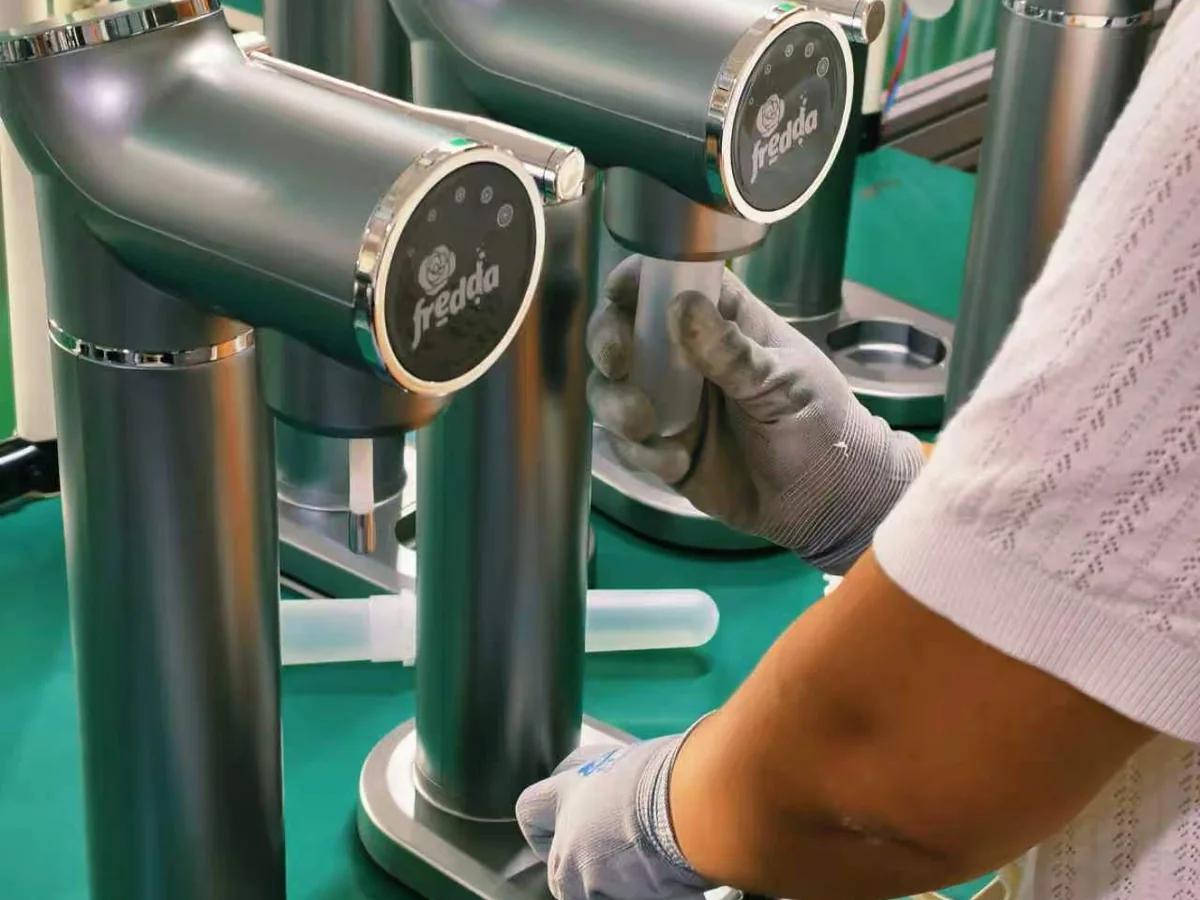
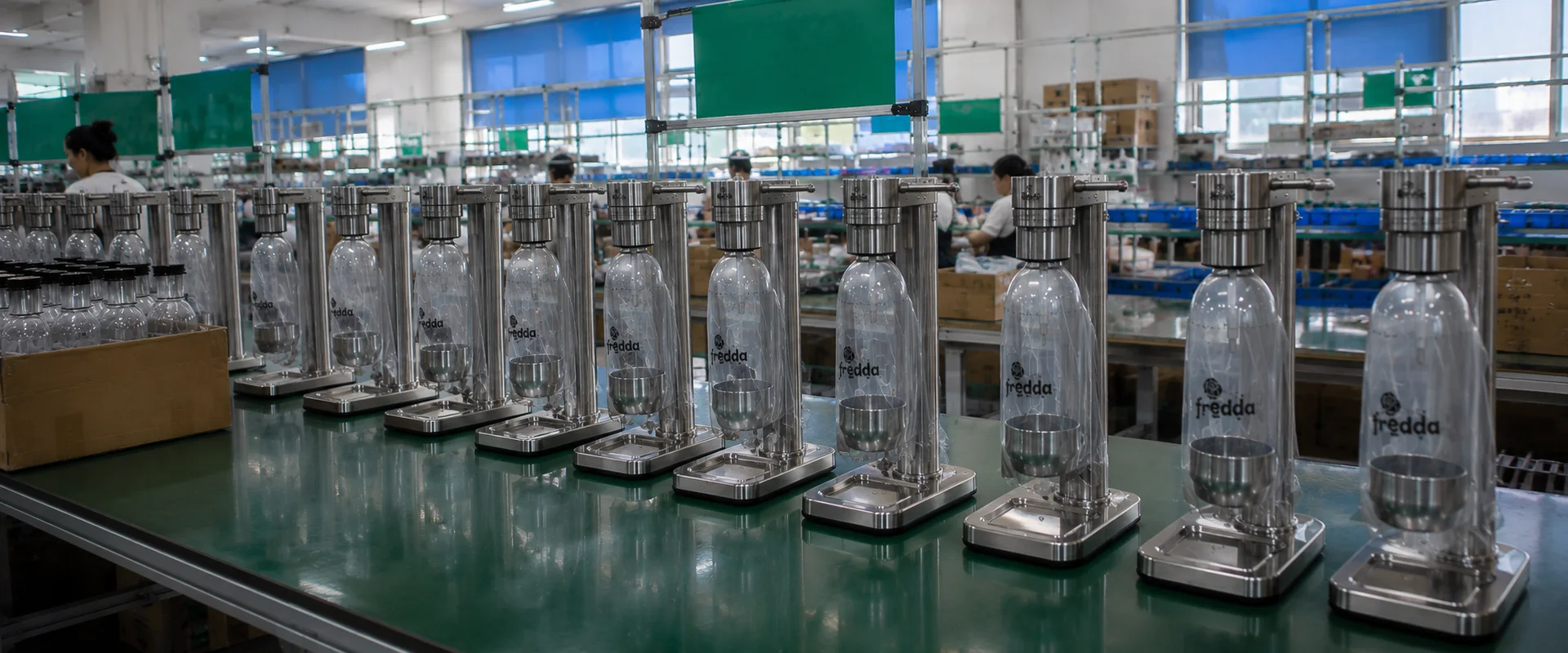
Finished private label G15 Pro soda makers for a Brazilian distributor

G15 Pro Metal-Body Line

The metal-body line gave the distributor a higher-specification option for buyers who compare finish, countertop presence and product construction. The photograph shows completed branded units during factory production, rather than a catalog rendering.

Review the G15 Pro model
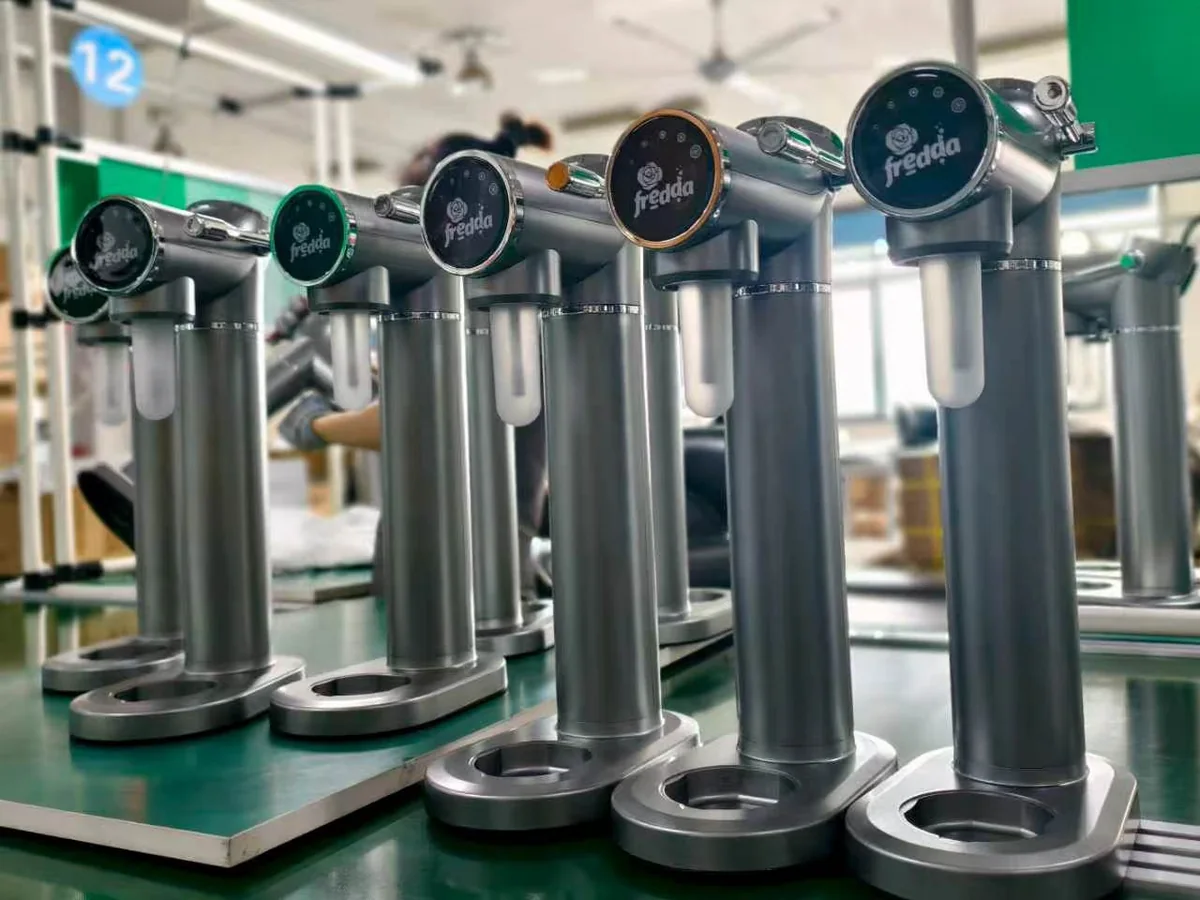
Finished G720 soda makers prepared for a Brazilian distributor order

G720 Standard-Model Line

The G720 provided a second established platform with an existing assembly route and known packaging requirements. Using the current mold allowed the project team to focus on branding, market documents and production control.

Review the G720 model

Focused Private Label Work for the First 1,000 Units

This was not a complete new product development project, but rather a streamlined private label route based on a mature product architecture.

Logo Silk-Screen Printing

Logo placement and artwork were reviewed against the approved files before mass production.

Portuguese Instruction Manual

Product instructions were translated and prepared specifically for the Brazilian consumer market.

Barcode Preparation

Customer-specific barcode information was integrated into the packaging preparation process.

Carton and Packaging Review

Carton marks, product information and shipment details were checked before packing.

Shipment Planning Before Container Loading

For a distributor shipping to South America, the loading plan is reviewed after the final packed quantity, carton dimensions, gross weight and total CBM are confirmed. The factory then coordinates the packing list and loading information with the buyer or nominated freight forwarder. The final method depends on the confirmed booking, cargo-protection requirements and the forwarder's instructions.

  • Packing Protection: Finished units are cleaned and placed in protective bags before retail-carton packing. Any additional moisture-control requirement is confirmed against the order and shipping plan.
  • Loading Configuration: Palletized or floor-loaded shipment is selected according to carton dimensions, cargo-protection needs, container availability and the freight forwarder's requirements.
  • Shipment Records: Final quantities, carton marks, packing-list data and loading instructions are checked before the cargo is released for container loading.
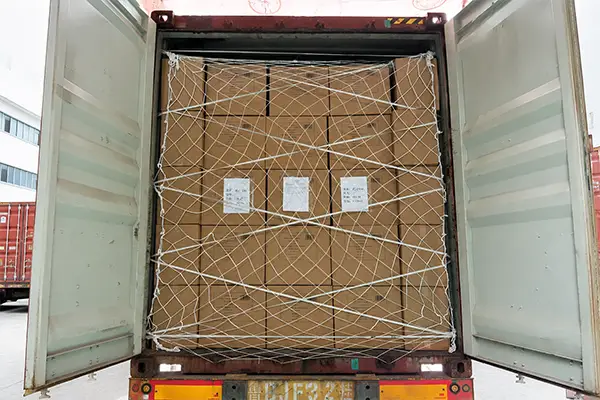
Reference container loading configuration used during Brazil soda maker shipment planning
Reference loading record used during shipment planning. Final loading and dispatch photographs for this 1,000-unit order will be added after the cargo is released.

How the Brazil Soda Maker OEM Project Moved Forward

Step 1: Market Discussion

Review target market, product direction and expected first order volume.

Step 2: Factory Visit

Inspect the product structure, production process and quality checkpoints.

Step 3: Model Confirmation

Select a mature standard model instead of starting with a new structural mold.

Step 4: Branding & Docs

Confirm logo artwork, Portuguese manual, barcode and packaging details.

Step 5: Production & Prep

Complete production, inspection, packing and container-loading preparation.

Factory Checks Recorded Before Shipment

Cheersoda's factory team records visible assembly and inspection steps before shipment so the buyer can review the production result before cargo leaves the factory. The checks shown here support the order-specific review and complement the factory's broader quality and compliance process.

Standard Inspection Points:

  • Production quantity tracking
  • Appearance inspection
  • Logo placement check
  • Functional inspection
  • Packaging check
  • Carton mark review
  • Pre-shipment video confirmation
  • Container loading preparation
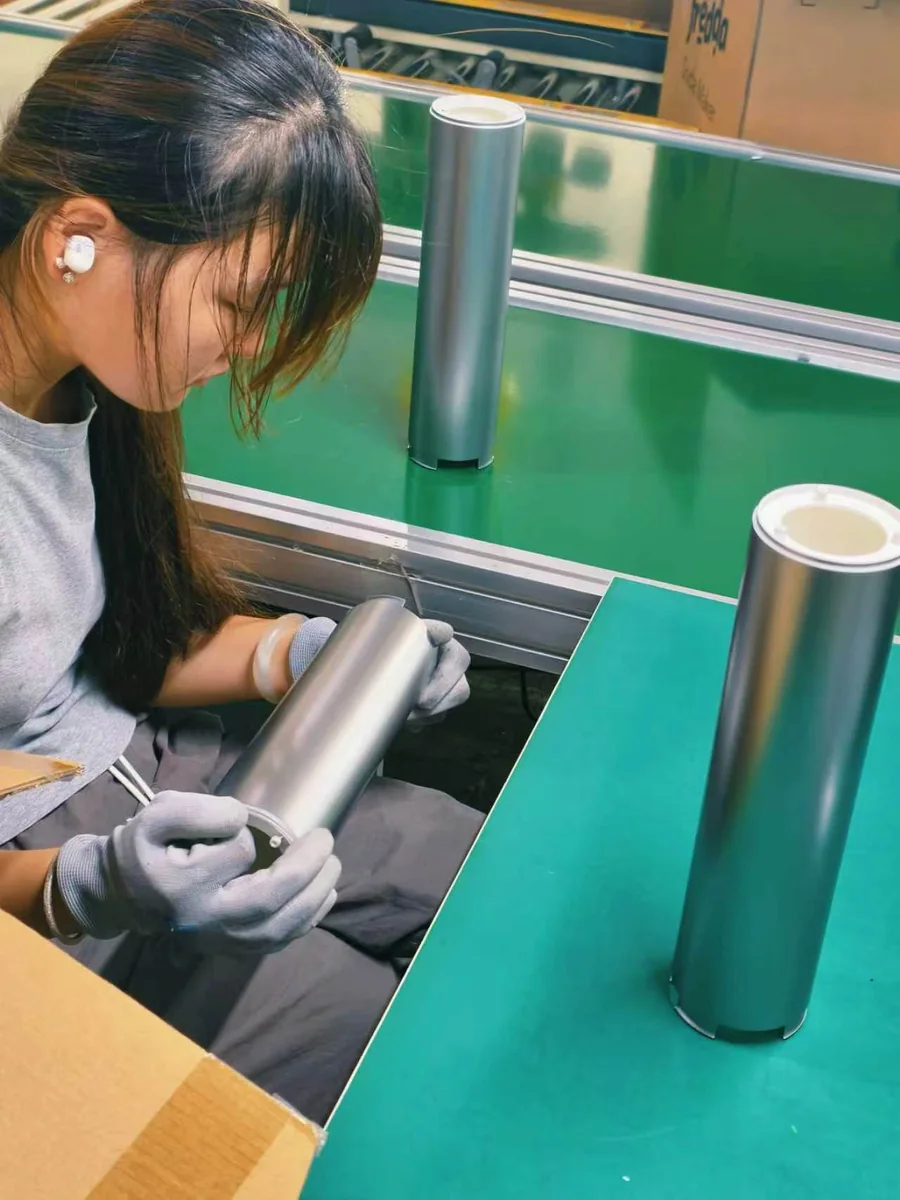
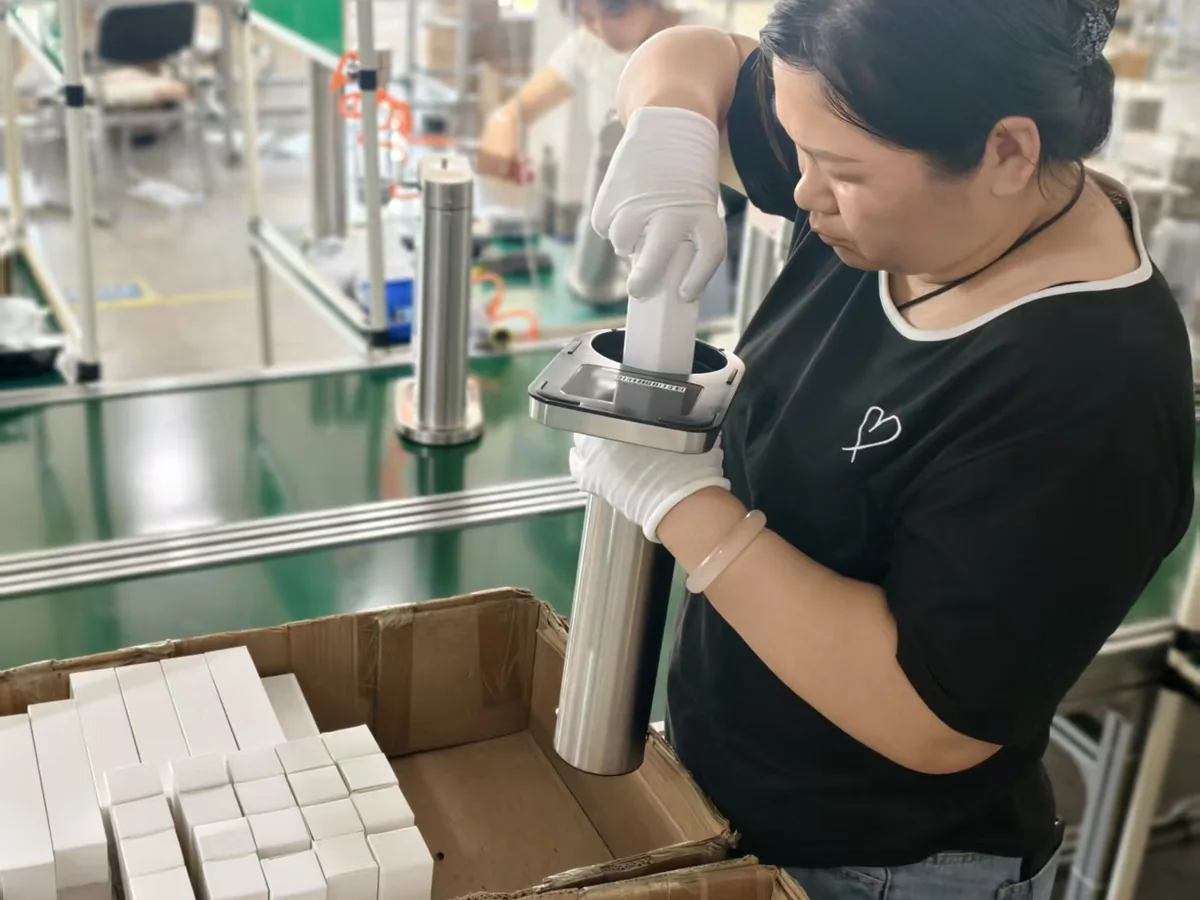
Stainless steel body inspection during G15 Pro production for Brazil
Metal body checked for surface issues before assembly.
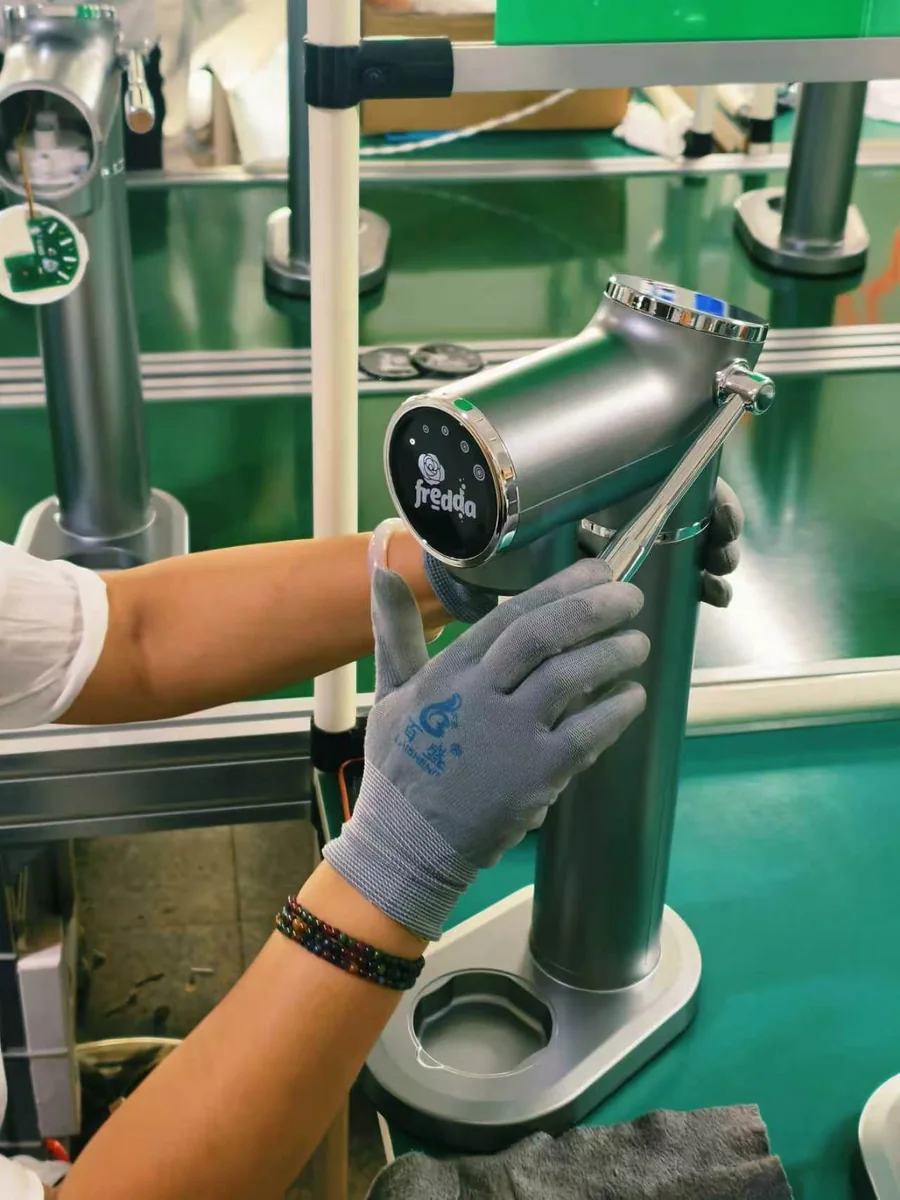
Indicator inspection on a G720 soda maker for the Brazilian distributor
G720 indicator and upper-body alignment check.
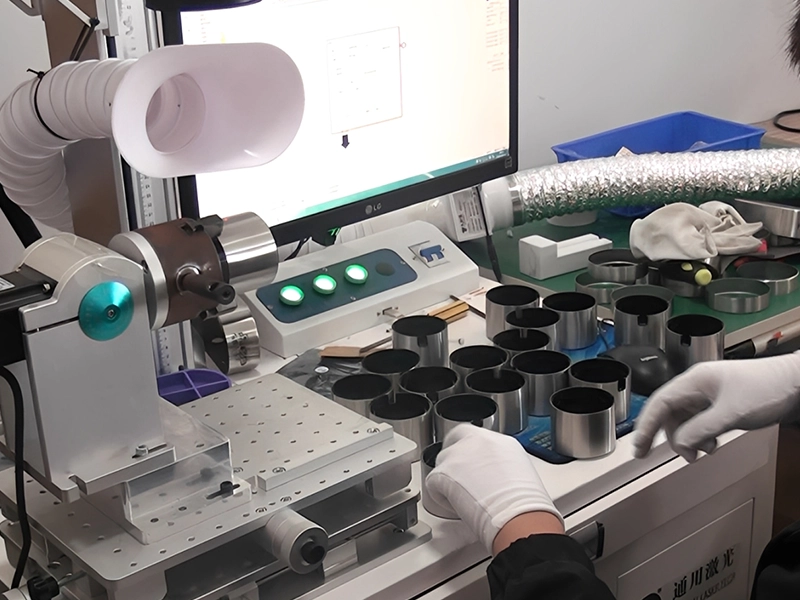
Logo placement check during production
Precise logo alignment verification on the line.
Bottle detection testing and functional inspection
Functional bottle detection and sealing tests.

Production Evidence From the 1,000-Unit Brazil Order

These photographs document visible operations from the branded production batch. Each caption identifies only the activity shown.

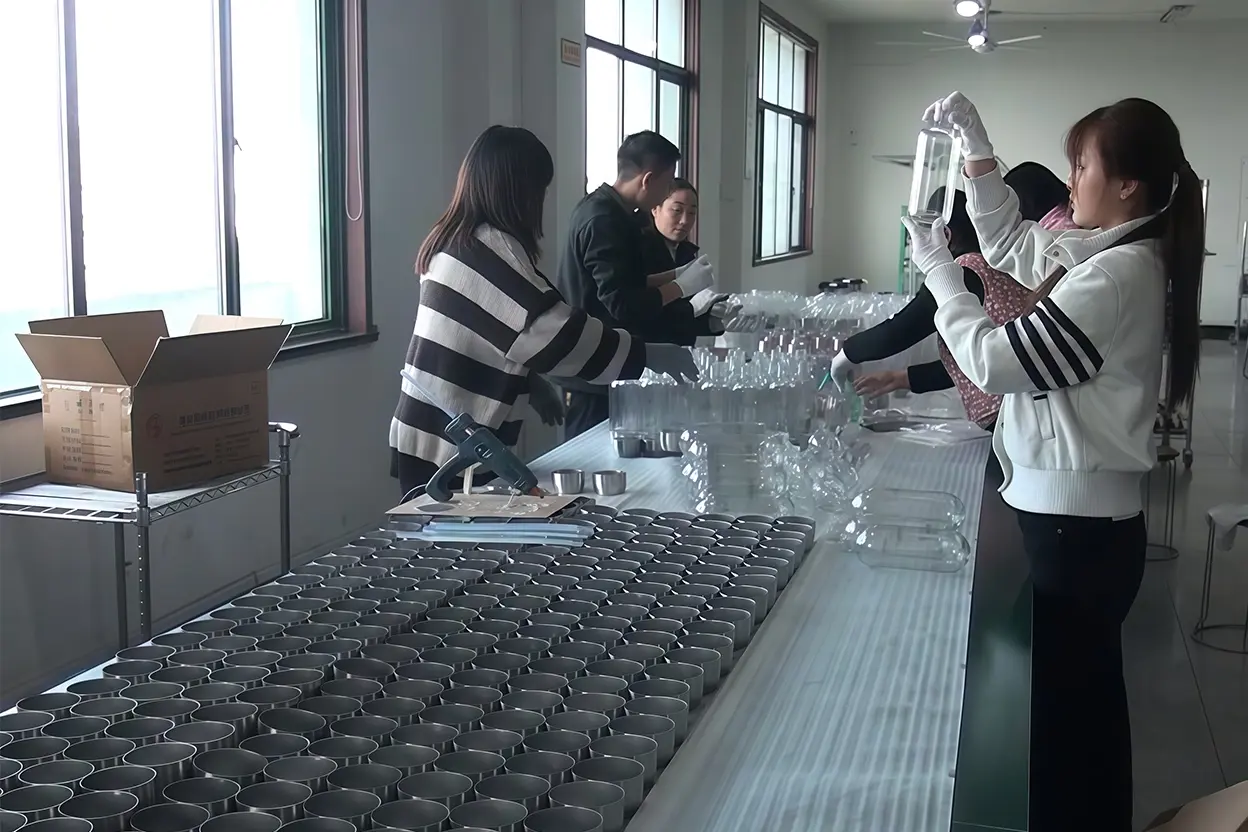
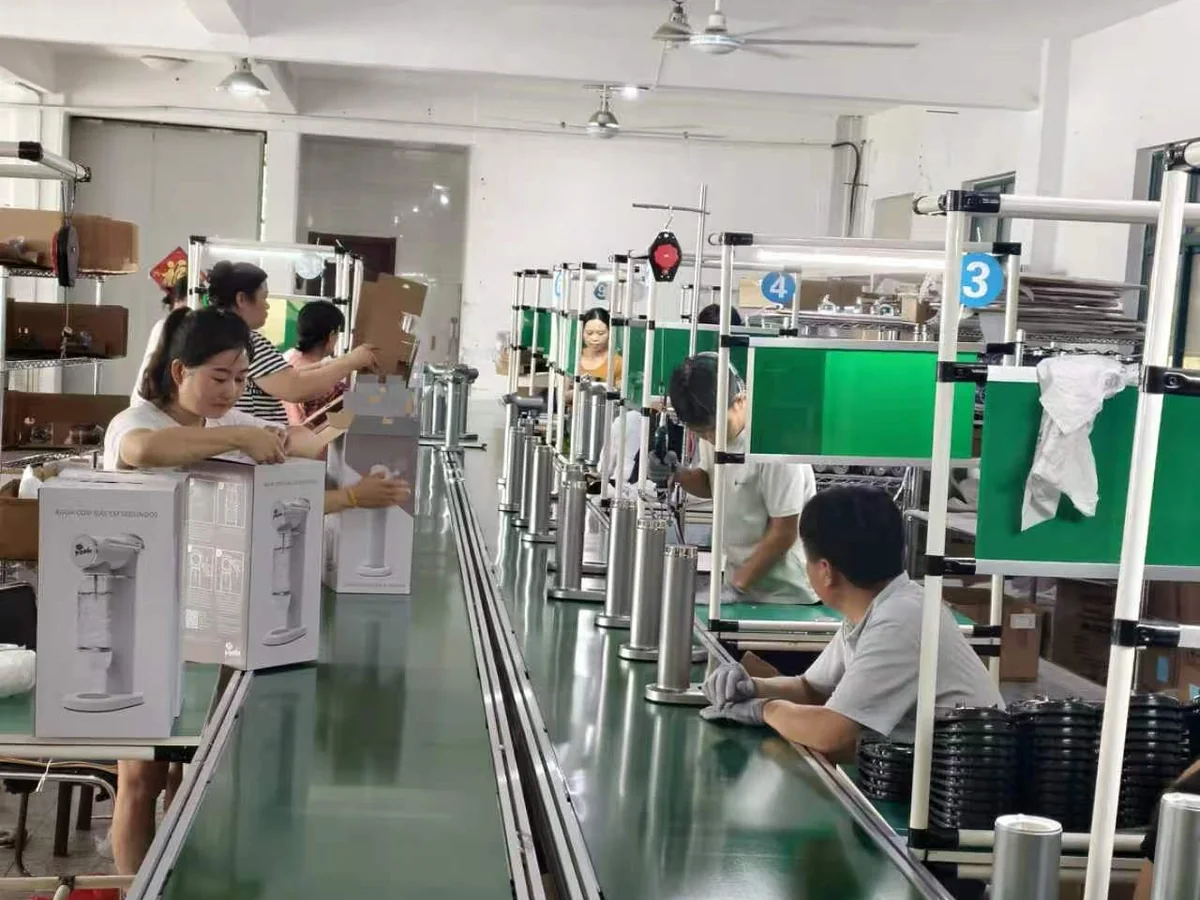
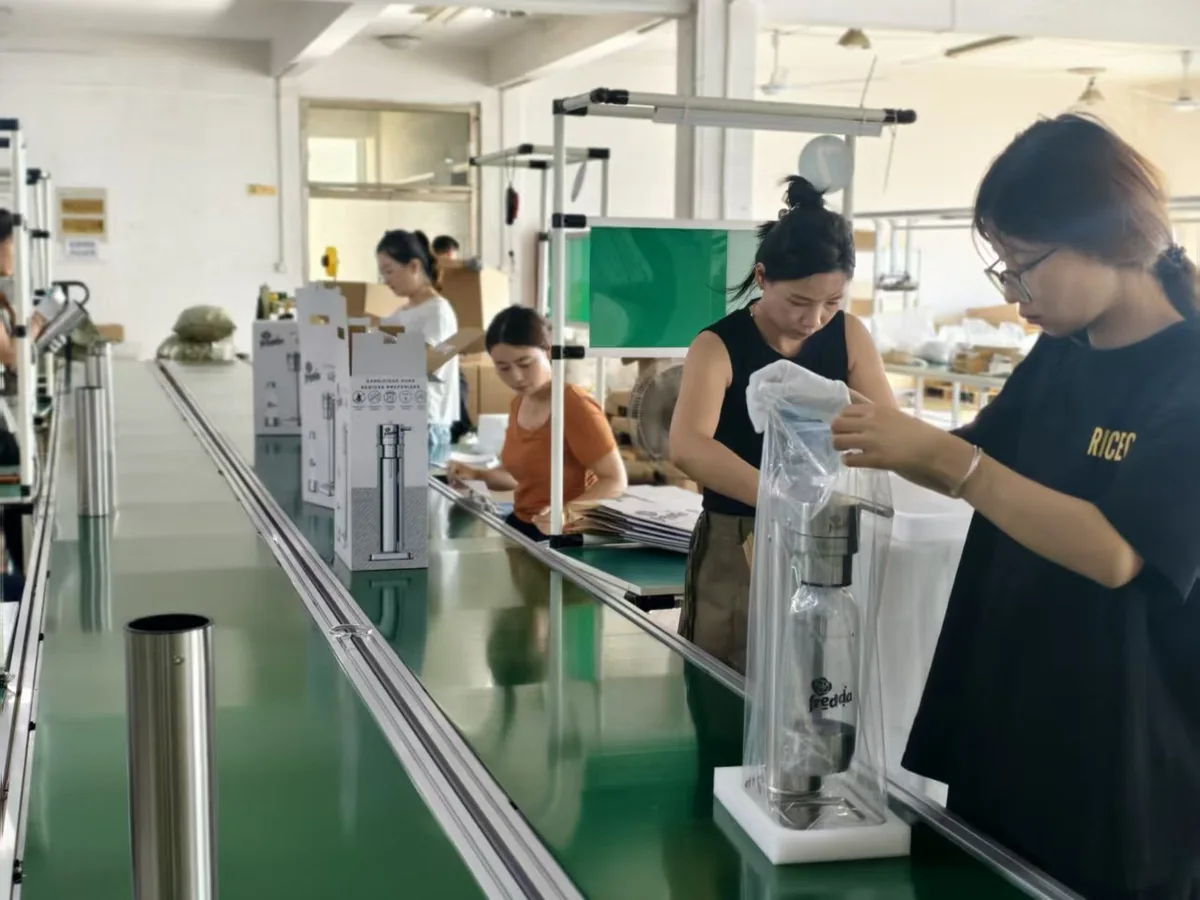
Soda maker assembly line working on the Brazilian private label order
Assembly-line overview during production of the Brazilian distributor order.
Worker assembling the upper section of a G15 Pro soda maker for the Brazil order
Upper-section assembly on the metal-body product line.
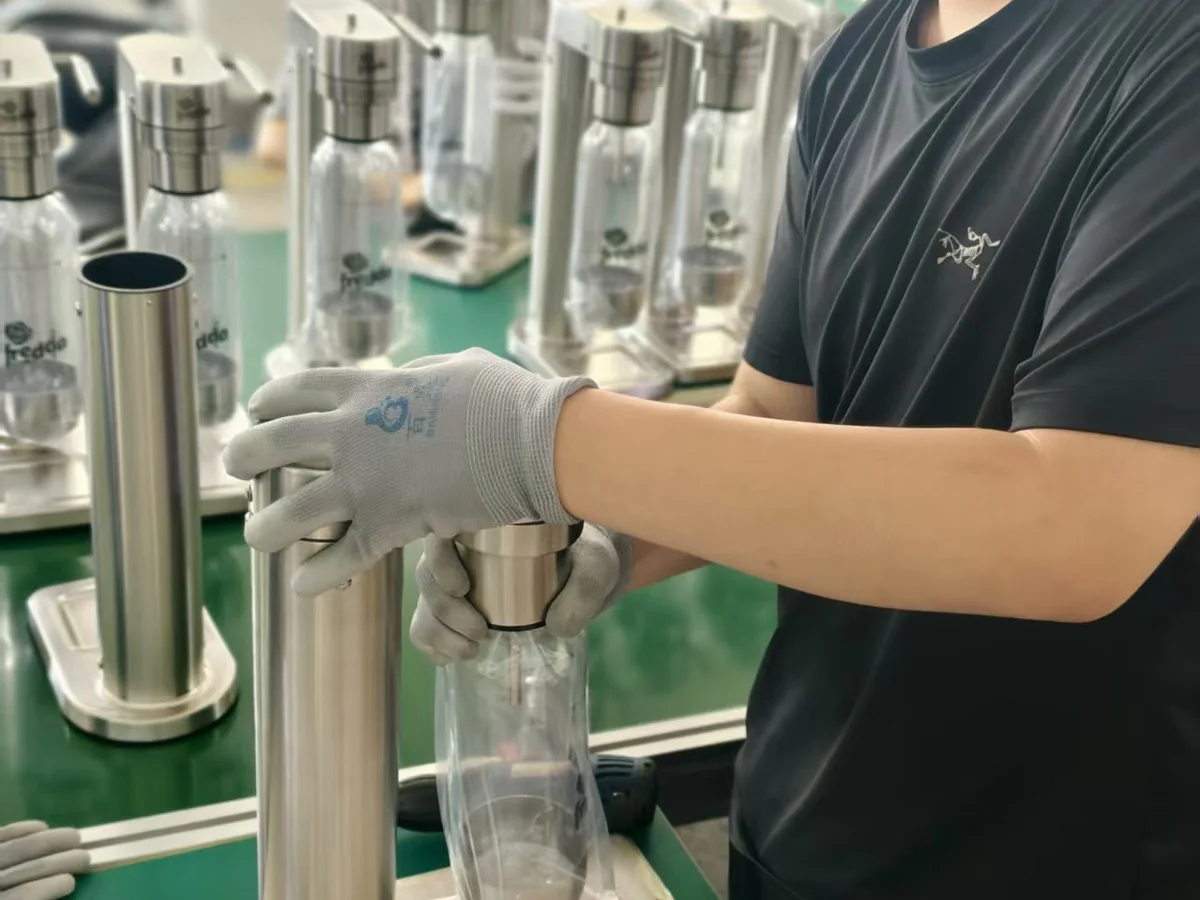
Worker fitting a bottle during G15 Pro soda maker assembly for Brazil
Bottle fit and product assembly before the unit moves to the next station.
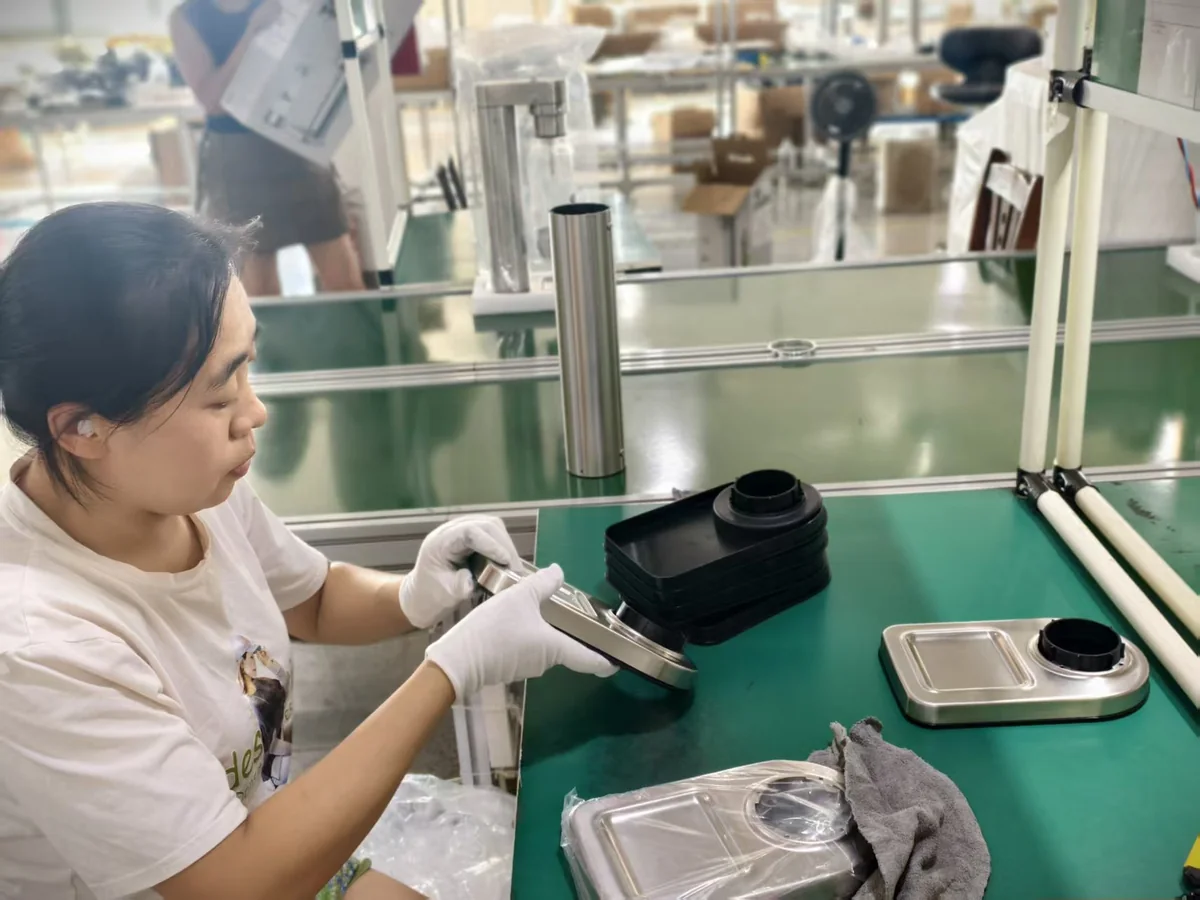
Base installation during G15 Pro production for the Brazilian order
Base components are installed on the production line.
Fastener assembly on a G15 Pro soda maker for the Brazilian distributor
Fasteners are installed before final cleaning and packing.
Protective cover installation on a G720 soda maker for the Brazil order
A protective component is fitted to a G720 unit before packing.

Branding and Retail Packing for the Brazilian Market

The project did not require a new structural mold. Work concentrated on the parts the distributor and retailers would receive: visible product branding, customer artwork, market-language information and protective packing.

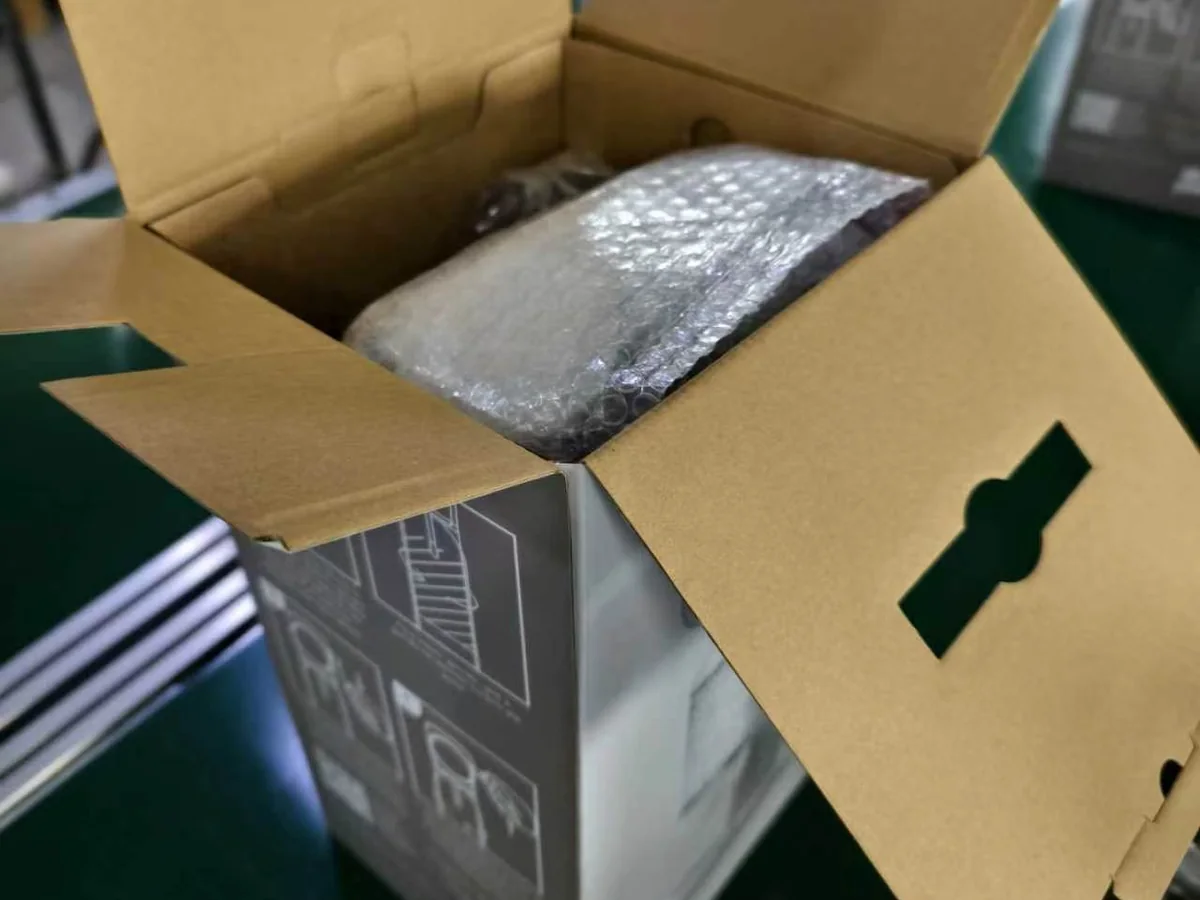
Before mass packing, the team reviewed the retail-box artwork and product information against the approved files. Finished units were cleaned and placed in protective bags before carton packing. G15 Pro and G720 units followed separate packing routes so the distributor could receive a clearly identified assortment.

Packing Records Available for Review

  • Customer logo on finished units
  • Branded retail-box artwork
  • Portuguese market information
  • Protective bag before carton packing
  • Separate retail packing for each model line
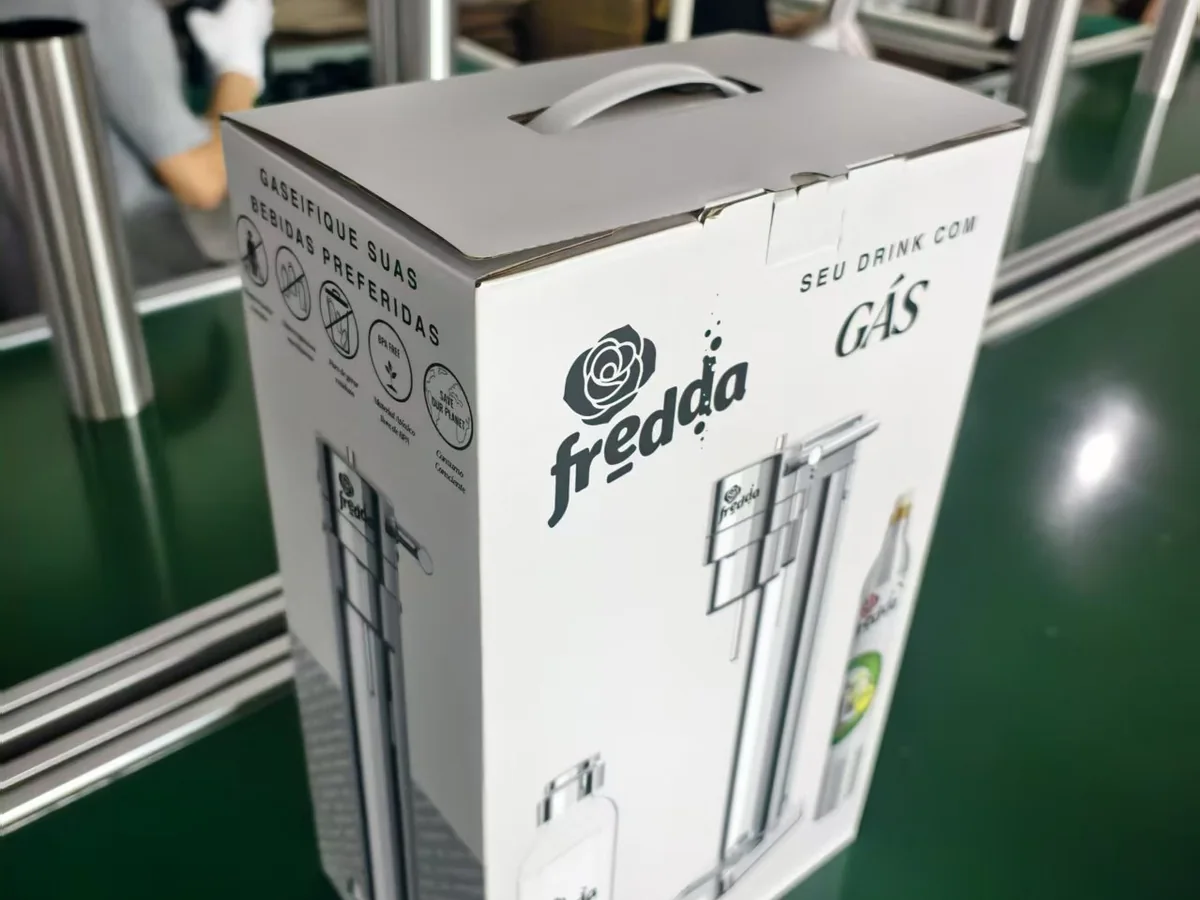
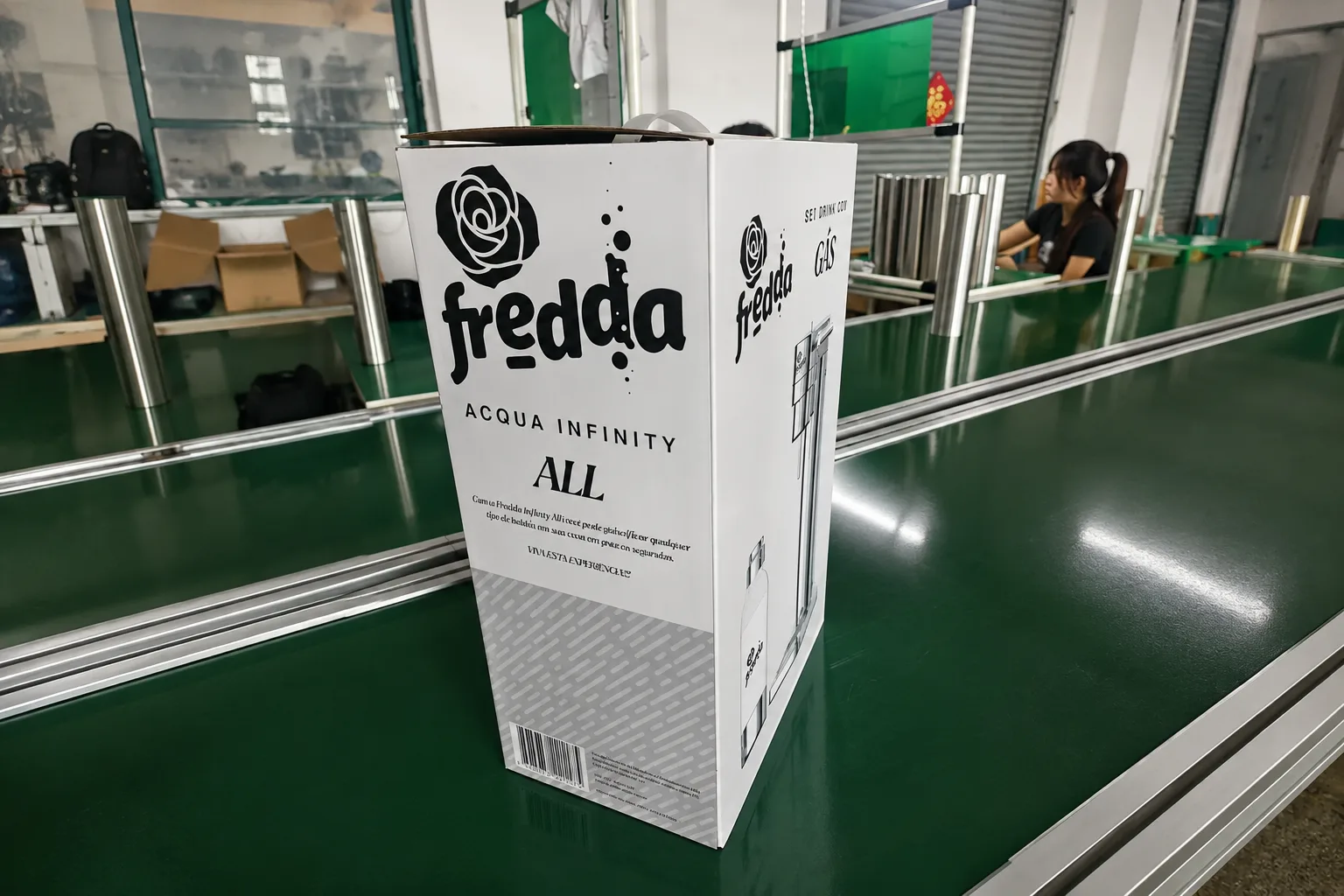
Custom retail box packing for the Brazilian private label soda maker order
Branded retail box at the packing station.
Portuguese retail box prepared for the Brazilian soda maker project
Retail packaging prepared for the Brazilian market.
G15 Pro soda maker placed in a protective bag before carton packing
Protective bag applied before carton packing.
G720 soda maker packed in its retail box for the Brazil order
G720 unit placed in its retail packaging.

The Result: 1,000 Units Prepared for Shipment

The production batch reached the packing stage without requiring a completely new product structure. By using established product platforms and concentrating the custom work on branding, documentation, barcode information and retail packaging, the distributor kept the order on a controlled production route. Dispatch and container-loading evidence will be added after shipment.

1,000 Units Prepared
2 Product Lines
PT-BR Documentation
25-30 Days Production*

*Approximately 25-30 days represents the production and shipment preparation time for this specific project after production release. Lead times vary depending on sample confirmation, packaging files, order quantity, and production schedules.

Project Status at This Update

Production and Retail Packing Completed

The 1,000-unit batch has completed production and retail packing using the established G720 and G15 Pro platforms. The completed scope includes customer branding, Portuguese product documents, barcode preparation and order-specific packing checks.

Container loading and dispatch remain subject to the final shipment arrangement. This case page will be updated with order-specific loading photographs and dispatch information after the cargo is released.

Building a Longer-Term Distribution Program

The relationship developed beyond a single market test. The distributor invested in local carbonation support and continued building awareness through exhibitions and local promotion. The current 1,000-unit production batch is part of that continuing supply program.

Cheersoda supports the program with production planning, market documents and agreed distributor cooperation. When territory protection is included, its scope, product range, volume requirements and agreement period are confirmed in writing. This approach gives the distributor a clearer basis for replenishment planning without describing the current batch as delivered before shipment.

What B2B Buyers Can Verify From This Case

  • Is the factory able to support a standard-model launch?
  • Can the supplier prepare private-label branding?
  • Can the supplier provide local-language product documents?
  • Can the supplier review barcode and carton information?
  • Can the buyer inspect production before shipment?
  • Can the supplier support a first order without new tooling?
  • Can the supplier discuss future product development after market validation?

Shipment Readiness at the Time of This Case Update

This status separates completed factory work from the remaining logistics step. It will be updated when loading and dispatch records are available.

Production Completed
Assembly and appearance checks Completed
Retail packing Completed
Container loading and dispatch Pending final shipment arrangement

Questions About This Brazil Private Label Soda Maker Project

Did the Brazil project require a new soda maker mold?
No. The first order used a mature standard model. The project focused on logo printing, Portuguese documentation, barcode preparation and packaging review instead of starting with a new structural mold.
How many units were prepared for the Brazil order?
The project covered a 1,000-unit private label soda maker order for the Brazilian distributor.
What was the beverage OEM lead time?
The production and shipment preparation window was approximately 25-30 days after the model, quantity, artwork, packaging and production requirements were confirmed. The final schedule should always be checked against the confirmed order plan.
What private-label changes were included?
The project included logo silk-screen printing, a Portuguese instruction manual, customer-specific barcode information and packaging review.
Why did the distributor choose a standard model?
A mature standard model provided a more practical starting point for market testing because it avoided the cost and delay of developing a new structural mold for the first order.
Can Cheersoda support deeper ODM development later?
Yes. After the market and product direction are validated, a separate ODM review can cover product design, structure, tooling, sample development and production planning.
Can a distributor discuss market protection?
Territory or distributor cooperation can be reviewed according to the target market, product scope, sales channels, minimum purchase requirements and agreement period. Any protection terms must be confirmed in a formal agreement.

Ready to Discuss Your Own Private Label Project?

If you are planning a distributor launch in Brazil or another market, send us your target quantity, preferred model direction, logo requirements, and expected launch date. We will help you determine the most efficient and cost-effective production route.

sales@customsodamaker.com
+86 15005520056

We use your details strictly for project evaluation. 100% confidential.