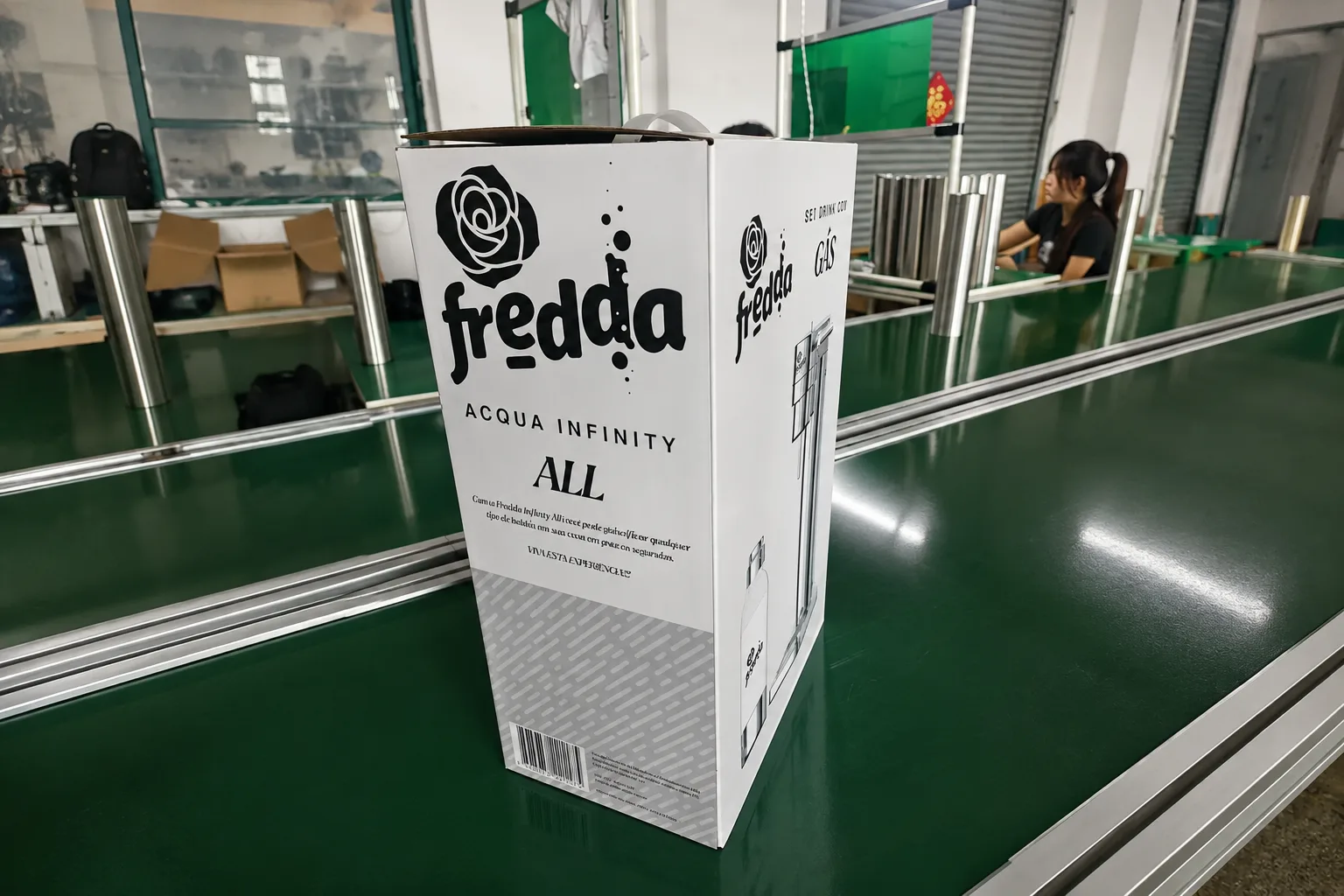
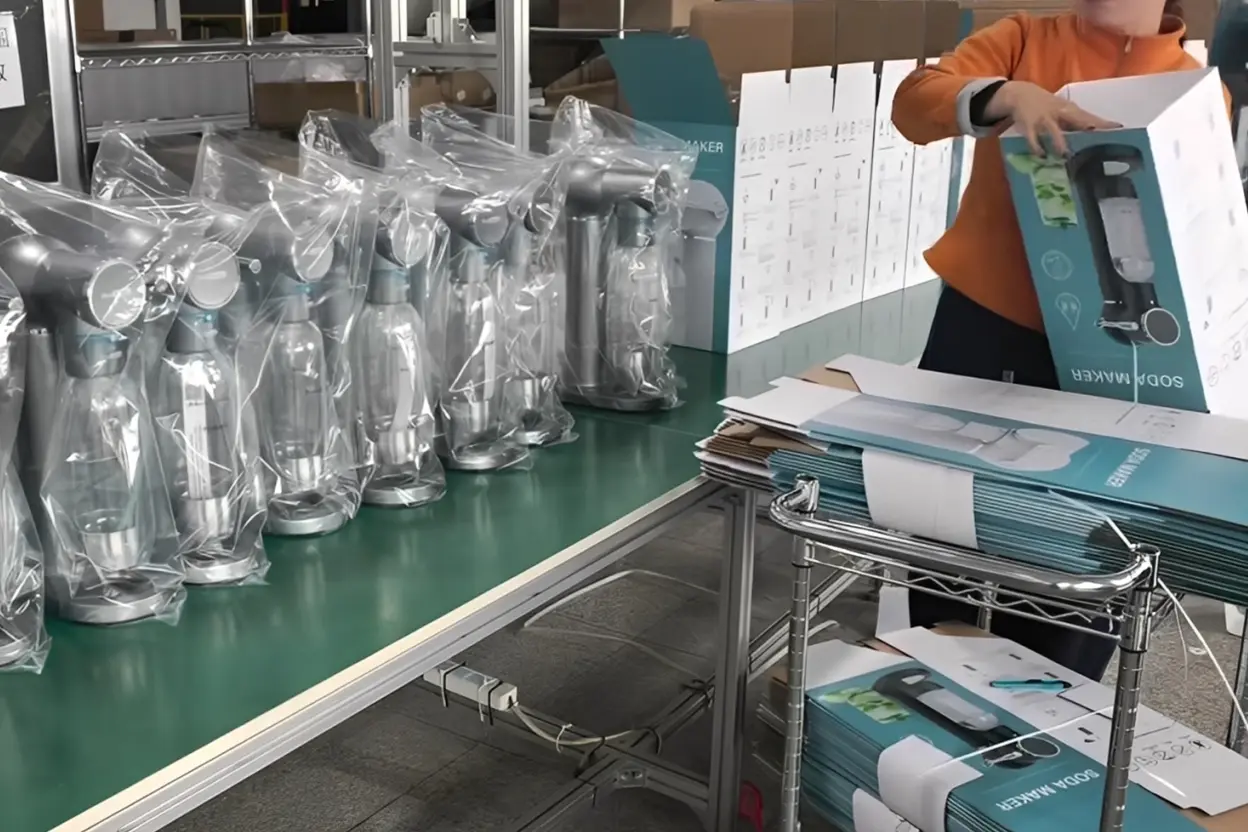
Good packaging is not decoration at the end of a soda maker project. For private-label buyers, packaging decides how the product is presented, how safely it travels, how clearly the user understands the machine, and whether the importer can sell the product without last-minute document trouble.
Many new buyers start an OEM soda maker project by asking for the machine price first. That is normal, but it is only part of the project. A soda maker sold under your own brand is not just the machine body. It is the logo on the machine, the PET bottle set, the color box, the instruction manual, the barcode label, the carton mark, the warning text, the warranty card, the accessory layout, and the way everything is packed before shipment.
If these details are confirmed too late, the project can lose time even after the machines are ready. A missing barcode, unclear carton mark, wrong language on the manual, weak inner support, or mismatched bottle set can delay shipment, create retail complaints, or force the buyer to repack goods locally. This guide explains how to plan private label soda maker packaging in a practical way before mass production starts.
1. Start With the Sales Channel, Not the Box Design
The right soda maker packaging depends on where the product will be sold. A distributor selling to supermarkets needs a different box from an importer testing a small trial order. An Amazon seller may care more about outer carton strength and barcode accuracy. A premium beverage brand may care more about color consistency, unboxing experience, and how the bottle set is displayed inside the pack.
Before making the box artwork, the buyer should tell the factory how the product will be sold. Is it for online sales, retail shelf, wholesale distribution, exhibition samples, or a soft launch in one country? This information helps the factory recommend the right packing structure, carton size, inner protection, and document package.
2. Decide What Level of Private Label You Really Need
Private label does not always mean full custom packaging from day one. For many soda maker buyers, the safest path is to start with a proven machine model, add logo printing, use a simple neutral carton or basic branded box, and test the market before investing in a complete retail packaging system. Once the sales channel is confirmed, the packaging can become more polished.
A factory should help the buyer choose the right level. If the buyer is ordering 40 or 50 units for market testing, a full custom color box may not be worth the cost. If the buyer is ordering 1,000 to 5,000 units for a distributor launch, branded packaging, localized manual, barcode labels, and carton marks should be planned carefully.
| Private Label Level | Typical Use | Packaging Scope |
|---|---|---|
| Neutral trial packing | Small first order, market test, sample sales | Standard carton, basic product label, one bottle set, simple manual |
| Logo-only OEM | Distributor pilot order or online test | Logo on machine, logo on bottle if needed, neutral or simple box |
| Standard private label | Normal importer or brand launch | Color box, manual, barcode, carton mark, product photos, batch packing records |
| Brand retail system | Premium channel or long-term exclusive distributor | Custom box structure, local language documents, accessory layout, inspection photo set, shipment file archive |
3. Confirm the Product Set Before Designing the Box
A soda maker package is built around the product set. The box size changes when the buyer chooses one bottle or two bottles, 500ml or 1000ml bottles, empty CO2 cylinders, extra caps, cleaning accessories, or a different machine color. If the design team starts the artwork before the product set is fixed, the box may need to be redesigned.
For Cheersoda projects, the most common bottle capacities are 500ml and 1000ml. Buyers should decide whether the market expects one 1L bottle, two bottles, or a starter pack with extra accessories. The choice affects box dimensions, carton weight, loading quantity, retail price, and how the customer feels when opening the product.
- Confirm the machine model before artwork starts.
- Confirm whether the pack includes one bottle or two bottles.
- Confirm bottle capacity, cap color, and bottle label requirement.
- Confirm whether CO2 cylinders are included or sold separately.
- Confirm whether the buyer needs accessory packs, warranty cards, or local inserts.
- Confirm inner protection method before approving color box size.
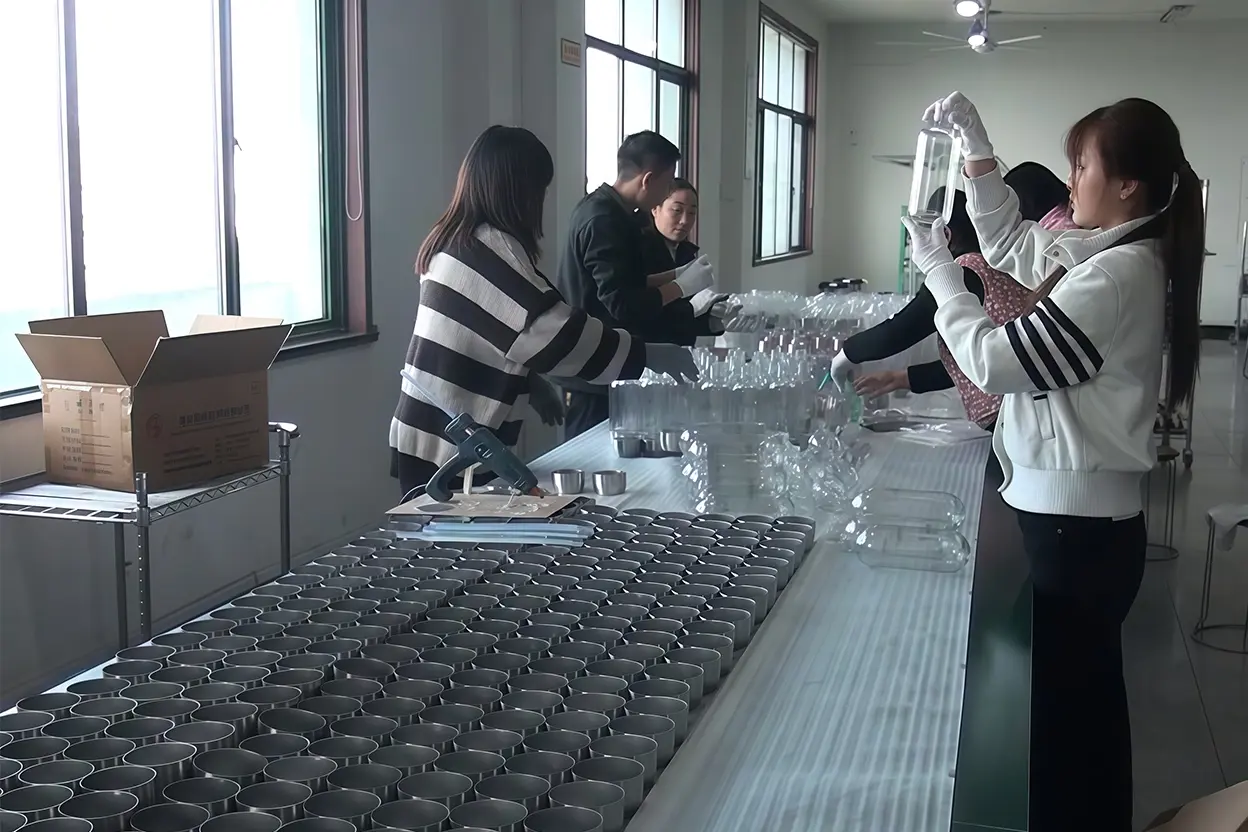
4. Logo Placement Should Be Confirmed With Real Product Photos
Logo work sounds simple, but it can go wrong if the buyer only checks a flat drawing. The machine surface may be curved, textured, painted, stainless steel, or plastic. A logo that looks good on a PDF may be too large on the real machine or too close to an edge. For bottles, the logo must also consider the bottle shape, filling line, cleaning marks, and user handling.
Before mass production, the buyer should ask for a logo position mockup on real product photos. For larger orders, a pre-production sample with the final logo method is better. The most common logo methods include silk-screen printing, laser marking, sticker labels, or molded brand marks, depending on the material and order quantity.
| Logo Method | Best For | Buyer Should Check |
|---|---|---|
| Silk-screen printing | Plastic or painted surfaces, standard OEM projects | Color accuracy, position, rubbing resistance, logo size |
| Laser marking | Metal parts or premium surface details | Contrast, visibility, surface effect, brand tone |
| Sticker label | Trial order, accessory packs, temporary market tests | Adhesive quality, label edge, waterproof requirement |
| Molded logo | Long-term private tooling projects | Tooling cost, exclusivity, lead time, brand protection |
Factory Video: G15 Black Assembly and Appearance Inspection
Appearance inspection is useful before approving private-label packaging. It shows whether the finish, screws, surface texture, and machine body are consistent enough for branded retail sales.
5. The Manual Is Part of the Product, Not Just a Paper Insert
A manual is often treated as a small translation job, but for soda makers it matters. The user must understand how to lock the bottle, how to connect the CO2 cylinder, how to carbonate water, what not to carbonate, how to release pressure, and how to clean the bottle. A weak manual can create unnecessary after-sales questions even when the machine itself is fine.
For private-label projects, the manual should match the target country. This includes language, warning statements, product diagrams, cylinder instructions, bottle safety notes, and customer service information. If the buyer sells in Europe, the UK, South America, or the Middle East, local language requirements should be confirmed before printing.
6. Barcode Labels and Carton Marks Must Match the Sales System
Barcode labels are not only for retail checkout. They help warehouses, distributors, Amazon operations, and importers identify the product correctly. Before printing, the buyer should confirm whether the product uses EAN, UPC, FNSKU, SKU label, model code, batch number, or internal warehouse label.
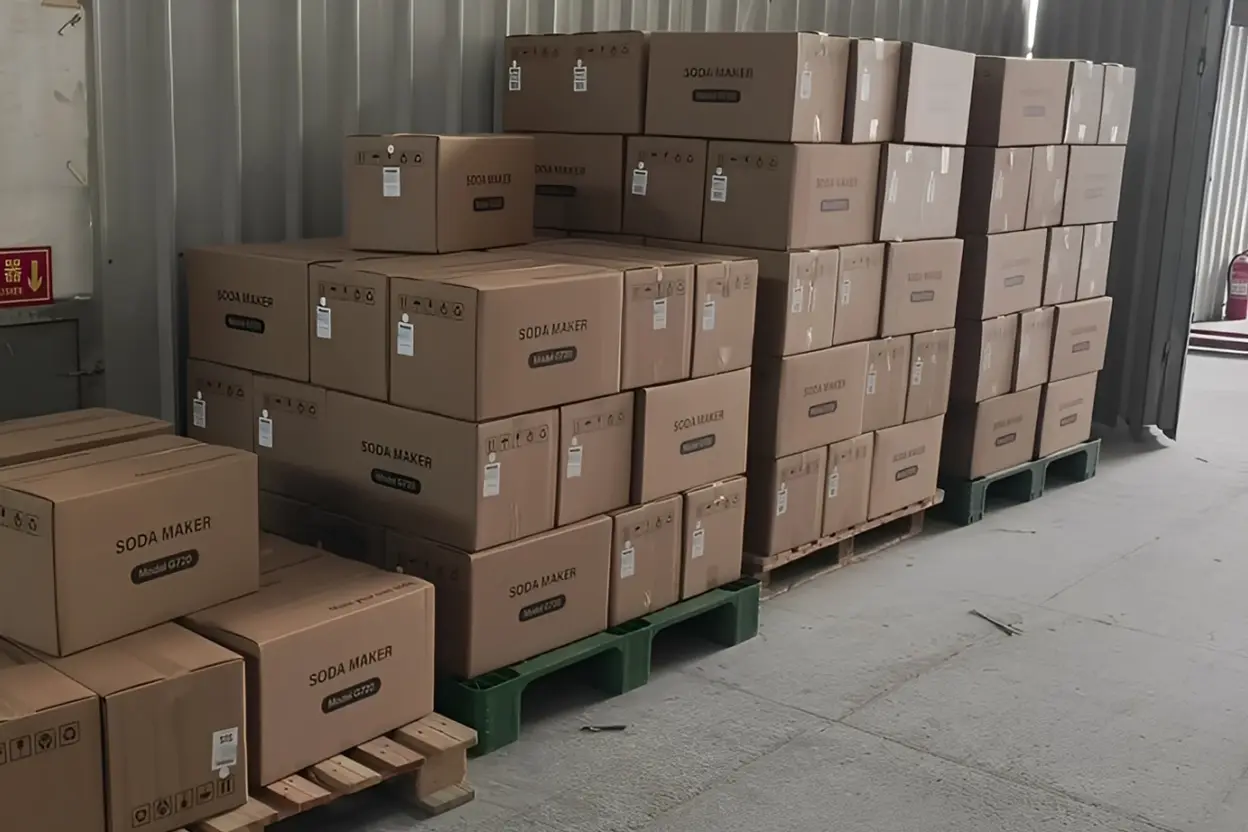
Carton marks are equally important. A carton mark should show model name, quantity, color, carton number, gross weight, net weight, dimensions, country of origin, and handling marks if needed. For mixed shipments, carton marks become even more important because different colors, bottle sets, or models may be packed together.
| Label Item | Where It Appears | Why It Matters |
|---|---|---|
| Retail barcode | Color box or product label | Needed for retail checkout and warehouse scanning |
| Model code | Box, carton, packing list | Prevents mixed-model confusion during shipment |
| Carton mark | Outer carton | Helps customs, warehouse, and distributor sorting |
| Batch record | Internal file or carton label | Helps trace production if an after-sales issue appears |
7. Packaging Should Protect the Machine During Real Transport
A nice box is not enough. Soda makers include a machine body, bottle, cap, and sometimes accessories. The bottle should not rub against the machine. The machine should not move freely inside the box. The lever or button area should not carry unnecessary pressure. If the carton will travel by sea, air, truck, or mixed logistics, the package must be stable enough for the route.
Buyers should ask the factory how the inner support is arranged. Some projects use cardboard inserts. Some need EPE or molded pulp. Some trial orders can use simpler protection, but retail orders should be reviewed more carefully. Good packing reduces damage claims and gives the buyer better control when selling through distributors or online platforms.
8. Ask for Packing Photos Before Shipment
Before the order leaves the factory, the buyer should request packing photos. These do not need to be artistic photos. They should be practical evidence: machine in box, bottle position, manual placement, color box, carton mark, outer carton, packed pallets or stacked cartons, and a final shipment view if available.
For repeat orders, packing photos help confirm that the factory followed the same standard as the previous batch. For first orders, they help the buyer catch small mistakes before shipment. If the buyer works with a third-party inspection company, these photos can also help prepare the inspection checklist.
- Photo of machine and bottle before packing.
- Photo of logo position and printed surface.
- Photo of manual, accessory pack, and warranty card if included.
- Photo of color box front, side, and barcode area.
- Photo of outer carton mark and carton sealing.
- Photo of final stacked cartons or pallet preparation.
Factory Video: G15 Private Label Assembly Line
Production and assembly videos help buyers connect packaging decisions with the real batch being produced. They are useful evidence for private-label brands that need to show internal teams or distributors how the product is made.
9. Packaging Also Affects Container Loading and Landed Cost
Importers often focus on the unit price, but the package size affects landed cost. A slightly larger box can reduce container loading quantity. A weak carton may cause damage during transport. A poor bottle layout may waste space. For a product like a soda maker, packaging design should balance retail appearance, product protection, and shipping efficiency.
When comparing models, buyers should ask for carton dimensions and loading estimates. For a market test, the buyer may accept a less optimized packing method. For large repeat orders, carton optimization can save real money over time. This is one reason mature public models are useful: the factory already understands the packing structure and loading data.
10. A Practical Packaging Approval Workflow
A good private-label soda maker project needs a simple but disciplined packaging workflow. It does not need to be complicated, but every file should be confirmed before printing. The buyer and factory should agree on who provides the artwork, who checks technical dimensions, who confirms barcode accuracy, and who gives final print approval.
| Step | Buyer Responsibility | Factory Responsibility |
|---|---|---|
| Product set confirmation | Choose model, color, bottle set, accessories | Confirm packing structure and dimensions |
| Artwork preparation | Provide logo, barcode, brand text, language | Provide die-line template and print area limits |
| Pre-print review | Check spelling, barcode, claims, contact details | Check size, bleed, print feasibility, carton mark |
| Pre-production sample | Approve final visual direction | Prepare sample photos or physical sample if needed |
| Mass packing | Review packing photos before shipment | Pack according to approved files and keep records |
FAQ
Can I start with logo only instead of a full custom color box?
Yes. For a first market test, logo printing with simple packaging is often more practical. Once sales feedback is clear, you can upgrade to a full private-label color box, localized manual, and complete retail pack.
What packaging files should I prepare for a private-label soda maker order?
You should prepare logo files, brand colors, barcode numbers, manual language, warning text, warranty information, carton mark requirements, and any local compliance marks your market needs.
Can the factory help with barcode labels and carton marks?
Yes. The buyer should provide the barcode information and SKU rules, while the factory can help place labels on the color box, product label, or outer carton according to the approved packing file.
Should the box include one bottle or two bottles?
It depends on your retail strategy. One 1L bottle keeps the starting cost lower. Two bottles can make the pack feel more complete, but it increases box size, weight, and landed cost.
When should packaging artwork be finalized?
Artwork should be finalized before mass production packing starts. For printed boxes, buyers should leave enough time for die-line confirmation, artwork review, pre-print approval, and printing.
Can packaging changes delay the whole soda maker order?
Yes. Packaging changes can delay printing, packing, inspection, and shipment. That is why model, bottle set, barcode, manual, and carton mark should be confirmed early.
Need Help Planning a Private Label Soda Maker Pack?
Cheersoda supports OEM buyers with model selection, logo placement, bottle set planning, color box files, manuals, barcode labels, carton marks, packing photos, and shipment preparation from our Qingdao factory.
Send Your Packaging Requirements